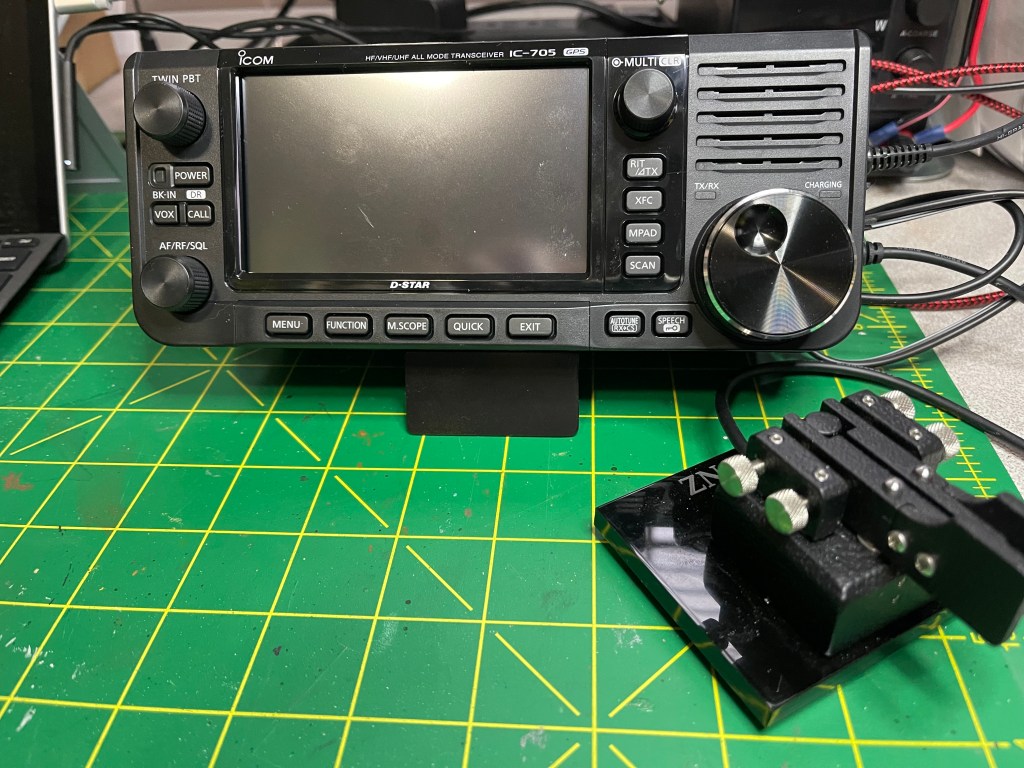
Why I didn’t Preorder the Yaesu FTX1

As information started coming out about Yaesu’s new QRP radio I was tempted to get one. However, the more I learned the less I liked about it. I have an Icom IC-705 and an Elecraft KX2 for QRP radios. My big field radios are an Icom IC-7300 and Yaesu FT-710F. I am looking for another QRP radio to do a long term review. I considered the FTX1 but gave it a pass for the following reasons.

Price. An IC-705 cost $1349.95 at HRO. The FTX1 cost $1499.95 but to be truly compatible with the IC-705, you have to add Bluetooth ($54.95) and GPS ($69.95). this brings the total to $1624.85. A spare battery for the FTX1 is $199.95. The Icom battery (BP-307) is $135.95; however, knockoffs on Amazon can be had for 2 for $59.95. I use them and they seem to work just fine. Another point are the antenna tuners. The AH-705 sells for $359.95 and can tune long wire and coax fed antennas. Yaesu chose a different path they have one tuner for coax fed antennas and one for long wire each costing $319.95 or $639.90 for both.

The optima package. It cost $1899.95 to give you a 100 watt option. To put this in perspective, you can buy a FT-710 Field for $884.95 and a FTM-510 for $499.95 for a total of $1384.90. Plus you get an antenna tuner included with the FT-710 and the 710 probably has better performance than the FTX1 on HF. As a side note, the FT-991A sells for $1229.95.

Performance. Yaesu was pretty mum about the performance of the FTX1. With the FTDX101, FTDX10, and FT-710, they touted the Rob Sherwood numbers long and loud. The only thing they said about the FTX1 was it had the same Analog to Digital Converter (ADC) as the FTDX10. ADC’s are all pretty similar in all of the SDR radios. So where does the FTX1 fall? Is it like the FT-710 or is it more like the FT-991A or the FT-891? For POTA and SOTA using SSB this is probably fine Rob Sherwood recommends a Dynamic Range Narrow Spaced number of 80 dB for contesting. For CW that number increases to 90dB. The FT-891 and the FT-991 are in the 70’s range.

My friend Thomas K4SWL who is attending Hamvention put his hands on a live FTX1. His first impression was it was much bigger than he imagined. He decided to cancel his reservation for a FTX1. Looking at how things attached to the radio, I had the same thoughts. If I am going that large, I’ll bring my IC-7300 or my FT-710F. I am curious about the current draw of the FTX1 at idle.

As folks get their hands on the radio, more details will come out. Hopefully Yaesu will be more forthcoming with information, we shall see. It seems to me that Yaesu did not listen to the QRP/POTA/SOTA community when building this radio. For sure the pricing and size seem out of whack. As for me, I am still looking for another radio to review, but at this time I will give the FTX1 a pass. 73 de Scott
WGARS Spring Fling 2025

Today was the club’s semi-annual outing and this spring it was one of our old haunts, Cheaha State Park US-1037 in the fine state of Alabama. There are 3 things we as a club like to do, we like to eat, we like to socialize, and once in a while we talk on the radio.

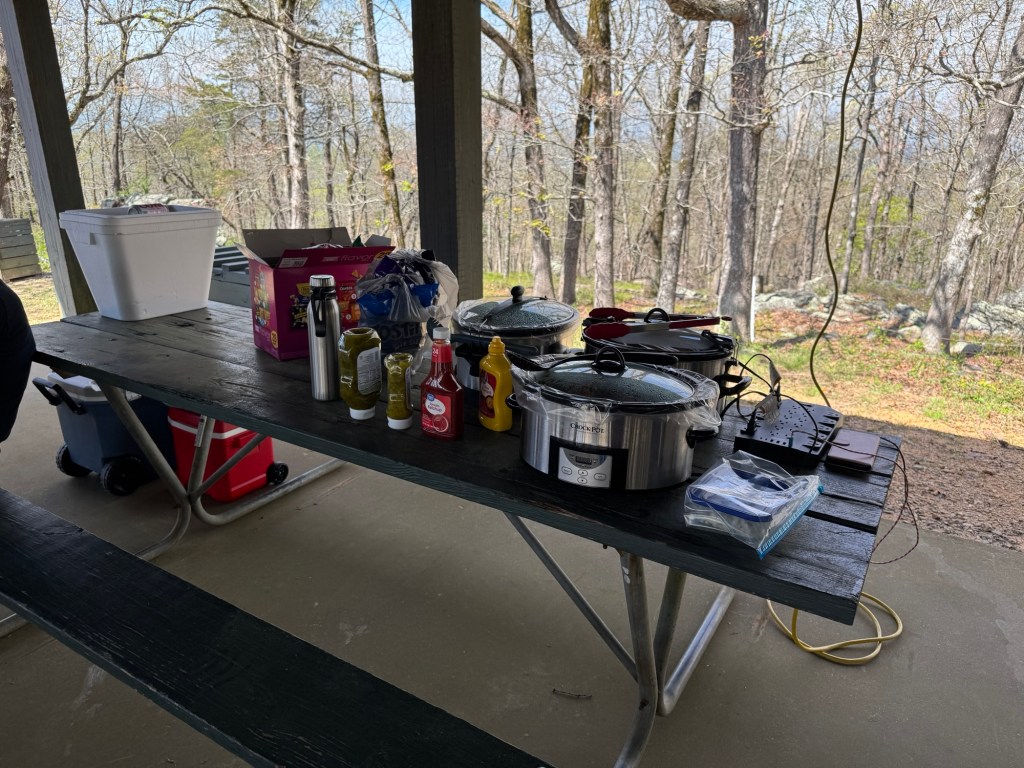
As usual, food was in abundance.

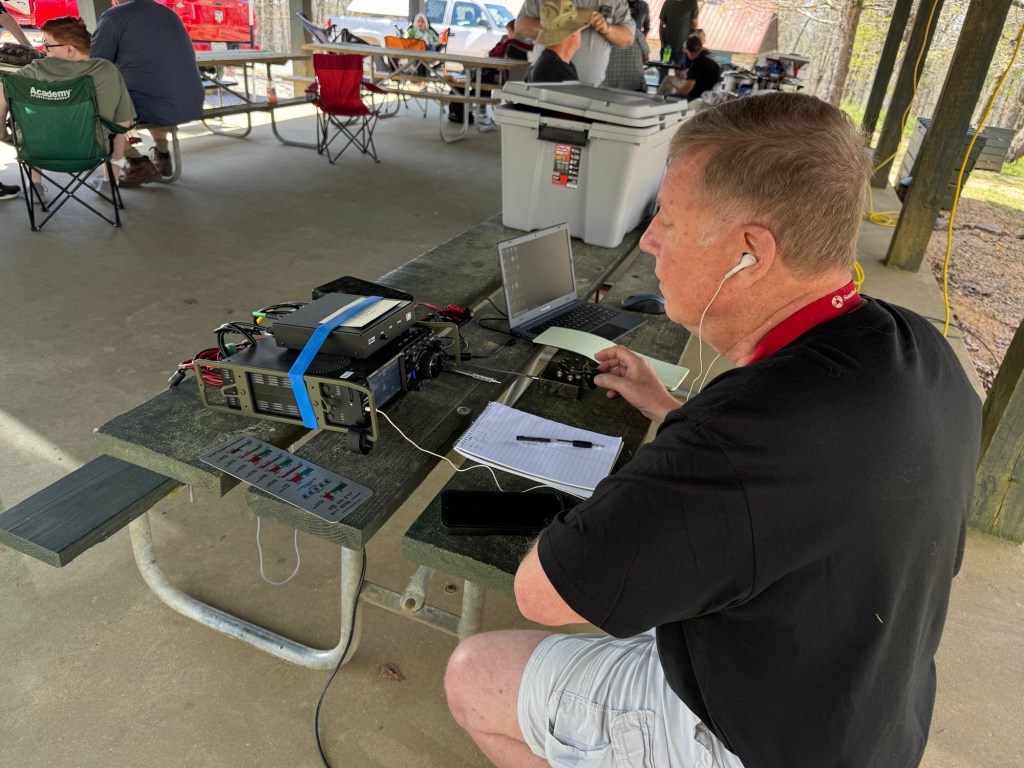
We had several stations set up under the pavilion. QRM was held to a minimum. We had Xeigu G90’s, Tru-SDR, Icom IC-705, and my Yaesu FT-710. I set the radio up and turned it over to the club President John WD8LQT. John, like me is a CW op and I wanted his opinion of the FT-710. I didn’t have to twist his arm too hard. The setup was the radio feeding a Chameleon micro transformer with a 12’ whip and about a 20’ counterpoise. The radio was powered by a 20 amp-hour Bioenno battery and the paddles were a Begali Expedition.

Band conditions were poor and it took John most of the time at the park to get his 10 contacts. There were stops for eating and chatting. Early in the activation, I decided to change antennas to be sure we had an atmospheric issue and not an equipment one. I had my Diamond RHM-12 which recently proved itself to be a good performer. Once the switch was made and some searching through the bands, John started making contacts on 20 meters. I believe it was atmospherics and not the equipment. John got his 10 contacts and we called it good.

John’s comments about the FT-710 were quite favorable. Like any radio, there are pluses and minuses. In general he thought it was a very good radio for CW. There is more commentary from John on the YouTube video posted below. John did have one epic fail. The ear buds he was using which looked rather ancient finally gave up the ghost. I took it upon myself to intervene and unceremoniously threw them in the trash. John will thank me.

My review of the FT-710 is drawling to a close. I find that I like the radio. It performs well for its price point and has some features found on more expensive radios. It has its quirks as all radios do, but none that I find overly objectionable. I plan on keeping the radio and it has found a place among my field radios. I imagine the radio may make an appearance during this year’s Field Day.

West Georgia Amateur Radio Society Spring Fling

Saturday, the West Georgia Amateur Radio Society (WGARS) took to the field for the Spring Support Your Parks Weekend sponsored by Parks on the Air (POTA). WGARS is a pretty active club and one of the best I have belonged to. Besides local events like fox hunts and balloon launches (APRS), we take to the roads 4 times a year to a park. In the spring and fall we make the POTA Support Your Parks Weekend usually on a Saturday. For the winter and summer, we participate in Field Day and Winter Field Day.

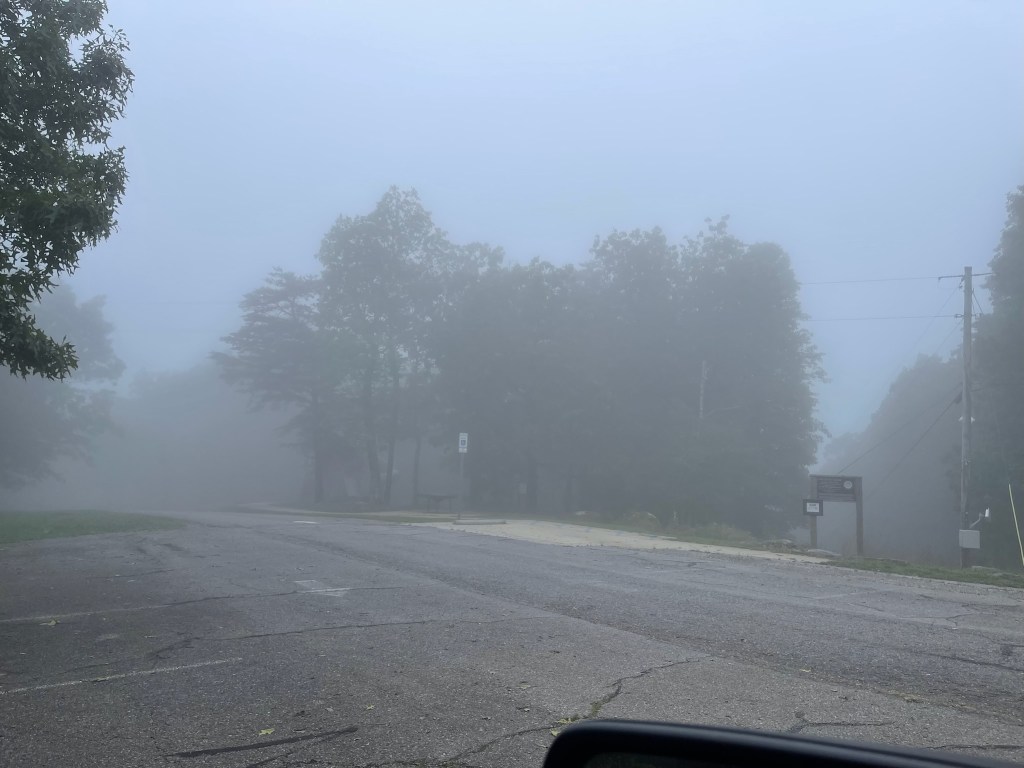
Weather was cold, with fog. Temps were in the 50’s and not the mid 70’s predicted by the weather service. I was in shorts and a tee shirt. Luckily, I had a goretex windbreaker in the truck. Others had blankets wrapped around them.

These events are casual events for us. We normally do 3 things while out. We eat, we socialize, and we throw in a little radio along the way. This was no different. We had a picnic table full of food with hamburgers and hot dogs cooked on site by our President John WD8LQT.

Due to a lot of recent solar activity band conditions were interesting. John WD8LQT was runnning CW/SSB and I was running FT8 to reduce interference between the 2 stations. When I switched to 10 meters, I was working into Europe and South America and when I switched to 20 meters, I couldn’t get out of the Continental United States (CONUS). We each made a handful of contacts and spent a lot of time enjoying each others company.

For radios, John was runnning his Xeigu G90 at 15 watts into a EFHW antenna. I was running my IC-705 at 5 watts into my 28.5′ Random Wire antenna. Towards the end my radio developed a glitch and refused to transmit. I was using my iPad via WiFi to make the FT8 contacts and I think that connection caused a setting to change. When I got home and warm, it took me about 3 minutes to figure it out. I still had a pretty good day. Here is a QSO map from my station.

The goal of these event for our club is not how many contacts we make, but how much fun we have and a large part of that is enjoying each others company. Field Day is only a couple of months away — can’t wait.

Below is a short video. It is a little jittery as I had navigate around people and chairs etc. If you’re prone to vertigo, you may wish to skip this one.

Bits and Bobs

This morning I started waxing philsophically about kits and kitting. Some folks prefer to build a separate kit for each radio or each adventure. That can be a fun past time itself. I have tried that and it doesn’t work well for me (YMMV your milage may vary). When I do an activation or for that matter when I am hunting from home, I like to be familiar with my equipment. I like to know what it can and can’t do. One negative about multiple kits is you don’t put your hands on them as much which means they don’t get inspected or checked for damage, dead batteries etc. as much. I’ve seen many times where someone brought one of these kits to the field and something was missing, broken or dead, and they couldn’t get on the air.

This probably goes back to my Army days. We were issued one set of gear and that’s what we used. You knew how every thing worked and your kit was inspected frequently . A good example is my pocket knife of choice. While in the Army, I always carried a Swiss Army knife (SAK). It was used daily for a multitude of tasks. I developed a close relationship with SAKs. Forward to today, even though I can afford fancier knives and I have a few, my Every Day Carry (EDC) is still mostly a SAK. Why? Because I know the knife. I know the steel, how they are built and how to various blades work. For a while I was a UH-60A Blackhawk Crew-chief and the SAK was routinely used to work on the aircraft. Today, a SAK Small Tinker resides in my pocket. I have carried SAKs for over 50 years.

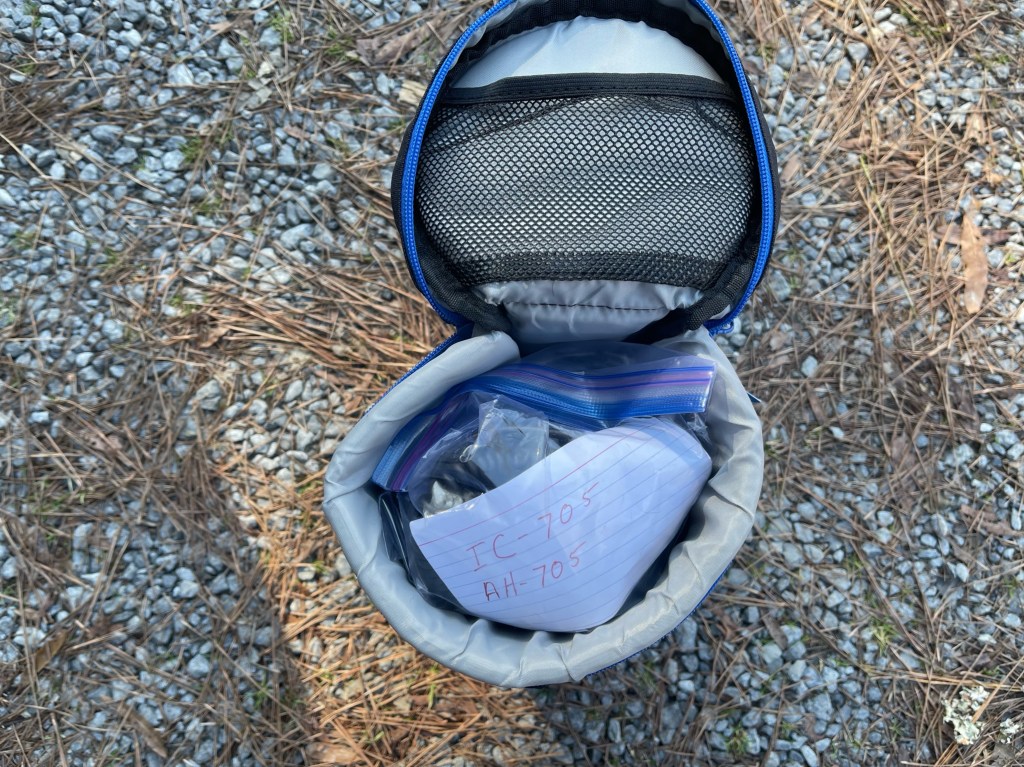
Back to radio stuff, I feel the same way. Even though I have quite a few antennas, I stick to a few that really work for me. I like going on an activation, knowing how my gear is going to work. Today, I was musing that I had my KX2 in its bag that came with the radio. It’s a nice bag but it’s a little tight fitting in my back pack. I decided to put some of the gear in a separate smaller bag. I have a 3D printed face cover and BNC connector cover to protect the radio bits so I can place the radio in my bag by itself. I also thought that my little QRP radios (KX2, IC-705, and QMX) use much of the same gear so I made one bag that all 3 radios can use. Then, when I go an activation, I can just swap out the radio and not worry about leaving something behind. Here is my new radio bag and list. For the rest of the pack contents see my blog post AAR on Bald Mountain: https://kk4z.com/2023/11/23/aar-bald-mountain/

The bag is a Condor Belt pouch. Nothin fancy, but sturdy enough and mashable enough to fit nicely in my backpack. Both my IC-705 and KX2 have a Begali Adventure mount and the Adventure paddle can be hand held. One thing not shown is an anti-slip pad that I use when operating from inside the truck. Here is the rest of the kit:
3’ RG-316 jumper
15” RG-316 with choke
Throw line and weight
Extra Bank Line
Begali Adventure Paddle
28.5 Random Wire Antenna with 17’ Counterpoise
Wire to BNC Adapter
BNC to SO-239 adapter
BNC to BNC adapter
3’ 3.5 mm Stereo Cable
Earbuds
Power Cable for there IC-705
Power Cable for the KX2 and QMX

My backpack stays packed and ready to go complete with a radio. Because it gets used often, I do not worry if the gear is ready, I just grab and go. Part of my Army training that has stuck with me, is I go through my gear when I come back from the field and get it ready for next time. As I said earlier, I plan on doing a one day activation a week along with one weekend activation a month. 72 — Scott
Day POTA Activation – Cheaha State Park

This morning, 05 May 23, I decided to take a trip out to Cheaha State Park. It’s about a 50-mile drive but worth it since it is the highest point in Alabama. I enjoy the park and consider it my home park. The day was cool and foggy. Since I was operating out of the cab of the truck, it was nice not to see the sun.

For a change of pace, I brought one of my QRP radios, the IC-705 with the AH-705. I like this radio. It is easy (for me) to use since I have other Icom radios and the interface is similar. I don’t have to relearn the radio every time I use it. The antenna was my Frankentenna Mobile version. I also wanted to give it a workout at QRP levels.

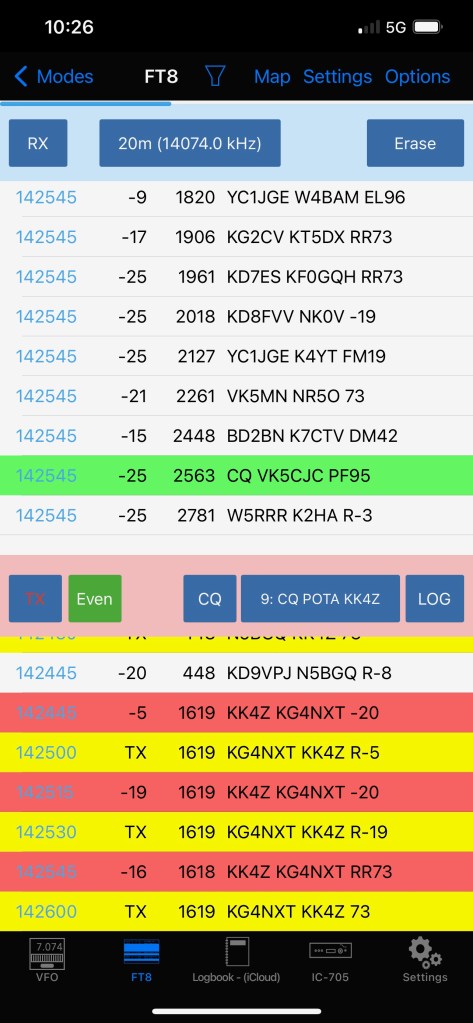
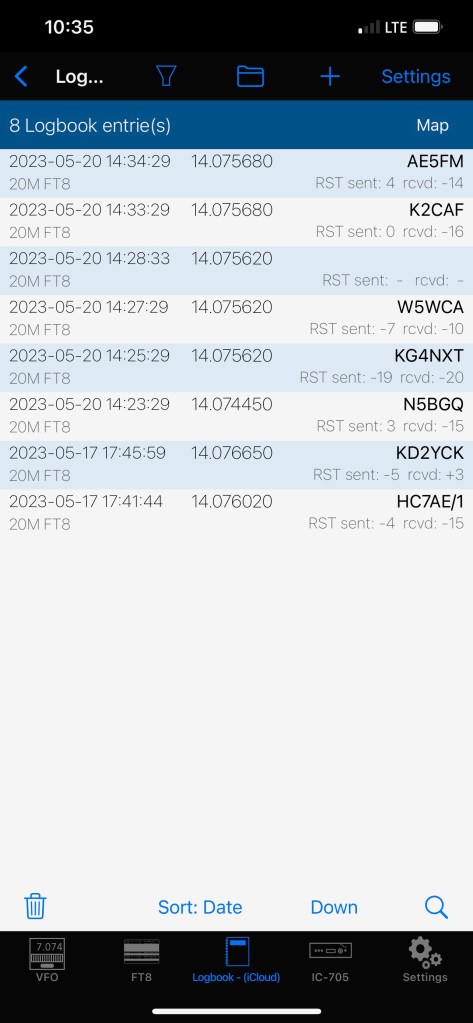
I had another motive for bringing the IC-705. I purchased an app for my iPhone called SDR-Control Mobile. It was created by Marcus Roskosch, the same Marcus that made SDR-Control for iPad. This app connects to the IC-705 via Bluetooth and operates FT8 and CW. It also has a logging function along with several other tools. What drew me to the app was the ability to use my cell phone. The cell phone uses far less power and lasts a lot longer than tablets or laptops. I used it for over 2.5 hrs and the battery level barely moved. The app controls the radio like most other apps. FT8 was a breeze as most of it was automated and logging was a push of a button. Exporting the log was also clicky-click.

Band conditions were up and down and even though I operating QRP, I still managed to make 41 contacts. It was nice working FT8 while holding the phone in my hands. In the past, I would have to twist a bit to get to the laptop making it uncomfortable.

While operating, a fellow ham drove up and said he was looking for me! He and 4 others were operating a special event station about 200 yards down the hill from me. the club was the Southern Appalachian Summit QRPers. SASQ or Sasquatch. This is a group that prefers operating outdoors. They enjoy hiking to SOTA summits and operating portable with lightweight gear. I visited with them for a while and interviewed them for my YouTube channel. If you are interested here is a link to their website https://jesarge.wixsite.com/sasq

I made 41 contacts and here is a QSO map of the activation.

It was a good day, I made a few contacts and a few new radio friends. I may have to see about joining SASQ. I also added another tool to my portable operations tool kit. I like it when things end up win-win. Below is a short video on the activation. 73 — Scott

POTA Activation Cheaha State Park Support your Parks Weekend

Cheaha State Park (K-1037) is one of my favorite parks and it is also the closest. It will probably be my first Kilo Award. The summer POTA Support your Parks Weekend fell on July 16 and 17 (Zulu). I got to the Park Friday morning to work a guy on 2 meters who was about 60 miles away. I did this as a part of N1CC award. I needed 2 more bands for this park. I stayed all day Friday and packed it in mid-morning Saturday. The whole activation was done using FT8 with a new app for my iPad.

GEAR
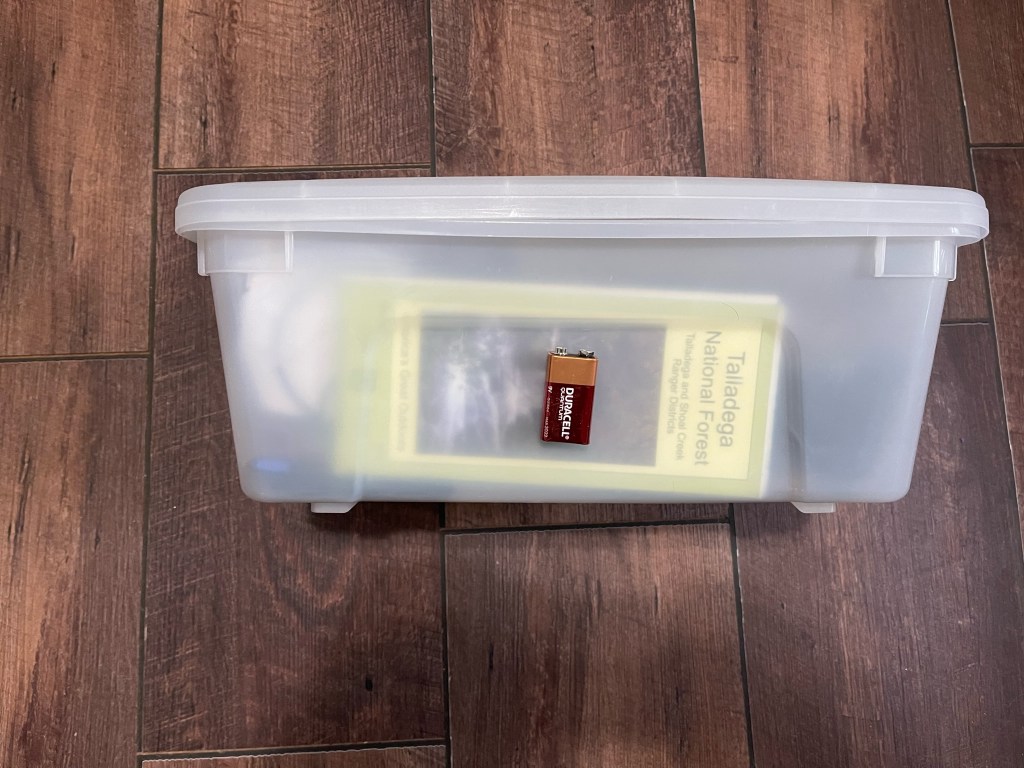
I brought a lot of gear with me mainly to try to accommodate the 2 meter sked and to try to have an antenna or two for 6 meters. Six meters turned out to be a bust this weekend. The radio was the IC-705. Normally my radio gear goes in a box like this along with a few antenna bits and a tablet/iPad.

The antenna was my K4SWL antenna was is a 29.5′ random wire antenna with a 17′ counterpoise. The antenna was matched with the Icom AH-705 tuner which did an excellent job.

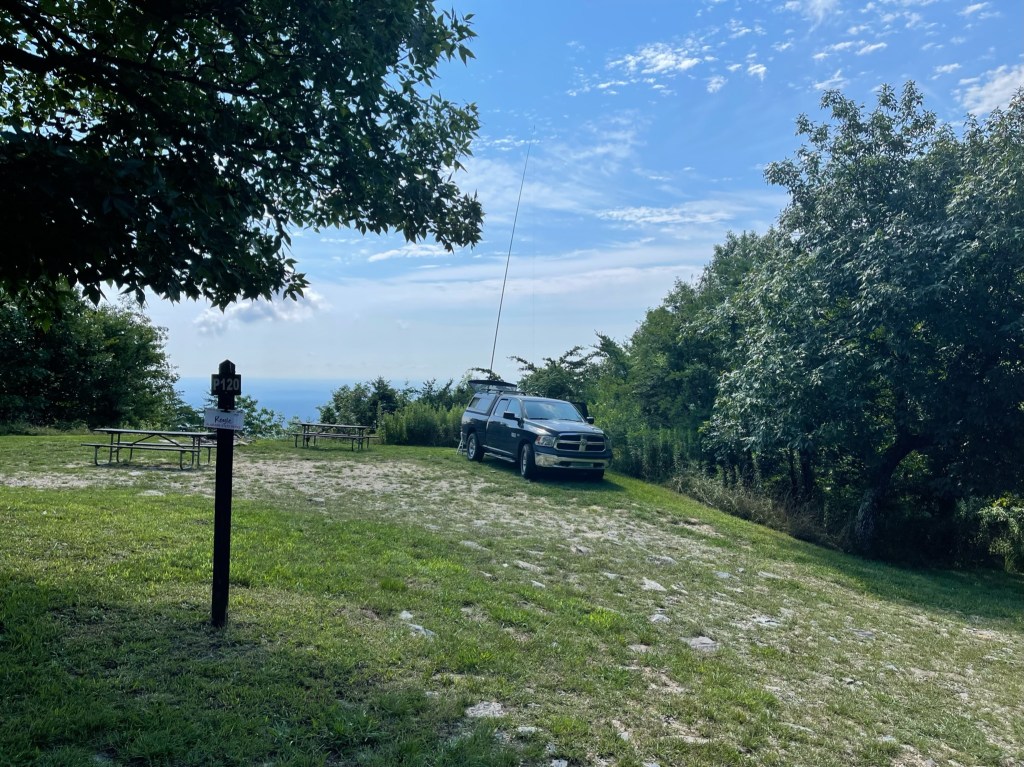
The antenna was held up with a MFJ-1910 33′ push-up pole. The pole was attached to the truck with a Flagpole holder and hitch extender so I could flip the tailgate down. The campsite was a group camp and while it had spectacular views it also had little shade. This was a primitive campsite, so I could not bring my camper with me. Since this was a one nighter, I decided to sleep in the truck bed. It would be a little cozy, but doable. In the end I stayed up all night anyhow. The shack looked like this.

I had plenty of batteries with me as this site does not have electricity. I discovered that my Bioenno Power BPP-160 power pack could run things for a long time. I also brought my Bioenno 40 watt foldable solar panel to help keep the power pack charged up. Next time I won’t bring near as many batteries. The fan you see is USB powered.

All in all, the station performed very well. I made 250 contacts all FT8 from all over the world. I even managed to get Alaska and Hawaii during the activation. Ten watts and a wire.

Glitches
One of the things about getting out with your radios, is you actually see how they work in the field and then you can improve your setup. Apart from bringing too much stuff, I only had a couple of glitches. I’ll do the easy on first.

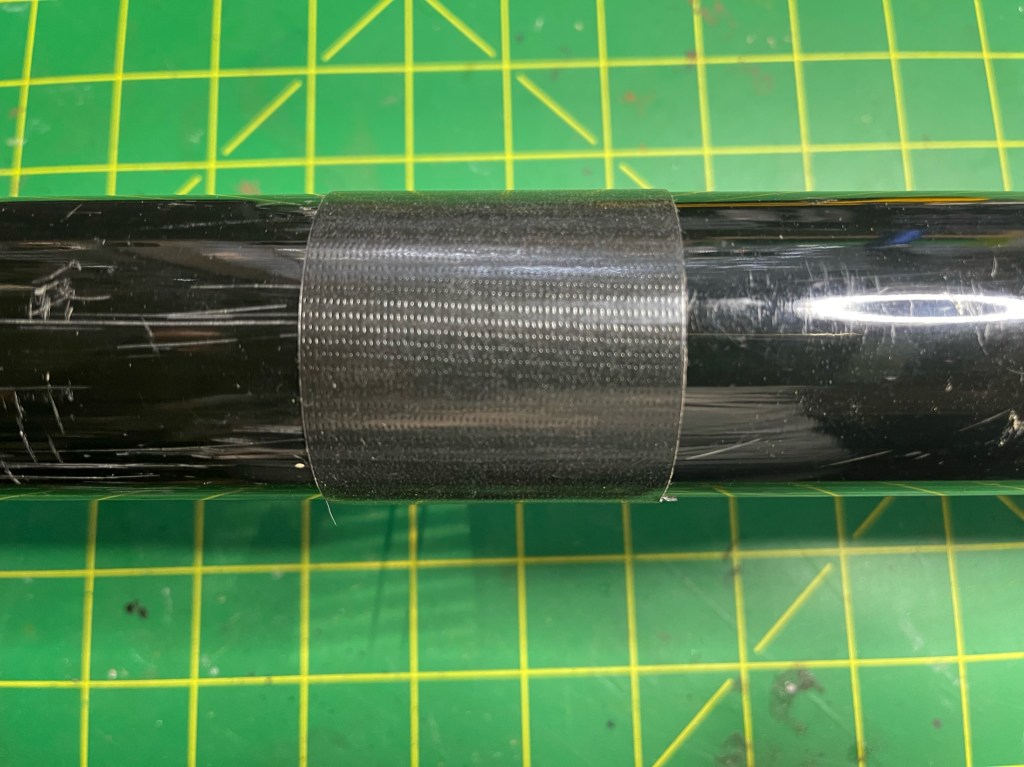
This is the first time I left my push-up in the flag holder for any length of time. I had some mild wind there and it caused the pole to rattle around some. Rubbing against the flag holder, scored the bottom tube a little.

The cure was simple. When I got home, an application of some Gorilla Tape, should take care of things.

The second glitch was the app I used on my iPad. It’s called SDR Control for Icom. It’s a really sweet app with a lot to like about it. Here are a couple of screenshots.

The interface was easy to use. I did not use a keyboard or a mouse with this. I did put the app through he wringer. I used it straight for almost 24 hours. I like using my iPad because I can power it from the same batteries as my radios — no AC adapters. I also liked being able to hold it in my hand to use it. The app does have a few short comings; enough to put it aside and allow the developer to iron out a few bugs. I spoke at length about these on my YouTube channel, so for here, I’ll give a summary:
1) The app randomly disconnects from the radio or completely shuts down. Restart/reconnect often take multiple tries and all data in the FT8 window is lost.
2) During FT8, the app will pause while another station contacts the DX. The app waits until it hears a CQ before it will transmit. The DX will often work several other stations without calling CQ. This allow other stations to “jump the line”.
3) The app will auto-log after both stations give a “73”. However, if another station call you prior to the “73”, the app will jump to the new station and the old station will not get logged. need to set the auto log to maybe RR73.
4) The logbook needs at least one user defined field that can be sticky. In POTA we use the ADIF field my_sig_info, to log which park we are at. RumLog has this feature.

It was a fun activation and I enjoyed pulling an all nighter; something I haven’t done in a long time. I didn’t plan on it but the DX stations kept rolling in. Until next time 73 –Scott

IC-705 Cover

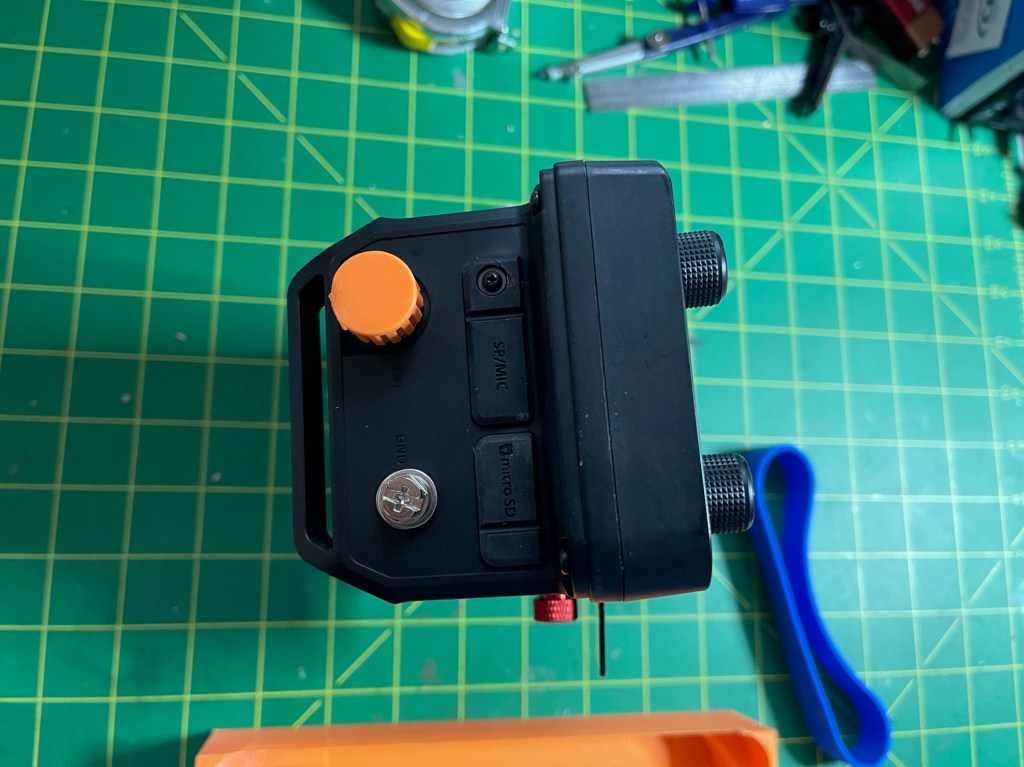
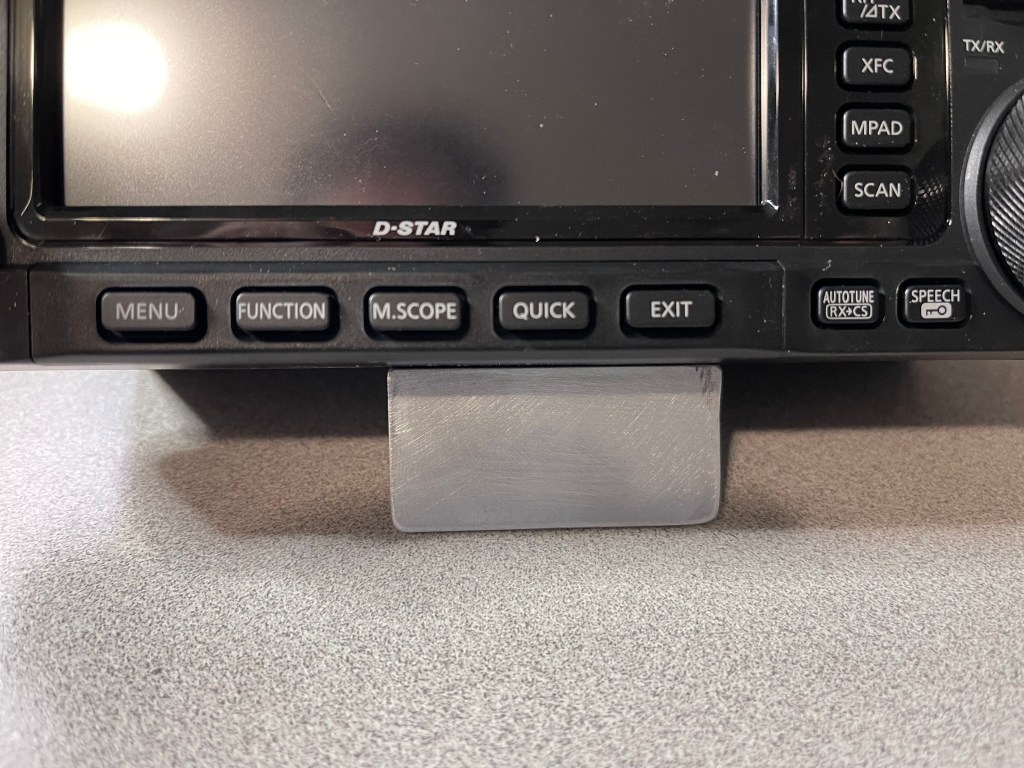
I’ve got a couple of activations coming up so I am trying to get a few things done to bring with me and evaluate. I bought the 705 because it is a small radio. I like that feature. When looking to protect the radio, many have darn near doubled its size so it is no longer a small radio. I tried a couple of padded cases and while they fit fairly well, they still felt too large. I don’t mind tossin a radio in a pack or bag as long as I can protect the important pieces. In the case of the 705 it would be the knobs and touch screen. I decided to make a cover for the front of the radio.

Icom has an STL file for the 705 https://www.icomjapan.com/support/IC-705_STL/ so pulling that into a CAD program, I was able to make a cover. I am not a CAD pro or even a 3D printer pro; however, I was able to scratch something together that is good enough. I roughed out the design and my son printed the cover out for me. It’s not beautiful. it’s not perfect, but it gets the job done. Here is the current prototype.

The inside is mostly hollowed out but the case is supported on the corners of the radio and the speaker area.

For POTA activations the radio resides in a plastic box with a latching lid. Should eb plenty of protection. Because I reduced the bulk and weight, it make the radio eligible for SOTA. I may make another one to adjust some of the dimensions but in reality, it works just fine. I can tweak this and burn a lot of time or I can get out and play radio. Remember “Perfect is the enemy of good”.

I made one other piece, BNC caps, which the STL files are available with a simple Google Search.

I like orange as I can readily see them if I accidentally drop them. Enjoy and hope to work you. Scott

POTA Activation K-3756 JL Lester WMA

I had a doctors appointment in the morning so that kind of scrambled my day. I decided to attempt a quick activation using my new IC-705 with the AH-705. Today was the best day to do it because we are supposed to get some real winter weather starting tomorrow. I’m not opposed to winter weather, I do not like driving around with a bunch of folks who are. And yes, true to southern tradition, people are at the stores buying milk, bread, and eggs. Can never to too sure.

The J. L. Lester Wildlife Management Area is located in Polk County, GA near Cedartown. It is 477 acres with hunting and fishing opportunities. Even though I wasn’t hunting or fishing, I am required to have either a hunting or fishing license, or a land pass. The land pass is $30 and the hunting or fishing license is $15 per year. I became a fisherman. I parked in a parking area near the eastern boundary. I was nice and quiet.

The setup was simple, the IC-705 running off of its own battery, N0SA paddles, AH-705 tuner and a Spark Plug EFHW with 65 feet of Buddipole antenna wire. The coax is RG-316. This is the first time I used the Spark Plug antenna. I hoisted the antenna wire about 20 feet up into a tree, and tied the Spark Plug off near my truck.

Here is the complete antenna set-up.

The setup in the truck was pretty simple. I used my center console desk and logged with paper. During the activation the AH-705 was on the passenger seat. Using the desk with the radio on it made it a little tipsy so for the photo, the AH-705 was a counter-balance. I will remedy this next time with a bungee cord. I had the earphones out; however, the IC-705 had enough volume for these not so good ears so the earphones were not needed.

I also discovered that I didn’t need the clock as the time on the IC-705 was easy to see.

How did everything play? Quite well actually, the AH-705 tuned the EFHW for the first time in less than 2 seconds. I was impressed. The AH-705 is more like a miniature AH-4. I have an AH-4 and it is a very capable tuner. I am looking forward to see how well the AH-705 compares to the AH-4.

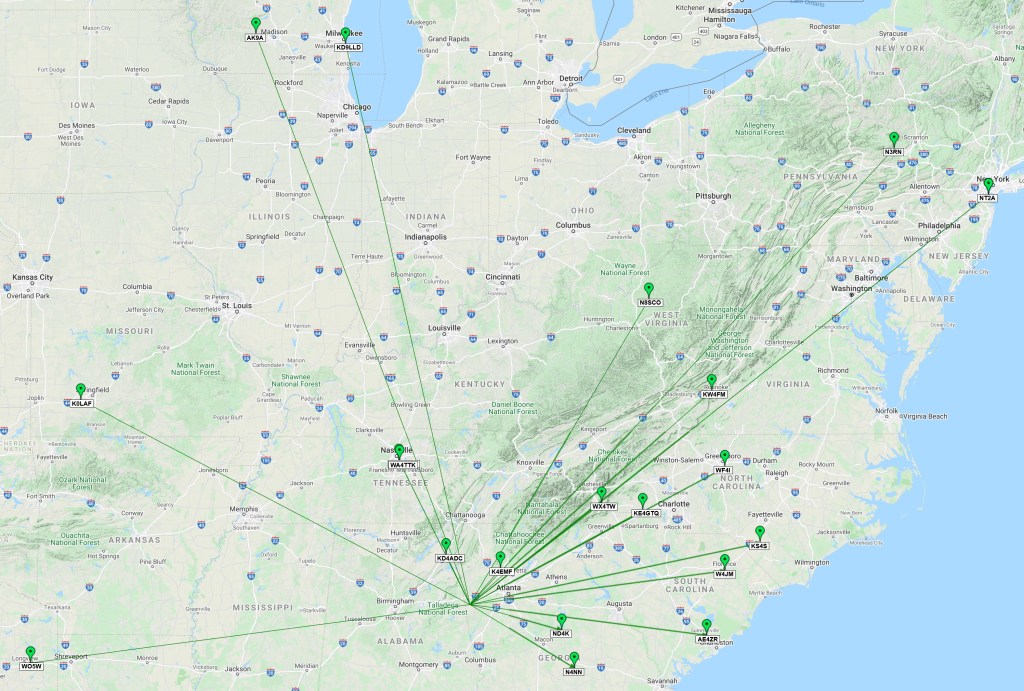
One of the reasons I brought the IC-705 was for the keyer memories. I use keyer memories quite a bit. Using memories eases the QSO workflow. I started on 40 meters hoping to get 10 activations and if not maybe move to another band. However, I had a nice pileup going on for about 35-45 minutes and ended up with 21 QSO’s. As suddenly as it started, it stopped. I called CQ twice with no answer and then pulled the plug. the antenna and 5 watts were more than ample. Here is a map of the contacts.

Packing up was a breeze, all my Icom stuff fits into one case. The only things that are not included is the antenna and coax.

All in all it was a great activation. It lasted just long enough and no one was left behind. I can see where the the IC-705 is moving up the ranks as my POTA radio of choice. Because I am very familiar with the Icom architecture, using it is almost second nature.

As I was packing up Marty K4JMG stopped by to say hello before he started his activation at the same place. We chatted a while and swapped a few tales. Marty and I belong to the same ham radio club. It is always good to see him.

Thanks to all those who hunted me, I enjoyed the QSO’s. See you down the log.

IC-705 Stand

I bit the bullet and ordered an Icom IC-705. It really was a no-brainer for me as I already have several Icom radios. I have had other brands, but I keep going back to Icom. Anyhow, once I got the radio I needed a stand to keep it tilted at the right angle. There isn’t a whole lot out there. The commercial stands are rather pricey, and the 3D printed versions are nice but my son’s 3D printer is down for maintenance and upgrades.

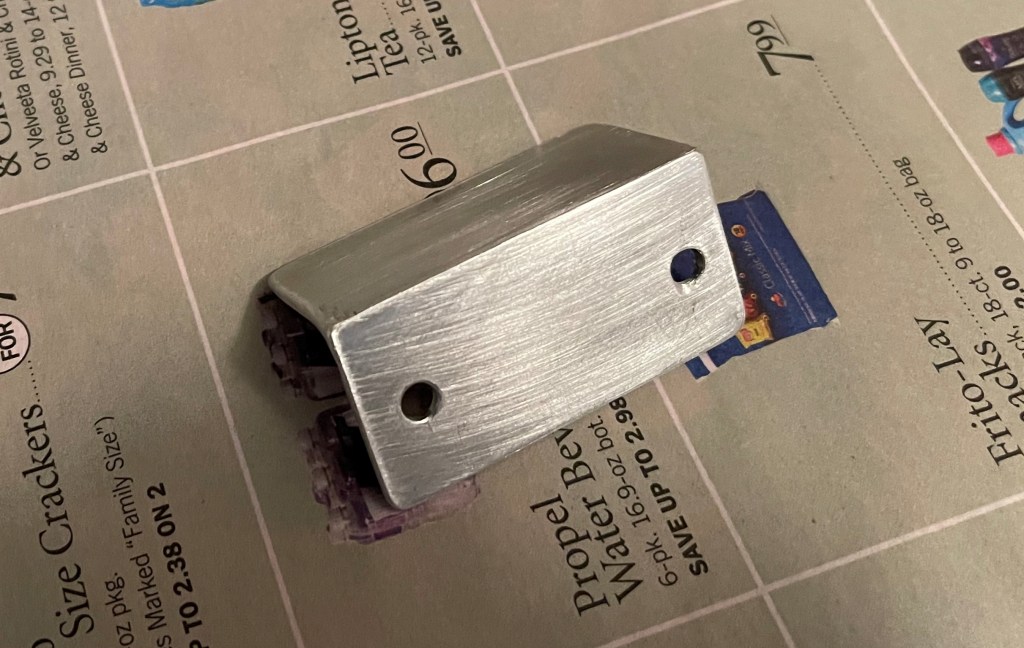
I had a $30 gift card from Tractor Supply I received for Christmas, so off I popped. The stand is made from 1/16″ thick, 1″ x 1″ angle aluminum cut to 2″ long. I got a 48″ piece for 10 bucks. While there I picked up some M4 x 10 machine screws and some M4 washers (about another 2 bucks. Icom gives you the dimensions for all the mount holes in their manual.

I cut it to length, drilled the holes and then did a nice deburr on it. Needle files and a Dremel work great here. I then lightly sanded the whole piece and cleaned it with non-chlorinated brake cleaner (great stuff and cheap at any auto parts store).

The next step was a coat of primer, in this case zinc chromate, a throw back to my Army Aviation days, followed by a coat of high temperature flat black. It’s what I had on hand.

Finally, I added a clear coat and let it sit over night. Here is the final product installed on the IC-705.

It was a fun little project and only took a couple of hours time. The 705 sits back on that angled section at the back of the radio — perfect. I found a padded telephoto lens case that should fit it just fine for about 20 bucks. I’ve taken Icom radios to the field before and they hold up well. I’ve made some CW contacts from home and the radio works as well as my other Icoms. I made out to California and up into NY. I am looking forward to getting this in the field.