POTA Activation Ft Mountain State Park and the Begali Traveler Light

This past weekend I activated Fort Mountain State park in North Georgia. The park is on top of the mountain and I was at just over 2,500 ASL. One of the things I wanted to accomplish was make a few contacts on 160 meters. This can be a difficult band because one wavelength is about 540 feet. Which means most portable antennas will not work. I dug into my Frankentenna bag and came up with my Chameleon Micro Matching Unit and two 65 foot Chameleon Wires.
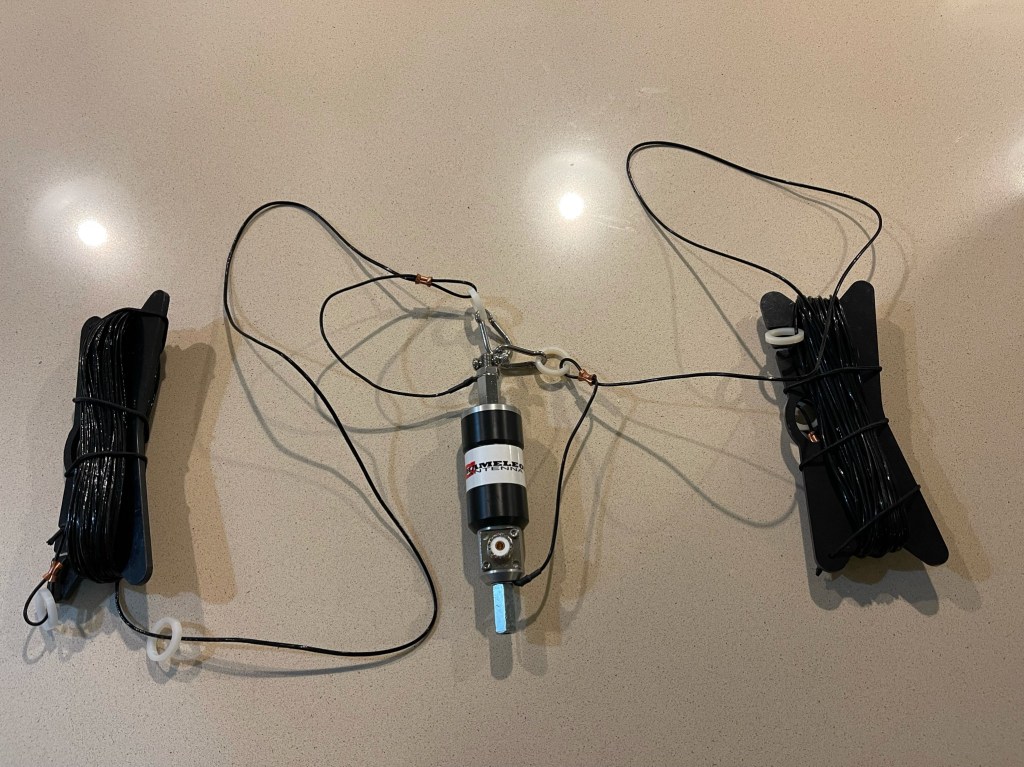
I strung this as an inverted vee dipole and fed it with RG-8x into the cabin. Yes, I was was in comfort and luxury for this activation. The apex of the vee was about 15 foot above the ground. I put the antenna analyzer on it and at 160 meters my SWR was abour 6:1, close enough for my antenna tuner to match.

Inside the cabin, the setup was pretty simple. I had my trusty IC-7300 with an LDG Z-11 Pro. I used a K1EL winkeyer and a Begali Traveler Light Key. Logging and digital modes were handled by my Microsoft Surface Go2.
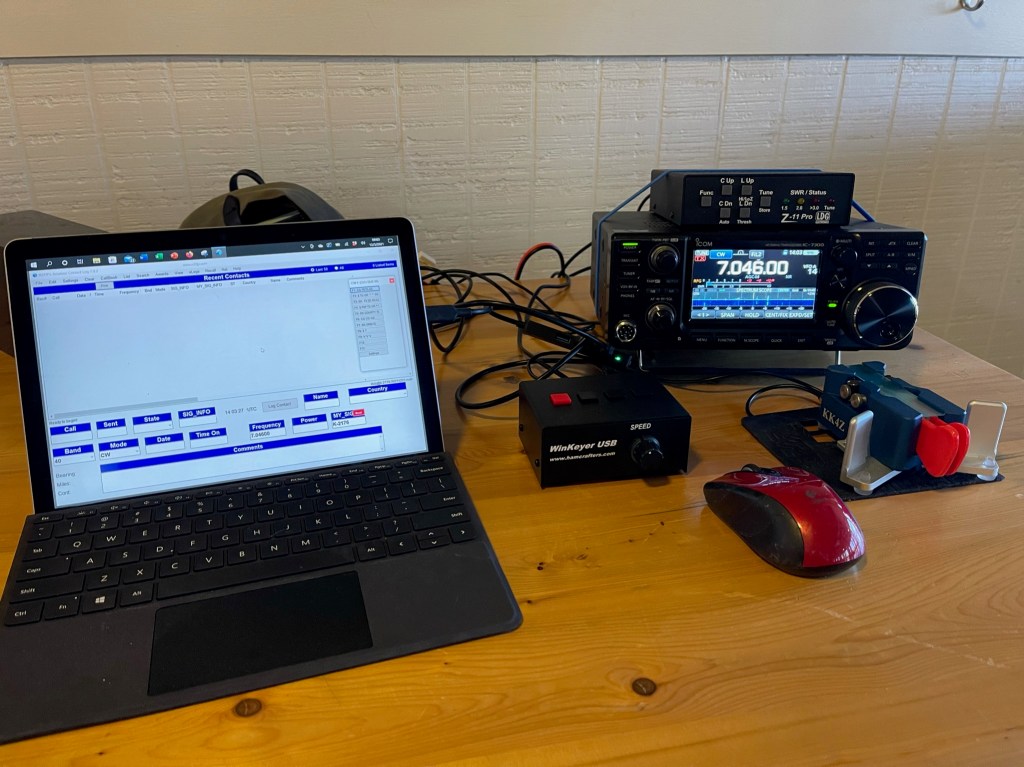
How did it play, most of my contacts were CW and the keyer and key worked as advertised. I used FT-8 for some bands and especially 160 meters as there was a CW contest going on. A nice thing about the newer ICOM radios is to work digital modes, all you need is a USB cable between your computer and the radio. I was running about 35 watts and made at least 10 contacts on 7 bands and 5 on one (11 on 160). I was satisfied that everything worked as advertised and made about 130 contacts.

The paddles I used were the Begali Traveler Light. The weigh in at about 15 oz and are a delight to use. When portable operations allow, this is the key I bring. They may not work lugging a backpack, but for activations like this, they are great. Begali fit and finish is excellent and the design is reminiscent of Italian Sports cars.

Looking at the side, the paddles are not that big. Near the bottom-center is a place to attach a thigh strap. You can also get these in black.
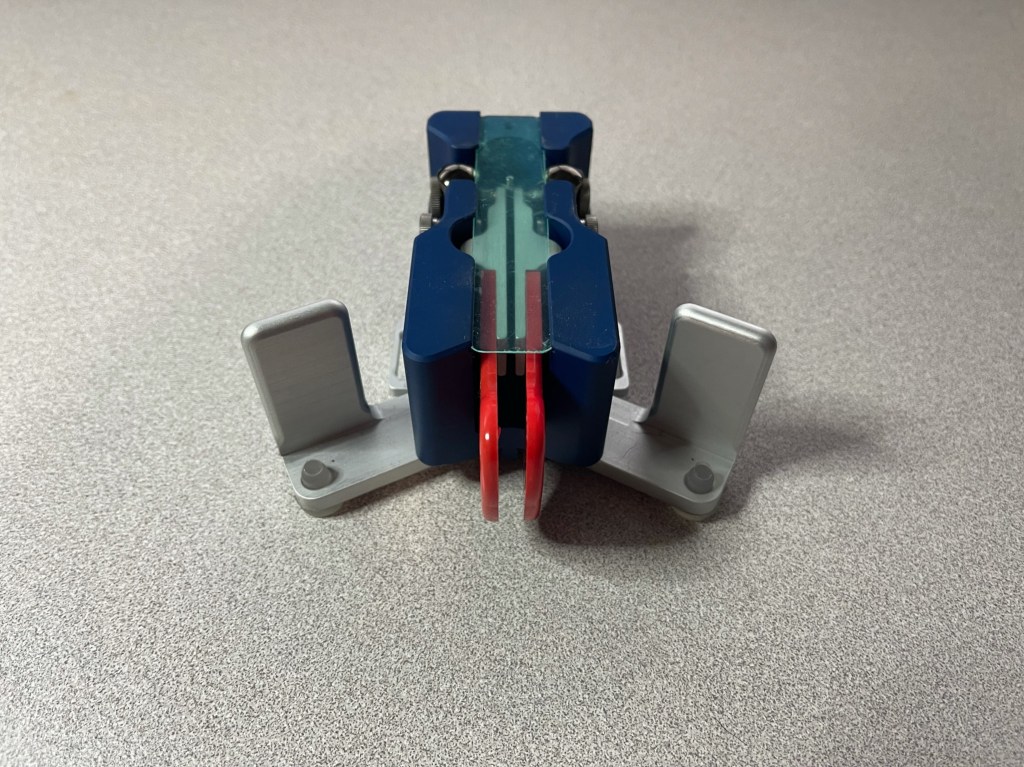
Open up, there is plenty of move for even my big hands.

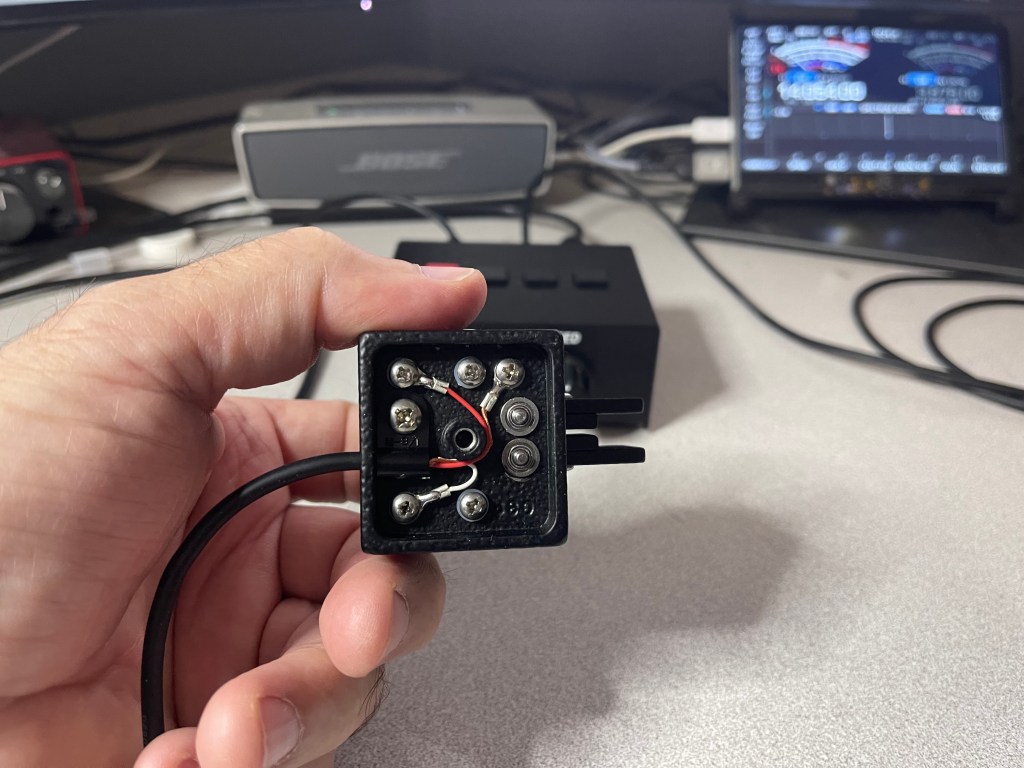
Even the bottom of the paddles are wonderfully executed. The Traveler Light is magnetically dampened and I am becoming a fan. The action is smooth and consistent, and a joy to use. This is my second Begali Key, my first a Begali Simplex Basic. I believe there will be a third under the tree this year.

Everything worked well. the keyer takes some of the load off of the opertator and AC Log helps mind the frequency and the Date/Time. I tried to use the AC Log Winkeyer interface, but I don’t think the Surface Go2 wasn’t quite up to the task. It seemed to lag more than I wanted it to. Plus, it was nice to have the Winkeyer buttons close at hand. All in all I had a lot of fun, even though on the first day I was a little more fumble fingered than usual. Thanks to all the Hunters/Activators who worked me. Here is a short video of the activation.

N3ZN ZN-Lite II

I like paddles — a lot. Sometimes I feel I am drawn to them like a moth to a flame. You can only use one at a time but isn’t variety the spice of life? To be sure, I’m no speed demon at the paddles nor am I 100% accurate, but I am passionate about CW, and surely, that counts for something. Pictured here is one of Tony’s, N3ZN’s creations. It is his ZN-Lite II and while it is not the lightest paddle on the market, it is near the top and it is a well built machine. By itself, it tips the scales at about 4.5 ounces with the attached cable. Add the plastic base and the weight is still less than 6 ounces.

The paddle itself is well built and the action is smooth. The adjustments are generous and precise. Once set up the way you like it, I found it is pretty easy to switch over from another paddle. In other words, going from your desk paddles to these is pretty easy.

On the bottom of the paddles, there is an 8-32 screw hole. This can be used to attach the paddles to the base of your choosing such as a flight deck.

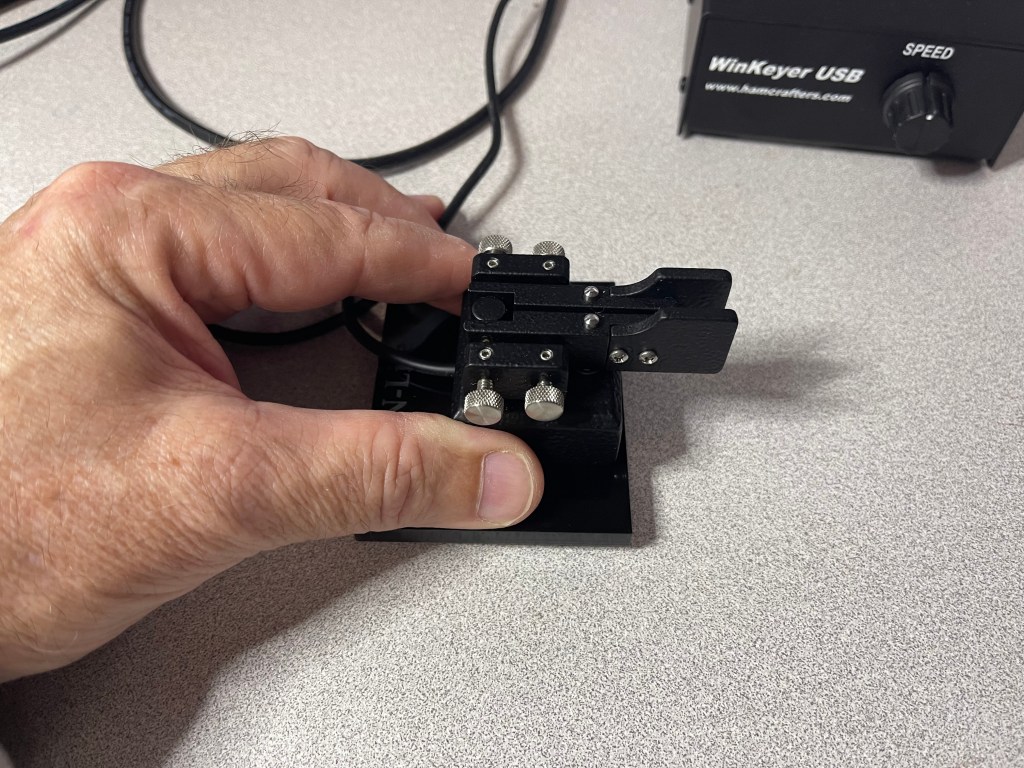
The ZN-Lite II also comes with a plastic base. Here is how I like to attach it.

In use. While I am writing this I am using the paddles to make POTA contacts. Because the paddle is light, it takes two hands to use it. One to hold the paddle and one to operate it. For portable operation, I found the best way to use them is either attached to a flight deck or on a flat surface such as a picnic table. Trying to grab it fist style interferes with the paddle levers and while you can hold it by its sides, well, it just wasn’t for me. Here is a picture of how I use these paddles.

In general, I found the paddles fun to use. When your doing something for fun, fun counts. I appreciate the precision and quality that went into these paddles. They are durable enough to be knocked a around bit in a pack (don’t run them over with your car). Where do they fit? I think these paddles are great for portable operations. In my way of thinking they would work for POTA activations or even Field Day. They would excel for those who wish to travel light and fast. An Example might be POTA RADAR (Rapid Deployment Amateur Radio). I think for SOTA there are better options out there as operators are often holding their paddles fist style in their hands. However, these may work well if someone devised a leg strap for them. Here is a YouTube video I did for these paddles.

Overall, I like the paddles, they are currently sitting on my desk and I am making contacts with them. They have a good feel, and enough of a fun factor to keep them in the rotation (I never thought I would say that). I have exchanged a few emails with Tony and he has always been responsive and helpful. If you want to find out more about Tony’s paddles, here’s a link: https://www.n3znkeys.com/

SOTA PADDLE

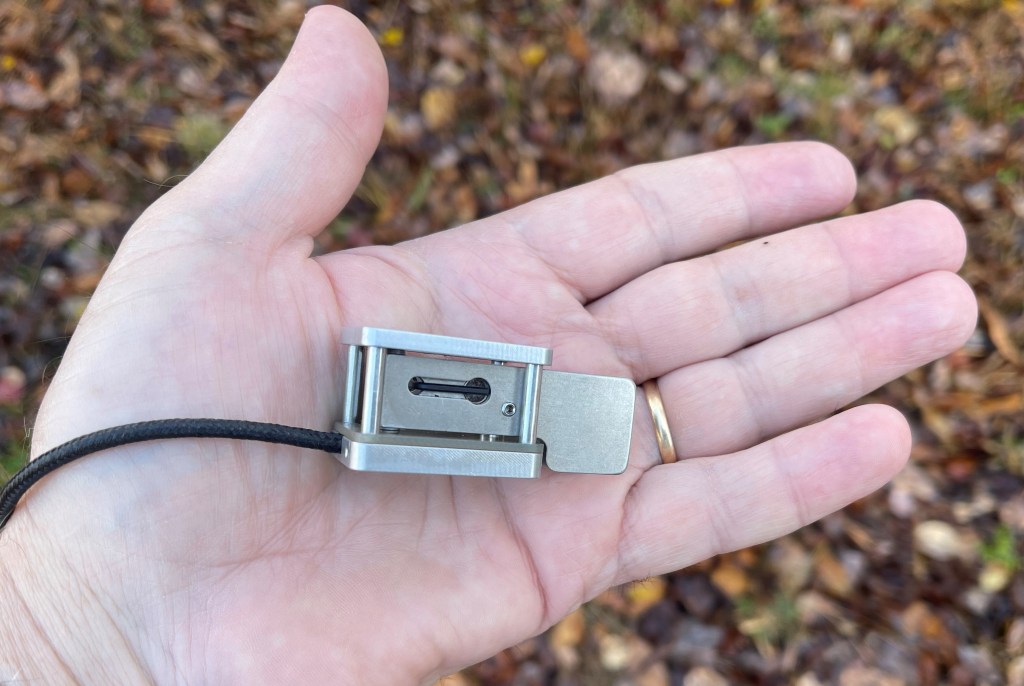
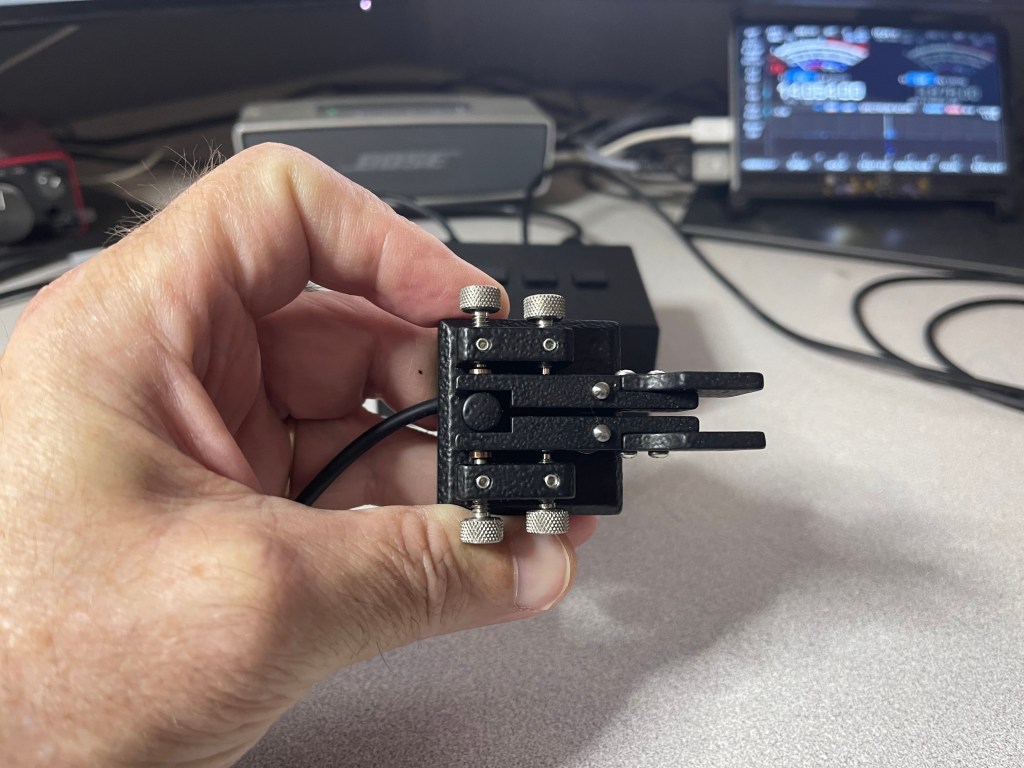
Larry Naumann N0SA builds keys and paddles as a hobby. He recently released a new design in a small quantity and I was lucky enough to get one. Larry is a CW guy and also likes to build paddles and keys. His new one is called the SOTA paddle and is designed for POTA/SOTA.

As you can see, it is a rather small paddle weighing 2 oz. including the cable. This is an amazing paddle with exceptional fit and finish. All corners are rounded and all edges deburred. The metal appears to be passivated which should provide a long lasting, corrosion resistant finish. Paddle tension is magnetic and Larry uses good sized magnets. You can tell they are there. The action is on par with other more expensive paddles. The action can be adjusted with the included hex key which is held in place by one of the tension magnets. I recently did an activation with this paddle along with my Lab599 TX-500. It was a cold dreary, drizzly day and both the radio and paddle did just fine. When I got home, all I did was blow dry the paddles with some canned air. You can see the YouTube video here:

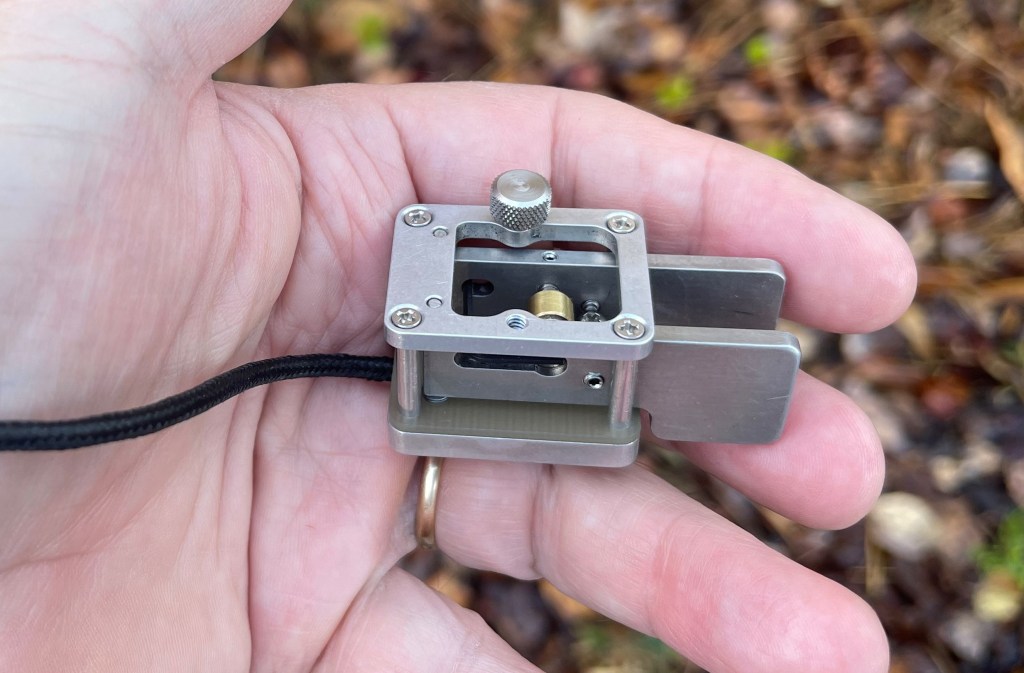
The paddles can be attached to something using 4, 4-40 tapped holes (two on the top and two on the bottom) or it can be held in the hand. Because of my somewhat large, meaty hands, when I use the paddles as held in my left hand, I sent the occasional stray dah.

After my last activation, I removed the paddle from the flight deck and then had to do something with the knurled 4-40 screw I used to secure the paddle to the flight deck. I moved the screw from the bottom of the paddle to one of the holes in the top and put the paddles back in the bag.

A couple of days later, I pulled the paddles out to play with them. Yeah , I know, they do kind of grow on you. I made a few contacts from home, and I noticed that there were not any stay dahs! I looked at the paddle in my hands; the screw changed the geometry of how I held the paddle. The screw was pushing my fat index finger away from the dah paddle. Problem solved.

These are great paddles and fun to use. I enjoy using them both at home and in the field. Will they replace my Begali Simplex on the desk? Probably not, but if Larry decides to make a desk set of paddles… I don’t know when or if Larry is going to make another batch, but if he does, don’t hesitate, because they go fast.