It’s Good to be SEEN

Saturday, 09 March 25, I made the two-hour trip over to Bessemer, AL to attend a SouthEast Emergency Network (SEEN) meeting. The meeting was to start preparation for an upcoming Field Training Exercise (FTX) in April. I was here to support my friend and SEEN founder Billy N4WXI.

Billy started SEEN a couple of years ago to serve his local area in case of a communications emergency using GMRS. It has since grown into a service covering the Gulf Coast States including Georgia. These are the States most affected by hurricanes. Hurricanes when they make landfall can cause extensive damage over wide areas. The focus of SEEN is to provide communications during the first few days of a disaster or until government agencies can recover their communications. SEEN is also affiliated with the American Radio Redoubt Operators Network (AmRRon). This affiliation will allow SEEN to pass messages from the southeast to AmRRon to anywhere in the USA.

SEEN primarily uses digital modes to pass traffic because it is quicker, more resilient to interference, and more accurate. Billy feels the main role of SEEN is to pass health and welfare traffic to connect families and friends inside and out of the disaster area. SEEN uses 3 apps/modes: FLdigi, JS8CALL, and VARAC. Right now, FLdigi is the heavy lifter, it has multiple modes and is used by many organizations. This allows cross group communications. The second is JS8CALL. JS8CALL is a slower but more robust and because of its excellent weak signal characteristics, it is used when nothing else will work. VARAC is the new kid on the block and has a lot of promise. This app uses VARA which is also used by Winlink. It has pretty good weak signal characteristics, but speed and automatic error correction are its strong points. A message sent through FLdigi using a mode like MFSK32 can take 5 minutes. Using JS8CALL can take 10 minutes or more. VARAC using VARA can send the same message in about 30 seconds. A good part of this meeting was spent getting folks up to speed on these modes. These are the ones that will be used during the upcoming FTX.

One of the topics talked about me sending Billy an intelligence brief from my mobile using VARAC on 40 meters. That story can be found here: KK4Z SEEN FTX 2024. The radio install can be found here: KK4Z mobile install.

As with any ham radio related meeting, the topic turned to equipment and gear. Some folks were thinking about using a QRP radio for the FTX. Both Billy and I recommended against it. There are good reasons not to and I will name a few: 1) digital modes have a high duty cycle when compared to SSB and CW. This causes the radio to heat up quicker and because QRP radios are small, there is not enough heatsink to mitigate the excess heat. The radios overheat and then automatically reduce power or shutdown. I have done this twice with two different QRP radios. They have their place, but not with EmComm. 2) Power. The primary purpose of EmComm is to get the message through, this is not a contest of how low you can go. You can always turn a QRO radio down but you can’t turn a QRP radio up. With a big radio like an IC-7300, I can run digital modes at 40 watts all day long and the radio will not even get warm.

Antennas. Again, the purpose is to get the message through. Put up the best antenna you can. Bigger is better. Your antenna in the field will not perform the same as your antenna at the home QTH. The only way you will know how your field system works is to take it out to the filed and use it. When I go on my trips, I use the same gear as I would for an actual deployment. I have 1,000’s of contacts from the field. I know my gear. A comment was made that big radios use more power than a QRP rig. True but that is easily resolved with a bigger battery. You need more juice to run that laptop anyhow. I did a test when I got home last night and checked a couple of my radios current usage at idle. My IC-705 drew 0.21 Amps, the IC-7300 drew 0.83 amps and the FT710 drew 1.28 amps. My main EmComm radio for the field is my 7300. Remember, you are most likely not going to move your EmComm gear far so weight/bulk is not a problem. You need the power and you need the heat dissipation.

To quote Leroy Jethro Gibbs “Grab you gear, let’s go”. Take your radios out to the field often. I try to get out 6-10 times a year to include both Field Days. Know your gear, know how it works. If you manage to get out, get at least 20 miles from the home QTH. That is the minimum distance that is too far to return home to get something you forgot. Learn to make do, improvise, adapt and overcome. Most of all have fun. I do a lot of Parks on the Air (POTA). POTA activators, know their gear because they get out and use it. Stay safe 73- Scott

POTA FunComm with EmComm Practice

This past weekend I spent some time at Florence Marina State Park US-2174. It had been a while since I had a chance to get out and I felt the need for a shakedown cruise. Peak hurricane season is just a couple of weeks away and I wanted to make sure I was ready. While most people connect hurricanes with the summer season, September is acutally the busiest month.

I usually work FT8 as a digital mode when doing a POTA activation but I wanted to test out my other modes making sure my radio system (radio, computer, antenna, etc) was in good working order.

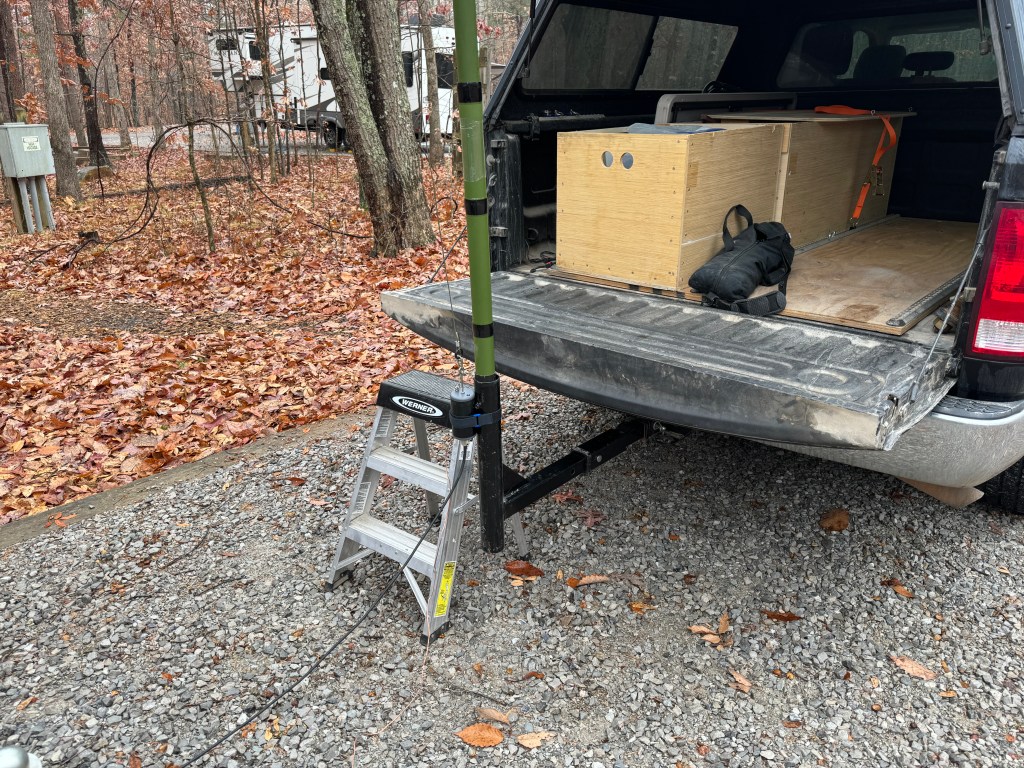
I have been busy the past couple of months working on some projects on the EmComm side of the house and I haven’t had the opportunity to test my portable gear. In particular, I haven’t had the chance to use my Elecraft K3 with digital modes. It is a great radio so I took it and the manual with me. For EmComm, always bring the manual. My antenna was my 28.5′ random wire vertical with a 17′ counterpoise. This is a good antenna for parks as it does not put wires in the trees nor holes in the ground. Being a vetical, it does tend to be more Dx than local. If I need more local operation, I have other antennas I can use. Attached to the antenna is a homemade 9:1 UnUn and a 1:1 current BalUn. Coax was RG-8x fed into the back of the K3. The auto-tuner on the K3 is fairly wide ranging so an external tuner is not needed. This configuration allowed me to work 40-10 meters easily. My spare radio was an Elecraft KX2.

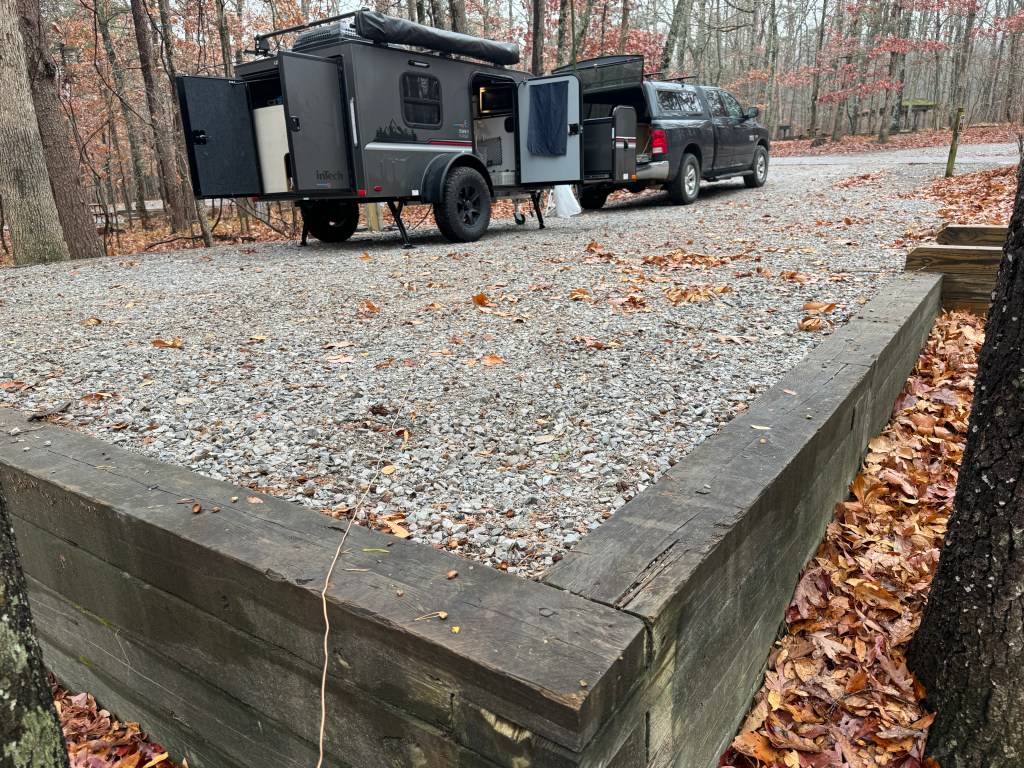
I used mains power at the campsite however, my two Honda generators will power the camper and the radios.

Band conditions were poor, you can’t pick the conditions when responding to a disaster. I booked this campsite a couple of months in advance. When I deployed to Hurricane Katrina, I had similar band conditions. You work with what you got.

I spent some time setting up the radio to run on digital, it took me about 10 minutes to get it sorted. I worked through my apps starting with Winlink. I didn’t update my propagation chart, so I had to download it via radio. I had to hunt around to find a node to connect to. Band conditions again made things difficult. I did manage to connect to a node in TX on 20 meters. I was able to get the report and send an email. Next up was VarAC. It started right up and I sent a few beacons and checked it on PSKReporter.

I had 1 bar on my cell phone and was able to get the map copied before it winked out again. Vara is a great mode and has weak signal propagation very close to JS8Call. From my experince, it is less than 1 S-unit difference.

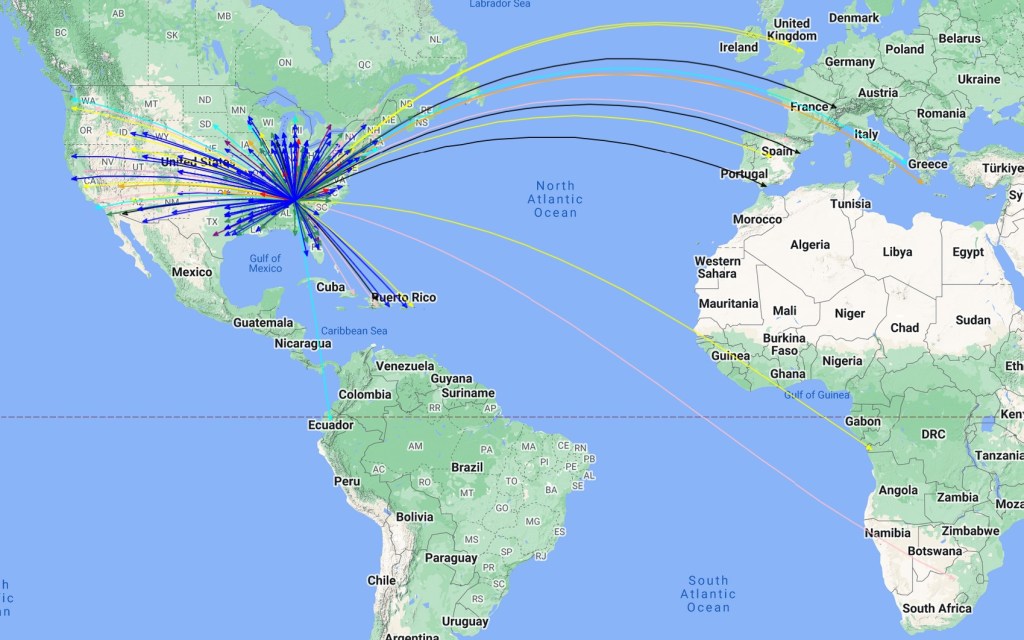
Later that evening, I checked into one of my EmComm nets using FLdigi. Along with FLdigi, I use FLrig, FLmsg and FLamp. All worked well except that the band condtions prevented 100% copy. The rest of the time I was on FT8. the bands were up and down and the only band producing anything was 20 meters. I only made 161 contacts. On a weekend with normal band conditions I would get between 400-600 contacts. I decided to call it quits late Saturday afternoon and head home. Besides the poor band conditions, it was oppressively hot and humid. There is only so much you can do inside a small camper. Here is the QSO map for the trip.

As you can see, really strange propagation. It was almost like someone built a wall SW to NE. My antenna is normally omni-directional.

It was a good trip and I managed to check all the boxes I needed to check. if you are involved in EmComm or if you live in an area prone to hurricanes, now is the time to check your gear. For those living in a hurricane prone area, make sure you have a spare antenna, tucked away somewhere. Take it out check it and run it with your radio on the bands you think you will be using. Hurricanes can and will take out you antenna farm. Don’t forget to check out the video. Stay safe and stay ready de Scott

POTA Activation K-2169, Me, VaraC, 160 meters and more

This weekend I had the opportunity to activate Cloudland Canyon State Park in NW Georgia. It was a digi weekend with me running FT8 and experimenting with VaraC. I also tried a new antenna combination to see how it would work on 160 meters.

The weather. I book my campsites 4-6 months in advance so I take what I get when I go. This weekend called for rain Friday and was supposed to clear up Saturday PM. It didn’t. It drizzled/rained from the time I got there until 0200 hrs Sunday morning. Since I mingle FunComm with EmComm, this was another test of my gear. The only issue I had was I needed to better seal the window where my coax goes into the camper. You shouldn’t let the weather stop you from going as long as it’s safe. I go year round and because of that, I have a good understanding of my gear and my clothing under varying conditions.

The gear. The antenna was a Chameleon EmComm II ver. 1. This version had a clunky antenna wire and insulator that is more from permanent/semi-permanent installation so I didn’t use it much. This year, Chameleon had a Black Friday Sale of 25% off. I decided to upgrade the wire to a 60′ Kevlar with a winder. I also ordered their new 40-meter OCF dipole which will be used on SOTA activations. I had some 14 gauge Flexweave wire that I cut to 50′ for a counterpoise. My intention was to use this antenna down to 160 meters. I ran the antenna as an inverted “L” ish. The vertical portion went about 25′ up my mast and the horizontal portion was more of a slope and facing north. The nice part was that the entire antenna fit within my campsite. I used the lantern hook on the site to secure the antenna. For rope, I used #36 tarred bank line. The rope is a little sticky so it holds knots well and does not absorb water like para-cord does. I used a clove hitch to secure the antenna ring to the mast and it held fast. The Bank line has replaced all of my para-cord.

The radio was First Peter, my IC-7300 that I bought new in 2016. I use an LDG Z-11 Pro that I have had for 15+ years to keep everything matched up. I was running 25-35 watts. My other IC-7300 is Second Peter. My backup radio was my new KX2. I keep it in a backpack so it is easy to toss in the truck.

Propagation. It was different, not bad, but different. There was a lot of solar activity and I believe it pushed the MUF up above 20 MHz. I had a lot of success on the higher bands which is typically not the case in the winter. My antenna easily tuned 160 meters and I made about half a dozen contacts using FT8. How did I do? I started at about 2030 hrs UTC Friday and finished up at about 2200 hrs UTC Saturday afternoon. I made a total of 325 contacts covering 42 states and 12 countries. Some of the interesting (to me) DX was Angola and South Africa. Both of those stations called me. Angola was on 10 meters and South Africa was on 12. No DX on 40 meters. I had a Facebook request to work 40 meters for local contacts. I did my best but 40 was rather flat this time around. It had the second-highest count of contacts. Breakdown by band was: 10 meters – 18, 12 meters – 18, 15 meters – 13, 17 meters – 7, 20 meters – 136, 30 meters – 19, 40 meters – 90, 60 meters – 12, 80 meters – 6, and 160 meters – 6. One of the surprises other than the lack of low band activity was that 17 meters was fairly dead. Typically on an activation, my money bands are 17, 20, 30, and 40. This time only 20 and 40 panned out. I manage 10 bands at this park in case I want to go for another N1CC award.

VaraC. For the past week, I have been evaluating VaraC mainly for EmComm. There is a lot to like about it. For one thing, it uses the same modem as Winlink. If you have it set up for Winlink, you are good to go for VaraC. VaraC can upload files and low-res pictures. PSKReporter showed favorable propagation on 20 and 40 meters. I made a few contacts with it and did some beaconing. I haven’t tried it yet, but it looks like I can create a document in FLMsg, save it, send it via VaraC, and reverse the process at the other end. pretty nifty. I think pairing Winlink with VaraC just might be the ticket.

Recap. Neither snow, nor rain, nor heat, nor gloom of night stays this operator from completing his park activation… I had a lot of fun. I try not to let the elements stop me from doing what I like to do. 73 – Scott