AAR Bald Mountain

My training from the military compels me to perform an after-action report of sorts. I have found it beneficial to review an adventure as quickly as possible while the triumphs and foibles are still fresh in memory. This becomes more important as we age. Today (Thursday) is a few days after my SOTA activation on Bald Mountain. In general, things went well even though the weather was not as nice as was expected. The climb was as expected, I had to huff and puff a bit which at my age was expected. Two things that came to mind were: 1) the pack could be a little lighter (it was 15 pounds with water and my Goretex jacket) and my hands were cold enough to hinder my CW sending. For my hands, I bought a pair of warm gloves that can expose the fingertips of my thumb and index finger. Because I was warmed up from the hike, the Goretex jacket was enough to keep me warm.

I decided to lighten my load a little bit. When climbing, a lighter is better. Here is a list of my new slimmed-down version of my SOTA pack. I got the pack down to 10 lbs without water or a jacket. I probably saved about 2 pounds, but hey! two pounds is two pounds.

Starting with my person, this is what I carry:
Wallet – minimalist
Bic Mini-lighter
Fischer Space Bullet Pen
Swiss Army Knife Hiker
iPhone
Benchmade Bugout Knife
Notebook 3×5
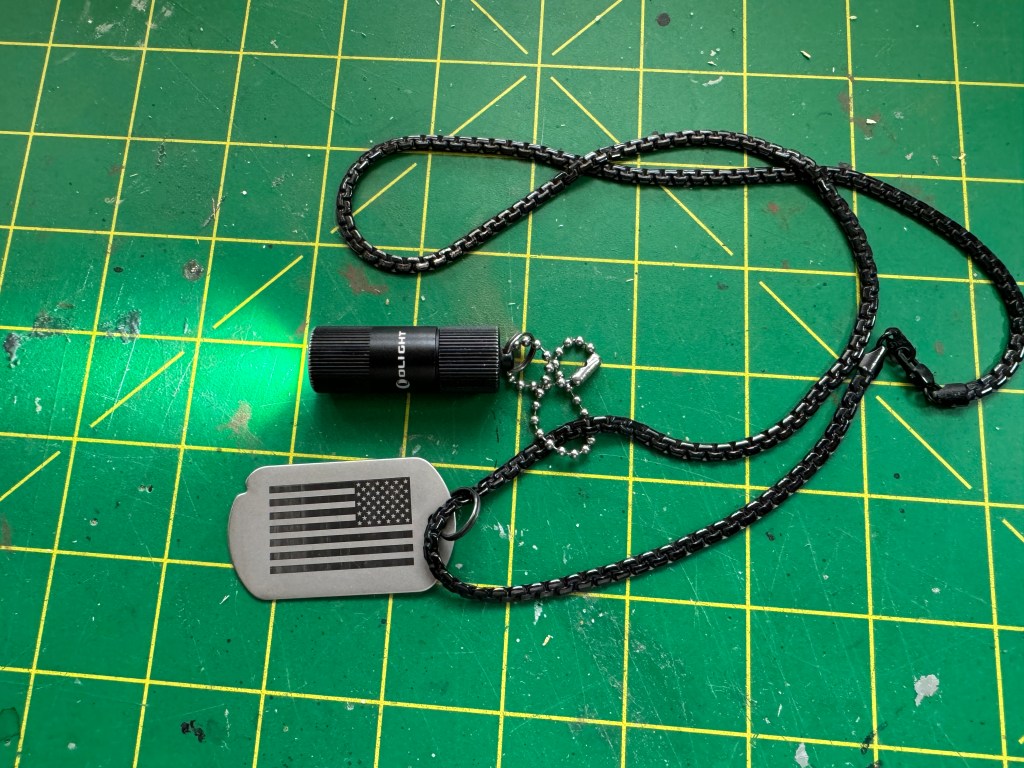
Dogtag with emergency contact info on a neck chain
Olight i1r2eos flashlight on the chain with the dog tag
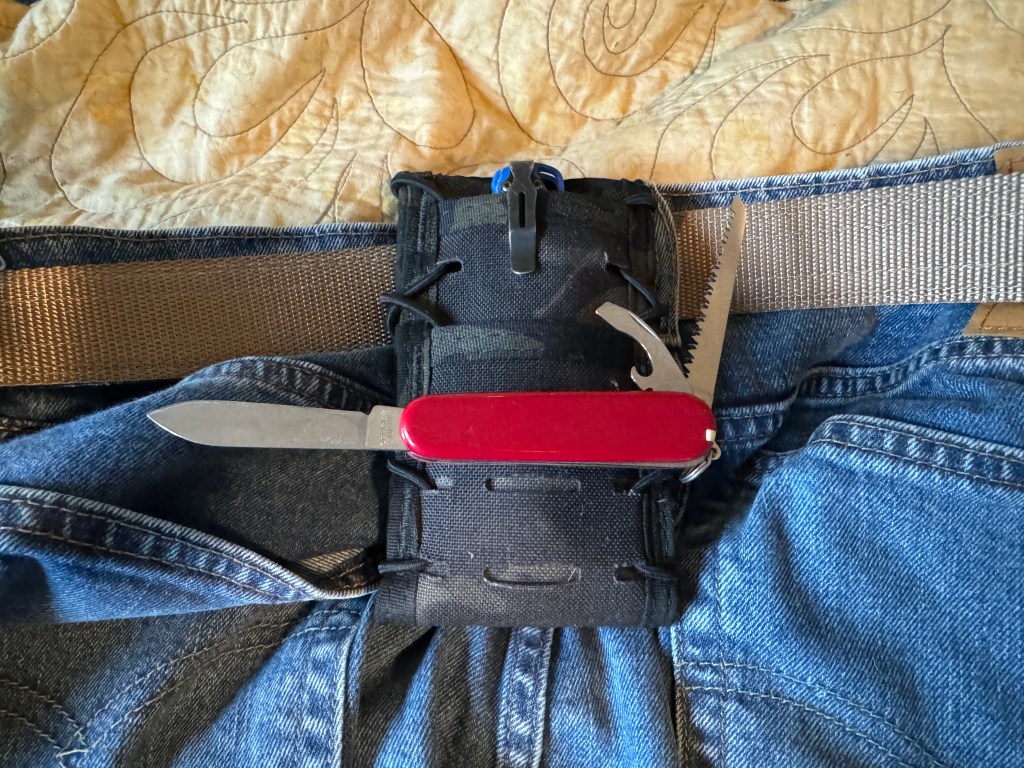
The Bugout rides in the same pouch as my iPhone in its own pocket. The pack I use is a Camelbak Military HAWG. It’s the old style. I’ve had it for quite a while and when I need a smallish pack, it’s the one I grab. The orange strip is highly reflective.

Attached to the left shoulder strap of the pack is a Garmin InReach Messenger. Some of the places I activate have little or no cell service so I use the Garmin to spot myself and keep the wife updated.

E&E Pouch
In the Army, we often made Escape and Evasion pouches. A small pouch with just enough stuff to get by. This one fits in a 6 x 9″ Alocsak Pouch and weighs 10oz.
Ferro Rod with carbide striker
Magnesium Rod
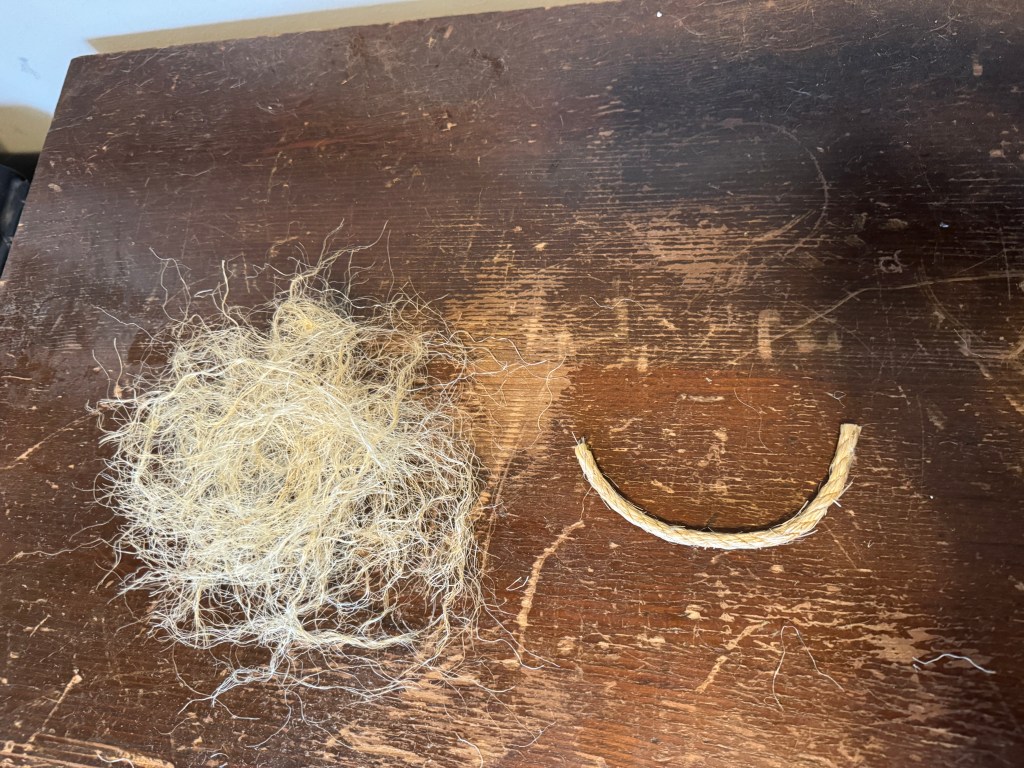
2 – 3/8 by 8″ Sisal Rope
Tropical matches (from MRE)
Tinder
Lighter Pine
iFAK
Whistle
Compass
Space Blanket
Signal Mirror
2 – Bic Lighters

The sisal rope is great for fire starting. You take it apart and it makes a nice nest for your fire.
Considering my whereabouts will be generally known, I do have a preference for fire and signaling. Most likely, any survival situation will be short-term, and I want to be found.

The Elecraft Bag
This is the bulk of my radio gear. The Elecraft bag that came with my radio does a great job of keeping things organized.
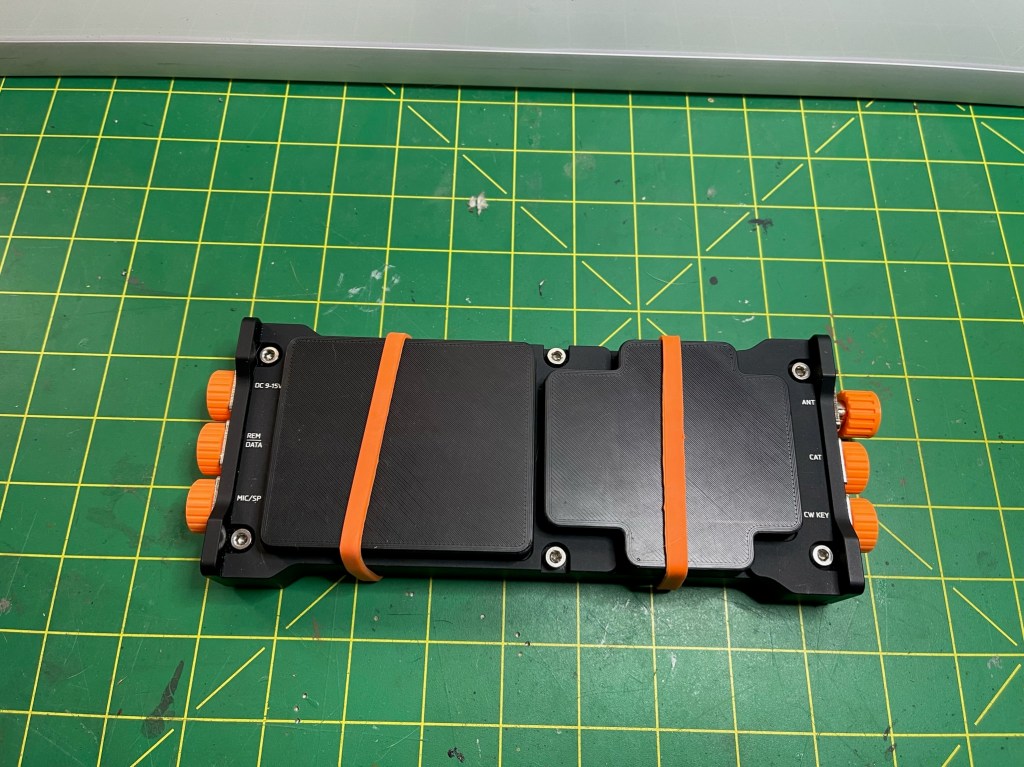
KX2 with a 3D printed cover
Begali KX2 Adventure Paddle adapter
28.5′ Random Wire Antenna
17′ Counterpoise
30′ Bank Line
12 VDC power cable with Anderson Power Pole connector
N0SA SOTA Paddles (swap with Begali Adventure Duo)
15′ RG-316 with choke (Chameleon)
Skull Candy earbuds
8 oz Arbor weight with line

The rest of the items are dispersed within the pack
1 Liter Canteen with Cup and Spoon
HeadlampSeat Cushion
Contractor Trash Bag
Knee Board
Rite-In-The-Rain 4×6 Notepad
2 Mechanical Pencils
Spool of Bank Line
2 Tent Stake
Chameleon 40-meter OCF Dipole

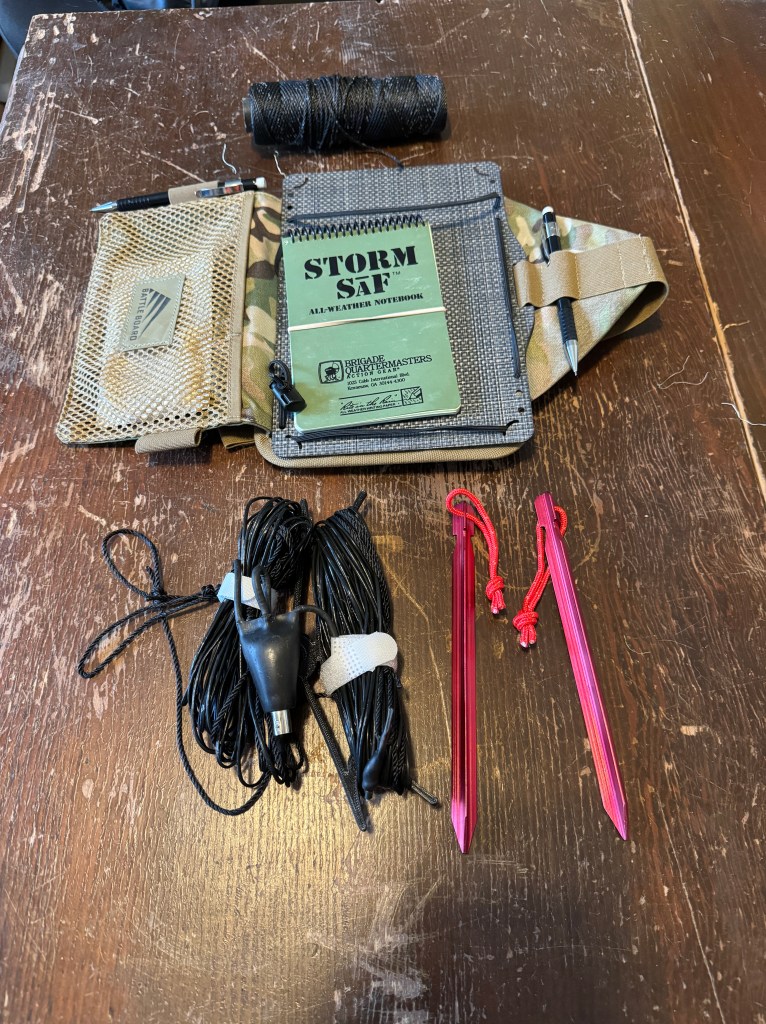
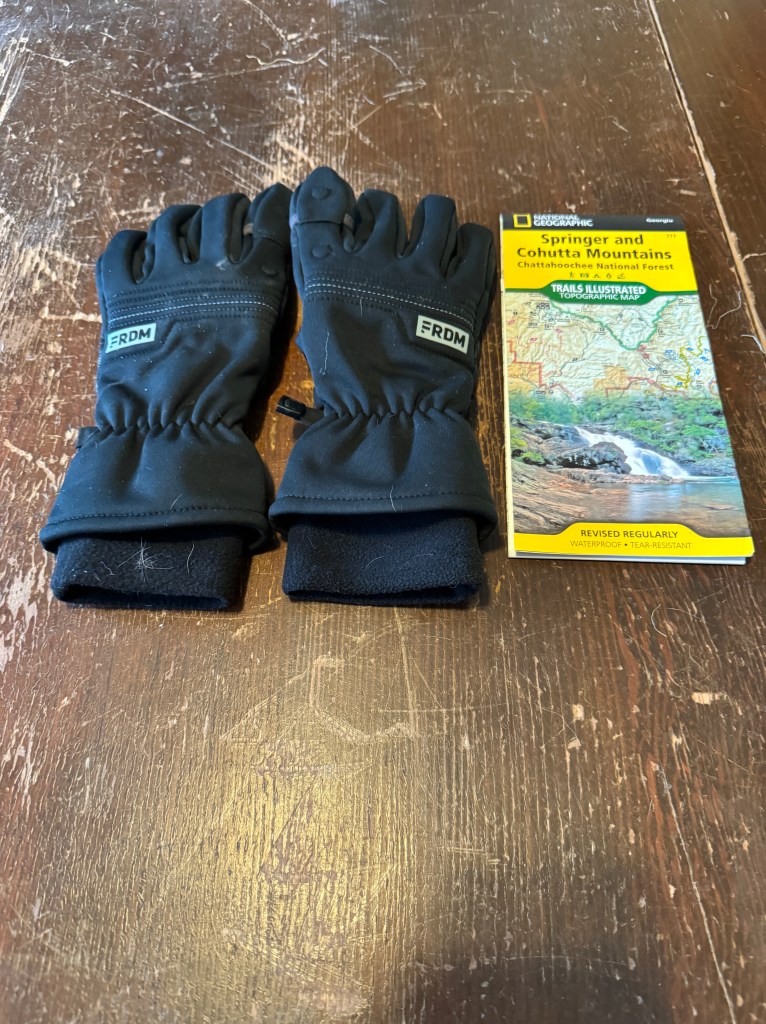
Finally, there are some seasonal/ad hoc items such as gloves, jackets, food, and localized maps. I have plenty of room in the pack to make adjustments for conditions.
My pack contents will probably evolve over time as I use it. Right now I think there is a good balance in the pack between fun and safety. Some of the places I go are pretty remote. I always tell my wife where I am going and a general itinerary. You should do the same.

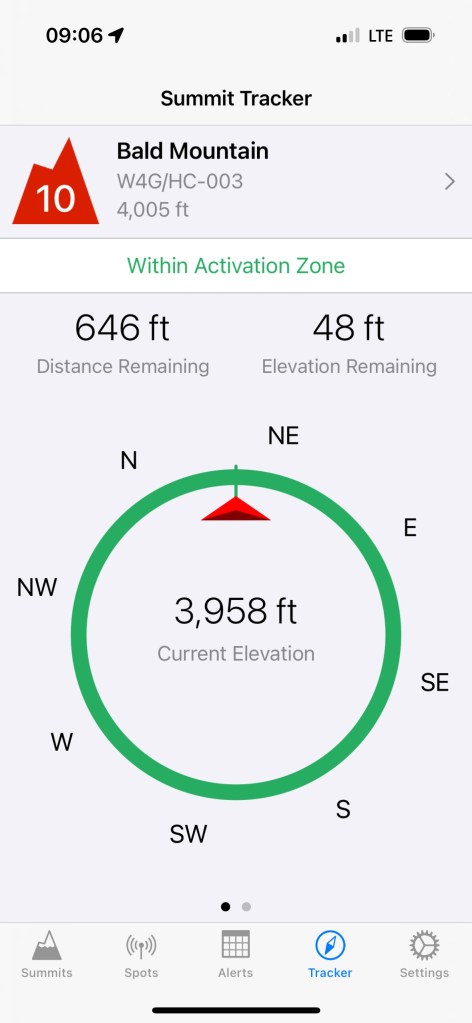
How did the KX2 do? This was the maiden voyage of the KX2. Right off the bat, I got to use it in some trying conditions. The weather was deteriorating as I walked into a cloud at the summit. It was windy and I wasn’t really sure what the weather was going to do. I figured I had enough time to make a quick activation and get down off of the mountain before the rains came. I climbed until I got well within the activation zone and set up. I strung the OCF dipole about 10 feet up and set my station right below it using the same tree as a backrest. I was going to use a Flight Deck but I didn’t want to fiddle with so I set the radio on top of the pack. Because the radio is self-contained all I had to do was plug in the antenna, paddles, and earbuds, and I was in business. I made 19 contacts logging on my notepad resting on my thigh. What helped to make the activation a success was the ease with which I got the radio working. Bing-Bam-Boom and I was on the air. As quick as I set it up, I took it down. The KX2 made it easy. I made it back to the truck to beat the drizzle. Since the activation, I added the kneeboard shown. I set it up at home and it should be easier to use than the one I had. I am still learning my way around the radio, but it is indeed going to be my main SOTA radio. Until next time 73 –de Scott
Old Man on the Mountain

It’s official, I am retired.  Fifty-three years in the making. Being on the north side of 66 does not mean you are wheelchair-bound.  Maybe a little slower, but with patience and skill almost anything can be done. One of my first acts as KK4Z (ret.) was to do a SOTA activation. I chose Bald Mountain, a 10-pointer in northwest Georgia.

One of the reasons I chose a 10-pointer is I wish to get involved with a group called Southern Appalachian Summit QRPers or SASQ (SASQuatches). The group combines SOTA with a moderate level of Bushcraft.  What’s not to like.  There are skill-based membership requirements and one is a 10 pt SOTA activation within the past year.  I wanted to get my 10-pointer in before the Park Service closes the roads to the summits during the winter. 

I was originally planning on Tuesday for the trip, but the weather was going to be harsh that day.  Lots of wind and rain.  This is what I call the first winter storm of the season.  Between the wind and the rain, it usually finishes knocking all the leaves off of the tree. So, I backed the trip up to Monday and checked the weather (Wx) – all systems go. Preflight check of the Wx 0600 hrs Monday showed VFR (good).  The 10-point mountains are at least a 3-hour drive for me.  Two hours on highway/improved roads and one hour on unimproved/gravel roads.  That last hour covers approx. 20 miles. Along the way, I was confronted by a 6-8 pt deer who thought he was up to the challenge by a 5,000 lb Ram truck.  After a few snorts, he thought better of it and scampered into the wood.  Shortly after this, I heard Mussorgsky’s Night on Bald Mountain, an omen I didn’t recognize at the time.  When I reached the parking lot below the summit, things weren’t so VFR.  I checked the Wx again and now it showed rain on the way.  The sky had closed in and the summit was in a cloud.  I figured I had just enough time to reach the summit, make the required contacts, and retreat without getting too wet.  When I started the trek, it was 60 degrees.  By the time I reached the activation zone, the temps dropped, and the wind picked up.  When I got back to the truck the thermometer registered 50 degrees.  I estimated that the wind chill put temps in the low 40’s to high 30’s.  Whenever I venture out, I always bring an extra layer, in this case, a Gore-Tex jacket. I forgot gloves and my CW suffered for it.

I climbed just high enough to get safely into the activation zone.  My setup was quick and simple.  I used a Chameleon 40-meter OCF QRP dipole.  I like OCF dipoles.  They do not have to get very high off the ground (10-12 feet is enough) and they are good performers.  I prefer them over EFHWs.  I sit on a cushion on the ground, so I use the supporting tree as a backrest.  Coax is 15’ of RG-316 with a choke on one end.  The radio was my new Elecraft KX2.  I waited quite a while to get the radio. I did set it up at home and made one contact before taking it out.  Since I was in a hurry, I set the radio on my pack and the notebook log on my thigh.  The paddles were N0SA’s SOTA paddles.  I got lucky and got one from his last run. I held it in my left hand.  I sent a spot out and a few minutes later I sent QRL? On 7.057 MHz.  I got a NO, they were waiting for me, I’ve never had that before.  The wind was picking up and I had some difficulty hearing.  As my hands got colder, my CW and handwriting suffered.  I had a pretty good pile-up going and after 19 contacts I called QRT.  There were still some calling, but Wx was not on my side. 

I packed it up and headed down the mountain. By the time I got to the truck, it was starting to drizzle. I really didn’t mind the weather, I need to keep my hands warmer though.

The KX2.  It was everything I had hoped it would be.  I ran it 5 watts and it purred like a kitten.  The quality of the received signal was great. I ran with the filter set to 1K Hz and it was fine, no overloading even with a pile-up. For SOTA, the radio is hard to beat.  I like that I only have 3 cables to the radio, paddles, earbuds, and coax.  Simple and easy.

Next time I will be sure to add some gloves to my pack.  It was fun and I can’t wait to do the next one.  If I knew retirement was going to be this much fun, I’d have done it a long time ago.  72 de Scott

Penntek TR-35 for SOTA

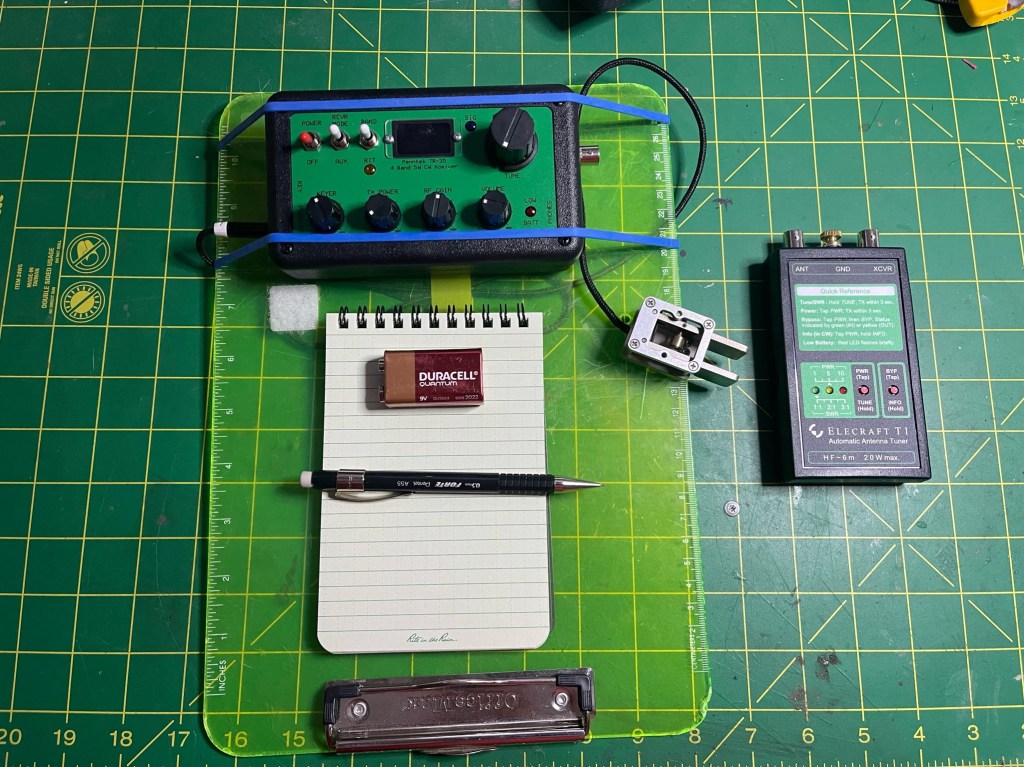
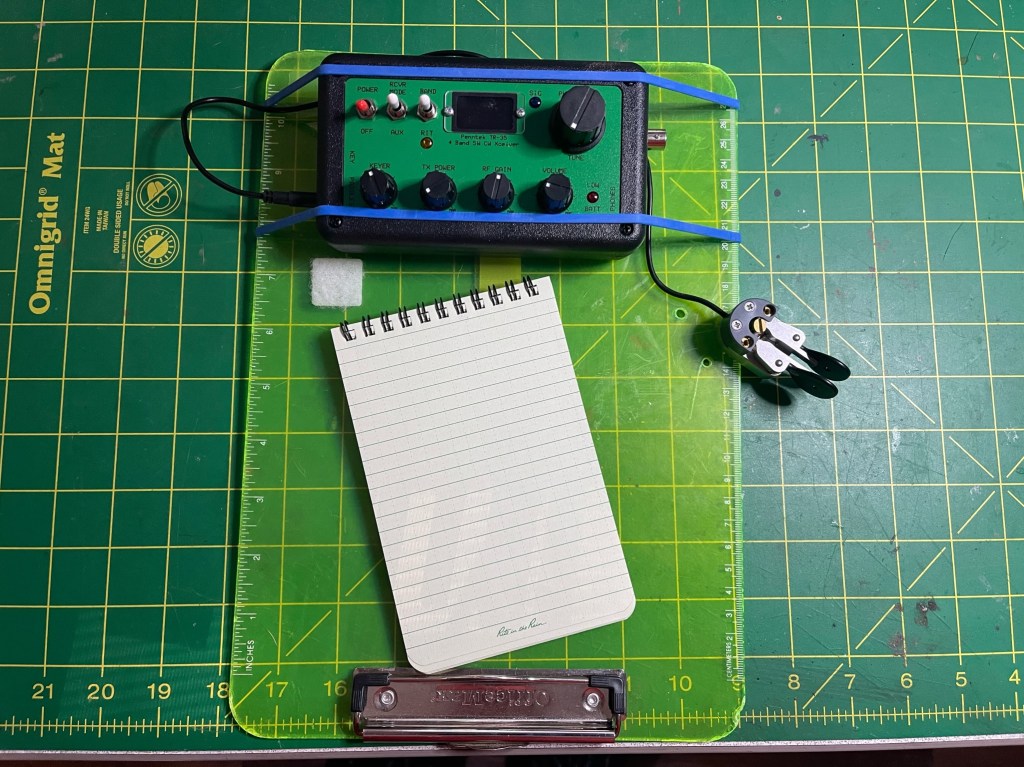
Yesterday, I received my Penntek TR-35. I am looking forward to taking it to the field next week. The radio is mounted on my homemade flight deck which is a modified clipboard. The 9-volt battery is for scale. The tuner is an Elecraft T-1 and the paddles are N0SA SOTA paddles. The notebook is a Rite-in-the-Rain 4×6″. I have been using Rite-in-the-Rain products for close to 50 years. There is nothing better for field use. In addition to the N0SA paddles, I can also use my Begali Adventure paddles.

Both the Begali and the N0SA paddles attach with a 4-40 screw.

I have made two adjustments to the TR-35. I had to adjust the sidetone volume and it was too low for my old ears. The adjustment was simple. Remove the 4 screws that hold the case together, split the case, and there is a variable pot next to the power port. A twist with a screwdriver and all is well. The other mod I did is I added 2 small tip-up feet to tilt the radio a little. I got this idea from John AE5X and you can find the feet here: https://tinyurl.com/2ht9yks2. They add just enough angle to make viewing the top of the radio easier.

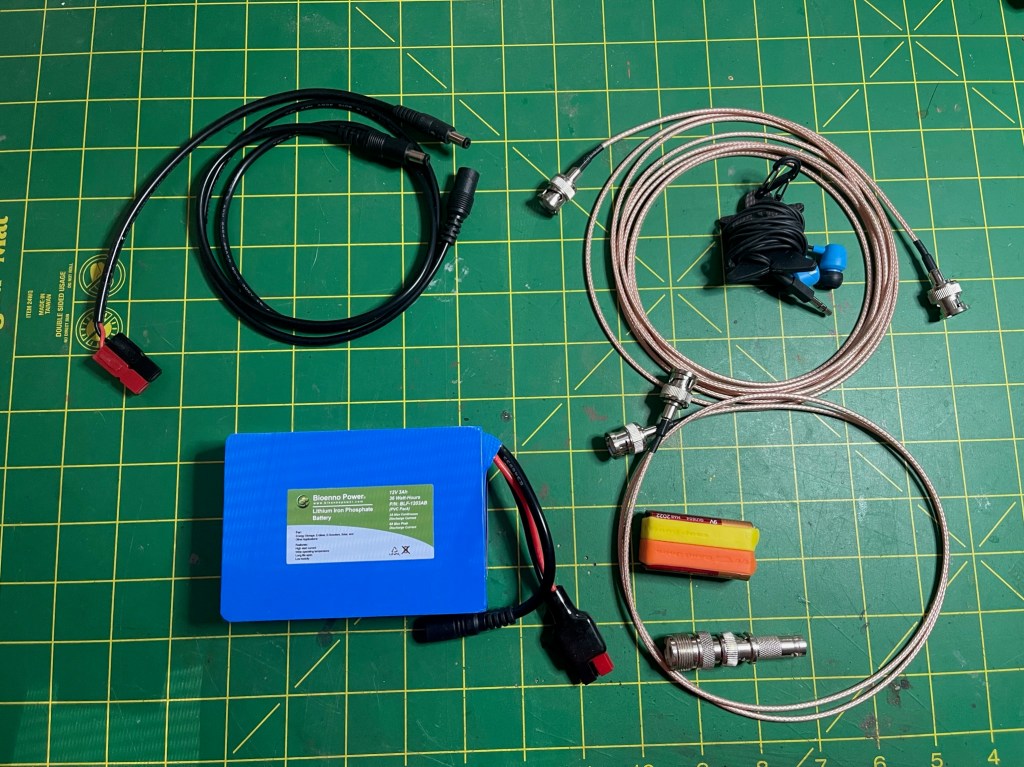
To finish kitting out the radio, I added the following:
6′ RG-316 cable
15′ RG-316 cable
Power cord with extension
Bioenno 3 AH battery
Skull Candy earbuds
Stereo to Mono adapter (not shown)
Spare 9-volt battery (tuner)
Cable Adapters

The stereo-to-mono adapter is for the earbuds. The TR-35 has a mono output and when you plug stereo earbuds in, you only get sound in one ear. Everything but the flight deck and the notepad fit into a Condor utility bag.

The bag and its contents weigh just shy of 50 ounces.

I have one addition and one modification to the setup. I have had an original In Reach satellite communications device for many years and it was showing its age. I now have a Garmin Messanger which works so much better. Many times even when I am doing a POTA activation, There isn’t much if any cell service. It’s nice to be able to spot in real-time. The Messenger is small and will reside on one of my shoulder straps.

I and using a USGI first-ad/compass pouch. I believe the one shown actually comes from my Army days. The Messanger also provides peace of mind for both my wife and I. I can send her a text message that I am okay and my location. I can also send an SOS if I have an emergency. It’s cheap insurance.

The last change I am going to make is the pack bag. The Camelbak HAWG is a great pack but for what I am doing it is just a little bit too small. It currently fits everything with a little room left over for food. Since I am out and about year-round, I need a little extra space for clothing and maybe my little Snow Peak stove. I’ll keep you posted. 73 — Scott
A little CW Project

I have the K1EL WKUSB-SMT keyer. I like it a lot. I use it at home and in the field. I would normally either plug it into my laptop or a battery for power. However, I am trying to clean up my act and reduce some of the cabling I have. The keyer will run for months on 3 AAA batteries that stow inside the case. It is a little bit of a chore to change them out due to the 4 teeny screws that hold the clamshell case together. Fine at home, but could become an issue in the field.

I put the batteries in and placed the keyer right-side up in my field box. When I got to the campsite and took the box out of my truck, I heard “dah-di-dah-dit, dah-dah-di-dah” I must have bumped one of the buttons. I open the box and there was the keyer chirping away — with no way to turn it off. Luckily, the paddles were in the top tray so it was easy to hook them up and send a dit to stop the keyer.

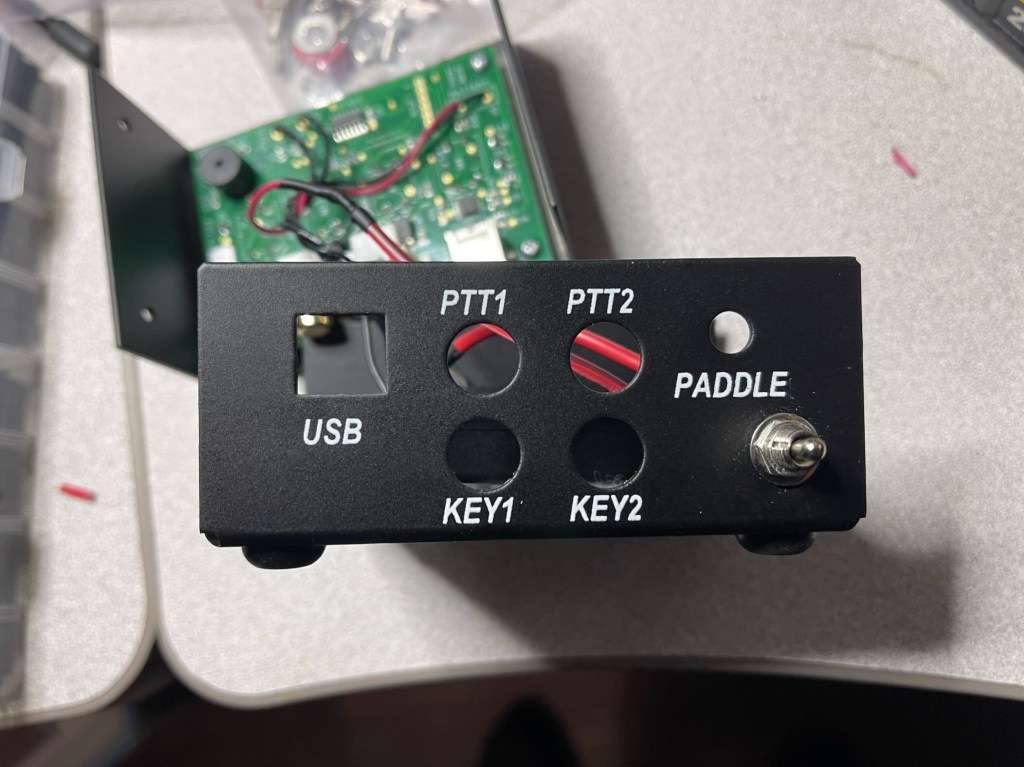
When I got home, I scrounged a few parts. All I needed was an SPST switch, some wire, and shrink tubing.

I found an open spot below the paddle connector and drilled an appropriate-sized hole.

A little bit of solder and some heat on the shrink and I’m done.

Now when I travel, I just flip the switch to turn it off. It probably took me more time to write this than to complete the project.

I use the keyer a lot. It integrates with ACLog seamlessly. There is also an app that allows me to program the keyer with a keyboard. I can then save the different message banks on the computer and load the one I need for the trip. I have one for POTA, SOTA, and Field Days. One thing I like is I can slow the CW speed for certain words. I’ll do that with Park ID. Start at 18, slow down for the park number, and then speed back up again. All with the push of a button.

I hope this gives you ideas for your own projects. 73 — Scott
My Field Radios

Taking a little break from activations and hunting, I thought I would showcase my field radios as it stands today. I recently culled the herd and this is what I ended up with. The power draw was measured using a Watts Up inline meter, something like this: https://tinyurl.com/yc6yfvsd. Not lab quality, but certainly enough for this article.

Most of my recent activations have either been camping with my little teardrop camper or in my truck for a day trip. The desire to trek to a destination is not as romantic as it used to be. Often my radio time is fitted in with my other responsibilities.

Before I go down my list of radios, I want mention that my modes of choice are CW and Digital with CW generally being my preferred mode. When band conditions are poor as they have been these past few months I use FT8. Some might say that FT8 is easy or point and click, but to be a successful FT8 operator does take some skill.

My first radio is my IC-7300. Because of band conditions these past few months, it was my radio of choice because it is a 100 watt radio. In the field, I normally operate in the 5-10 watt range, but when the bands are bad I am in the 25-35 watt (and sometimes more) range. I also want to note that over the past few months I was working on my N1CC award which is working 10 bands at 10 different parks. Most parks are a couple of hours drive away from me so I try to get my 10 bands over the course of a weekend. Because gas prices are elevated, returning to some parks may not be an option.

I’ve had this IC-7300 since 2017. It’s a great radio and a great field radio. I have 4 radios that share much of the same menu system so I do not have to relearn the radio everytime I take it out. The filtering is excellent. The noise floor is lower than many other radios by a factor of 4. I have worked stations were the meter is not moving indicating a less than S1 reading.

With Icoms, antenna tuner integration is a simple cable connection and will also power the tuner. The only mod to the radio is I added a set of Portable Zero 7300 Escort guards https://portablezero.com/icom706.html. The radio rides in a Dewalt Tough Sytem medium case with no additional padding https://tinyurl.com/2sw8u9ub. The guards protect the knobs from bumping into the sides of the case. They also make great handles. Power consumption for this radio at idle with nothing connected to it is 0.81 amps or 810 mAh. For a 100 watt radio, that’s pretty darn good. The paddle I use with this radio is a Begali Traveler Lite. I am a fan of Begali paddles.

The next radio is my current favorite QRP radio, the IC-705. This radio is brillant. Icom packed a bunch of goodness into a samll package with an idle amp draw of 220 mAh with the charger off and 360 mAh with the charger on. That’s right down there with many other QRP rigs.

My 705 travels with a 3D printed cover for the face inside a MTM Ammo Crate https://tinyurl.com/y4j6t4nu. These are great cases for small radios and their accessories. A nice feature for this radio is it and be linked/controlled via Bluetooth. I have run FT8 and logged on my iPad using an app called SDR Control https://roskosch.de/sdr-control/. Another brillant feature of the IC-705 is it can be recharged via USB. That means both my iPad and the IC-705 can use the same charger. Some complain that the IC-705 is too heavy. When you realize that you do not need an HT for VHF/UHF (plus you get 10 watts of power), no cabling needed to hook the radio up to a laptop and as a bonus can use an iPad, and, can be charged via USB, you may have an actual savings of weight. No, it doesn’t have a built-in tuner and that has never bothered me. I have the AH-705 tuner and it is amazing. I use it to tune random wire antennas and can tune them without a UnUn or Balun. I would say the AH-705 tuner is on par with an AH-4 or even an SG-237 albeit at lower power.

The paddles for the 705 are Begali Adventure Dual. Big performance in a small package. Like all Begali products, they must be tried to be appreciated. I also use the Begali stand for the 705, it does a good job preventing the paddle from moving without adding a lot of weight. The screwdriver is a Nite-ize KMT-11-R3 that I modified by narrowing the screwdriver blade. I also have the begali base so I can use the paddle with other radios.

The paddles are stored in a little 3D printed box which holds the paddles, the base and the screwdriver. To the left of the box is another steel base from American Morse Equipment. The Begali base is a little light but has magnets on the bottom to attach to the AME base. Together, they work perfectly.

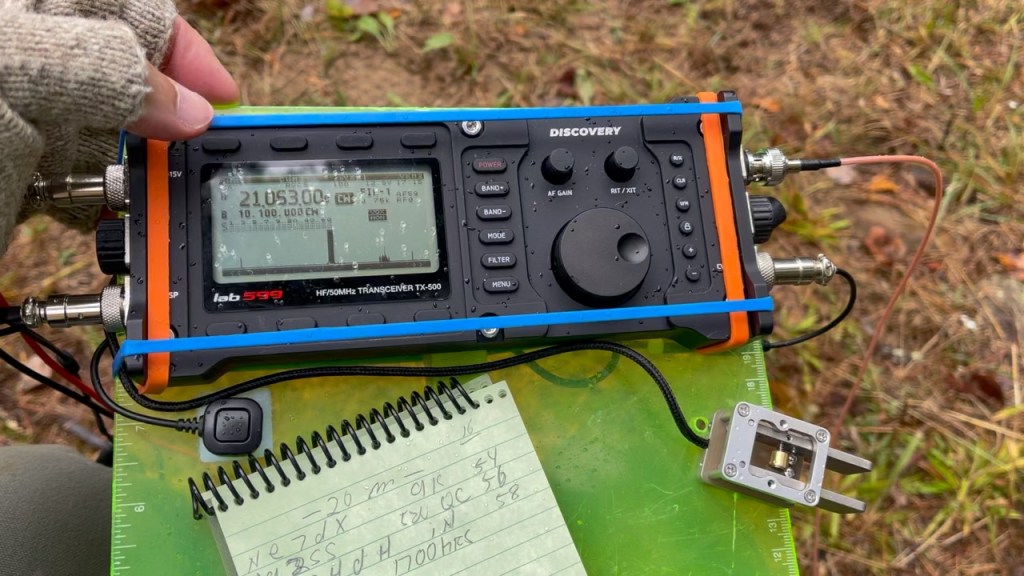
Last but not least is my Lab599 TX-500. This is a great rig for many reasons. Lightweight, simple to use, weather resistant and draws less than 100 mAh idle. It includes a waterfall on the easy to read LCD display. The receiver specs are pretty decent and I have not had any issues using it. I normally pair it with Elecraft T-1 tuner and Bioenno 3Ah battery. For travel I use 3D printed covers.

The paddles I use for this radio are Larry’s N0SA SOTA paddles. These are great paddles but last I heard he is no longer making them.

What is nice about these paddles is they are easy to hold in the hand and can be mounted to a flight deck.

These are my current radios and the paddles I use with them. Is this list set in stone? Of course not, you never know what you might find just around the corner. However, I could be quite happy with these. They are all good perfromers that give me a lot of latitude when operating in the field. Now that my N1CC is complete, I can worry a little less about quantity and a little more about quality. Hope to hear you out there — 73 Scott.

ZN-Lite II Update

I’ve had these paddles for about a year now but I haven’t used them much. Here is a link to my original review: https://kk4z.com/2021/11/24/n3zn-zn-lite-ii/. The reason is rather complex. they are small but because of their design, they can’t be held in the hand like some other paddles. If you put them on a table with the included Lexan base, they are so light, you have to use both hands to operate them. To me, it was a conundrum. These are very well-built, precision paddles and as smooth as any well-made paddle out there. My original thought was to use them for POTA. I was a little discouraged with their functionality, and even offered to sell them at one point — but I didn’t.

Here lately, I have been pairing my paddles with my various radios. My Begali Signature with my IC-7610, Begali Traveler Light with my IC-7300, Begali Adventure with my IC-705, and my N0SA SOTA paddle with my TX-500. I have a Penntek TR-45L on order. It is a CW-only radio that has a nice retro look. I thought these paddles would be a great match for this radio. What I want for this radio is a set of paddles that can be operated with one hand. The TR-45L is a tabletop radio https://www.wa3rnc.com/store/penntek-tr-45l-qrp-transceiver. I envision its use at a park during a POTA activation. I decided what my ZN-Lite II paddles needed was a heavier base. I ordered from Amazon a 3″ diameter, 1/2″ thick piece of steel.

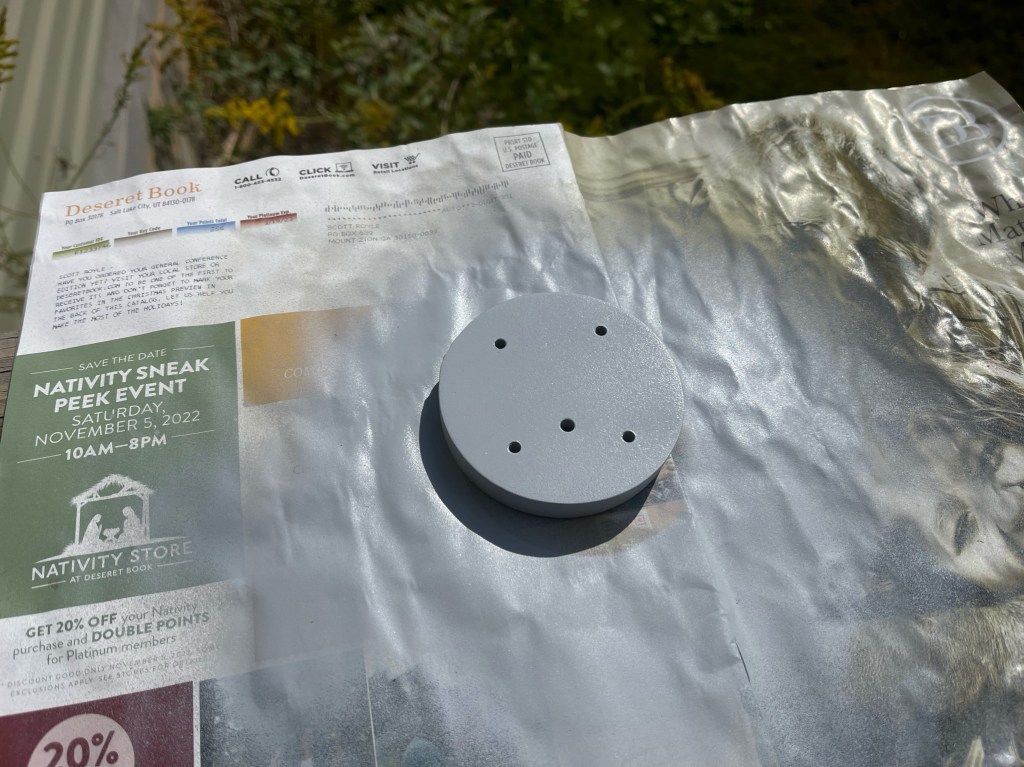
I drilled a hole to mount the paddle and 4 smaller holes to mount the rubber feet. The paddle hole is countersunk on the bottom so the screw head is below (or above) the surface of the base. That way it can be used without the feet.

The holes for the feet were drilled and tapped for 8-32 thread. I had to drill the hole all the way through because I didn’t have a bottom tap. Without a bottom tap, there would not have been enough threads in the hole if I didn’t drill all the way through. When I do these projects, I basically use hand tools and in this case, I used a cheap drill press I bought from Home Depot.

Here is a view of the base from the bottom.

Because the paddle mounting hole is offset from the center, I can mount the paddle two ways.

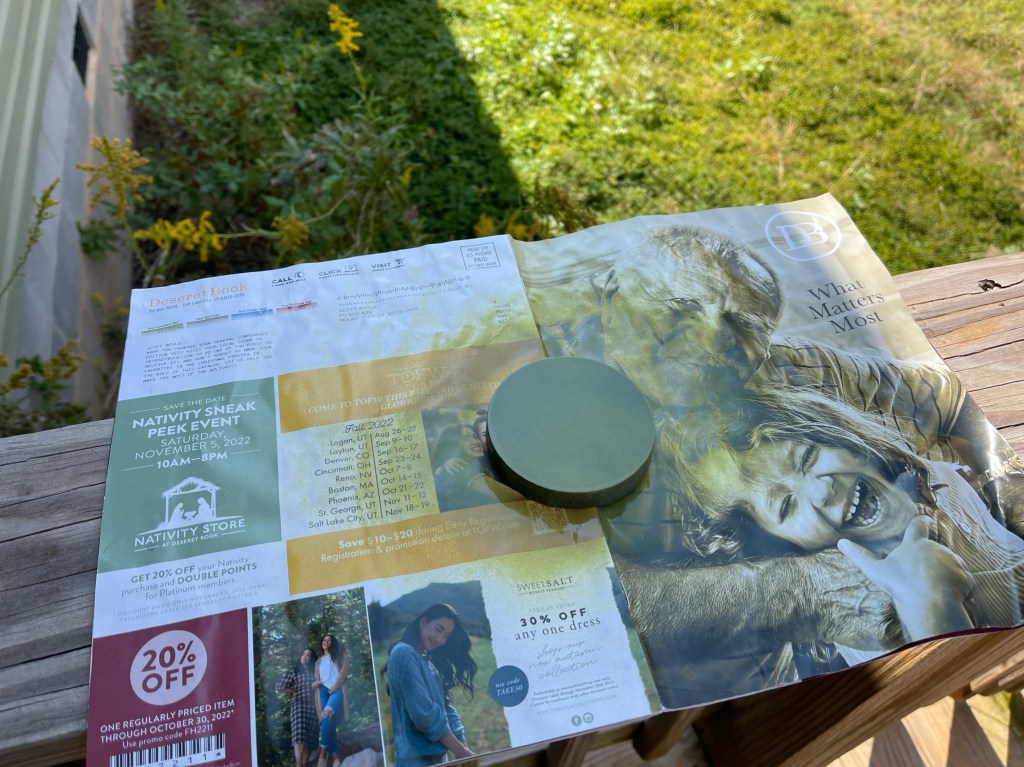
In the bottom picture, the base offers some protection for the paddles. Even though I can loosen the screw to move the paddles to where they face outboard, I found that I prefer the paddles facing inboard like the bottom picture. I feel it offers a little more stability. This mod allows me to use the paddles one-handed on most surfaces. The last step was painting. I put a coat of gray primer, followed by a coat of Nickel Metallic (Rustoleum), and finished off with a clear coat.

I didn’t go overboard with the painting. The main goal was to give the metal a little protection from corrosion. Basically one coat of each with a 15-30 minute wait time between coats. I chose the color because I thought it would complement the paddles. I think it did.

There you have it, a nice set of paddles ready for my next adventure. 73’s Scott
POTA Activation Skidaway Island State Park K-2198

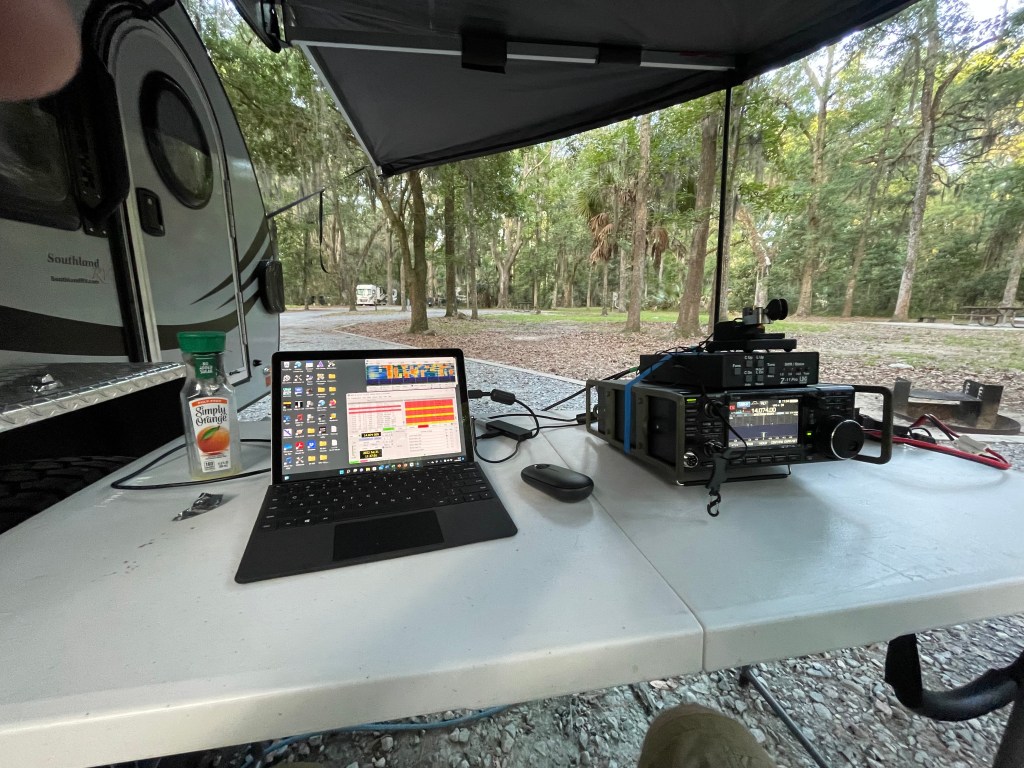
Skidaway Island State Park is a beautiful park. Located southeast of Savannah, GA, With Spanish Moss, along the typical summer heat and humidity, it is a prime example of coastal Georgia. This trip came about because my wife needed a package delivered to South Carolina; I volunteered as long as I could camp one night an play radio. It’s about a 5 hour drive from NW Georgia to SE Georgia. After delivering the package I arrived at the park somewhere around 1600 hrs Local. It took a couple of minutes to get the camper setup and a little longer for the radio. Because it might be a while before I can make it back here (gas is still over $4 a gallon). I tried to get 10 bands for my N1CC award. I mostly worked FT8.

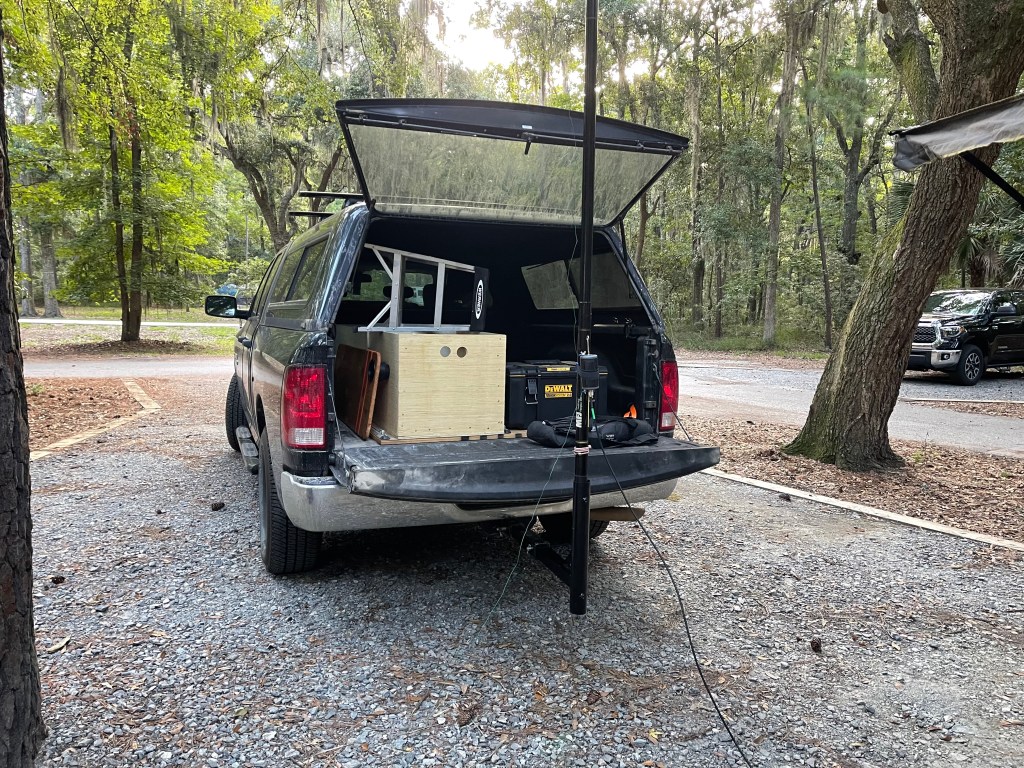
Setup. Setup was my usual for this type of activation. The radio was my IC-7300 and LDG Z-11 Pro tuner. The computer was a Microsoft Surface Go2.

The antenna was my K4SWL antenna which is a 29.5′ random wire antenna with one 17′ counterpoise. I used my Chameleon EmComm II transformer to even things out. The antenna is hoisted into the air with a MFJ-1910 33′ pushup pole. No plants or animals were harmed during this activation.

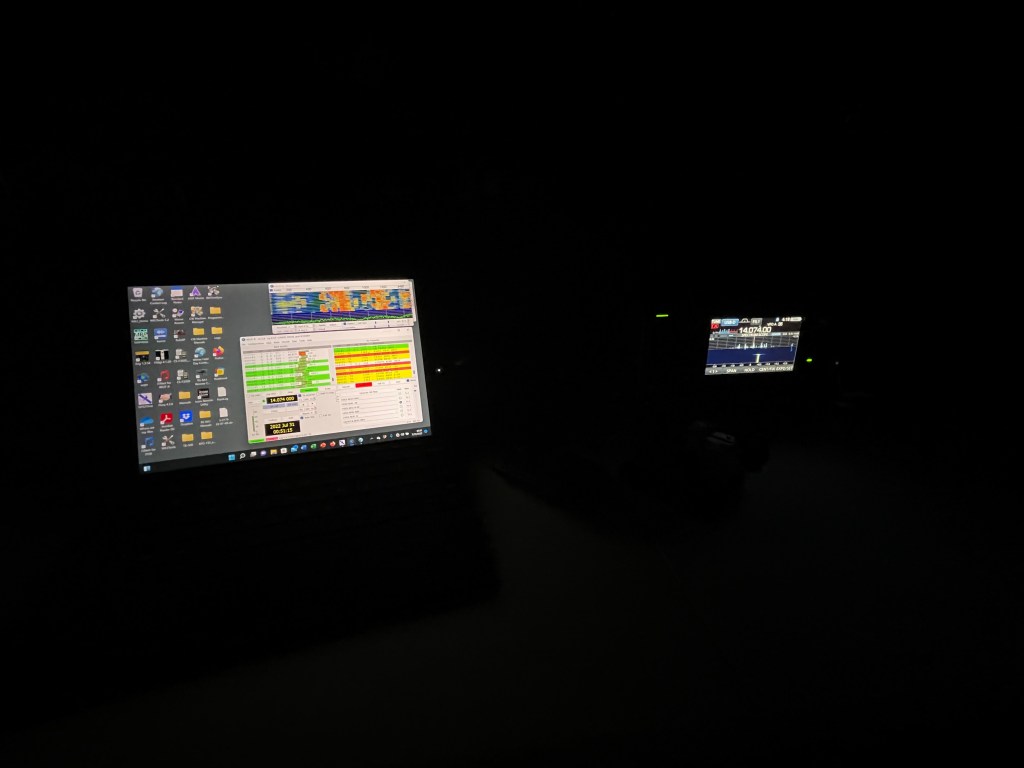
Being a former Nightstaker, working in the dark is routine to me. I stayed outside well after sunset until I finally had enough of the heat.

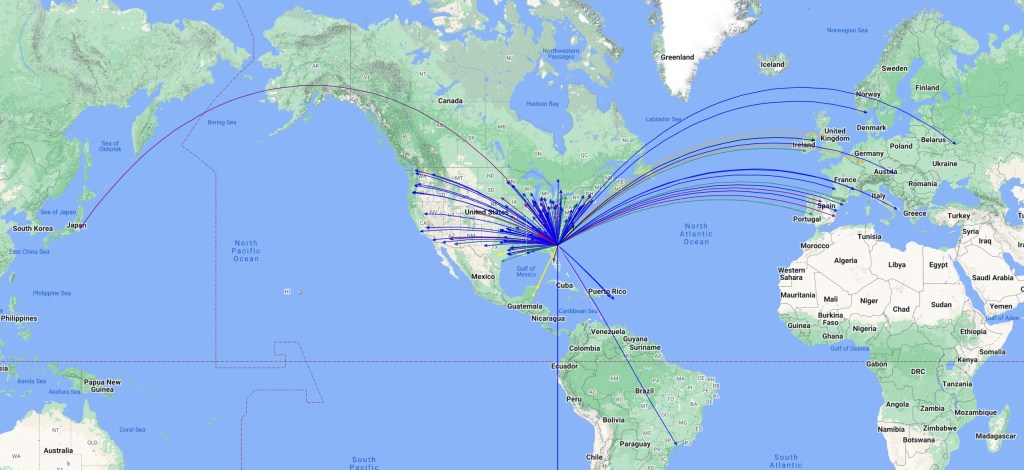
Band conditions were so-so, and I earned my keep making contacts. Working about 20 hours total I ended up with 174 contacts on 10 different bands. I had quite a few FT8 pileups which was fun and let me know that my antenna is working as it should. Here is a QSO map of the activation.

What was new? I recently acquired a Begali Adventure Duo with their metal base. The base is a little on the light side but there are magnets on the bottom. I had a fairly heavy base made for a AME Potra-Paddle. I set the the the begali base on the Porta-Paddle base and Viola! It works like a champ.

I also have the 705 mount coming to use with my IC-705. I really like these paddles. I only used them a little while trying to make contact with K7K. Alas, I didn’t have enough horsepower to make the trip to Alaska. My new paddles will definitely be my choice when camping.

Issues? I only had 2 and neither was catastrophic. The first was with the antenna. It seems when I increase power somewhere above 20 watts, I start getting some RF feedback through the coax on some bands. It was more of a nuisance than anything and I have since added a RF choke to the antenna bag. This antenna is one of my favorites if not my favorite antenna. It always performs well for me. The second issue has to do with the IC-7300. When I am working from inside of the camper, I set the radio down on the mattress. The tilt stand sinks nicely down in the 4″ of memory foam making the radio face plate difficult to see. I set my QRP radios on the lap desk with my computer and paddles. I banged around in my workshop and found a scrap piece of 3/4″ plywood. I cut it to 11″ x 12″ and now my radio floats on top of the mattress. The board also fits in the box I carry the big radio in.

Every time I go out, I learn something new. With gas prices the way they are, I may not be making these long trips for a while. However, there are plenty of great parks closer to home. Thanks to all of the hunters who took the time to work me. Sometimes making that contact can become a little tedious. I appreciate you all and 73’s until next time.

GA POTA Meetup and K-2171 Activation

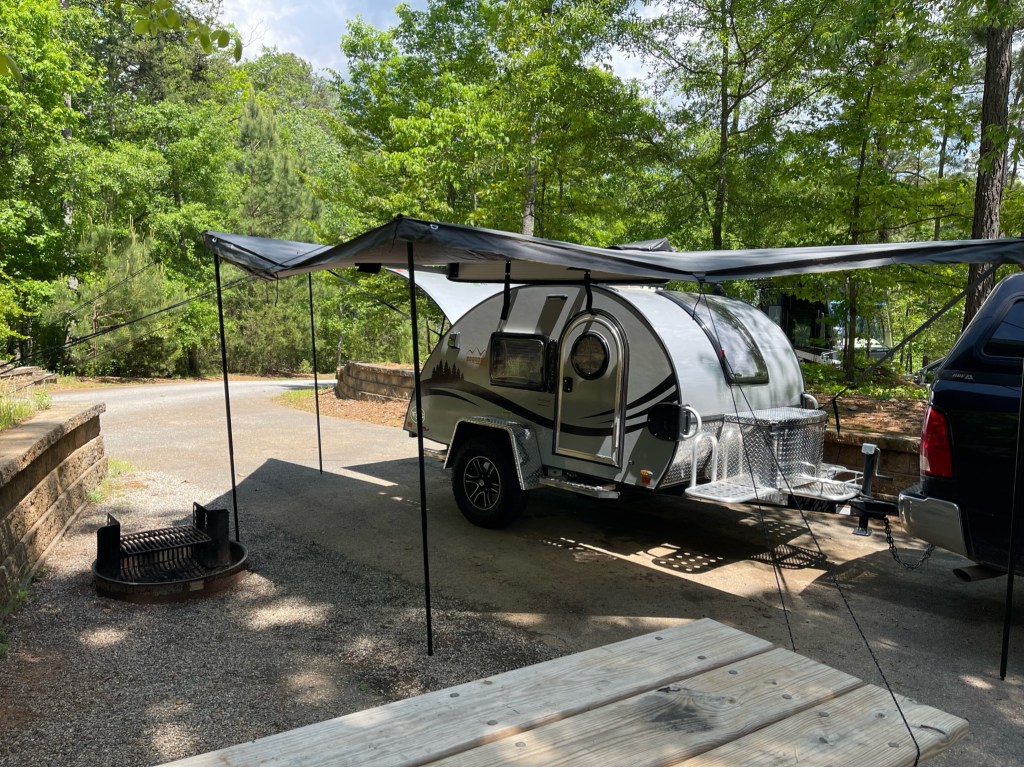
This past Saturday (05-07) was the Georgia POTA Meetup. It was held at Don Carter State Park (K-2171). The park is about a 2 hour drive so I decided to take my new teardrop camper out on its inaugural run. I drove up on Friday. One of the reason for purchasing the camper was to extend my POTA activation range. The camper is made by NuCamp and so far I am pretty impressed with it. It pulls well behind my pickup truck and I only lose about 1/2 mile a gallon for gas. Set up was easy. Since I didn’t disconnect the trailer from the truck, I was set up and good to go in about 15 minutes. Here is a shot of the camper set up.

The camper next door told me some strong winds and possibly a storm were coming so I added some additional guying to the awning. There were no problems.

Friday was a rather chilly day and because of the winds I did not set out my folding chairs and table until Saturday. I brought two radios and a couple of antennas with me. Traveling QRP doesn’t take up a lot of space even if you bring a couple of each. I wasn’t sure I was going to make enough contacts on Friday since I started late but I gave it a go anyhow. The first radio up was my Xeigu X6100 and I hooked it up to Chameleon Micro on a spike with a Buddipole 12 foot fiberglass antenna and two aluminum extensions. I also ran a counterpoise. I was only able to make 5 contacts Friday evening, furthest being Colorado. Band conditions were not that good from this location. The Reverse Beacon Network (RBN) didn’t even pick me up. I did start outside.

I worked this way for a little while until the temperature dropped and I started seeing chiggers on the table. I move the operation inside. I wanted to see how well I could operate from inside the camper.

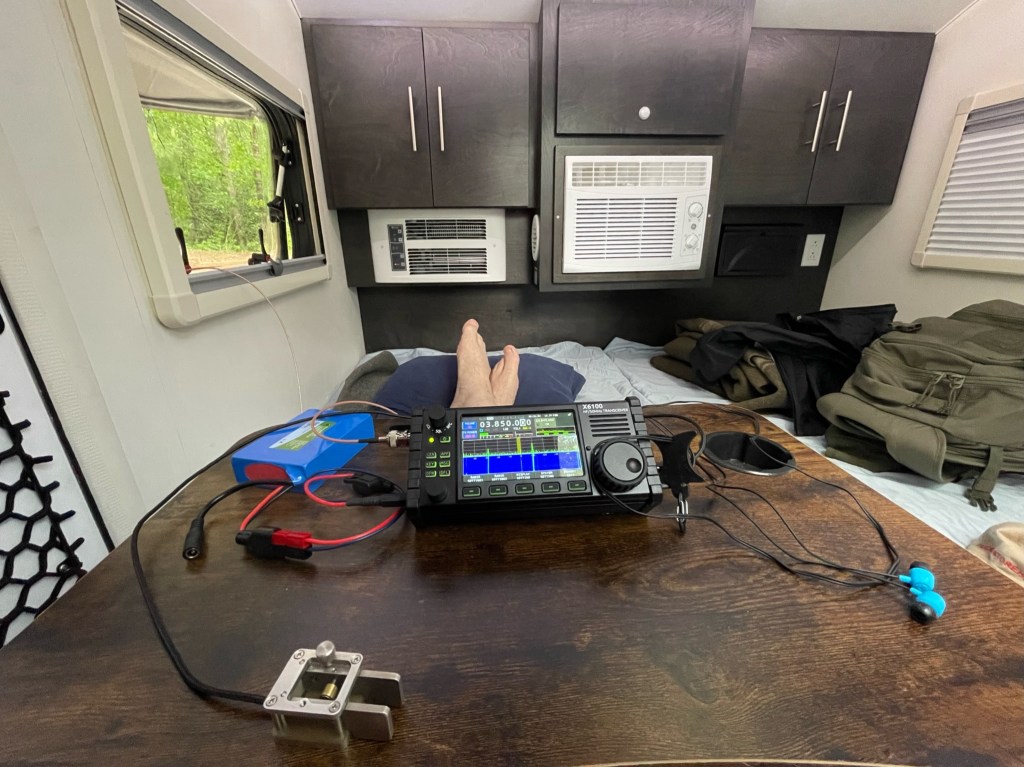
The answer was quite well. I bought a lap desk for this purpose and I was quite comfortable. For logging, I used the Hamrs App on my phone. This was the first time I did logging solely from my phone. Band conditions were still not very good, so I spent most of the time hunting P2P. It was fun, doing a search and pounce while operating CW QRPish (10 watts).

How does the X6100 play? First let me describe the environment. I was in a a RV camping area that was mostly full. There were a lot of big trailers loaded with all sorts of electronic devices, switching power supplies, and whatnot. I was also down in an RF “hole”. The X6100 is fun to use and the display is top notch. Most of the controls are fairly intuitive. I had no problems operating CW and did use the memories. It does have its nits. As others have said, the receiver does overload rather easily, and while I can still work stations, I felt I may have missed some because of the added noise. Along with that, the audio is also rather harsh. While at a park, I often wear ear buds to be respectful of my neighbors. The audio can become tiresome. Adjusting the RF Gain helps. The last real nit was the Digital Noise Reduction. It needs work. Turning it on even at the lowest setting is way too much. Hopefully they will fix this in future firmware updates. The digital filters on the other hand are very good, almost on par with Icom. I did run the radio with a Bioenno 3AH battery so I could have 10 watts. There is a lot to like about this radio. You get a lot of goodness for the money, and Xeigu so far has been good about updating the firmware. When I use this radio again, it will be in quieter RF environments. such as, less popular parks, National Forests, Wildlife management Area, and SOTA. It really is a fun radio to use.

Saturday morning, I walked over to the GA POTA meeting up. It was about a mile and gave me the opportunity to get a little exercise in. There were about about 20 or so people there and they had a couple of stations set up. They also had the special event callsign W4P. It was good to meet fellow POTA operators and have a chance to chat with them. They served hamburgers and hotdogs along with chips, soda and condiments. After a few hours of chatting and a couple of hamburgers, I decided to head back to the camper and see if I could complete my activation for the day.

When I got back I broke out the X6100 again and used it for a while. Not having a lot of luck, I switched over to my IC-705. Yes it is a much better radio and it is more refined, and it does cost twice as much. The X6100 is an excellent value at its price point. I set the 705 up with the AH-705 tuner. I really like the AH-705, as is very versatile, much like its big brother, the AH-4.

One nice thing about the Icom, is it works just like my other Icom radios. Easy to remember. The paddles du jour are my N0SA SOTA paddles. They are one of my favorites. With the better receiver and audio on the Icom, I made a few more contacts, but still not what I was expecting. QRP antennas can be light and small so it is nothing to bring a few along. I decided to swap out antennas. I took down my Chameleon/Buddipole antenna and put up my K4SWL 28 foot vertical with counterpoise. It is a homebrew antenna, but I got the idea from Thomas Witherspoon K4SWL. After putting this antenna up, I continued to slowly add contacts to my log. My method was simple. If I could hear them fairly well, I figured they could hear me, so I tried to work them. There were plenty of stations on the POTA spot page that I did not hear at all. By the end of the day, got enough contacts for an activation on Saturday. Here is a map:

Wrapping up and lessons learned. First, I had a lot of fun both at the meetup and at the campsite. I enjoyed taking up my camper for its first go. Everything worked except for the heater. I may have to bring it back to the dealer, but I had plenty of blankets. I am already planning a trip for next month.

Radios. If I am going to do a drive up POTA activation, my first choice will be the IC-705/AH-705. I like the X6100, its fun to use, and I imagine as time goes on it will get better. The X6100 will do well in quieter RF environments. I haven’t given up on it yet as I think there is still a lot of potential there.

Antennas. I had a surprise here. When weight is not a problem, I bring my my Frankentenna which is a mixture of Chameleon and Buddipole parts. On Saturday, when I switched from my Frankentenna to my K4SWL Random Wire antenna, it was on par and maybe even a little better than the former. The idea of carrying less on an activation has endeared itself to me. I can fit everything I need in a small 8 Liter Bucket Boss Bag https://tinyurl.com/3mwbk95r.

The important part is to get out and have fun. So pack those radios up, 10 watts or 100 watts SSB or CW, drive or walk, around the corner or around the world. I hope to work you and if I have, thanks for the contact. de KK4Z

Begali Signature Paddles

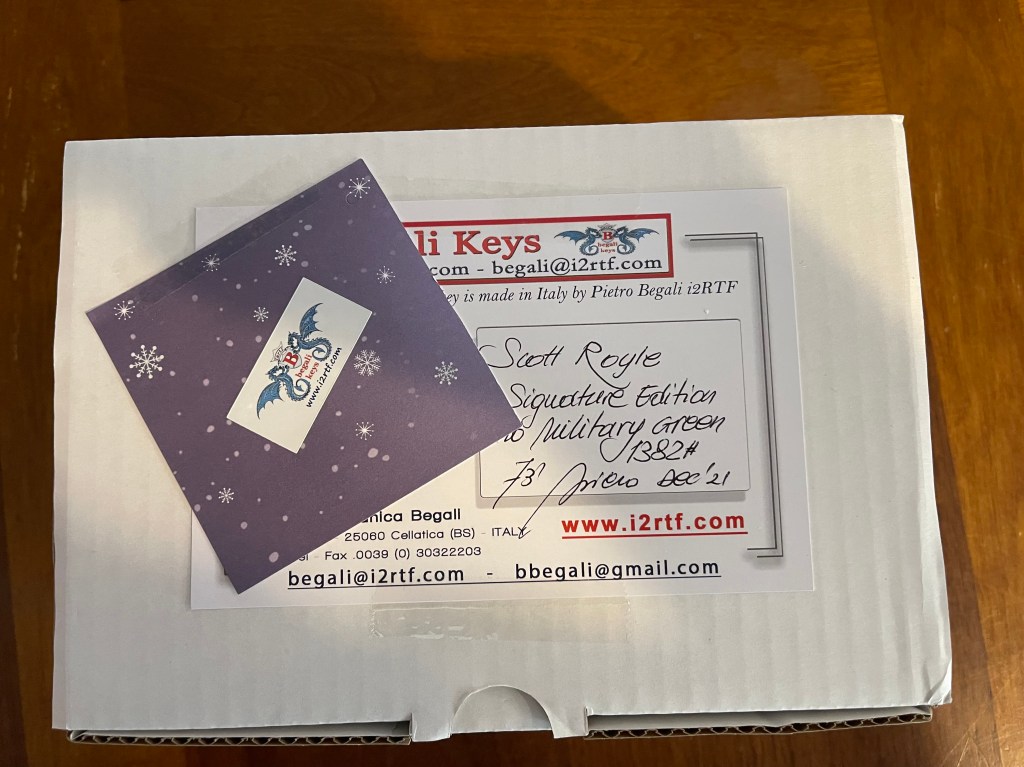
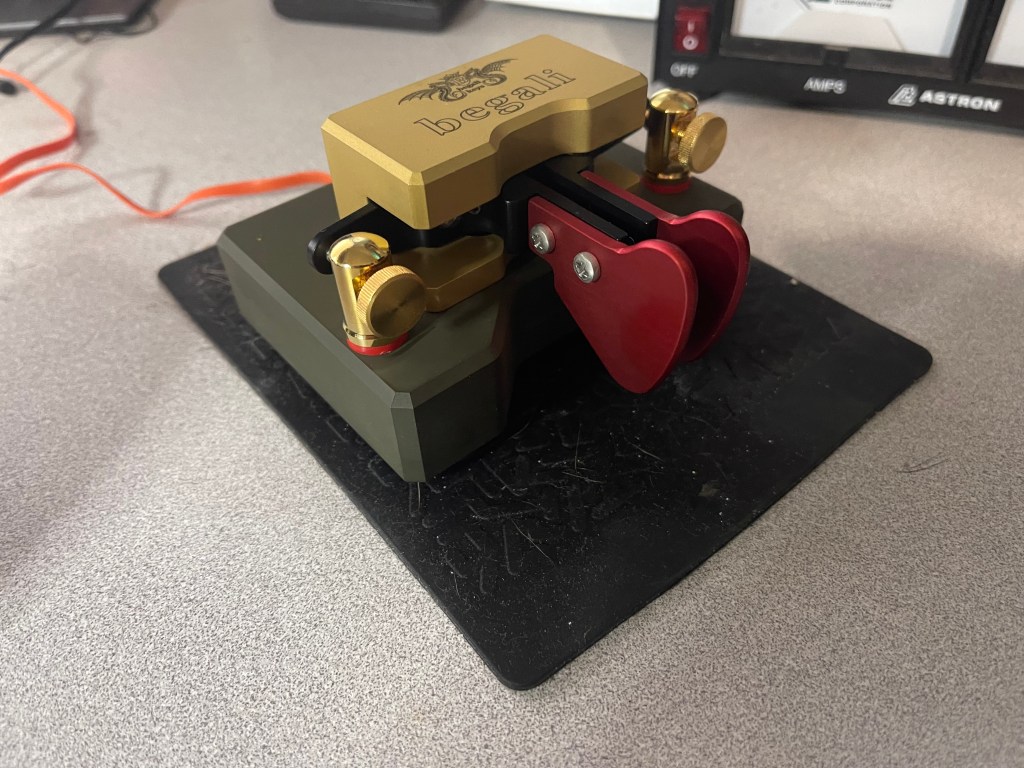
Today is a dreary day in northwest Georgia. It looks like rain and thunderstorms most of today so little or no Ham Radio. Yesterday I received a package from Italy. After waiting almost 3 weeks, my Begali Signature paddles arrived. This is no fault of Bruna at Begali, she shipped them out early so that I would have them for Christmas. However, Fedex had different ideas and the paddles sat in a Fedex facility for 10+ days before they moved. So here they are.

Even the packaging is a work of art with a note from the master himself.

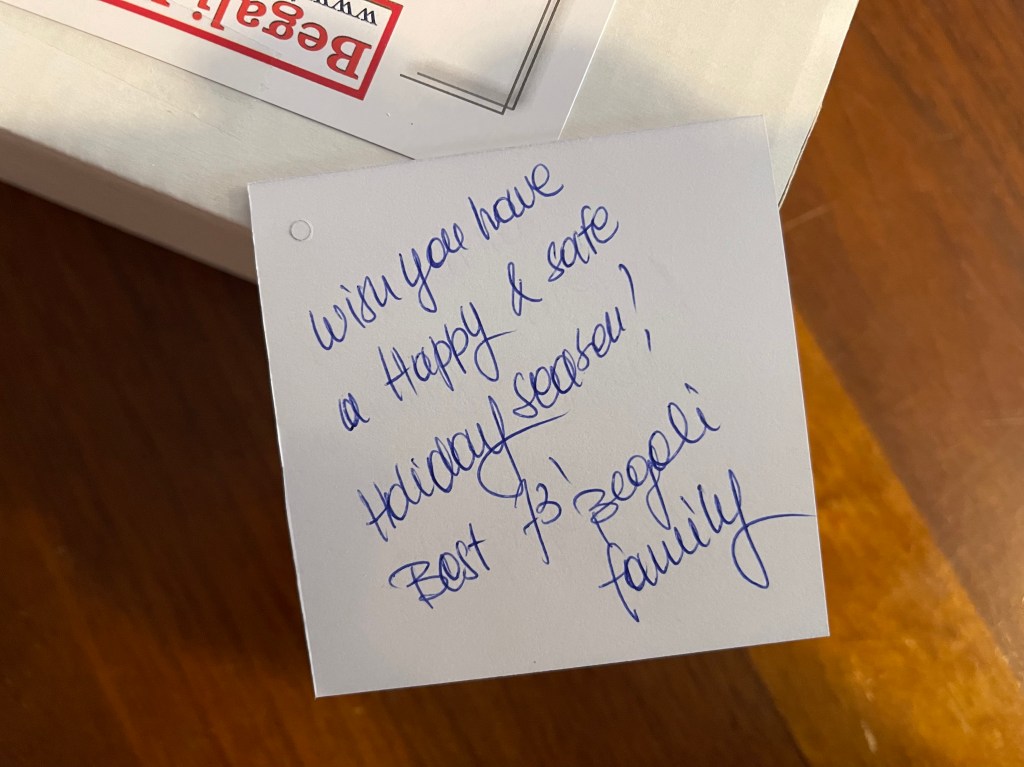
His daughter Bruna added a little holiday cheer.

To be honest, this is my third set of paddles from Begali.

So why did I choose the Signature this time? My first set of paddles were Benchers. That set up is what I call right angle arms. The contacts are to the side of the paddles and not to the rear. In my opinion they have a slightly different feel. The paddles came with the longer plastic finger pieces and the contacts screwed closed to prevent damage. I swapped the finger pieces out with the included short aluminum ones.

Adjustment was easy. I loosened the contact screws, plugged the paddles into my radio, screwed the contacts in till I heard dits or dahs, and them back it out until they stopped. No other adjustment was necessary.

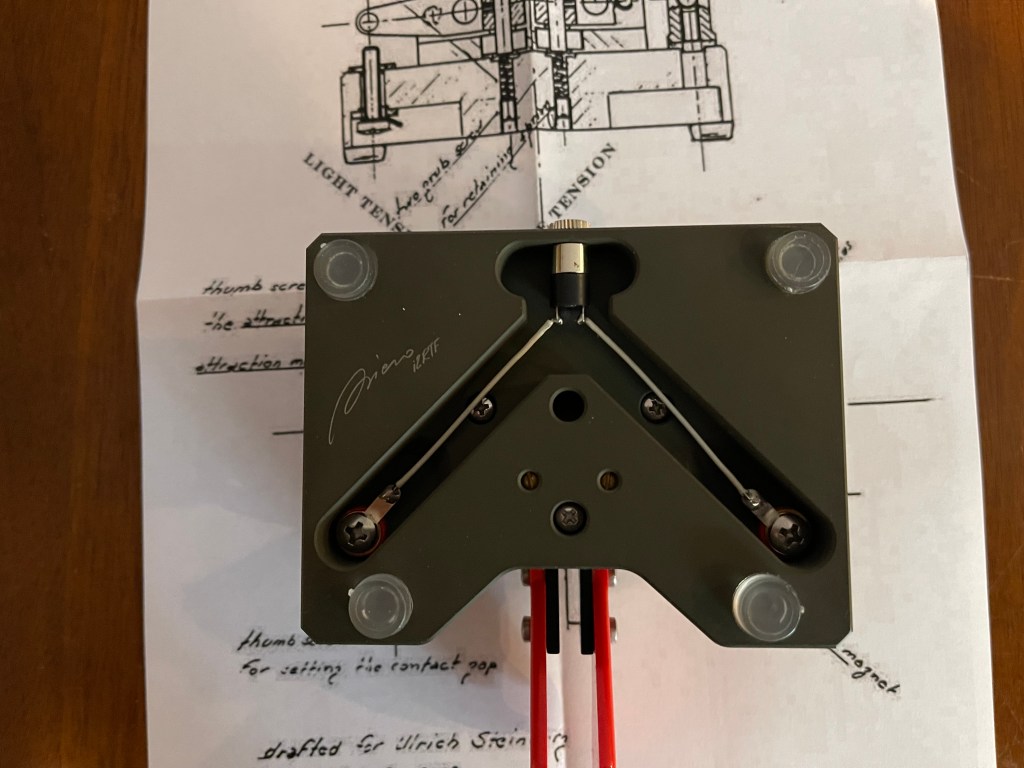
The fit and finish of the paddles are typical from Begali which is excellent. I have an engineering/quality background and have an appreciation for fine fitment and finish. Begali never lets me down. Even the work on the underside is perfection. The paddles make me think of Ferrari or Lamborghini.

For the finish, I wanted something a little different. I’m from the “chrome don’t get you home” crowd. The base of the paddle is military green and the top is their titanium finish. Both are more of a satin finish rather than shiny. I like the green as I am a former soldier. The finish creates an understated elegance that is a quiet statement of quality.

How do they play? First, they are different. The action feels a little different because of the different geometry of the arms. That being said, I do not think I have ever used a smoother set of paddles. Smooth as silk or purrs like a kitten come to mind. I am no speed demon with CW. I typically run in the neighborhood of 16-22 wpm. These paddles are smooth enough to go much higher. The arms are magnetically tensioned keeping the amount of force consistent through the swing. In short, they are a joy to use and to admire. The little time I have had them and used them, they have endeared themselves to me. The now reside on my desk top and are my go to home key.

Final thoughts. The whole Begali experience is something other companies should aspire to. From their customer service, packaging, and the product itself, is all top shelf. Their commitment to customer service leaves me feeling like they made this key especially for me. Is there another Begali set of paddles in my future? Probably, but not tomorrow.

Begali Simplex Basic and More

The Begali Simplex Basic is probably one of the best values when it comes to CW paddles. I have had mine for several years and it easily preforms above my skill level. At the current exchange rate it sells for about $135.00. This is the paddle that currently resides on my desk.

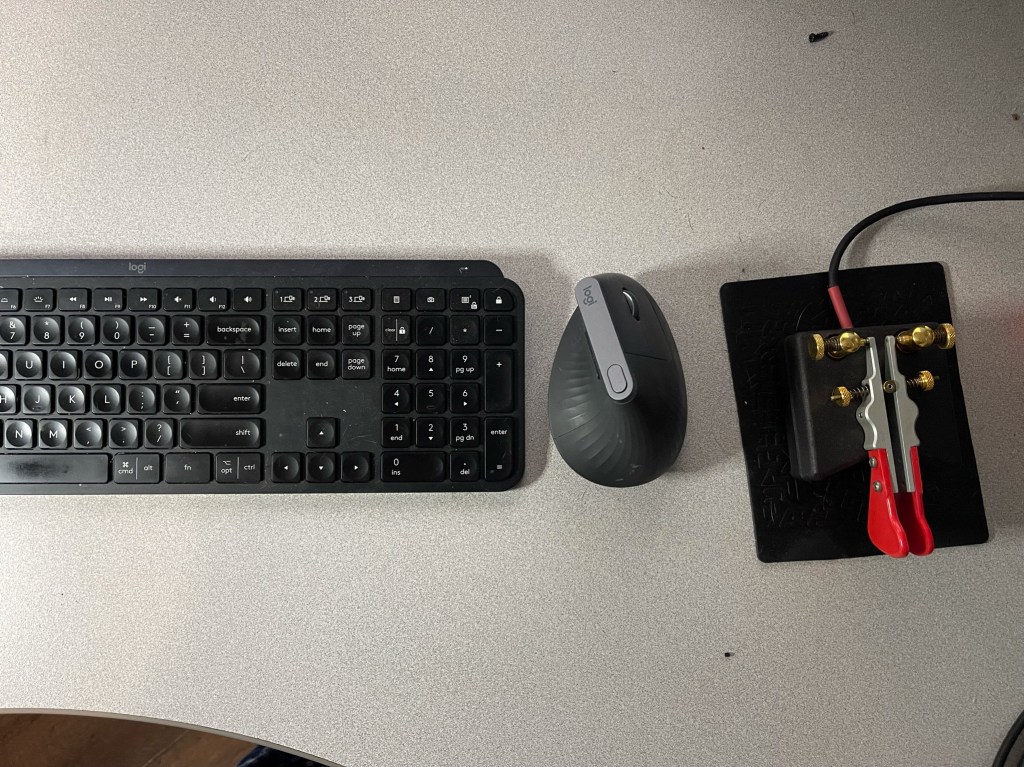
As you can see, I like to mix work and play. I often have the radio on and make CW contacts while I am working in the office. The Simplex Basic is a very pleasant set of paddles to use. They weigh in at 2.75 pounds and with the sticky mat underneath, they do not move. You can find the mat here: https://tinyurl.com/mvr4mvm8. I like a light touch and the Simplex is very capable of doing that. To set the paddles, I screw the contact in until I hear a dit or a dah, and them back it off about a 1/4 of a turn. The action of the paddles are very smooth. I can detect no rough spots and the feel remains very consistent.

The base is cast and the top has a rough, but not too rough finish to it. the bottom and a band around the bottom of the base is smooth to allow Pietro to sign his name and apply a serial number.

Fit and finish is what you would expect from Begali. Even though it is their Basic and least expensive set of paddles, it is still a beauty to behold. I am not a speed whiz nor am I a perfect CW op. I like to cruise around 16 to 20 wpm and I have had the paddles up to 25 wpm. the paddles didn’t flinch. I like to do Parks on the Air (POTA). I mainly do CW, so if I have hunted you, it was probably on this key. I have a set of aluminum finger pieces ordered for the Simplex. I really don’t need them; I thought it would dress the paddles up a little.

If you are looking for a good set of paddles, the Simplex Basic can not be beat. Yes, you could get a cheaper set of paddles, but not at this quality level. At this price point, I am not sure you could find a better paddle.

With all that being said, I do have another set of paddles on the way. This time is it the Begali Signature. My first set of paddles were made by Bencher. They had what I call right angle levers where the contacts are to the side instead of to the rear like the Simplex. I wanted to try a right angle lever set up again. Hopefully they will be here by Christmas. that will make my third set of paddles from Begali. No, I am not selling any of the others 🙂

Another long term project I have is I ordered a Begali CW Machine. It is a complex keyer/logger. It comes with a 75+ page manual. I plan to use it during activations. It will replace my keyer and computer. The nice part about it is it only draws about 20 milliamps of power (according to Begali). Once I get my hands on it, I’m sure it will take some time to get it set the way I want it. I will keep you posted.