Moving things around

Its been a busy 2025 so far. I have been involved with MARS and that by itself has kept me occupied. I decided to change the the shack around a little to better meet my needs. I pulled the IC-7300 out of the line up and replaced it with a Kenwood TS-890s. The IC-7610 was shifted to the left which is now pretty much dedicated to MARS stuff. The TS-890s will be for everything else. I have both of my paddles hooked up to the 890 along with my Heil PR-781 microphone. I haven’t had a chance to use the 890 much but it is one heck of a radio. It is a very enjoyable radio. I am hoping to get back into CW this year. Last year was not a good year in general for radio and so far this is looking better. I want to get my code speed up. Rounding out the shack lineup is an IC-9700 for FM/DSTAR stuff.

So what about the IC-7300? That has gone back to being a field radio. That is where I enjoy it most. I also have a Yaesu FT-710 Field that is my other field radio. Over the years, I have found that I prefer big radios with better controls when I am in the field. Both radios can go down to QRP levels and if needed I can crank the power up to match band conditions. I find myself operating in the 20-35 watt range mostly and these radios can do that all day long even with digital modes like FT8.

I still have an Icom IC-705 and an Elecraft KX2 for the occasional day trip. If I am at a park, I am in my truck and I can carry a big radio 40 feet to a picnic table. I do like my little radios, but they do not see as much use as the big ones.

I have a new project I am working on. I am building a T3FD antenna to use with ALE.

Mine will be 177′ long and it will be 90 degrees from my OCF dipole. That will give me an antenna oriented north-south (OCF) and one east-west(T3FD). In order to have the space for the antenna I had take down a few trees.

After the tree removal it looked like this.
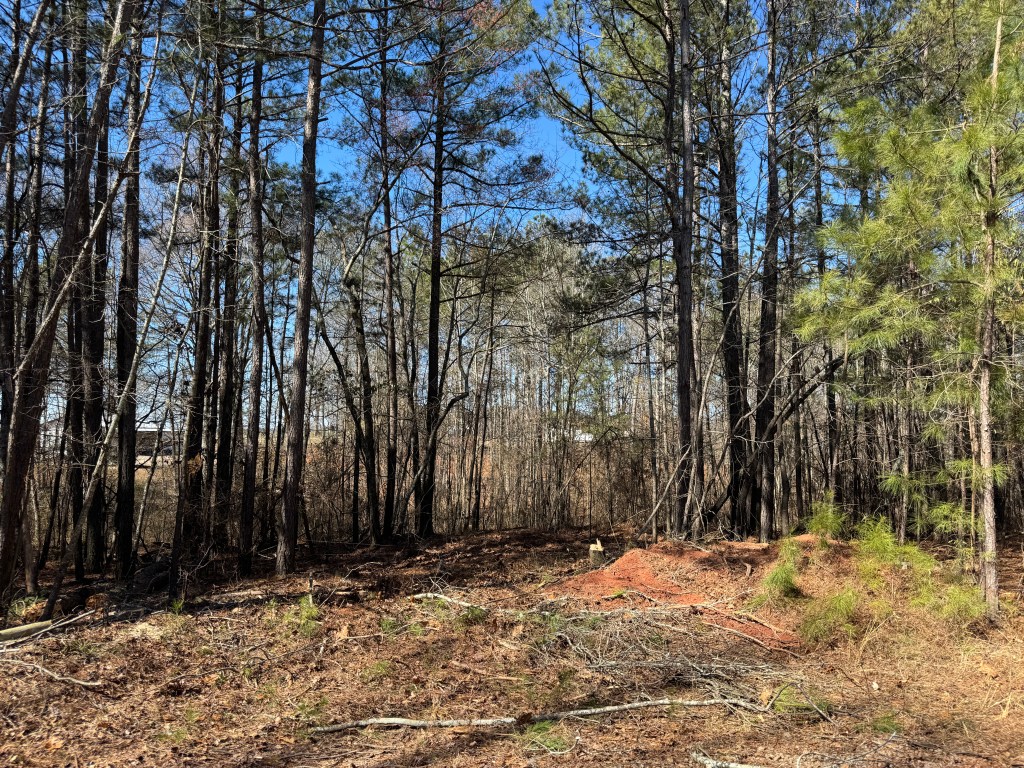
During the last windstorm one nearby pine blew down creating a widowmaker.

These are fairly dangerous and I had to be very careful. The break was about 6′ off of the ground. Even though it looks straightforward, when the tree came down it broke into 3 pieces and actually fell back toward the stump. It was good I had an escape route planned.

The antenna will go over the top of the house, and attach to a red maple.

It will take me a couple of months to gather all the supplies I need for the antenna. Being on a fixed income doesn’t always fit into the “I want it now!” mindset.

As I write this I am recovering from a stomach bug, which can lay you out for 1 or 2 days. Another project I am working on is a mount for my Diamond RHM12 antenna. I hope everyone is doing well, that this year is better than the last, and I get the opportunity to work you. 73 de Scott
AAR Bald Mountain

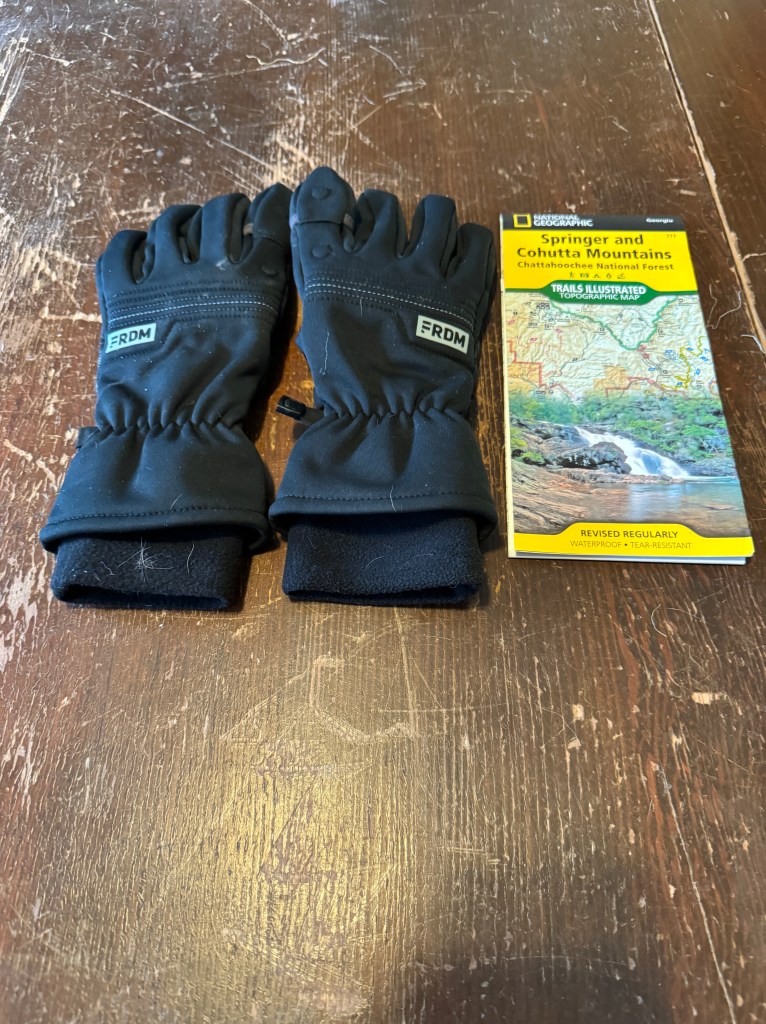
My training from the military compels me to perform an after-action report of sorts. I have found it beneficial to review an adventure as quickly as possible while the triumphs and foibles are still fresh in memory. This becomes more important as we age. Today (Thursday) is a few days after my SOTA activation on Bald Mountain. In general, things went well even though the weather was not as nice as was expected. The climb was as expected, I had to huff and puff a bit which at my age was expected. Two things that came to mind were: 1) the pack could be a little lighter (it was 15 pounds with water and my Goretex jacket) and my hands were cold enough to hinder my CW sending. For my hands, I bought a pair of warm gloves that can expose the fingertips of my thumb and index finger. Because I was warmed up from the hike, the Goretex jacket was enough to keep me warm.

I decided to lighten my load a little bit. When climbing, a lighter is better. Here is a list of my new slimmed-down version of my SOTA pack. I got the pack down to 10 lbs without water or a jacket. I probably saved about 2 pounds, but hey! two pounds is two pounds.

Starting with my person, this is what I carry:
Wallet – minimalist
Bic Mini-lighter
Fischer Space Bullet Pen
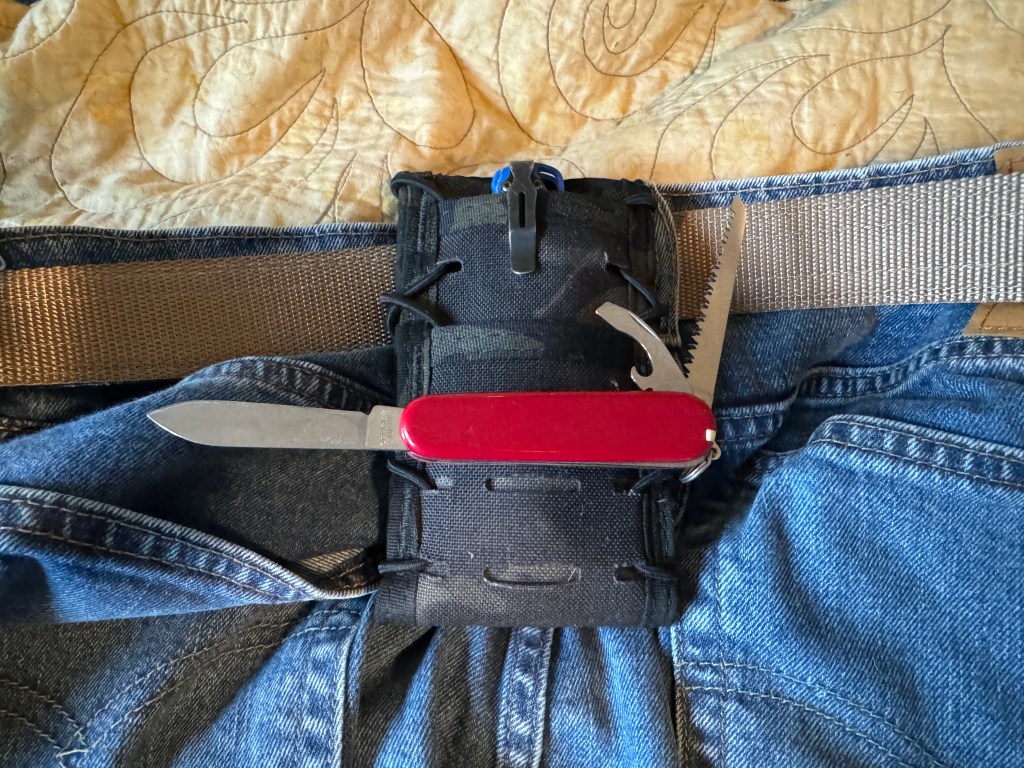
Swiss Army Knife Hiker
iPhone
Benchmade Bugout Knife
Notebook 3×5
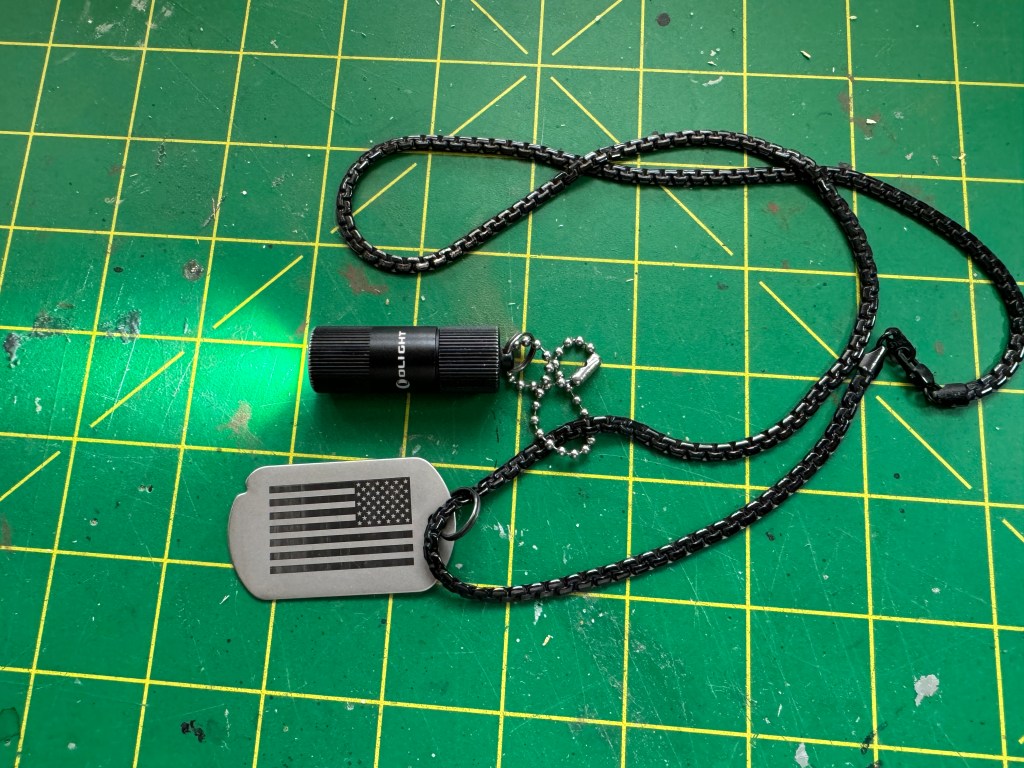
Dogtag with emergency contact info on a neck chain
Olight i1r2eos flashlight on the chain with the dog tag

The Bugout rides in the same pouch as my iPhone in its own pocket. The pack I use is a Camelbak Military HAWG. It’s the old style. I’ve had it for quite a while and when I need a smallish pack, it’s the one I grab. The orange strip is highly reflective.

Attached to the left shoulder strap of the pack is a Garmin InReach Messenger. Some of the places I activate have little or no cell service so I use the Garmin to spot myself and keep the wife updated.

E&E Pouch
In the Army, we often made Escape and Evasion pouches. A small pouch with just enough stuff to get by. This one fits in a 6 x 9″ Alocsak Pouch and weighs 10oz.
Ferro Rod with carbide striker
Magnesium Rod
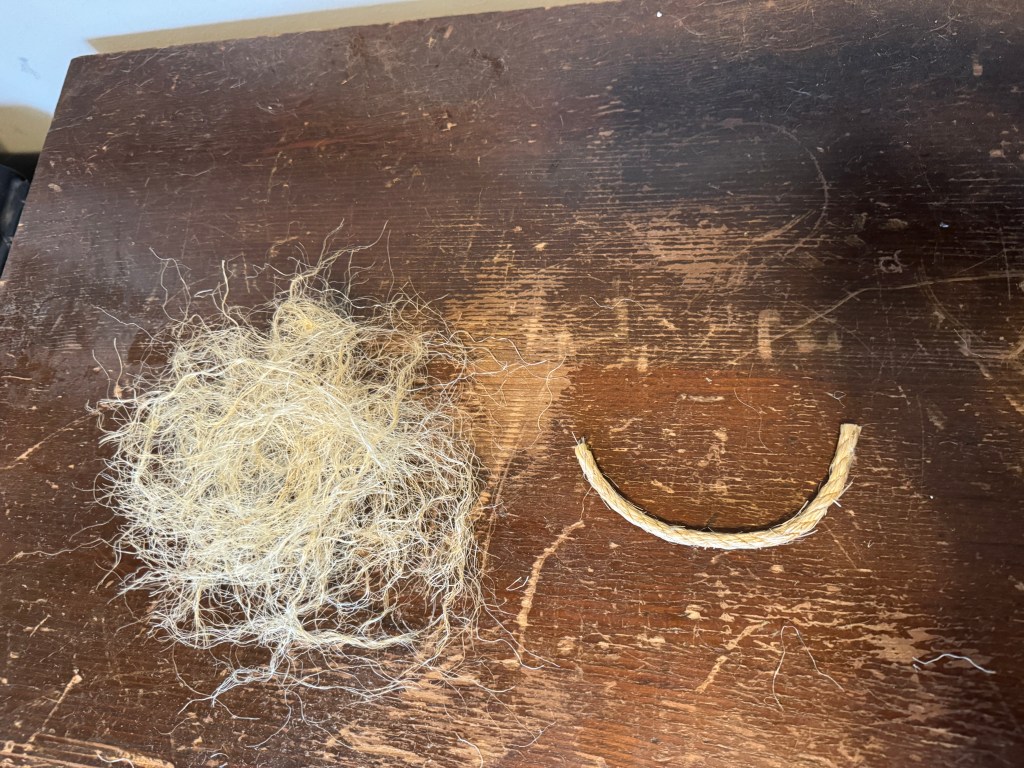
2 – 3/8 by 8″ Sisal Rope
Tropical matches (from MRE)
Tinder
Lighter Pine
iFAK
Whistle
Compass
Space Blanket
Signal Mirror
2 – Bic Lighters

The sisal rope is great for fire starting. You take it apart and it makes a nice nest for your fire.

Considering my whereabouts will be generally known, I do have a preference for fire and signaling. Most likely, any survival situation will be short-term, and I want to be found.

The Elecraft Bag
This is the bulk of my radio gear. The Elecraft bag that came with my radio does a great job of keeping things organized.
KX2 with a 3D printed cover
Begali KX2 Adventure Paddle adapter
28.5′ Random Wire Antenna
17′ Counterpoise
30′ Bank Line
12 VDC power cable with Anderson Power Pole connector
N0SA SOTA Paddles (swap with Begali Adventure Duo)
15′ RG-316 with choke (Chameleon)
Skull Candy earbuds
8 oz Arbor weight with line

The rest of the items are dispersed within the pack
1 Liter Canteen with Cup and Spoon
HeadlampSeat Cushion
Contractor Trash Bag
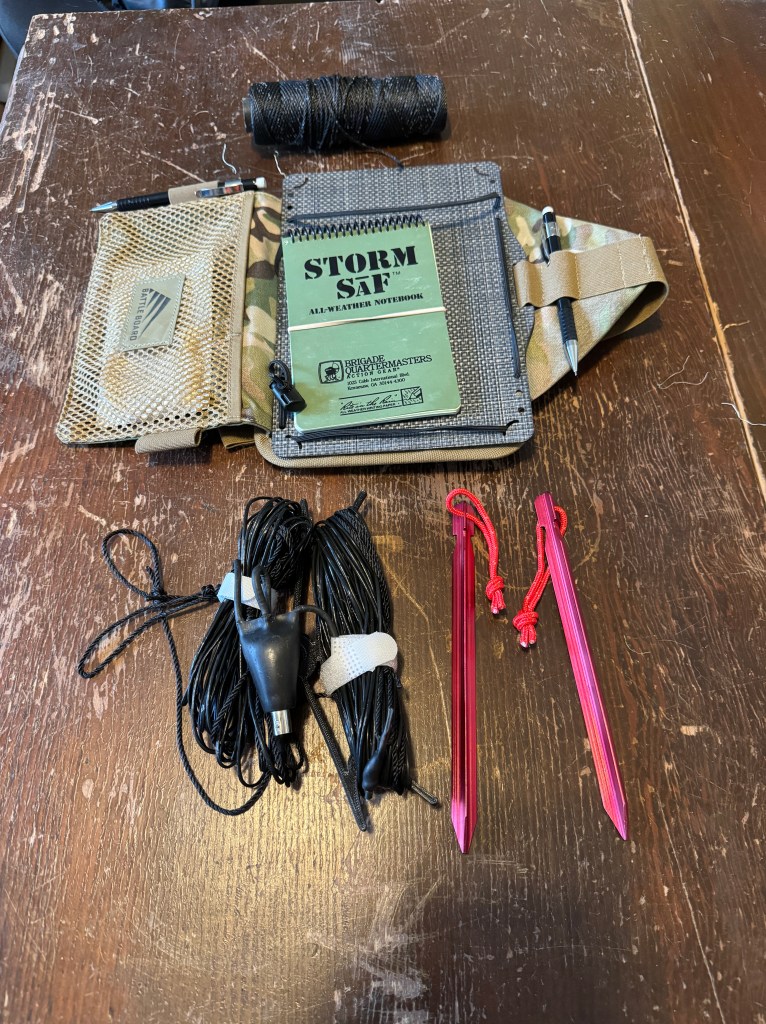
Knee Board
Rite-In-The-Rain 4×6 Notepad
2 Mechanical Pencils
Spool of Bank Line
2 Tent Stake
Chameleon 40-meter OCF Dipole


Finally, there are some seasonal/ad hoc items such as gloves, jackets, food, and localized maps. I have plenty of room in the pack to make adjustments for conditions.

My pack contents will probably evolve over time as I use it. Right now I think there is a good balance in the pack between fun and safety. Some of the places I go are pretty remote. I always tell my wife where I am going and a general itinerary. You should do the same.

How did the KX2 do? This was the maiden voyage of the KX2. Right off the bat, I got to use it in some trying conditions. The weather was deteriorating as I walked into a cloud at the summit. It was windy and I wasn’t really sure what the weather was going to do. I figured I had enough time to make a quick activation and get down off of the mountain before the rains came. I climbed until I got well within the activation zone and set up. I strung the OCF dipole about 10 feet up and set my station right below it using the same tree as a backrest. I was going to use a Flight Deck but I didn’t want to fiddle with so I set the radio on top of the pack. Because the radio is self-contained all I had to do was plug in the antenna, paddles, and earbuds, and I was in business. I made 19 contacts logging on my notepad resting on my thigh. What helped to make the activation a success was the ease with which I got the radio working. Bing-Bam-Boom and I was on the air. As quick as I set it up, I took it down. The KX2 made it easy. I made it back to the truck to beat the drizzle. Since the activation, I added the kneeboard shown. I set it up at home and it should be easier to use than the one I had. I am still learning my way around the radio, but it is indeed going to be my main SOTA radio. Until next time 73 –de Scott