QRP at Home and SOTA Setup

I posted earlier that I was in a radio doldrum. Today I am slowly drifting back to fair skies and wind at my stern. My friend Thomas K4SWL recently posted on his blog a Field Kit Gallery showcasing operators’ various field kits: https://qrper.com/resources/field-radio-kits/ I thought I would post mine.

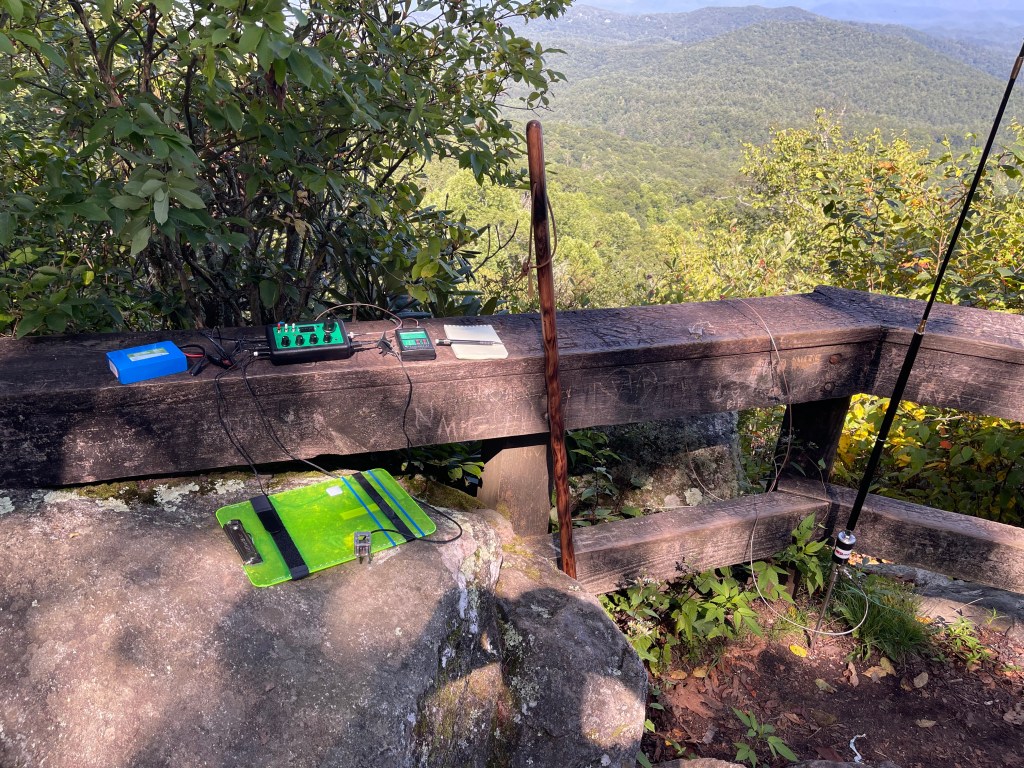
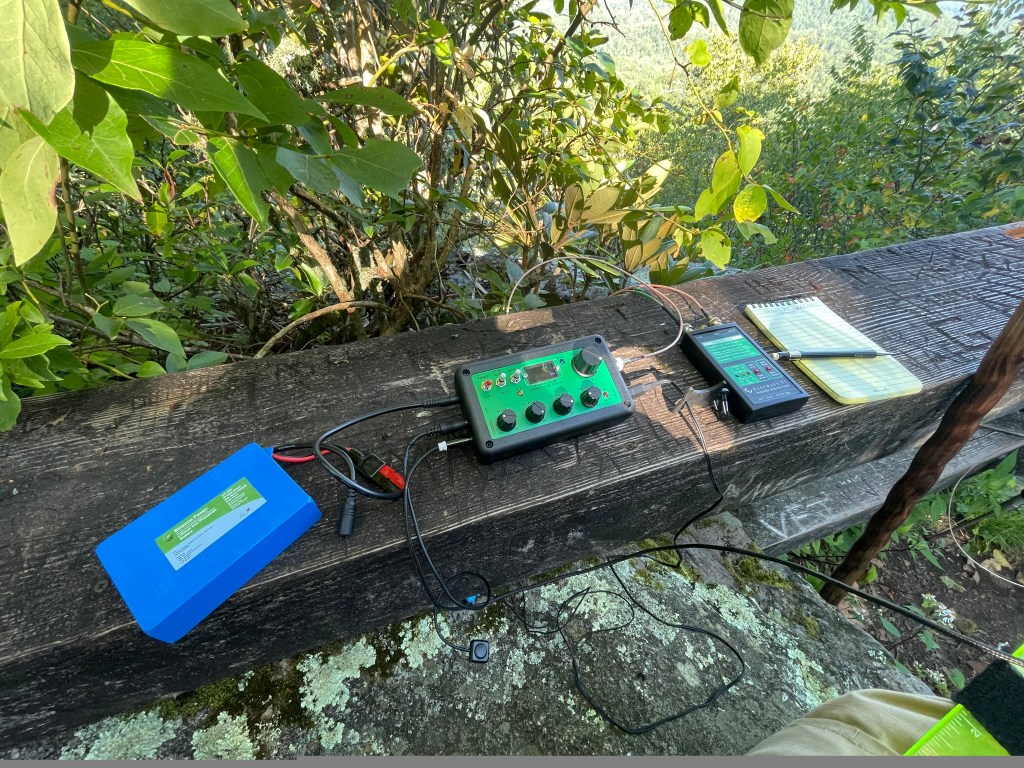
This is what I typically bring for a SOTA activation. I also have some general outdoor essentials like an iFAK, bug repellent, a compass, water, and of course snacks. For POTA, I am usually in my camper and bring a full-sized radio like my Elecraft K3/10. I also have an IC-705 which I like for those one-day POTA activations. The kit is pretty simple and gets the job done. Here is a list of components.

Garmin In-reach Messenger https://www.garmin.com/en-US/p/793265

Elecraft T1 Antenna Tuner in a homemade 3D printed case https://elecraft.com/products/t1-miniature-stand-alone-atu-and-accessories

WA3RNC TR-35 4 band QRP radio https://www.wa3rnc.com/store/tr-35-cw-transceiver-kit.html

N0SA SOTA Paddle

Staples Clip Board

Rite in the Rain 4×6 Notebookhttps://www.amazon.com/Rite-Rain-Weatherproof-Top-Spiral-946-3/dp/B01MQFDNSH

Pentel Forte 0.5mm Pencil – no longer made

Grifiti Band Joes Silicone Rubber bands https://www.amazon.com/Assorted-Standard-Wrapping-Exercise-Silicone/dp/B018WPZCSO/ref=sr_1_8?crid=2EOBSH8X6QR0V&keywords=joe+band+silicone&qid=1696349174&sprefix=joe+band+silicone%2Caps%2C282&sr=8-8

Stretch Velcro Strap (leg strap)https://www.amazon.com/gp/product/B09VY5H5JT/ref=ppx_yo_dt_b_search_asin_title?ie=UTF8&th=1

Homemade Random Wire antenna (41′)

Throw weight and line

3 AH Bioenno Battery https://www.bioennopower.com/collections/12v-series-lifepo4-batteries/products/copy-of-12v-3ah-lfp-battery-pvc-blf-1203a

6 Foot RG-316

Chameleon 15′ RG-316 with Choke https://chameleonantenna.com/shop-here/ols/products/cha-50-coax-with-integrated-rfi-choke-cha-50-cx-wth/v/CHA-RG-316-15-RFI

MM0OPX Balun w/61′ of wire and a 17′ counterpoise

A couple of generic tent stakes

Not shown – a spool of 35# bank line.

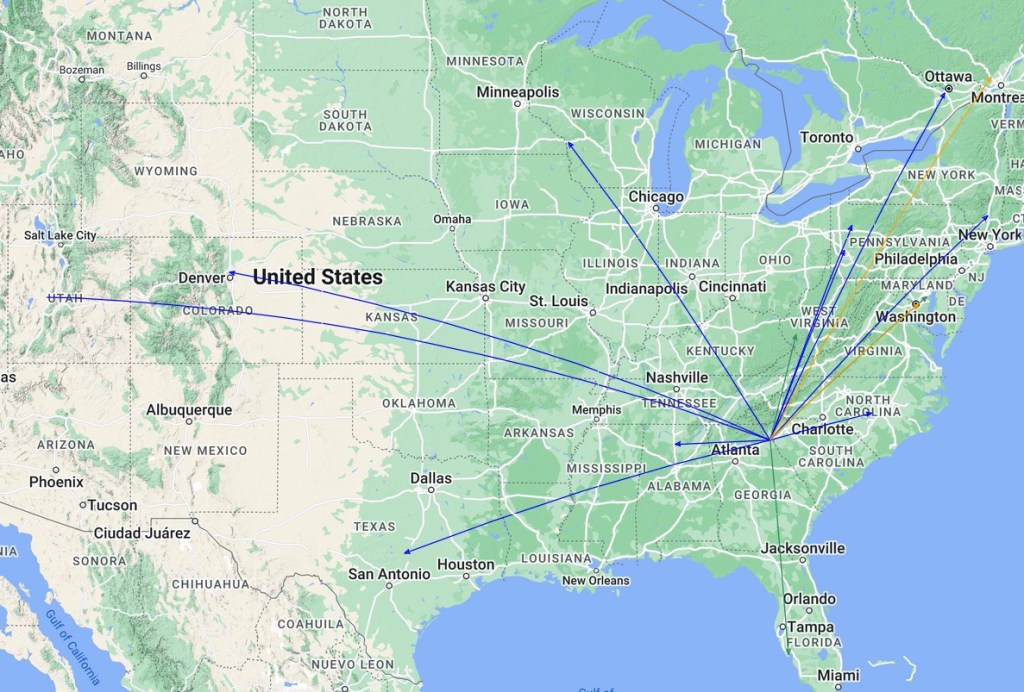
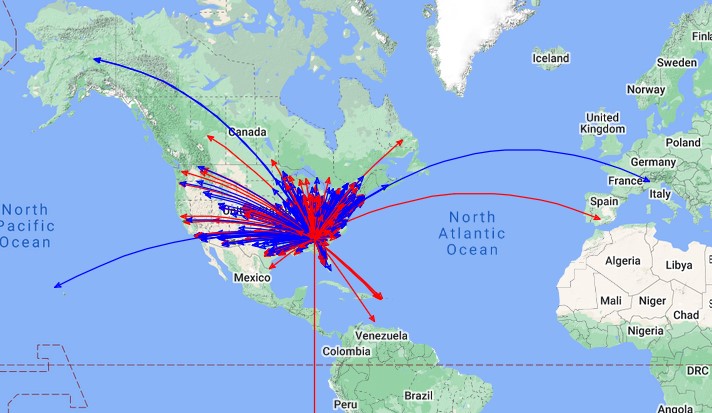
Also, I decided to take a break from everything else I have been doing and get on the air. I recently got my K3/10 back from the shop and thought I would give it a good workout at home so I wouldn’t have another calamity like I did a few months ago https://kk4z.com/2023/08/06/calamity-on-black-rock-mountain/. I set the radio up in the shack and started to make contacts. I had forgotten how far 10-watts CW can get you with a good antenna. At the home QTH, I run a 270′ OCF dipole with the apex up about 35′. I was hunting POTA activators and found I could work almost everyone I heard. I got as far north as Ontario, Canada, and as far west as TX, MO, and IA. This was still the morning and there weren’t many activators out yet. The K3/10 worked like a champ and purred like a kitten. Not hearing relays click during QSK CW is sublime. With the K3/10 cleared for field use, I have a couple of outings planned for it.

It feels good to be back in the saddle again. Absence makes the heart grow fonder, and after being away from amateur radio, even for a short while, I appreciate it all the more. 72 de Scott

Radio Doldrums

For the past month or so I have been in the radio doldrums, A doldrum is a period of stagnation or slump, often doldrum is associated with an area of the ocean near the equator that has little or no wind. Ships were be-calmed.

Radio-wise, I was radio be-calmed starting at the end of August. My wife and I were asked to assist in setting up a command center in Valdosta, GA to organize clean-up efforts after Hurricane Idalia. Valdosta and the surrounding area received significant damage. The command center was a relief effort by the Church of Jesus Christ of Latter-day Saints, where a large body of manpower along with material to help mitigate the damage was going to arrive in Valdosta, the same weekend I was supposed to to go camping. Instead, I canceled my reservation and assisted at the command center, organizing the relief effort. We set up at one of the church buildings and over the weekend over 300 work orders were completed in and around Valdosta. This could not have been accomplished without a high level of organization.

While be-calmed, an opportunity came up to attend the Georgia Beekeepers Association Fall Conference. As I get closer to retirement, thoughts of having more time to do the things I want abound. Beekeeping has been on the radar and with 6 acres of rural land, this should be very doable. I prefaced the conference by reading Beekeeping for Dummies. I was glad I did. while it didn’t make me an all-knowing, all-seeing bee pro, it did give me enough knowledge to understand many of the topics at the conference as well as giving me the capability to ask questions and understand the answers. I walked away with a lot of information — my brain was tired. I am hoping to have bees by next spring.

Some good news was I got my K3/10 back. I had damaged a filter slightly and the radio came with a few other minor issues. Elecraft fixed and updated the radio as well as tuned it up to meet or exceed factory specs. The repairs cost $310 dollars. Elecraft has a $250 minimum so my blunder cost me $60. Since I bought it used and it was homebuilt, I was going to send it in for a check-up anyhow. I got it home and set it up the way I like it.

I had a campsite reserved for the weekend of the 10/06. However, I was once again double booked, this time to help a couple of families with preparedness. The times they are a changing. Sometimes EmComm, sometimes FunComm. Taking care of friends and family always supersedes FunComm. Instead of canceling the reservation, I moved it to February. I have campsites reserved each month until then. While I missed two camping trips in a row, it is looking like I may be able to get out one or two days this week for a local activation. I’ll keep you posted. Life’s an adventure 72 de Scott

Calamity on Black Rock Mountain

It all started innocently enough. This was my monthly camping trip where I take a weekend and go play radio somewhere. It gives me a chance for some FunComm and in a roundabout way EmComm. This month it was Black Rock Mountain State Park. The highest state park in Georgia. I really like this park and try to come here a couple of times a year. It works really well in the summer months as it is usually cooler here than in other parks. There is also a SOTA summit within the park (W4G/NG-027). I thought I would try both a POTA and a SOTA activation with the bonus that any SOTA contacts can be counted for POTA.

Radios for this weekend were going to be my new to me Elecraft K3/10 and my Penntek TR-35 with an Elecraft T1 tuner for SOTA. It was going to be a nice QRP weekend. Everything was going well until I arrived at my campsite. I got the trailer set up and when I reached for the cooler to start lunch, the cooler wasn’t working. Sigh, I had to troubleshoot the cooler before I could do anything else. I found out it blew a fuse and I didn’t have any spares. Luckily, the stereo circuit uses the same size fuse so I swapped the bad fuse for a good one and all is well. Note to self: Buy spare fuses.

After lunch, I set the K3 up and got ready to activate the park. I had no transmit power on the K3. Not on SSB and not on CW zip, nada, none. I spent the next couple of hours trying to troubleshoot the radio. No luck. Prior to the trip, I did replace some of the filters and added the KAT3 autotuner. I am pretty sure I tested the radio after the work I did. The funny thing is when I hit the auto-tune button, I get 5 watts out to tune the antenna. For CW, when I try to send, the TX led lights, but no output. I monkeyed with it on Friday and Saturday but to no avail. May have to send it in for repair. But wait! there’s more.

Prior to turning in for the night, I managed to sit on my eyeglasses breaking both arms. while my distant vision is pretty good, I need glasses for close-up work. Luckily, I made a few contacts on the TR-35 before the incident. I only made a couple of contacts on Friday due to trying to fix the K3, and made about half a dozen more before turning in and breaking my eyeglasses.

Saturday morning, I planned to hike from my campsite to the summit; however, I needed glasses so I drove to the trailhead which is on the way to town where I can get some readers. I have a pair of sunglasses that have cheaters in them, but they aren’t for extended use. I did use them to make the SOTA activation before heading into town.

The hike from the trailhead to the Tennessee Rock Lookout was about half a mile or so. It was mostly uphill and what I would term a moderate climb.

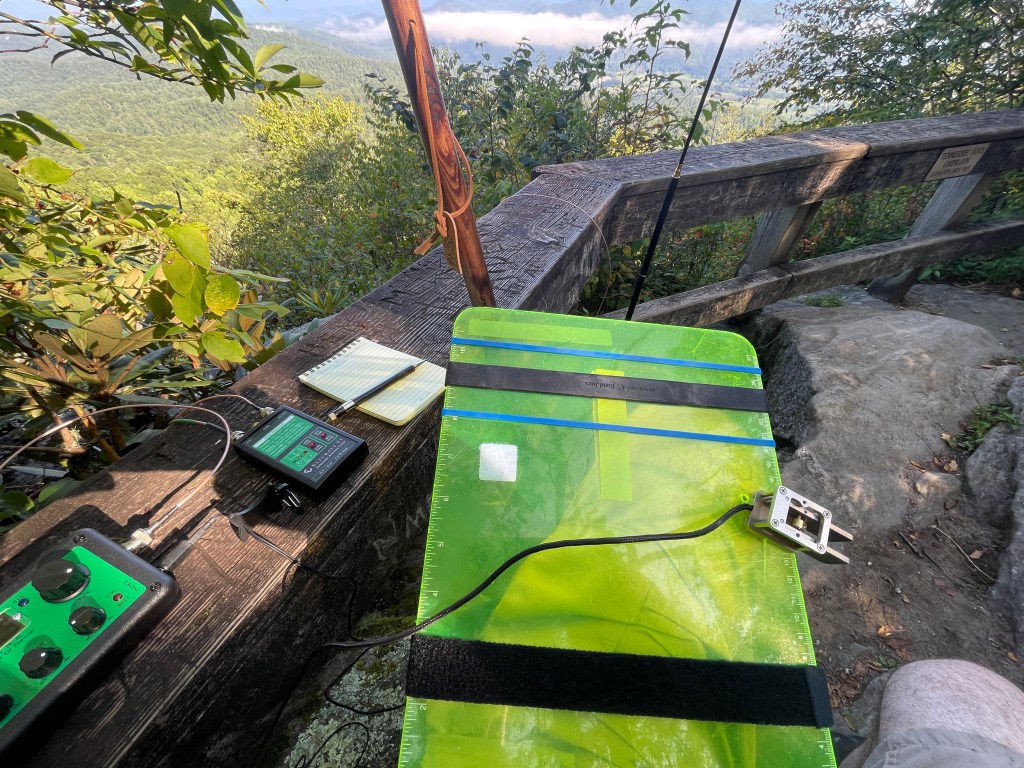
I set up a vertical antenna from my Frankentenna collection and the fence rail at the site provided a place for my radio, tuner, and battery. I used my flight deck for my N0SA paddles and iPhone. I am trying to get better at logging directly into Hamrs on my phone. Each time I do it I get better. Band conditions were not that good and it was a bit of a struggle to get contacts. Before I left the overlook I had 7 in the log enough for a SOTA activation and seal the deal for the POTA activation. It was a wonderful view of the valley from the overlook. It makes the huffing and puffing uphill worth it.

After coming down off the mountain, I drove into town and picked up a set of readers for my eyes and spare fuses for the camper. When I got back to base camp, I had lunch and tried to work on the K3 some more and yes, it looks like it is still going in for repair. The TR-35 did well for a little no-frills QRP radio. It only has 4 bands 40, 30, 20, and 17, so it’s not the best when the band conditions are up, down, and sideways. It is a great radio for SOTA though. Lightweight, 5 watts, and a decent narrow CW filter. I was glad to have it with me.

I made a total of 16 contacts. I would have liked to have made more, but given my “special” set of circumstances, I was able to complete an activation for SOTA and POTA. Below is a QSO Map courtesy of qsomaps.org and a YouTube Video of the activation. Note: The video did not escape the run of bad luck I had, audio is low.

Stuff happens and even though things didn’t work out the way I had planned, I was still able to make a SOTA and POTA activation. Plus I was able to check into my EmComm net on 40 meters. Every time I go to the field, I learn something new or I discover a weakness in my planning. For FunComm it’s not so bad, but for EmComm, where others may be depending on you, failure should not be an option. Practice makes perfect, or at least better. Till next time. 73 — Scott

POTA Activation K-2176 Ft. Mountain State Park

I spent part of the Fourth of July weekend at Ft. Mountain State Park. I really like this park. It’s where my wife and I spent our honeymoon many years ago. This time I had a nice drive through campsite. The campsites are located down from the mountain top but I am usually able to get my signal out. Driving up there, the temps were in the upper 80’s but by the time I got to Ft Mountain, the temperature dropped by about 18 degrees. Seems a cold front passed over but then on Saturday afternoon, it made its way back in the form of a squall line. The wind picked up and we had thunderstorms overhead for about an hour or so. I had to lower the antenna and hunker down in the Radio Flyer.

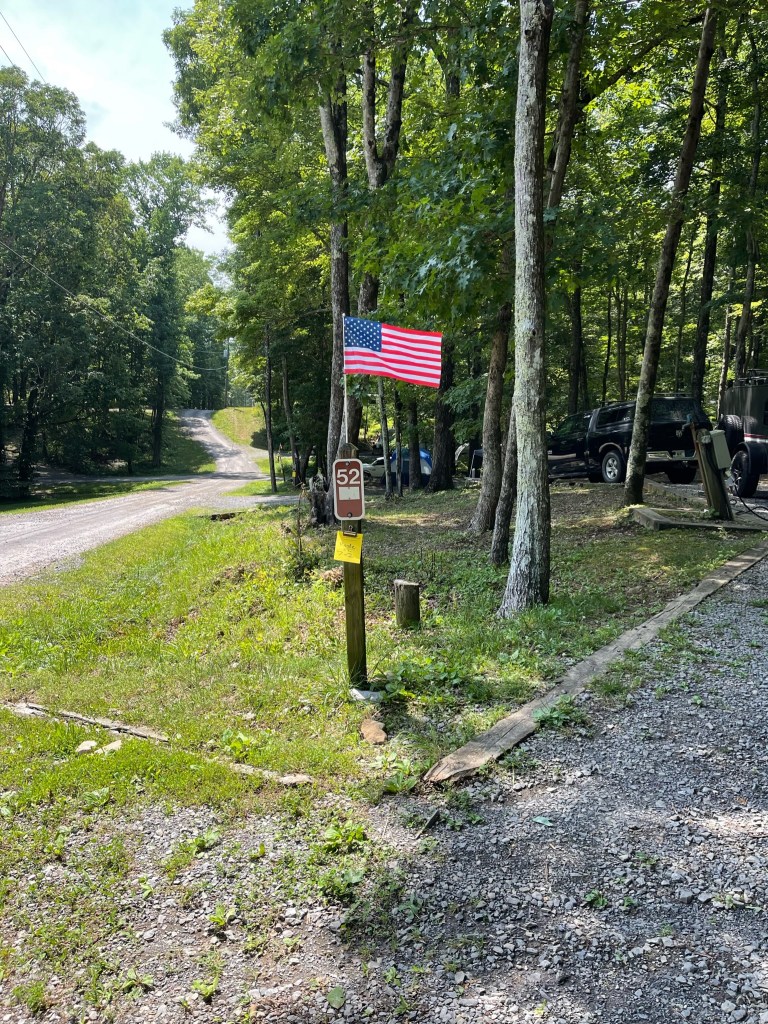
Prior to the storm, the man came around and placed American Flags on the campsite markers. I love seeing our flag especially when the wind stands it up.

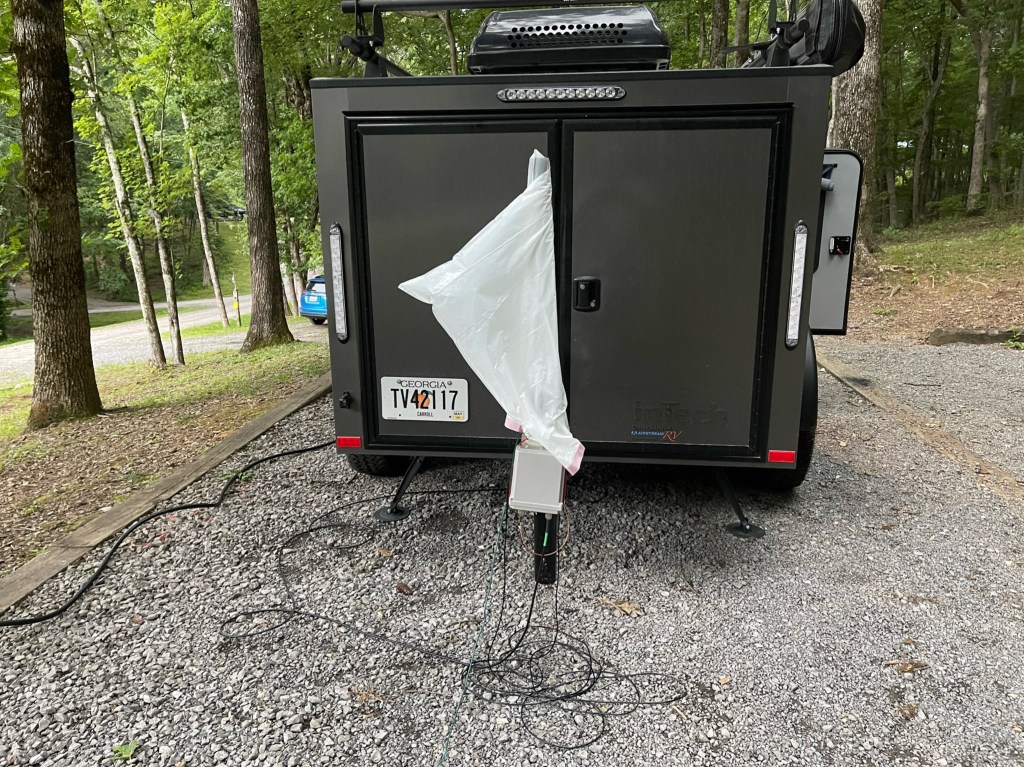
I placed a garbage bag over the lowered antenna to prevent water from filling up the fiberglass antenna pole. My antenna goes up and down in less than a minute.

The setup was typical. My homemade 28.5′ Random Wire Vertical with a 17′ counterpoise. The radio this time is my new (to me) IC-7300. I traded the FT-710 for it. Nothing really wrong with the Yaesu, I prefer Icoms. I now have two IC-7300 for EmComm and FunComm. One thing I can do with the Icom that I cannot do with the Yaesu is show all of the meters.

Where this really matters is during digital operation. I can watch Power, ALC, and SWR all at once. With a mode like FT8, the waterfall isn’t important on the radio.

Band conditions were poor with sporadic good moments. I book campsites months in advance so I have to work with what I got. The mode this time was FT8 and the power was in the 40-45 watt range. The IC-7300 doesn’t even get warm. I went QRV at about 1500 hrs local and operated until about 0100 hrs. I get early the next morning and checked into my EmComm net and then back to FT8. Like to check into the EmComm net from a park to give net members the opportunity to work a field station. I operated all day until about midnight local Saturday night. Sunday I packed up and came home.

Overall, I did pretty well. I worked 510 stations (500 for POTA) including 46 States and 11 DX entities. That puts me pretty close to a kilo maybe next time there. here is a QSO Map of the activation. The money bands were 40, 30, and 20 this time around.

Everything worked as advertised and only a few minor glitches. Below is a short YouTube of the activation. 73 — Scott

Field Day 2023

This weekend I got to participate with my local amateur radio club, the West Georgia Amateur Radio Society (WGARS) for Field Day. This is a great club and every event is fun. It covers a wide variety of activities, including Parks on the Air, Fox Hunts, Balloon releases, Field Day, and Winter Field Day. This year, Field Day was held at the Little Tallapoosa Park located in Carroll County Georgia. We operated as W4F, 5A GA. We did not operate 5 stations all of the time, we padded the number to allow members to bring their own rigs and operate for a short time if they desire.

I decided to make a night of it and brought my micro camper. Because I was in a group setting I set my radio up outside as there were plenty of folks to keep an eye on each other’s equipment. My original intent was to operate FT8 and CW. I have a newly acquired Elecraft K3/10 I wanted to try. However, band conditions were poor, so I relied on my IC-7300 and FT8. The club president tried CW and only made 2 contacts.

Everything worked well. The only glitch was a software one. We networked our computers together with N3FJP’s AcLog for Field Day. The glitch was with the CQ message. I set mine up for CQ FD W4F EM73. It would stay that way until I clicked on an incoming message (red). The FD would change to PACC on its own. I would have to change it back to FD before calling CQ.

I know this wasn’t isolated as I saw other stations from other groups calling CQ PACC. I had to keep an eye on it the whole time I was operating.

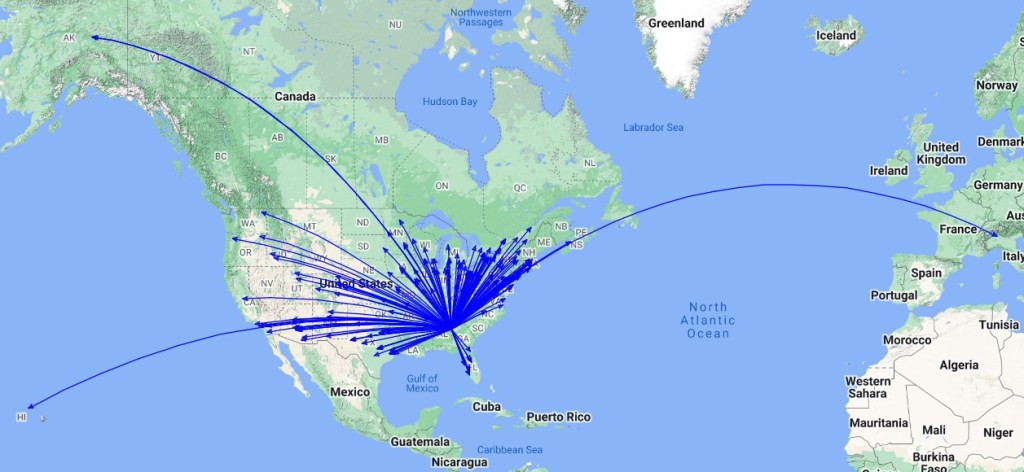
How did we do? I think we did okay. Our group is a little more casual than others but, by the time I left by mid-morning Sunday, we were north of 500 contacts. Here is a club QSO map.

I had a good run. I mainly ran FT8 on 20 meters. I ended up with 200 contacts from 38 states and 4 DX entities. The most fun came in the wee hours of the morning when there are DX openings to the west. I was able to make two contacts with Alaska and one with Hawaii. also about the same time I managed a contact to Italy. I didn’t hit the sack until 0400 hrs Eastern.

I was up at 0700 hrs to make the last few contacts. I wanted to pack up a little early before the heat of the day. I had a breakfast of eggs, bacon, OJ, and a pancake in a cup before heading home.

It was a lot of fun. I enjoy field operating and seeing how well my equipment does. What better way to spend a weekend than with friends and fellow amateur radio operators. Below is a short video about the event. 73 – Scott

What the Heck is going on at KK4Z!

Over the past week or so I have had a bit of a shake-up. I decided to sell some of my stuff so the line-up is changing. Yesterday, I drove to a friend’s house for a visit. While there I traded my FT-710 for an IC-7300. Yes, I now have two IC-7300s. They are a part of my EmComm package so now my primary and backup field radios are the same. One of the problems I had with the 710, is a needed extra stuff to make it work with my field gear. That and the IC-7300 is easier to use.

I think I said it earlier but the TX-500 is gone and the TR-45L should be leaving soon. The TR-45 wasn’t getting much use because of the IC-705. In their places, I have a QRP Labs QMX and an FX-4CR on order. When I don’t have to pack something like on a SOTA Summit I prefer bigger radios because they are easier to use. To that end, I am currently working on a deal for a QRP K3. It’s kind of a dream radio for me. I am looking forward to getting it.

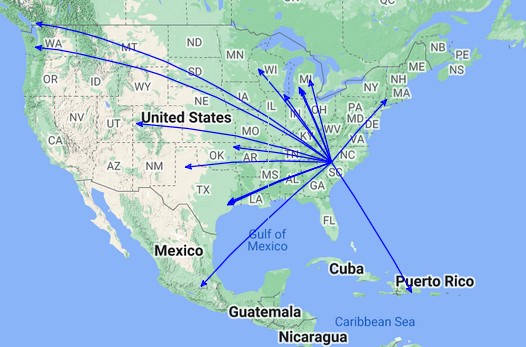
My friend lives in SC so while I was there I did a quick activation at Chester State Park K-2889. I never did a POTA activation in SC so I wanted to check that box. I didn’t have much time as I drove up and back in one day so the activation was short, just 16 contacts on FT8. I stuck to 20 meters, and I made some decent contacts riding the crest of the QSB. here is a map.

The park is small and a little out of the way. My kind of park. It’s a fairly popular park with POTA enthusiasts, and I can see why. I enjoyed the short time I was there and maybe in the future, I can go back and spend more time. Below is an equally short video on the activation.

Assault on Dugger Mtn

On Saturday, June 10th, I decided to try a SOTA activation. I wanted a Saturday workout and test my gear, to see how I fair on a 6-point summit. I have eyes on doing a 10-pointer in the future. The summit reference is W4A/PT-002.

As I soon discovered, Dugger Mountain is no easy summit. From my starting point at a Forest Service Road where the trail crosses, it is a steady climb for almost 2 miles with an elevation increase of over 1,200 feet. After that, it is another quarter-mile climb bushwacking to the summit.

There was supposed to be a trail leading to the summit but I didn’t find one. It was probably overgrown with the summer foliage, I don’t think it would have helped much. Once I got to the top, I found a nice clearing with plenty of rocks to sit on. This time of year in the South is not a good time to sit on the ground, it is the middle of Chigger and Tick season.

The radio du jeur was my Penntek TR-35. It is a nice handy radio covering 4 bands: 40, 30, 20,17, my workhorse bands. The TR-35 is a 5-watt radio which can put out slightly more with a good battery. The radio has an excellent receiver and there are no hidden menus. You could say it is WYSIWYG, What You See Is What You Get. The radio was powered by a Bioenno 3 amp/hour battery that was rubber-banded under my homemade Flight Deck. The Flight Deck is an inverted plastic clipboard with some holes drilled for my N0SA paddles. There is enough room left for a Rite-in-the-Rain 4 x 6 notebook and/or my iPhone. I also have a large Velcro strap to secure it to my leg if need be.

The earbuds are made by Skullcandy and I like them a lot. If you look to the left of the clipboard, you will see a red dot. That is a momentary on push button connected to the key input on the radio. The radio comes with 2-inputs, one for paddles and one for a straight key. I use the button to tune the tuner.

The radio is connected to an Elecraft T-1 tuner and the coax is RG-316, The antenna is a home brew 41′ Random wire antenna without a counterpoise. I use a 15′ coax between the tuner and antenna for the counterpoise. It is made by Chameleon and has a choke balun at one end. When running a random wire antenna it is good practice to use a choke to prevent unwanted RF from getting into the radio. The antenna uses a homebrew 9:1 UnUn.

Many parts of the Talladega Nation Forest are isolated and cell service is spotty at best. For this reason, I carry a Garmin Messenger with me. It allows me to send SMS/Text messages as well as location information. Since I am sometimes doing a solo activation as an old guy, it gives me a safety net and gives comfort to my wife.

QRV. After a short break and set-up, I went on the air. I expected bands to be poor; however not as poor as the actual conditions. It was probably not the best day to be operating QRP. I had to work pretty hard to get the 4 that I did (enough for a SOTA activation). If I had a wish at that time, it would have been to have higher bands like 10 thru 15 which were supposedly open then.

The trip was fun, Dugger Mtn is off of the Pinholti Trail. It is a fairly well-maintained trail and was easy to navigate. The elevation changes there and back will put your boots and socks to the test. I am happy to report no blisters were indicated. This hike gave me an opportunity to test out my kit. It has been a while since I did any hiking with a pack. One thing I am going to do is lighten the load. I didn’t feel too overpacked, but I need to lose some weight in the pack. I will work on that Sunday. Here is a short YouTube of the trip. 73 — Scott

POTA Activation K-2187 with the Yaesu FT-710

This weekend, I tried a new park, The James H. (Sloppy)Floyd State Park. With a name like that, what’s not to like. It’s a beautiful quiet park that is not too far from the home QTH. How convenient I thought.

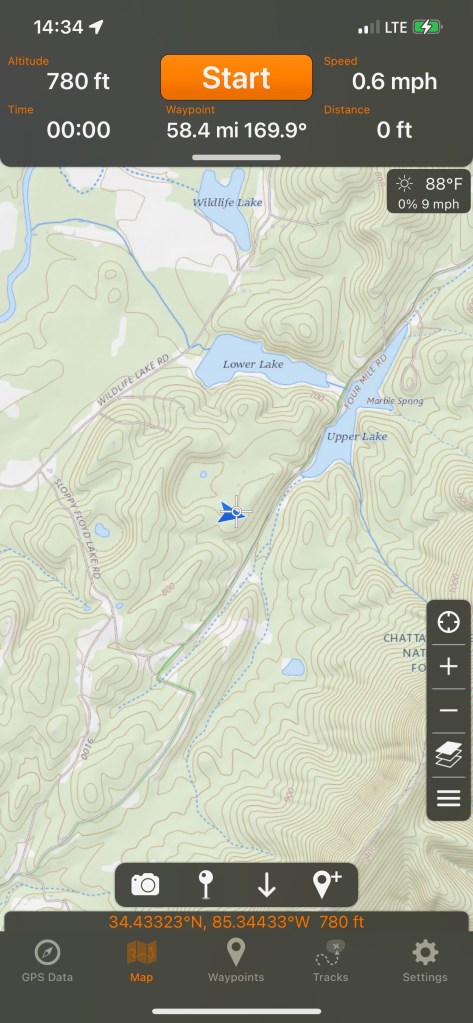
The Trouble I discovered was the park is located in a river valley. My campsite was well below the ridge and hilltops. It wasn’t until later that I checked my topo map. In addition, the bands were not in good shape but hey, I’m up for a challenge.

It is a beautiful park with lots of peace and quiet. The setup was my usual, my 28.5′ Random Wire antenna with the Yaesu FT-710. In hindsight, I should have rigged the antenna in a horizontal orientation rather than a vertical one to take advantage of NVIS or Near Vertical Incidence Skywave propagation. I have been reviewing the FT-710 and I thought I would finish up with the POTA Plaque weekend using CW. I even left the laptop at home to avoid temptation. I used HAMRS for logging and kept a notepad handy for scratch paper. Another thing I wanted to try was going paperless.

I started by calling CQ POTA but that wasn’t really getting me anywhere, I made a few contacts, but the deck was stacked against me. I switched over to Search and Pounce (S&P). I was going to do S&P but not right away. I wanted to S&P so I would be working with other activators. Making contact with someone who has a tribander and 1,500 watts is no challenge. Working other activators really gave the 710 a workout. I had to twist knobs and turn dials for a lot of the contacts. Many were S0 signal strength and often down in the static. It was a good test of the receiver. When I finally went QRT sometime around 1845 UTC and had 52 contacts. Not a lot, but each one a challenge. You will notice in the photo above, I have a weight on the paddles. To operate one-handed I need the extra weight to hold the paddles still. The weight is 500 grams or about 1.1 lbs.

How did the FT-710 do? Quite well. I was pleased with its performance. I was able to work stations I could hardly hear. The filtering worked very well. The DNR does get a little watery sounding as you increase its presence. I usually kept it between 2 and 6. With this radio and any SDR radio, RF gain is your friend and Preamp is not. Sometimes dialing in (actually taking out) a little RF gain is just enough to make that signal pop.

Issues? A few but none earth-shattering. When using headphones sending CW, there is clicking as the code is being sent. It happens at all volumes. It’s a little annoying, but not irritating. Another niggle is using the clarifier. When the clarifier is engaged, it uses the main tuning dial to adjust it. You have to turn off the clarifier to change the frequency. Yes, you can use the Step/Mch knob, but the lowest step is 1 KHz. The 7300 does not use the main tuning dial to set the clarifier.

One thing the 710 has that the 7300 doesn’t is the ability to send CW while in SSB mode. I really like that feature and I use it. The 710 is a likable radio and compares favorably with the 7300. Each has its pluses and minuses and I feel in the end, they equal out. I own both and unless you have a specific need for a specific feature that one or the other has, I think either one will serve you well.

This go around I used the HAMRS app on my phone to log contacts. I have the iPhone Max so I have a bigger screen and it wasn’t that difficult to keep up. Things did get a little dicey when signals were down in the noise but with a little more practice, it (and I) will be fine.

Even though my activation didn’t turn out as well as I expected (through no fault of the radio), it was a beautiful weekend to be out and about. I may not try another activation here, but it is a nice place for some peace and quiet. Until next time, 73 — Scott

POTA Activation Kolomoki Mound State Park and First Kilo

This past week I got to spend a few extra days at a park. My Church Youth Group was camping at this park and I offered to set up an amateur radio station to showcase what it can do.

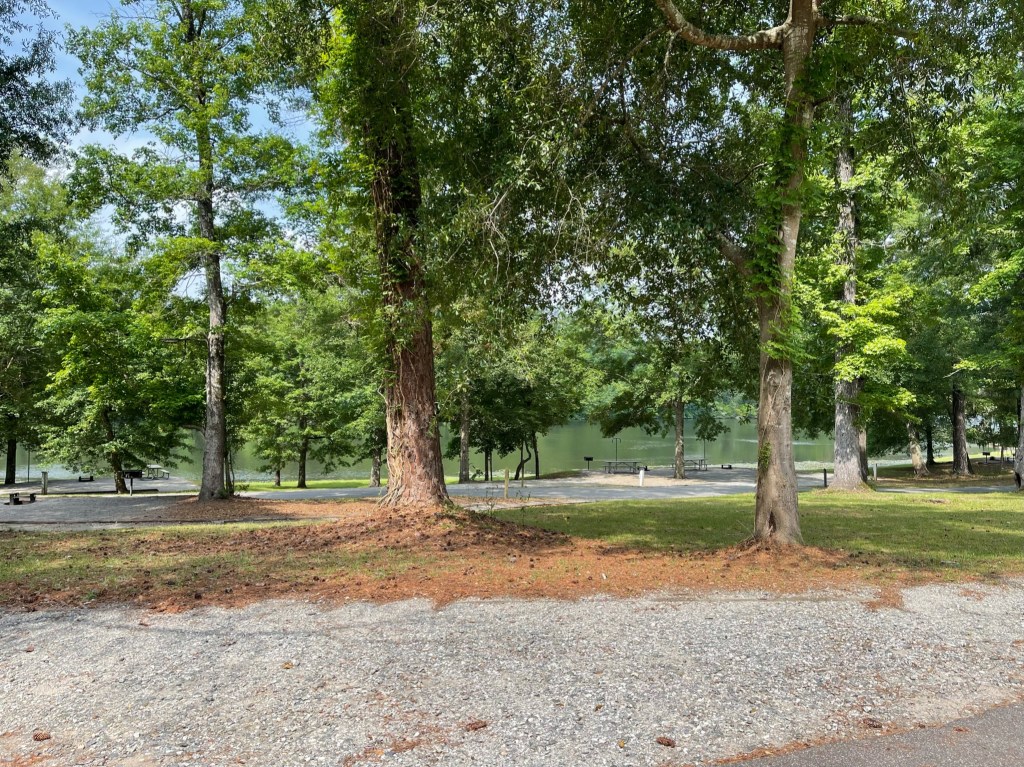
The park is one of my favorites. It has a small campground and it is always peaceful and quiet.

There are a couple of and lakes fishing is one of the activities available here. You can also rent kayaks for a bit of a paddle. My campsite this go around was nestled back in the trees, and while there was a campsite right next door, the campers were quiet.

The antenna I used was my 28.5′ random wire antenna up a 31′ Jackite push-up pole. I got the green one and as you can see above, it almost disappears against the foliage.

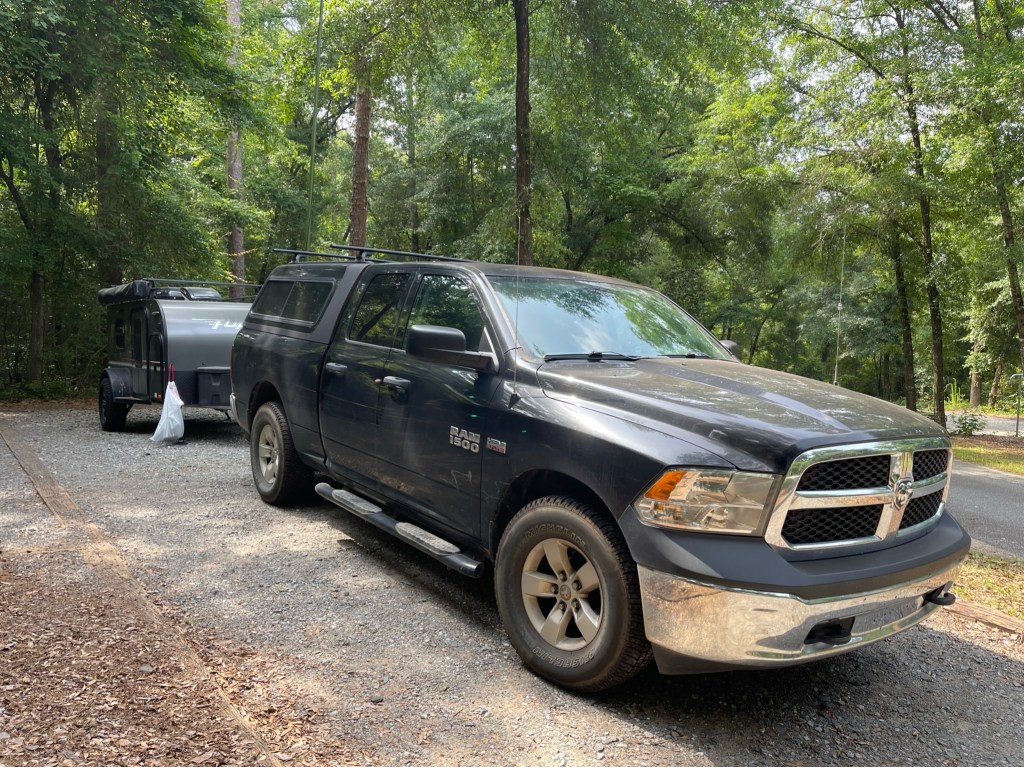
Like last time, I had to mount the antenna to the truck due to trees over the camper.

Two new additions to the camper were screens and a radio desk. The screens were a kit designed for the camper. Installation was simple. You attached metal disks in the appropriate places and the screens attach by magnets. I mainly used the screens on the back door. It gave me a more open feeling and with the roof fan or A/C, I was able to keep the camper quite cool even in 85-degree heat. By keeping the side door closed, I had a nice breeze at the back. The desk was covered in a previous post but this was the first real workout it got. Here is a picture of the setup I used this weekend.

This would be a typical setup. There is room for a key (paddles) and everything is within easy reach. On the top shelf is a switching power supply, a Yaesu FT-710, LDG RC-100, and a Garmin InReach Messenger. This was another good workout for the FT-710. band conditions were good on Tues and only fair on Wednesday. My mode of choice was FT8. I was within 330 contacts of a Kilo and knew I could get it done. I ran the FT-710 pretty steady at 45 watts for almost 12 hours. The radio did not get warm and no hiccups were noticed. The screen is easy to read and most of the controls are in the right place. I find that in the field, the 710’s main menu, is a little too busy. Sometimes I have trouble finding the option I wish to change. Overall, the FT-710 is a likable radio. I am going to do some CW POTA Activations with the radio in the near future. I still feel that the FT-710 is very comparable to the IC-7300 and whichever brand you are married to, get that radio. If you are a new op or have no brand loyalty, I would still recommend the IC-7300 over the FT-710, because I feel the ergonomics are better. I still plan on keeping both radios.

Garmin InReach Messanger. This trip was the first time I took the InReach Messenger to the field. Cell service at Kolomoki is very spotty. A nice feature of Messenger is it uses an app on my iPhone. The app is very similar to other SMS apps. Once I got there, I was able to send a quick text home along with my location, downloaded the current weather, and spot myself on POTA. Messenger is so much faster than my old InReach (the first clunky big one). It is now a regular part of my kit and will be a boon to EmComm and FunComm.

FunComm. I have used this term a few times lately and probably need to explain it a little. Among other things radio, I am deeply involved in EmComm or emergency communications. I practice EmComm at home and in the field. Most of the time, the gear you see me take to the field, is the same gear I would take to an emergency. Enter Fun Comm, FunComm is using your EmComm gear for fun doing something like POTA. Each time I go out, I learn more about my gear and its capabilities. Everything is used, tested, repaired, or replaced. I know my gear. I have been to real-world emergencies, and I have had operators come up to me and tell me if I can help them fix their radio, they could be of help. Don’t be that guy. I have had my share of oops and blunders, but I take each experience and build upon it. Now, once a month me and my gear are tested, in a fun way of course. And if something fails, I lose a few contacts, and no harm is done.

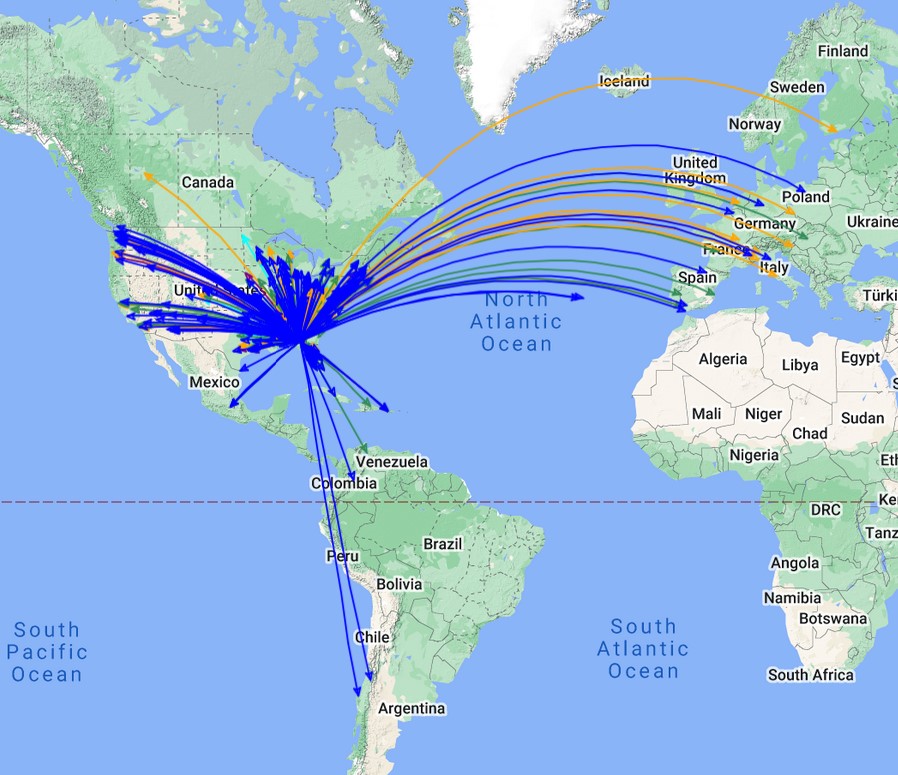
How did I do? Not bad really. I made over 400 contacts using FT-8 from 41 States and 20 Countries. Here is a QSO Map.

Here is a video of the activation.

Penntek TR-35 First Impressions

This weekend is the CQ WPX contest which means there is a lot of activity on the non-WARC bands. It was a great opportunity to take the TR-35 out for a test drive. As some of you know, I tend to do a running review that covers months instead of weeks or days. The same will go for the TR-35.

The first thing I learned is that the CW sidetone level is linked to the TX power. The higher the power, the louder the sidetone. When I adjusted it yesterday, I had the TX power turned way down. When I transmitted today at full power, the sidetone level was almost painful Plenty of volume available. It was a simple fix and I got it where I wanted it.

I fired up the rig using an Elecraft T-1 tuner into my 270′ OCF dipole. With the filter set to CW Wide, there was a cacophony of noise; a mix of static and CW while QSB brought the levels from a whisper to a mighty crescendo. The receiver took it all in stride, Having separate volume and RF gain controls made it easy to tame the beast. Listening to the noise was easy on the ears. Harsh but pleasant. Then I switched the filter to narrow and it was easy to isolate the desired signal. The filter is narrow, but not what some would call contest narrow. In a contest with signals often very close together, it is not unusual to set the CW filter to 150-300 Hz with sharp skirts. The TR-35 feels somewhere around 500 Hz. Could I contest with this radio? Yes, I think I could. The receiver never overloaded, and there was enough isolation that I could clearly hear most stations.

The ergonomics of the radio are excellent. There are 4 single-purpose knobs across the bottom: Keyer, TX Power, RF Gain, and Volume, all within easy reach. These are the controls you will be using the most and they are close at hand. The screen is small but easy to read. I haven’t tested it in direct sunlight yet, but you can reverse the colors to make it easier to read.

How did it play? Very well. I got on the air for a little while and contacted 5 POTA activators. Two of them were in with the contesters and I was able to easily pull them out and work them. I am impressed with this radio. I bought it to do SOTA and wanted a radio with a good receiver. I had read several reviews about the radio and it easily lives up to its reputation. The radio is fun! Small, light, and it is a good performer. Can’t wait to get it into the wild. 73 — Scott