Winter Wonderland

I woke up this morning to fresh snow on the ground. I had the same excitement as I did as a kid. I got dressed and went on my daily 4 mile walk—in the snow while it was snowing. It was glorious, I remembered playing in the snow as a child and backpacking in it as a young adult. I also remember the grueling Army Field Training Exercises (FTX) in German winters. I have seen cold winters, my coldest was somewhere between -20 to -30 degrees F. Winters can be fun, and they can be dangerous. The most dangerous winter is like what we are seeing today on NW Georgia. Snow with freezing rain and temps hovering around freezing. For driving, this means ice on the roads and sometimes ice covered with snow. Drivers unaware that they are driving on ice lose traction and control of the vehicle. Often they are unaware they have lost control until it’s too late. I have driven cars, trucks, military vehicles, and 18 wheelers on snow and ice covered roads. Only through training and experience did I survive those encounters.

These conditions are also conducive to personal physical injuries such as immersion foot, frost nip, frost bite and hypothermia. Being cold and wet by itself may not kill you, but cold and wet, coupled with inexperience will. This blog post is not necessarily about amateur radio, but about operating amateur radio outside in these conditions. Using my 4 mile walk today, I will lay out what I wore and why.

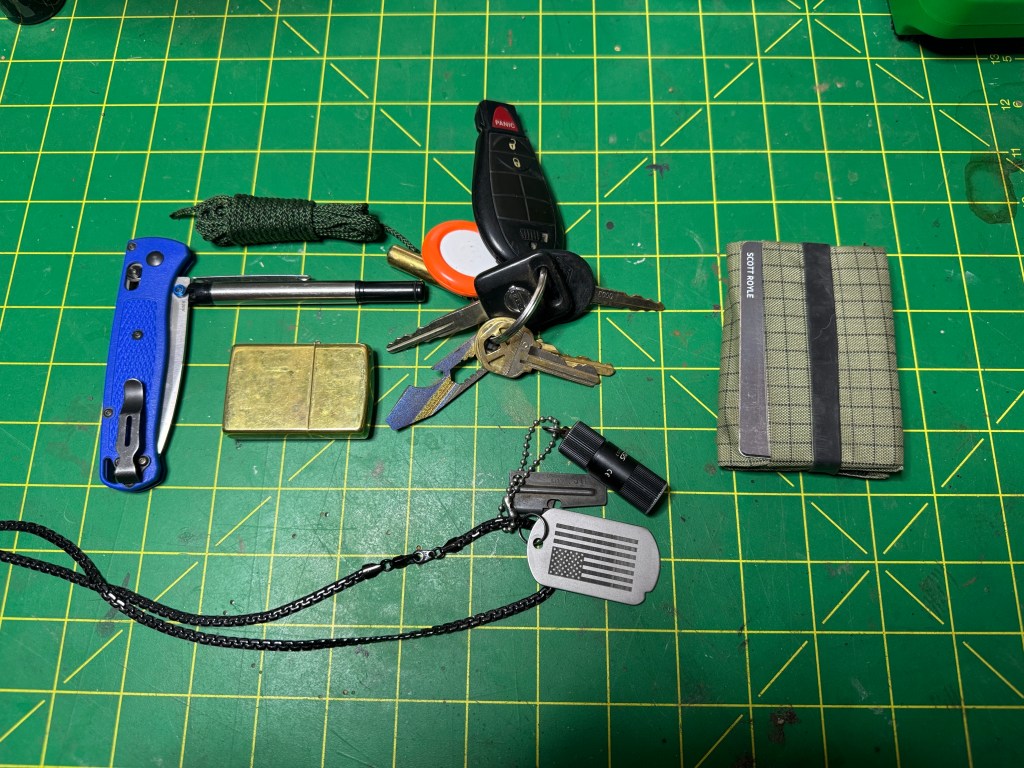
Let’s start with EDC. EDC is Every Day Carry which for me is every time I leave the house I have these items on my. Here is what I carry Every Day.

Knife – Benchmade Bugout. I love this knife. It is the perfect size and
weight. I resides in a pocket on my cell phone holster.

Bandanna

Pen


Lighter – Zippo with a butane insert. I used to carry a Bic Flic but because it is so light, it would fall out of my pocket when I retrieved other items. I do not have this issue with the Zippo

Cord – 10-12 feet of 1/16” 100 lb test cord.

Car keys with a bottle opener

Cell Phone

Necklace with:
P38 can opener (from my army days)
Olight i1Reos flashlight. This is an amazing little light.
Dog tag with emergency contact info and medical insurance info

Wallet with:
Cash, Credit Cards and ID
Signal Mirror
Fresnel lens – for reading and fire starting
A couple of bandaids
Victorinox Swiss Card.
Other items may be added as necessary such as self-defense items or electronics to support blogging/vlogging and radio gear.

Clothing. Starting from the inside out. My undergarments are a mesh top with a bottoms made from 60% cotton and 40% polyester. The next layer was a Carhartt Force Cotton Tee shirt 65% cotton/35% polyester, and Levi blue jeans. I wore Darn Tough wool socks (I wear these year round) and Solomon XA Goretex trail shoes.

My next layer was an Eddie Bauer fleece pullover I got cheap from Sam’s Wholesale. It is 100% polyester. On top of that I wore a cheap Amazon Basics lightweight fleece vest again 100% polyester.

My outer layer was a Carhartt stocking cap 100% acrylic. A TurtleFur neck tube (polyester). Cotton Jersey Gloves and a British SAS Windproof Smock (50-50% Cotton Polyester (unlined and uninsulated). Through the rain/Sleet/Snow I remained warm and dry. My Smock got quite damp but the hydrophobic nature of my under layers and the heat I generated kept the moisture to the outside. If I wore one of my Goretex jackets, I would have been soaked in sweat as Goretex is not as breathable as the smock is.

While walking, I was warm enough to have to unzip my smock and my vest. My gear would have kept me warm down into the teens. I tend to dress one layer warmer than I need. In this case I added the vest. There is a myth that “cotton kills” It’s not the cotton, it’s the operator. Most military uniforms are about 50% cotton. My days in the Army go back to the BDU which is made from Nyco or 50% cotton/50% nylon. I wore that uniform from very hot to very cold and I lived to tell about it. Know your gear, know how it works in different conditions. How does it perform when wet. What I wore today was perfect. My smock got damp, my gloves got damp, but inside I was warm and dry. I walk year round and I walk in most weather conditions. I know how my clothes work. I made myself a promise when I got out of the Army, and that was I would only be cold and wet when I wanted to be. To date, that has not happened. Get outside, try your gear, know what to wear for different conditions. Be safe. Be especially safe when your community needs you. 73 de Scott

Bits and Bobs

This morning I started waxing philsophically about kits and kitting. Some folks prefer to build a separate kit for each radio or each adventure. That can be a fun past time itself. I have tried that and it doesn’t work well for me (YMMV your milage may vary). When I do an activation or for that matter when I am hunting from home, I like to be familiar with my equipment. I like to know what it can and can’t do. One negative about multiple kits is you don’t put your hands on them as much which means they don’t get inspected or checked for damage, dead batteries etc. as much. I’ve seen many times where someone brought one of these kits to the field and something was missing, broken or dead, and they couldn’t get on the air.

This probably goes back to my Army days. We were issued one set of gear and that’s what we used. You knew how every thing worked and your kit was inspected frequently . A good example is my pocket knife of choice. While in the Army, I always carried a Swiss Army knife (SAK). It was used daily for a multitude of tasks. I developed a close relationship with SAKs. Forward to today, even though I can afford fancier knives and I have a few, my Every Day Carry (EDC) is still mostly a SAK. Why? Because I know the knife. I know the steel, how they are built and how to various blades work. For a while I was a UH-60A Blackhawk Crew-chief and the SAK was routinely used to work on the aircraft. Today, a SAK Small Tinker resides in my pocket. I have carried SAKs for over 50 years.

Back to radio stuff, I feel the same way. Even though I have quite a few antennas, I stick to a few that really work for me. I like going on an activation, knowing how my gear is going to work. Today, I was musing that I had my KX2 in its bag that came with the radio. It’s a nice bag but it’s a little tight fitting in my back pack. I decided to put some of the gear in a separate smaller bag. I have a 3D printed face cover and BNC connector cover to protect the radio bits so I can place the radio in my bag by itself. I also thought that my little QRP radios (KX2, IC-705, and QMX) use much of the same gear so I made one bag that all 3 radios can use. Then, when I go an activation, I can just swap out the radio and not worry about leaving something behind. Here is my new radio bag and list. For the rest of the pack contents see my blog post AAR on Bald Mountain: https://kk4z.com/2023/11/23/aar-bald-mountain/

The bag is a Condor Belt pouch. Nothin fancy, but sturdy enough and mashable enough to fit nicely in my backpack. Both my IC-705 and KX2 have a Begali Adventure mount and the Adventure paddle can be hand held. One thing not shown is an anti-slip pad that I use when operating from inside the truck. Here is the rest of the kit:
3’ RG-316 jumper
15” RG-316 with choke
Throw line and weight
Extra Bank Line
Begali Adventure Paddle
28.5 Random Wire Antenna with 17’ Counterpoise
Wire to BNC Adapter
BNC to SO-239 adapter
BNC to BNC adapter
3’ 3.5 mm Stereo Cable
Earbuds
Power Cable for there IC-705
Power Cable for the KX2 and QMX

My backpack stays packed and ready to go complete with a radio. Because it gets used often, I do not worry if the gear is ready, I just grab and go. Part of my Army training that has stuck with me, is I go through my gear when I come back from the field and get it ready for next time. As I said earlier, I plan on doing a one day activation a week along with one weekend activation a month. 72 — Scott

I Got Bit By The SOTA Bug

Meeting with the SASQ group at Cheaha State Park this past weekend renewed my interest in SOTA. Over the past year, I have gotten myself in pretty good shape making SOTA more doable. I started putting together a bag for hiking to SOTA Summits. I have hiked and backpacked at different parts of my life so I have an idea of what I need (and want) for a kit. Since I’m an old guy, I do not want to be carrying the kitchen sink with me. I have a QRP radio coming, but that’s another post. Here is the list of my current load out.

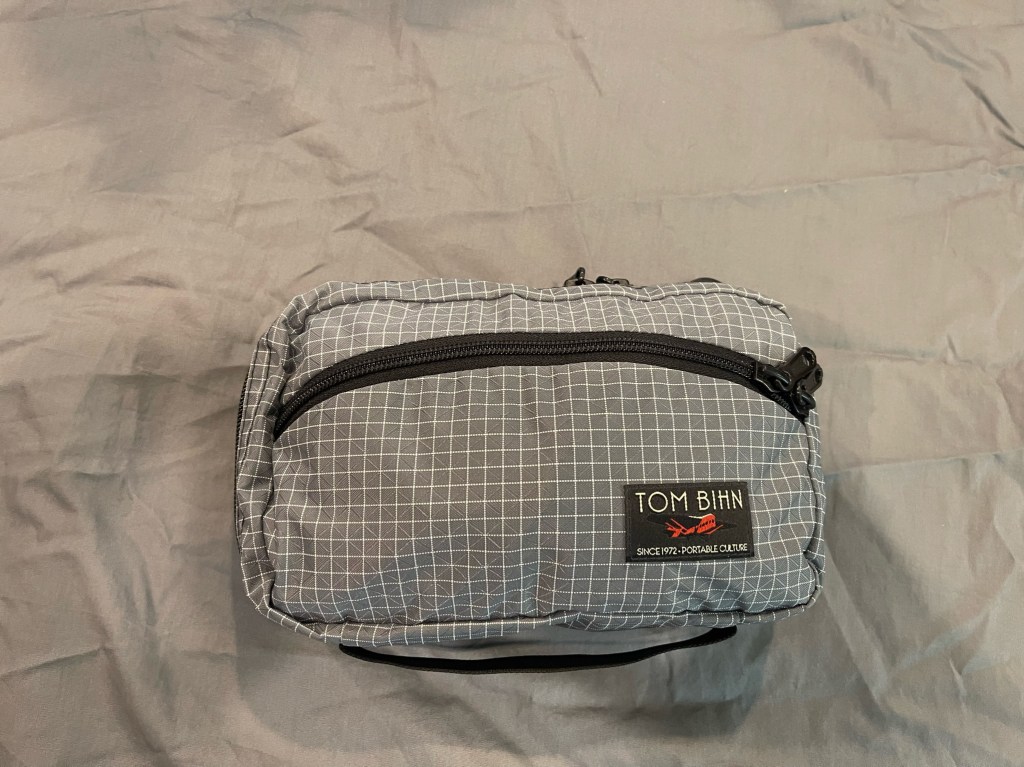
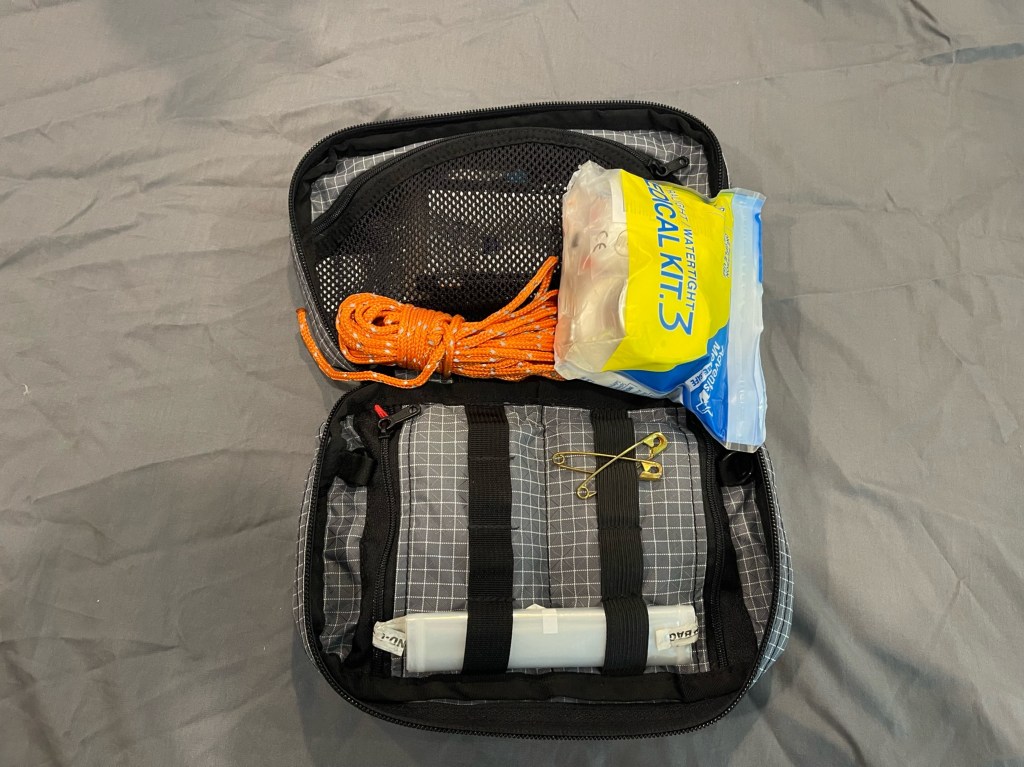
I’ll start with my E&E bag short for Escape and Evasion. Typically an E&E bag has the bare minimum of gear. This bag travels with me when I leave my home area. I move it from bag to bag as needed. The bag is a Tom Bihn Handy Little Thing (HLT) size 2. Loaded, it weighs 24 oz (1.5 lbs).

Here is a list of the contents:
Mechanical Pencil
Bullet (Space) Pen
Rite in the Rain Notebook
Mylar Rescue Blanket
2 – Eye Glass Cleaners
2 – Dude Wipes
Rope
First Aid Kit
2 – Safety Pins
1 – 1 Liter Water Bag
Compass w/signal mirror
Whistle
Survival Guide
Dental Floss
Ferro Rod, Striker, and Magnesium
Fire Tinder
Matches
Duct Tape
P-38
Mini Screwdriver
Flash Drive
Evidence Card
Large Magnifying Glass
Small Magnifying Glass

To carry the radio and associated gear, along with food, water, etc., I decided to use my Camelbak HAWG. It is the older style. I like it because it prevents me from overpacking. The bag and gear without the E&E bag weigh an even 6 lbs., 7.5 lbs with the E&E. With adding food, water, and radios, I am hoping to keep the weight below 15 lbs. I’ve done some Go Rucking with 40 lbs so this should be a breeze.

Here is the list:
Canteen, Cup, and Cover (canteen is Nalgene)
Potable Aqua
MRE Spoon
Poncho
Garbage Bag – Contractor
Rope Kit w/Duct Tape
Triangular Bandanna
Insect Repellent
Tincture of Iodine
Sit Cushion
Tent Stakes – 6

There you have it. enough to cover most events that may happen on an excursion into the wilds, but not too much where you feel like a pack mule. Next work on the radios. 73 – Scott