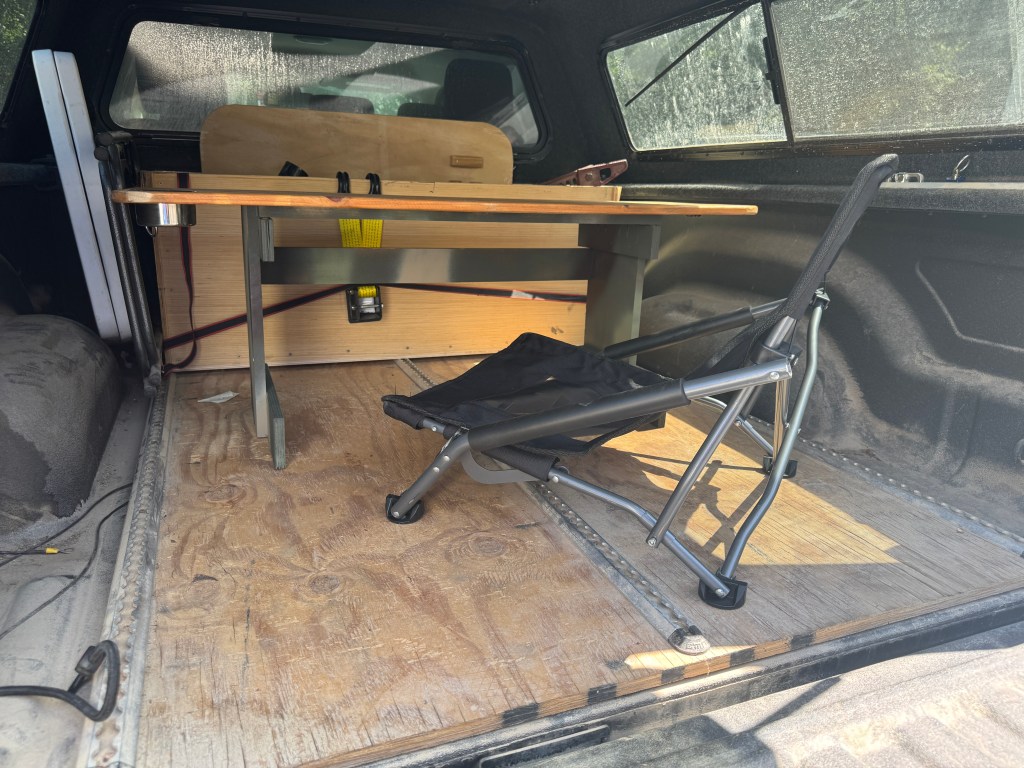
Update. I got the cupholder for the desk. It’s important to have because I often use tall coffee cups or soda bottles in the field. They can tip over easily and make a mess. The cup holder prevents that. Here is a view of the table and chair inside the truck bed.
I have a couple of L-track cargo straps on order that will tie the desk to the bed floor. This is a pretty comfortable setup when I am not in the camper.
Speaking of the camper, the table fits nicely in there too. I will be taking the folding table I was using out and replacing it with this. The other table was too large. You will see the table in action on my next camping trip.
I received all of the pieces for the Chameleon TDL (Tactical Delta Loop). I plan on using it my next trip. What is nice about the TDL is it has a lower vertical height and will be safe to use around power lines.
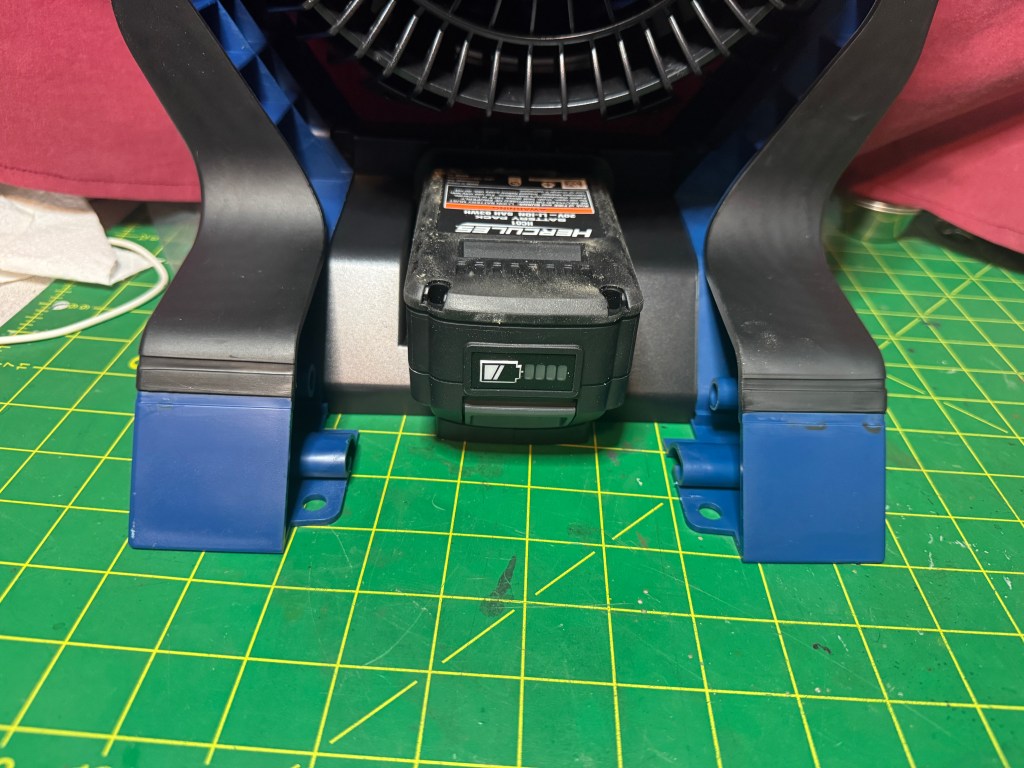
Here in Georgia it can get pretty warm. At the time of this writing Fall is approaching and temperatures are moderating. I added a battery operated fan to my kit. I recently discovered Harbor Freight Hercules brand battery power tools. I needed a small trim router and decided to try Hercules. The router was $69 vs $219 (Dewalt at Home Depot). Since I no longer work out of a tool box, I felt the Hercules brand would have me covered. I really like that little router. I decided to try their fan at $25.
It runs off of 120 VAC and 20V Hercules batteries.
The Dewalt version runs about $125. I can buy 5 of these for one of Dewalt. The fan comes with a 5 year warranty and the batteries – 3 year. From what the folks at the store tell me, it’s no questions asked, any Harbor Freight Store, anywhere. I turned the fan on and it moves air pretty good. Certainly enough for inside the camper or the truck bed.
So far this year, the hurricane season has been quiet and we have only had glancing blows. I check my gear on a regular basis. I have been doing this enough that my annual improvements are incremental. I use my camping trips to check gear and my skill set. I feel that if a call came, I could be ready to go in about 4 hrs give or take.
For those that practice FunComm, good on you and for those that practice Fun, have more of it. Let’s hope for a quiet remainder of the season and that FunComm was only for fun this year. 73 de Scott
My Ic-7100 rides with me in the truck. I have it hooked up to an AH-730 and a 102″ whip. I also have a 60′ wire with insulators and an alligator clip on one end. I can attach this to the whip and make a very effective NVIS/medium range antenna.
I really like the 7100 except that I was having RFI problems. I read where the cable between the control head and the radio was not shielded well so I tried some CAT8 ethernet cable. It worked great once and I couldn’t get it to work again. so I switched to plan B. I added some ferrite cores to both ends of the cable and that solved it up to 75 watts. I still get a little RFI interference at 100 watts but I rarely operate above 50 watts mobile/portable so I am good to go.
The other thing I wanted to do was make the radio easier to detach from its tray. I have some desks that I can put over the center console for laptops, notebooks, etc, but they cover up the radio. So off to TSC for some hardware. This is what I came up with.
The knob fits under the tray and makes it easier to unscrew the control head from the tray. I have about 5′ of cable to move the head around, enough for what I want to do. Installed, it looks like this.
I am glad I got the RFI problem sorted and made the head easier to remove. I also have another cable so I can now get the control head outside of the truck and on a folding table if that’s what I want to do.
Marching to the beat of a different drummer.
I know I do a few things differently. Many POTA activators use small QRP radios or compact radios like the FT-891 when they activate. That’s not me. I have always had a foot in the EmComm world and I enjoy working weak signals. There’s an art to catching the weak ones and it takes a good ear. It also takes skill in operating your radio. I like to have the controls I use most easy to get at like I find on radios like the IC-7300, and TS-590sg. I also like to operate low power, not QRP. I mostly find myself in the 20-35 watt range. Even at home, I am usually at 50 watts. Low power gives me enough oomph to make the contact and still makes it a challenge. Through most of my amateur radio career, I have been involved in EmComm. I use FunComm events like POTA to keep my EmComm skills sharp and my radios and antennas in good working order. Not using your EmComm gear until the “Big One” hits often brings unwelcome surprises. I know I am getting a little long in the tooth for some EmComm but old habits die hard. 73 de Scott
Over the past couple of years, I have spent a lot of time taking what I call big radios to the field. These are 100 watt radios that I run at reduced power usually between 20 and 35 watts. I can run digital modes all day long on a big radio at this power and it won’t even get warm. I usually take them out for a weekend camping trip.
That has gotten a little stale, I feel I have a good understanding of how those radios and antennas work and I have made 1000’s of contacts all over the world. It’s time to do something different. I have 2 wonderful QRP radios, a KX2 and an IC-705, that haven’t seen a lot of use. I have also let my CW skills slip a little. Change is in the wind. I am planning some trips using my little (QRP) radios. in addition, I may spend a few nights in a motel rather than camp. Each day I am out, I can mini rove and do a couple of parks instead of just one. I feel the change will be refreshing, kind of going back to my POTA roots.
This fall, I am planning another multi-state rove. This will be a multi-day rove hitting a park in a state and moving on. It will be a nice drive and a lot of fun. I want to try my hand at quick set-ups and tear downs. The beauty of amateur radio is the diversity of things you can do. Sometimes, you gotta due a few things for fun. 73 de Scott
NOAA has released their 2025 hurricane season (01 June to 30 November) prediction. they are calling for an above average season with 13-19 named storms and 6-10 to reach hurricane strength. Of those hurricanes, 3-5 are predicted to become major hurricanes.
As we learned last year, coastal states are not the only ones vulnerable to the havoc a hurricane can bring. Now might be a good time to break out the portable gear and give it a shakedown. Turn on those go-boxes and feed those portable antennas. Make sure everything is in working order. Take your gear out and go at least 20 miles from home. Why 20 miles? It’s a distance that is too far to go back home and retrieve a forgotten part or replace a broken piece of kit. Field Day (winter and summer) are good events to try your gear. Only if you use the same gear you would bring for EmComm and use the same power levels. The lesson here is don’t wait to get ready, get ready now. I try to keep myself prepared to deploy in 4 hours or less.
You can’t plan for everything that may go wrong. You can however, minimize the chance of failure by ensuring your gear is in the best possible condition. Remember Proper Planing and Preparation Prevents Piss Poor Performance (7P’s). Be THE guy, not THAT guy. 73 de Scott
For those old enough to remember Popeye the movie with Robin Williams, there is a song called Everything is Food. When we talk about EmComm, we spend a lot of time talking about radios, antennas, batteries and so forth; but rarely does food come up. When deploying to an EmComm event, you often do not know if there is any food available (or available to you). I have been deployed to places where there was an active kitchen preparing meals, to living off of peanut butter and jelly sandwiches. I will tell that as much as I like. good PB&J sandwich, after a few days it gets old. On that trip, on the way home we stopped at the first burger joint we found open and a cheese burger never tasted so good.
During the aftermath of Hurricane Katrina, I spent 3 weeks in gulfport MS providing local and area comms. I was living off of 2 MRE’s a day donated by FEMA. MRE’s lose their flavor after about the first week. I’ve learned that you always bring food. ALWAYS! You never know what will or will not be there. When I am camping or on a deplyment, I want easy meals. I am usually busy doing other things to overly fuss about what to eat.
Back in my youth, I was an avid backpacker. Freeze dried foods were just coming out and they were expensive. I would mix and match them with store bought foods. I would eat instant oatmeal for breakfast along with a cup of instant coffee and maybe some Tang, lunch might be some granola bars and GORP (Good Ole Raisins and Peanuts), and supper might be one of those freeze dried meals. I only used my stove to heat water.
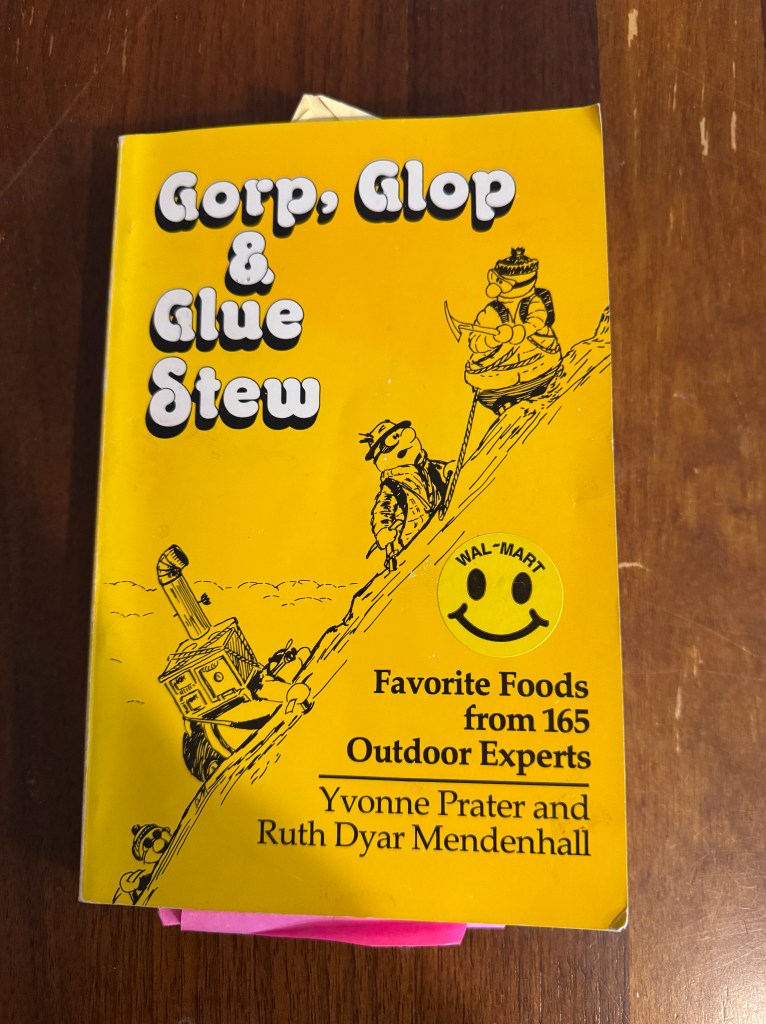
Today, I rarely buy MRE’s or Freeze dried foods. I bought a book Gorp, Glop and Glue Strew about 30 years ago. It’s a book about mountaineering foods that date back to pre dehydrated/freeze dried foods. These are the foods that conquered mountains. The foods are hardy, sturdy, and provide lots of calories. They are also quite filling. I like to make some of the mountain breads and fruit/energy bars. A little bit goes a long way and they do not require refrigeration. I can couple mountain bread with summer Sausage and cheese for the main course and then have some GORP for dessert. Drinks are usually coffee, tea, or some instant fruit mix.
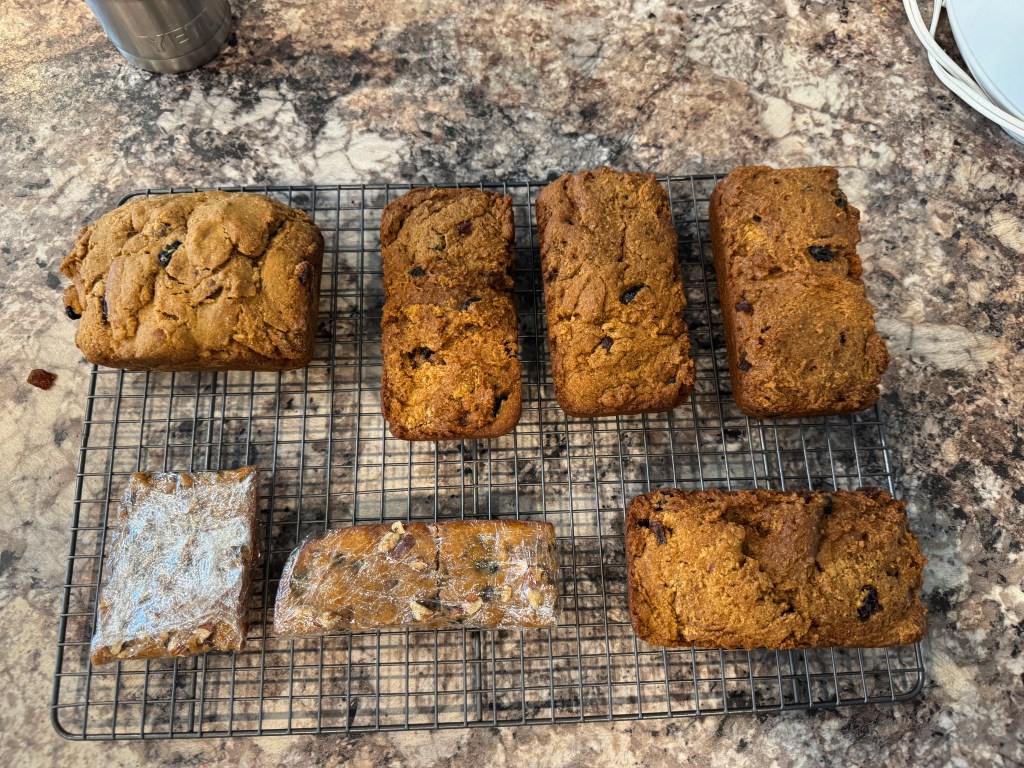
The loaves are Apple Logan Bread and the wrapped bars are Mince Meat Cookies. I will get them all wrapped and then freeze them. They last almost indefinitely. Some deployments may require a conservation of energy because those resources may be limited. Having foods that require no on site preparation is a bonus that allows you to operate longer. Sometimes, the Calvary doesn’t arrive just in time. Along with these foods, you can add Summer Sausage, Beef Jerky, Beef Sticks or canned meats. In addition to meats, cheeses keep pretty well and Ghee does not require refrigeration. Crackers or Pilot Bread are a good addition, try to find crackers that won’t crumble from the rigors of the road.
An old Army trick was to mix a little cold water with Hot Chocolate mix to make a pudding and doing the same to coffee creamer makes a field expedient whipped cream. It may not taste good at home but in the field… In the field I eat to live. These foods taste good to me especially out in the great beyond. One piece of advice; whatever food you plan to use on a deployment, start eating it now. Eat it during a POTA activation, an ARES event, or anytime you may be away from home. Now is the time to make sure your system can handle the foods you plan to eat. Having your bowels in an uproar away from home and nice “facilities” can be a very miserable experience. Stay safe es 73 de Scott
This trip was to Cloudland Canyon State Park located in NW Georgia. It is a very nice campground about a 2 hour drive from the home QTH. I got at the campground Tuesday, around 2000Z and quickly set up. Radio du jour was the Yaesu FT710 Field which is currently under review. The antenna was my 28.5’ random wire vertical. I am also trying out my Maestro Evolve III laptop along with HAMRS Pro software.
Band conditions were a little off so I started on FT8. It was slow going but I made 15 contacts before the new day. After supper, I went back to FT8 to try to get 15 more contacts before the storms hit.
The whole time I had moderate winds and some pretty good gusts. Right before the storms I lowered the antenna and put a garbage bag over it to keep it dry. The antenna is weather sealed, but the push up pole when it gets wet, is a real pain to dry out.
How about the FT710? In general, I like the radio. I think it’s a keeper. It is fun to use and performs well. It has a few niggles that I camp about but I like it. I talk more about the issues on my YouTube video. I will say that this radio is very different than the first one I got. The first radio was probably released too early and still had growing pains. This radio just feels better. In general I feel this radio and the IC-7300 are about equal. Either one will work well.
Evolve III. This is a pleasant surprise. I paid about $122 for it and for a field laptop it does well. Last night I ran WSJT (FT8) and AcLog without any issues. I was also running. BktTimeSync with a GPS receiver in the background. It is a little slow to start up but once it’s running, it does fine. I run it with a Logitech M310 mouse.
I am also trying out HAMRS Pro. I have it on Windows, Mac, IOS (iPhone, iPad) and they all sync up. I will talk more about HAMRS in a follow up article.
This is Wednesday morning and I am going to try to do some CW before I pack up and go home. Bands conditions are so-so at the moment. I will break my normal procedure are hunt a while to try out some of HAMRS features.
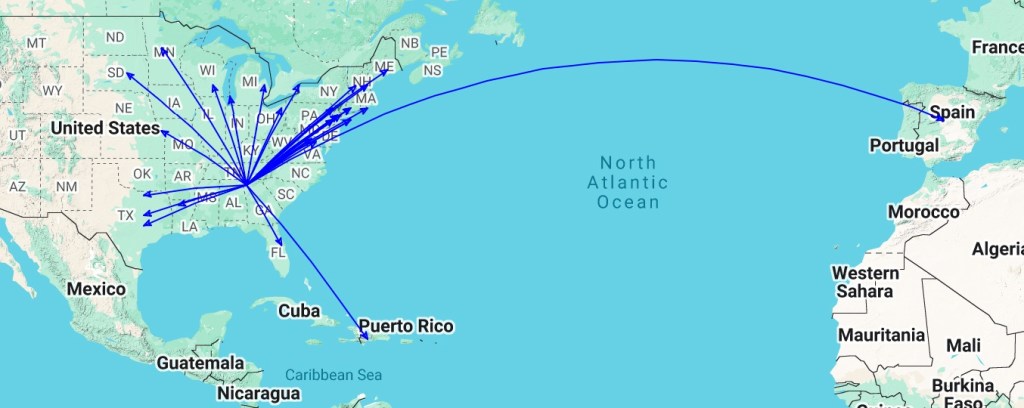
I only managed to make one CW contact hunting and activating. I could tell I was getting out as I showed up on HamAlert. Here is a QSO map of the activation.
Screenshot
If I remember correctly, I had issues last time I was at Cloudland. The important thing was I got out for a while and I had fun. It isn’t always about the numbers. Below is a video about the activation and my thoughts on the FT710. Stay tuned es 73 Scott
The 2024 Hurricane Season started of slow but boy did it pick up steam. Right now, the country has been rocked by the devastation left by Hurricane Helene and now Florida is bracing for Major Hurricane Milton. There are lots of good people doing lots of good things out there. I want to give a shoutout to AmRRon and Grindstone Ministeries for all the work they are doing in the Tennessee/North Carolina areas. You can find out more about these organizations at https://amrron.com and https://grindstoneministries.com.
I have been blessed in that both of these powerful hurricanes missed me. Helene about 40 miles to my east and Milton several hundred miles to my south. Just because I got lucky doesn’t mean I should sit back and rest upon my laurels. Contrary to popular belief, ham radio operators in the affected area are typically not able to operate after a hurricane passes through. Their number one concern is the safety of their family and the protection of their property. Many have left the area and are holed up in a motel somewhere or are with friends/family. This is the time and the place for those not affected by the storm to lend a hand. With families and property safe and secure, amateur radio operators can travel to, set up and operate their portable stations, relaying valuable information to public safety and/or nervous families wanting to know that their kith and kin are safe.
For those able to deploy, preparations should start long before you leave hearth and home. Radios and coax need to be checked for proper operation, antennas checked for damage? Are all of your batteries charged, generators serviced, and solar panels operating properly? Is your vehicle ready: tires checked, engine serviced, lights work? Do you have enough fuel for your vehicle and your generators? Do you have a place to sleep and something to sleep on? Do you have water and do you have food? Always bring food and always bring water, regardless of what someone promises you.
And what about you? Are you in shape? When was the last time you were to the doctors? Do you have any conditions that may affect you and are they serious enough that not being near an emergency room might kill you?
I’m not young anymore and my days of traveling to a disaster areas are coming to a close. However, I am ready; I keep a running talley on my gear. How? I practice with my gear almost everytime I go to park or a campground. The same gear I use in a park is the same gear I use for a disaster. I know how it works and I know I have what I need. I call this FunComm, which to me, is practice for EmComm. My field radio stays packed and ready to go. My basic kit looks like this.
The top box contains my radio and associated gear.
The bottom box, contains my batteries, power stations and a couple of solar panels. I also have 2 larger solar panels that I would also bring. I do not always bring batteries with me for FunComm but I see that they are charged up several times a year. Two notes. 1) Check your gear. Out in a disaster, you probably won’t be able to get whatever it is you left behind. I recommend that when practicing FunComm, you go at least 20 miles away from home. That is about the distance too far to drive back home again — either make do or call it a bust. 2) Solar power generation is iffy. On a good day, a 100 watt solar panel puts out about 6 amps. Your radio at 100 watts output consumes about 18 amps. That means for every hour of transmitting, it requires 3 hours of solar power generation at max efficiency. Don’t forget, you will have to feed you laptop, lights, cell phone etc. Yes, a cell phone has other uses besides a phone. My battery box looks like this.
You EmComm types may chuff at Parks on the Air (POTA), but they know their gear, because they use it often. Take the time now. Check your gear, get it ready, get yourself ready, sometimes, when they need you, they need you now. My prayers are for those in the paths of Hurricanes Helene and Milton, and also for those souls who when the call came were ready. When the call comes, can you cry out “Here am I” 73 and God Bless de Scott
This weekend I decided to camp at one of my favorite parks. Ft Mountain State Park. I go back a long way with this park. Thirty three years ago I spent a wonderful honeymoon there with my bride and princess. We recently spent a weekend there in the same cabin we spent our honeymoon in. Memories.
This time it’s a solo trip. I came up here for some radio adventure and I got it. On this trip, I did more EmComm related stuff. This was more like an FTX (field training exercise) than a simple POTA activation. I grabbed my normal gear and set myself some tasks to accomplish while out. I wanted to stretch my gear and me, do a grab and go like it would happen in a real scenario. I did not do any extra prep than I normally would do for a POTA activation.
My first task was to receive the National Intelligence Brief (NIB) from the Early Warning Network. I am the Communications Director (G6) of the Early Warning Amateur Radio Network (EWARN). We are building the EWARN system to best suit the needs of the Early Warning Network. This network collects information, analyzes it, and then disseminates the intelligence in products like the NIB.
Right now l receive the NIB via email and one of our projects is to be able to send the NIB to me and others via radio. We are looking at options to include using operators from AmRRon which we are developing a relationship with. AmRRon has some very talented operators. Getting back to my task, I received the NIB via my cell phone while on my way to the park. I pulled over in a gas station, connected my computer to my cell phone via the hotspot and downloaded the NIB onto my laptop.
I got the NIB ready to send over the radio. This includes formatting the document and then signing it using a PGP key. By signing the document this way, anyone with the public key can verify that the document was not altered. The document is not encrypted so it can be sent over the air. The next step is hooking up the laptop to the HF radio in my truck and sending the message. I decided to move since I didn’t think transmitting with a radio near gas pumps was a good idea so I moved. I found a pullover near the bottom of the mountain, on a road that leads up to the State Park. The radio wan an IC-7100 hooked up to ab AH-730 and a 102” whip.
Issue. I am having trouble formatting the file correctly when PGP signing the file in FLmsg. Next week I am going to get with a buddy who is a pro user and get this sorted.
I stopped, hooked the laptop up to the radio, turned it on and using VarAC on 40 meters connected to N4WXI near Birmingham AL. It took me about 2 minutes to send him the file. His group will inject it into the AmRRon system to be passed as traffic from coast to coast.
After I sent the NIB I continued up the mountain to Ft. Mountain State Park.
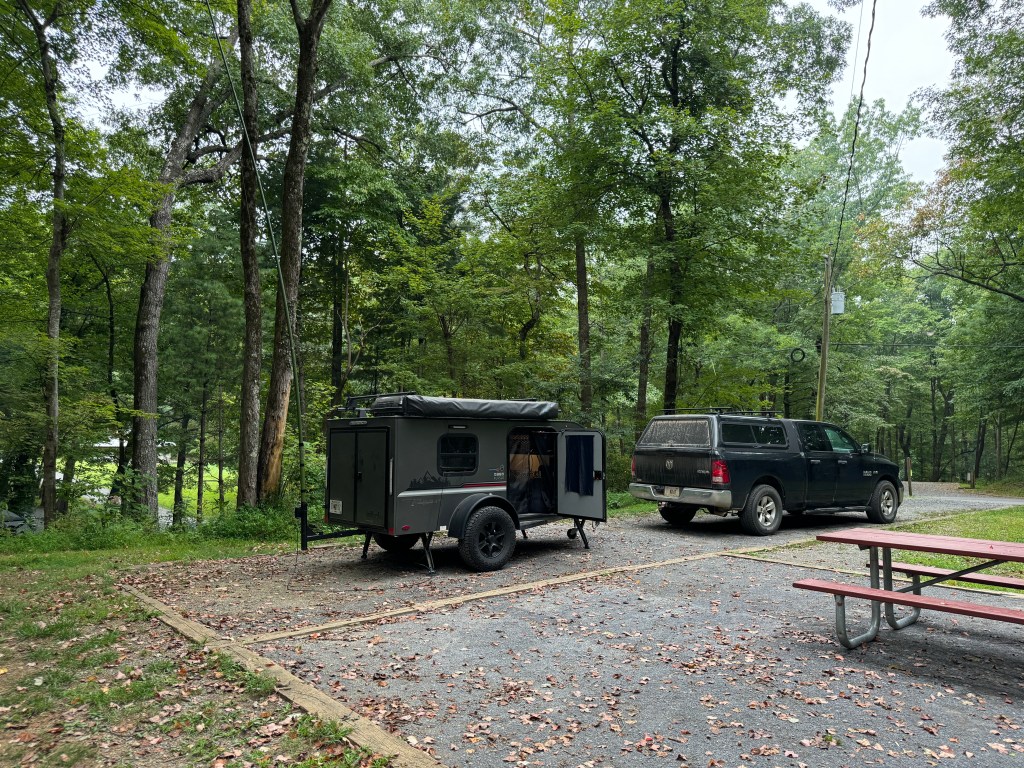
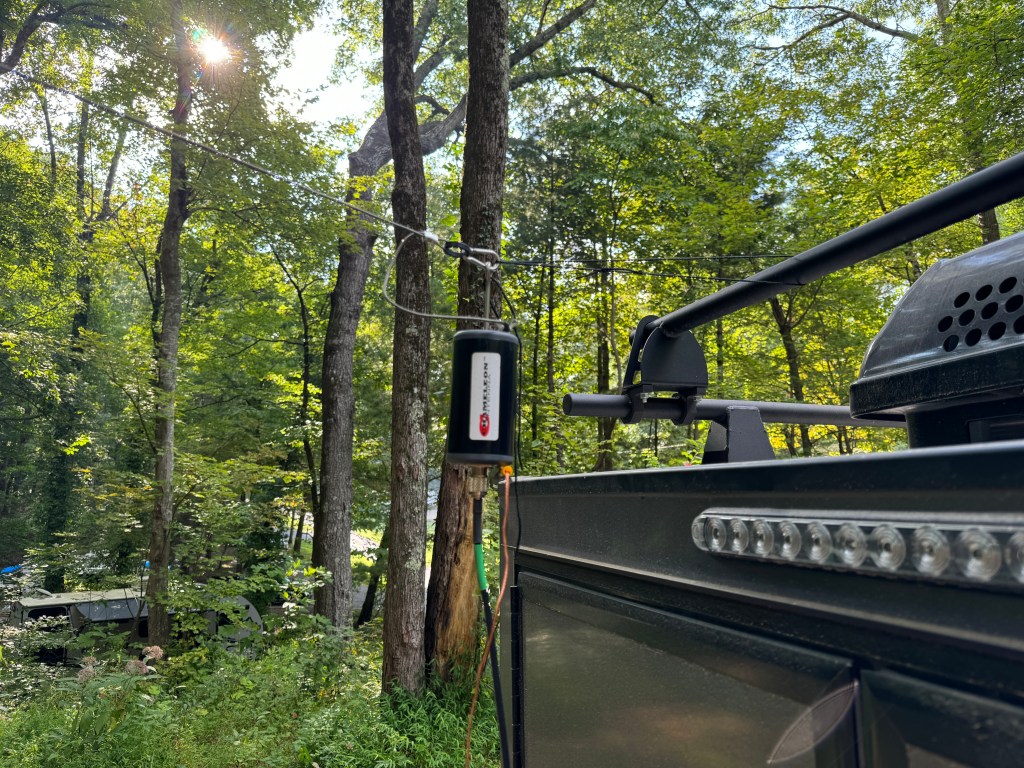
Antenna. I decided to use my Chameleon EmComm II ver. 1 for this FTX. Since I would be on the lower bands I wanted a larger antenna. I ended up configuring the antenna 3 times before I felt like I had the right combination. The first time I used my push-up pole to get one end of the antenna about 12-15 feet off of the ground and set it up like an inverted L with the counterpoise underneath the antenna. I didn’t like this version as I had power lines nearby and while I felt the setup was safe I erred on the side of caution. My second attempt was to attach the balun to the camper and elevate the center of the antenna wire in an inverted Vee with the counterpoise underneath it. I didn’t like this way because it left the counterpoise touching the camper and I didn’t want to radiate the camper. They say threes a charm and so it was in this case. I made a loop of cord between the camper and the unun which when the antenna was stretched, it pulled the unun and the counterpoise away from the the camper. The counterpoise was run underneath the antenna and this was the setup I ended up using. The radio was my Elecraft K3(s) and the laptop was a Lenovo Thinkpad T14.
Once the rest of the station was setup, I sent a quick VarAC vmail to my buddy in Alabama to make sure everything was working. My next task was to send out the NIB via Wnlink email to the regional NCS’. The equipment and the Winlink software worked fine. However, I had a fail. The note app on my phone failed to sync across my devices so I did not have all of the email address for the regions. Luckily I had two in my possession so I was at able to get the NIB out partially. One of the quirks of this campground is there isn’t any cell service. A good test of your gear and you.
Issue. App on my devices was not syncing. I am going to move my files to a better app.
After Winlink, I ran FT8 before and after the net. I did so to see if I was operating NVIS. The antenna was configured for NVIS but that doesn’t mean conditions were favorable. My initial impressions were that I was using NVIS to make many of the contacts I did on 40 meters. Forty meters is about the upper limit for NVIS. Between Friday afternoon and Saturday morning I made 121 contacts on 40. Charting out the average signal strength and percent of total contacts leads me to believe that NVIS was in use. More on NVIS in a separate post.
The net ran fairly well, I had 23 contacts and I was able to send the NIB using FLmsg. Flirig, and FLdigi. These apps worked well. The net macros worked well and need only a few adjustments. This completed another task.
FLamp was another story. I couldn’t get it to work right even though I had the most current version. I found out after the net that this version is quite buggy and I should have used the previous version. No cell service, no internet to fix it. Just like real life in EmComm. I will have to fix that when I get back home. Another issue I had was with the antenna. It does not do a good job running a digital net with above normal duty cycles. The balun would heat up causing the SWR to rise lowering the output power. If I run the net again I would probably only run FLmsg. I have a couple of other antenna options to try.
Issue. The Chameleon antenna was not up to the task of running a digital net with a high duty cycle. It would warm up, increasing the SWR. I was running 30-35 watts (I did reduce power). Further research showed that while the antenna was rated higher for Voice/CW, on digital it is only rated for 20-25 watts. This was not apparent on the website or instructions. For digital modes a rating of about 30% of PEP would be about max. My solution is to get a higher rated UnUn and derate it for digital.
Issue. Even though I had the latest version of FLamp, it was buggy and it wasn’t until I got my cell service back that I discovered that. The solution is to find an older version and install that or see if there is a patch to fix the current version.
Saturday morning the bands were in so-so shape. In addition, it looked like some weather was moving in so I broke down the station and started working on the video and this blog post. It was a nice day but I decided to go home this afternoon instead of tomorrow morning. So much to do, so little time.
Even though I’ve been doing stuff like this for 25+ years, there is still a lot to learn. Experience is only gained by doing so I leave you with a quote from Leroy Jethro Gibbs: “Grab your gear!” 73 de Scott.
Addendum. I had a total of 166 contacts. The 45 additional contacts were above NVIS and were not included with the 121 above. Here is a QSO map of all of the contacts.
Today is the second day of hurricane season for the United States. According to Colorado State University, this may be a busy season. For most of CONUS (CONtinental United States), hurricanes have little effect. For those of us on the eastern seaboard and gulf coast, it is time to keep a weather eye out.
It should be a time of preparation. Procuring materials to stormproof homes, purchase/maintain generators and check on fuel supplies, check the pantries for food and water storage, and ensure there are adequate medication and first aid supplies. In addition to this, is there enough cash on hand as with no power, there is no credit; cash is king. There is always the question of; should I stay or should I go? This is often a tough decision and the wrong choice could be fatal. If you are going, do you have a place to go? During Hurricane Michael, I was returning to Georgia from Virginia the weekend before the storm, there was storm related traffic up in Tennessee, people looking for a place to stay.
Even though I live in northwest Georgia, I can still be affected by a storm. High winds, heavy rains, tornadoes, flooding and power outages occur as a hurricane winds down as it travels inland.
Part of my preps, besides food, and water, etc., is making sure my communications gear is in order. Most of my gear gets used at least weekly with some of my portable gear getting use monthly. As I have said in past posts, my FunComm gear is mostly the same as my EmComm gear. I check to see that my radios are working and that my portable antennas are in good working order. I pull out my laptop and make sure all of my radio apps and OS are up to date and working. I especially check to make sure I can send/receive on my main digital modes. For EmComm I rely mainly on Winlink, PSK31, Contestia, and CW. I get on the air and send emails, check into nets, etc. I am also a Net Control Station for Phone and Digital, and I run those nets on a monthly basis. During a disaster is the wrong time to find out something doesn’t work. Been there, done that. And yes, sometimes, even though you checked, checked, and double checked, things can still go wrong, but at least you can reduce the probability.
My vehicles get serviced regularly, and I go over my little camper before each trip. My generators are checked and run on a regular basis. I also go through my Flee bag. I check to make sure everything in it is in working order, that there are no expired, expiration dates, and the clothes I have tucked in there still fit. Too big is okay, too small is not.
With all my gear squared away, I turn to me. Have I had a check-up recently? Are my meds current to my needs?, is there anything I need to get fixed before I deploy somewhere? From here I move to my skill sets. Can I use the apps/radios I need? Sometimes a big update happens that changes the app enough I may have to relearn it. Can I still copy CW? CW is not widely used, but it makes a pretty good backup when everything else is going to pot.
How is my fieldcraft? Can I cook and eat in the field, can I purify water, start a fire, clean myself, apply first aid, make repairs, navigate; can I improvise, adapt, and overcome?
Some of this is annual and some of it is on going. I should never let my skills and gear degrade to a point where they are no longer usable. It is bad voodoo to try to learn/relearn a skill during or on the way to a disaster.
How about you? Don’t wait until the last minute. It’s no fun waiting in a long line to get something you could have gotten a few months ago for half the price. And then to add insult to injury, the guy in front of you buys the last one. Be ready, do it now! Embrace the coming storm with a cup of coffee and the knowledge you have done everything you could to be ready. Or, you could be driving around white-knuckled in a panic trying to buy the same things everything else who has waited is trying to buy. I’ve done both and I like the first option much better. Think straight and stay safe. 73 de Scott
In less than a month, Hurricane Season starts. For most parts of the country, this is nothing more than a news item. For us in the southeastern United States, it becomes a time of preparation.
Hurricanes, are an extreme force of nature. Unlike tornadoes, whose path of destruction may be a mile or two wide, a hurricane can leave a path of desolation 100 or more miles wide. Because it it so immense, it is almost impossible to describe; you have to be there to appreciate the god-like destruction.
Last month Colorado State University’s Department of Atmospheric Science, released it’s 2024 hurricane season forecast. Their prediction is for an “extremely active” season with an “above-average” probability for major hurricanes making landfall along the continental United States (CONUS)and the Caribbean.
This year they are predicting 23 named storms (aver. 14.4) with 5 major hurricanes (aver. 3.2). The probability of a major hurricane striking the east coast is 34% (aver. 21%) and for the gulf coast 42% (aver. 27%). In the tropical Pacific there will be La Nina conditions which can increase hurricane activity in the Atlantic. In addition, eastern and tropical Atlantic surface sea temperatures are warmer than normal making conditions conducive to hurricane development. The complete report can be found here: 2024 Hurricane Season Prediction
FunComm is a great way in keeping your emergency and portable comms ready. Field Day, Winter Field Day, POTA and SOTA are good ways to maintain your emergency gear. The same gear I take to the parks is what I would use during a disaster. I have been to disasters where a guy walks up to me with a handi-talkie in 3 pieces and telling me if I can help him fix his radio, he could help me. Don’t be that guy.
Do your radios work? Do your field antennas work? Have you tested them and checked their performance? Have you tested your batteries and do they work with your radio? Do you have enough capacity? How about generators? Do you have the right kind of generator? Some of these Home Depot generators will destroy a radio. Can you bring fuel to power your vehicle and generators? If there is no power in a disaster area, there is typically no power to pump gas. Make sure you have enough gas to get back out of the disaster area.
Don’t forget about your laptop. Do you have the apps you need installed on the laptop? Are they up to date? Did you sync the time before you left? Do you have a plan to power your laptop?
Where are you going to sleep? Are you going to bring enough food? Water? What about sanitation? Again, no power, no public sanitation. Do you have a list of things you need to bring? What about cash? In a disaster, cash is often king as the credit card machines run off of electricity and the Internet. Remember, if there is no cell service, those cell phone credit card swipers won’t work either. Make sure you bring small bills, as stores will probably not have the means to make change.
The way I am set up now, I could leave my QTH in about 4 hours with a stop at a gas station and grocery store. Part of the reason is I practice my EmComm using FunComm. I have been to several wide area disasters and I made plenty of mistakes, I learned the hard way. 73 de Scott












 KK4Z
KK4Z 