Black Rock Mtn St Park Kilo #7

This weekend I went back up to Black Rock Mtn State park to finish my kilo. My last trip was cut short by a power outage on the mountain. This time I brought a battery which fortunately, I didn’t need. During this trip, I brought some new items with me. A new radio, a new antenna and a new fan.

The radio. I did some trading and ended up with an IC-7200. I always wanted one of these. I am a Veteran and I like its military vibe. The radio worked well.
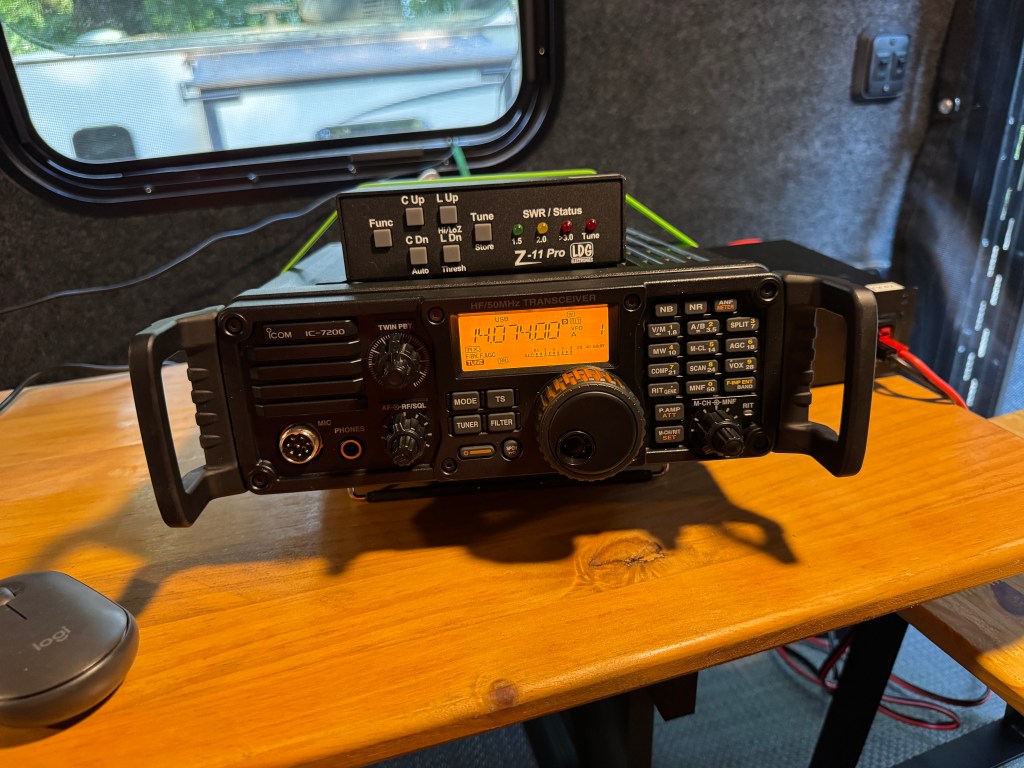
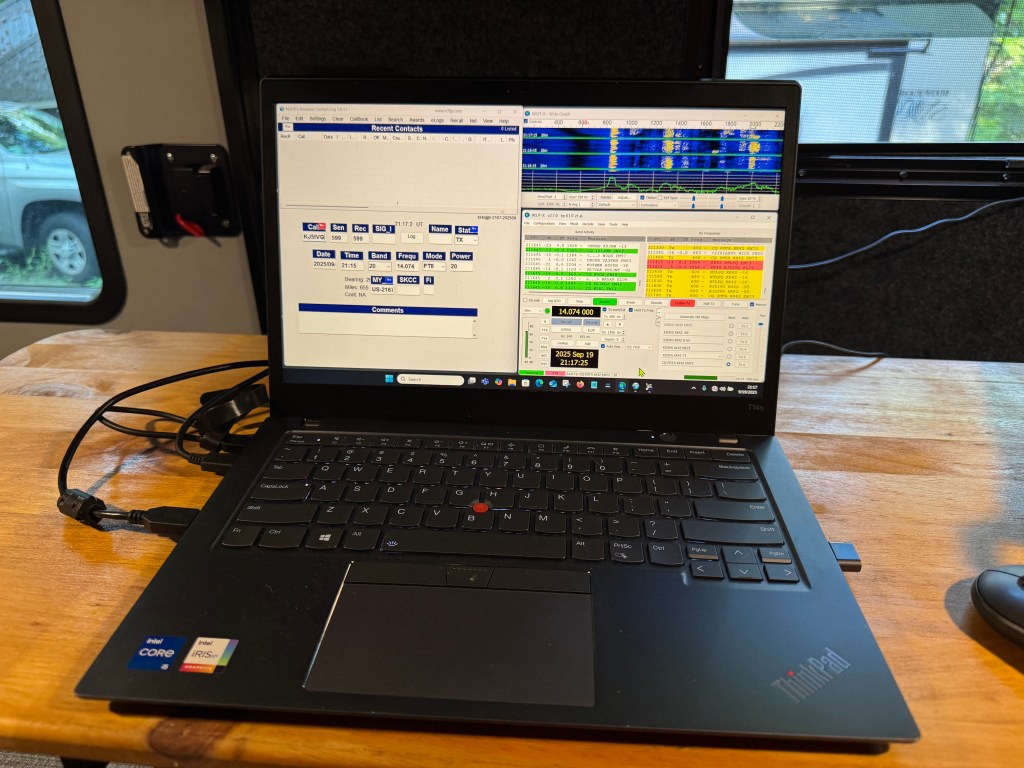
The weekend was an FT8 weekend as the bands were not in good shape. I did notice that the radio got warn running FT8 at 20 watts. It felt about the same as an IC-7000 did back in the day. The radio performed well and no hiccups were noted. Also new was my battery powered Hercules fan.
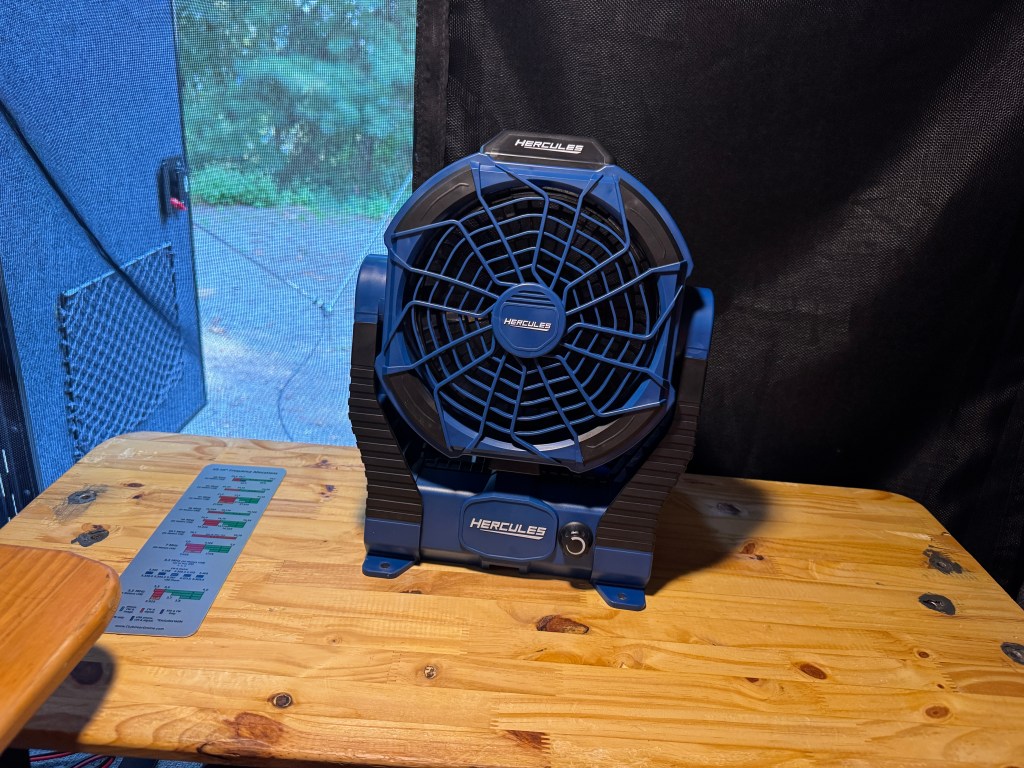
I used it to cool the camper without running the A/C and it had plenty of volume. I turned it slightly toward the IC-7200 to help keep it cool. It ran for over 8 hours on the 5 amp/hr battery and would probably go much longer.

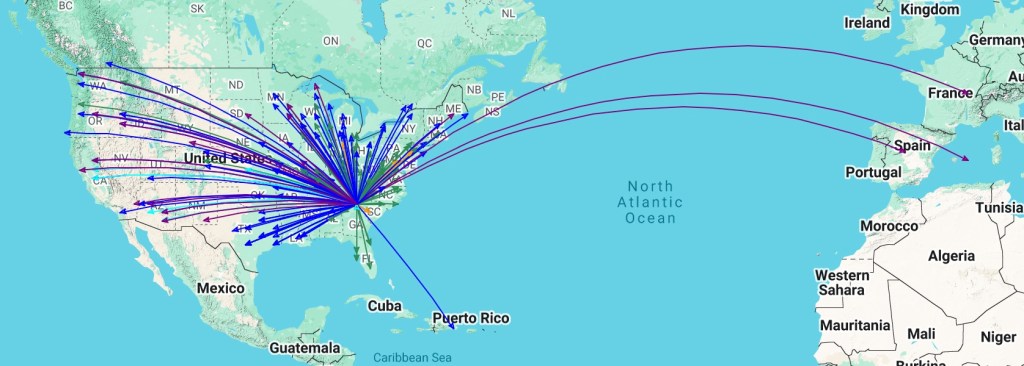
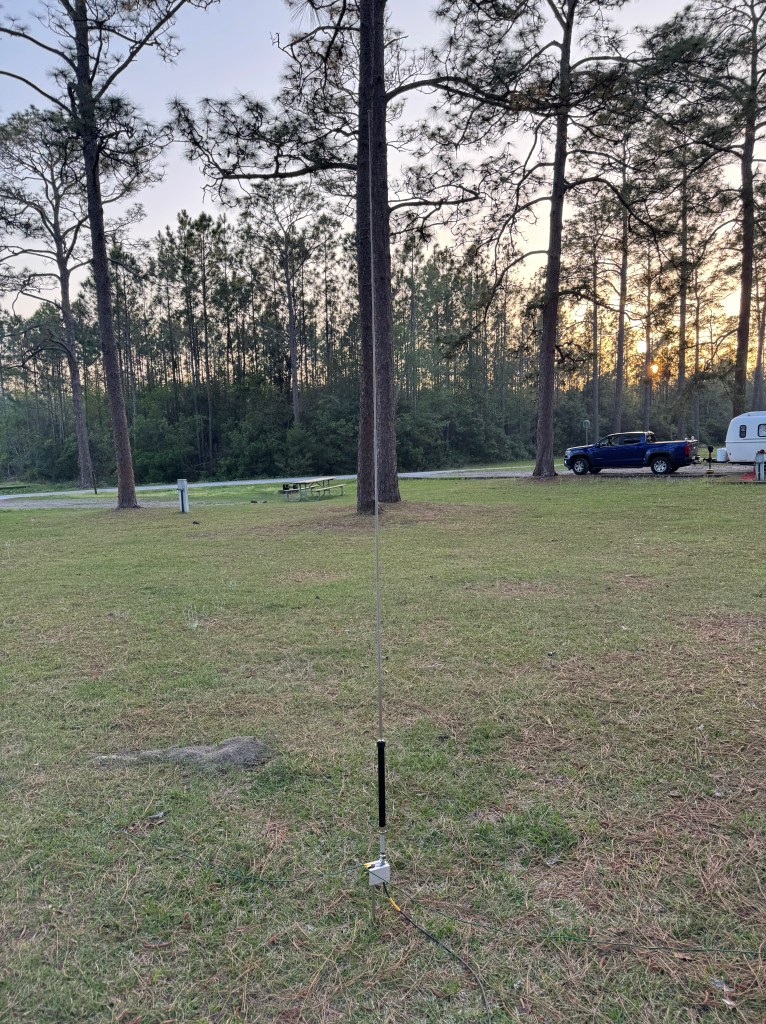
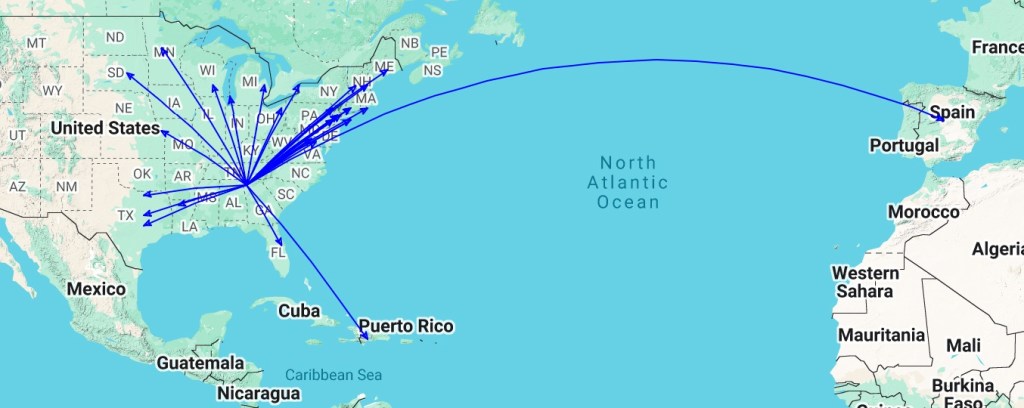
My antenna for this trip was a Chameleon TDL (tactical delta loop). I had some of the pieces already and only had to add another whip, a hub, and wire that goes between the whips. I used the ground spike to to secure the antenna to the ground. It made it easily to turn the antenna. Above 10 MHz the antenna is slightly directional and I found this to be true. Pointing the antenna east-northeast got me further into Europe than I normally get with my verticals. In the evening I pointed the antenna slightly northwest and you can see in the QSOMap, the antenna shows a little directivity. All in all, I was pleased with the antenna. I sets up really fast and there are no wires in the trees. My campsite had power lines nearby and the loop was well below them. Putting up and taking down the antenna was done by extending and retracting the whips so there was no danger in contacting the overhead wires. Through the whole activation, I only ran 20 watts and I felt the antenna helped in that success.

I made 200 contacts which covered 33 States and 10 countries. Furthest State being California and the furthest country being New Macedonia. Considering the band conditions, I was pleased with the results.

It was a nice trip. the weather was great, I did not have to run the A/C or the heater. I finished up Kilo #7 but I will return to this park as it is one of my favorites. This may be one of my last campouts of the season, I have a lot of work to do around the home and property. 73 de Scott

The king is dead, long live the king.

Today was a bit of an emotional day. I sold my beloved IC-7300. I bought the radio in 2016 and I have taken it on many a trip. It has always been a solid, reliable radio. It was and still is the radio I recommend to anyone looking for a first or even second radio. Even though it is an older design, it holds its own when compared to more modern radios. It has a lower noise floor and in A/B comparisons, whatever I hear on one radio, I can hear on this radio. I have compared it with an IC-7610, FTDX10, and a FT-710. I usually test in a CW contest environment, probably the toughest out there. The secret is the ergonomics. All the controls I use are easy to get to and easy to use. The radio went to a follow club member so it is staying in the family. It will be missed – for a while.

I have reserved a spot with HRO for an IC-7300 MK2. They will be shipping by the end of the year. What drew me to the MK2 was a lower noise floor, cooler running, and reduced power consumption. The IC-7300 has a pretty low number (around 850 mA) and the new one is even lower.

Screenshot

Another interest is Dual Comm port. According to Icom, it can run two separate apps on two separate com ports for the radio. I think that’s pretty cool. They took the IC-7300, listened to its user base and then made a better radio. I like that about Icom.

I can’t wait to get my hands on the MK2. I hope it will be here by Winter Field Day. In the meantime, I still have my TS-590sg and IC-7200 for field duty. I must be patient, I must be patient. 73 de Scott

Shack Shakeup Continues

I have a stable of radios. I like radios. I have spent the past couple of years going through radios and finding the ones I like to use. I think I am getting close. In the shack, I like my IC-7610 and TS-890. They are big and all the controls I use are easy to get to. There performance is top notch. I am content.

QRP radios. This has been my greatest controversy. When I retired, I thought I was going to do a lot of QRP with little radios and maybe even do some SOTA. It didn’t turn out that way. I found myself using big radios at low power. They are easy to use and because of their heatsinks, they never overheat at low power. I did keep one little radio the IC-705, of all the little radios I had, the 705 was the one I grabbed the most.

Field radios. I went through a bunch of radios here too. I kept my IC-7300 which I bought new and has stayed with me over the years. I may sell it off for the new IC-7300MK2. I recently acquired a TS-590sg which went with me on my recent POTA activation at Black Rock Mountain State Park.

It was definitely a fun radio and I look forward to using it more in the future. Yesterday, an IC-7200 was delivered by UPS. The was a trade I had in the works. I always wanted an IC-7200. It’s a basic radio that has a military vibe to it. Being a Veteran, it appealed to me. The radio came with the rails and the MARS mod was already done. The radio is pristine. Power draw at idle is about 1 amp and at 20 watts it draws about 8 amps. Lowering the power level does not overly change the amp draw. Above 20 watts and the amp draw increases. Twenty watts is the happy medium. Here in the shack I had it turned on and was able to work N0SA. I have a set of his SOTA paddles from his last run before he retired. They are fun to use. I plan on taking the 7200 on my next POTA adventure.

During the past couple of years after making many POTA activations, Field Days (winter and summer), Army MARS, and SHARES I was able to shape how I operate. Some of it was a surprise as I was led in a different direction than when I started. I guess when it comes to radios, I may march to the beat of a different drummer. I prefer big radios (IC-7300 size) over little radios. I like that the controls are easier to get to and they don’t overheat. In the field I usually run around 20-35 watts. Most of the time I am in my micro-camper so I am not carrying the radios very far. I may have to lug them 50 feet to a picnic table. I recently bought one of those folding wagons so weight is no problem.

Another surprise was my use of FT8. Band conditions on many of my outings was poor. If it wasn’t for FT8, I may not have had a valid activation. Plus, I discovered I could work a lot of DX while in a park using FT8.

Yaesu’s. I don’t have any Yaesu’s. I have tried to like them, but they are just not for me. I had an FTDX10 for about 18 months, a FT-710 for about a year total, and a FTX1 for a couple of months. To me they are kind of quirky. The Icom’s and the Kenwood’s are solid performers and the ergonomics are superior. I know how to make them dance and sing. I know there are those who love Yaesu and I get it. To each his own. Find the radios that suit you best and enjoy them as I have. The journey is half the fun. 73 de Scott

Black Rock Mtn State Park – Aug 2025

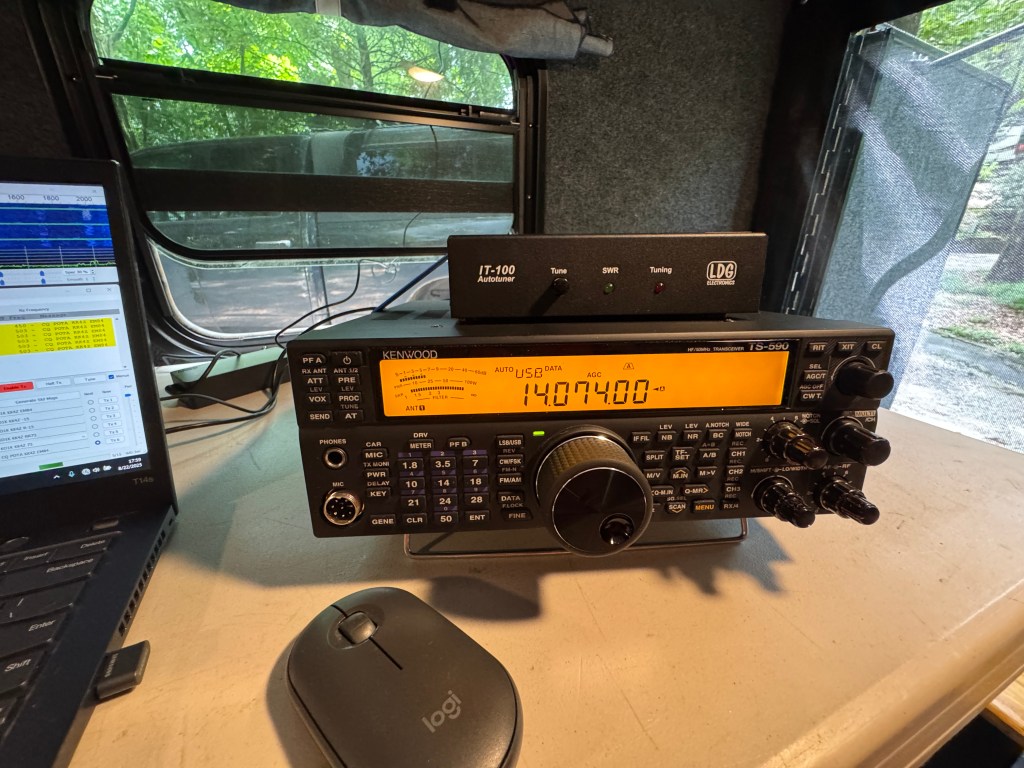
Last weekend I finished up a 3-day, 1,800 mile, 7-state POTA Rove that included a radio trade. Out with the FTX1 and in with a TS-590sg. After setting up the 590, I brought it with me to Black Rock Mountain State Park to try some FT8 and if the band conditions permit, a little CW.

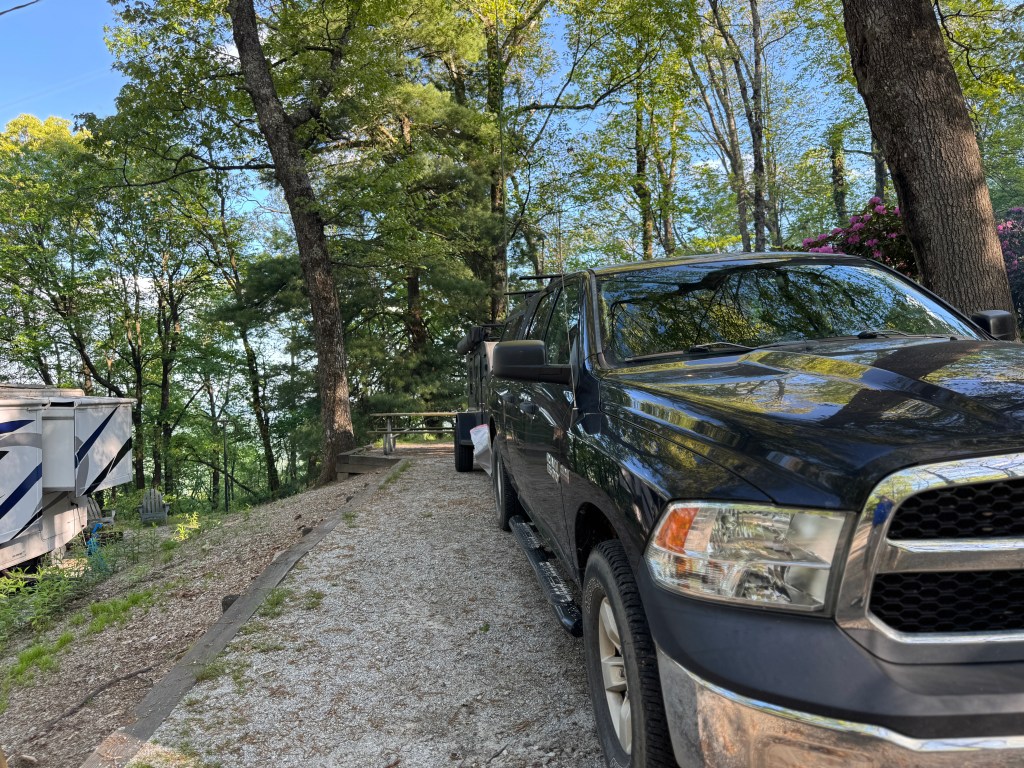
I arrived at the Park Friday afternoon. I have done this enough times that I am setup and ready to go within 30 minutes.  This campsite had some challenges.It was the smallest campsite I ever used.  I had space for the trailer and I had to park my truck in the picnic area.  I also had overhead power lines so I had to use a shorter antenna. The weather was cool for a change and I didn’t have to run my A/C.

Setup was a Chameleon Micro Hybrid transformer with a 12’ whip and about a 20’ counterpoise.  The radio was my new-to-me Kenwood TS-590sg.  This was the radio’s maiden voyage and I really liked it. It performed well.  One of the main reasons I like running big radios at low power is more of the controls are readily available. Most everything in the TS-590sg is either a push button or a twist of a knob away.  Having a high performance receiver isn’t any good if you can’t get to the controls.

Band conditions were poor. The first night I only made 88 FT-8 contacts and they were a struggle.  At times the band would “white-out”, high noise and only white snow on the waterfall. At the better times QSB or fading was a constant up and down.  I would watch S7-9 signals drop to nothing during a QSO.  Saturday afternoon brought a power failure at the park. Yep, right during mid QSO.  The power was still out at 1800 hrs, so I had a decision to make – should I stay, or should I go.  As you get older one of the things that goes, is your night vision.  If I was going to leave it had to be soon, so I could still do most of my driving during daylight/evening hours.  I decided to go.  Since I have a lot of practice setting up and tearing down.  I was packed up in less than 30 minutes. As I was pulling out of the park, the power returned.  Better safe than sorry.

I ended up with 233 contacts, 88 short of my kilo for that park.  I will plan another trip in the fall to finish.  I am real happy with the TS-590sg.  I opened it up and found the MARS mod already done and the TXCO installed.  The radio performed well and I ran it mostly at 20 watts.  As you can see in the QSO map, Most of my contacts were CONUS. Kenwoods and Icoms have the best ergonomics. I feel the layouts were designed by people who use their radios; that ergonomics were a primary concern and not an afterthought. 

Screenshot

I also decided to trade off the FT-710 and ended up with a pristine IC-7200.  I always wanted one but the stars never aligned — until now.  I no longer have any Yaesu radios in the stable and probably won’t have any more.  Why? A couple of reasons. I prefer the ergonomics of the Icoms and the Kenwoods.  Everything I need is right there on the front panel. Easy, to see — Easy to use. I have owned a FTDX10, FT-710, and a FTX1, along with an Icom IC-7610, IC-7300, and a Kenwood TS-890s. I can tell you that whatever I hear on one radio, I can hear on the other.  There’s two reasons for this.  One is knowing where the controls are and two is knowing how to use them. There is a third factor the CSP unit, that’s Cerebral Signal Processing Unit. Half of the battle is using the CSP to process faint signals.  After 30 years, mine is pretty good.

The Yaesu radios, are not bad radios, they are not my cup of tea. I can squeeze more horsepower out of the Icoms and the Kenwoods.  I am sure there are those who can say the same about Yaesus.  I at least crossed the fence and tried them but in the end my preference is not Yaesu. YMMV.

Other happenings. I rearranged my Go Box.  My TS-590sg will not fit in it like my other radios so I got an Apache case for it from Harbor Freight and moved some antenna stuff into the Go Box. So now all my radios travel in a separate case and my Go Box has become universal.  Everything I need to run any of my field radios is in the Go Box.  These days I do more FunComm than EmComm, but I am always prepared to do either. I load the same stuff and off I go. I’ve had a busy summer and the honey-do list is growing, there is lots to do around the ranch so this may be one of the last trips for a while. I do most of my outdoor work from Fall to Spring to avoid working in the southeast hot, humid summers and the accompanying chiggers and ticks. That’s all for now,  take care and 73 de Scott

FTX1 vs IC-705 Connectivity

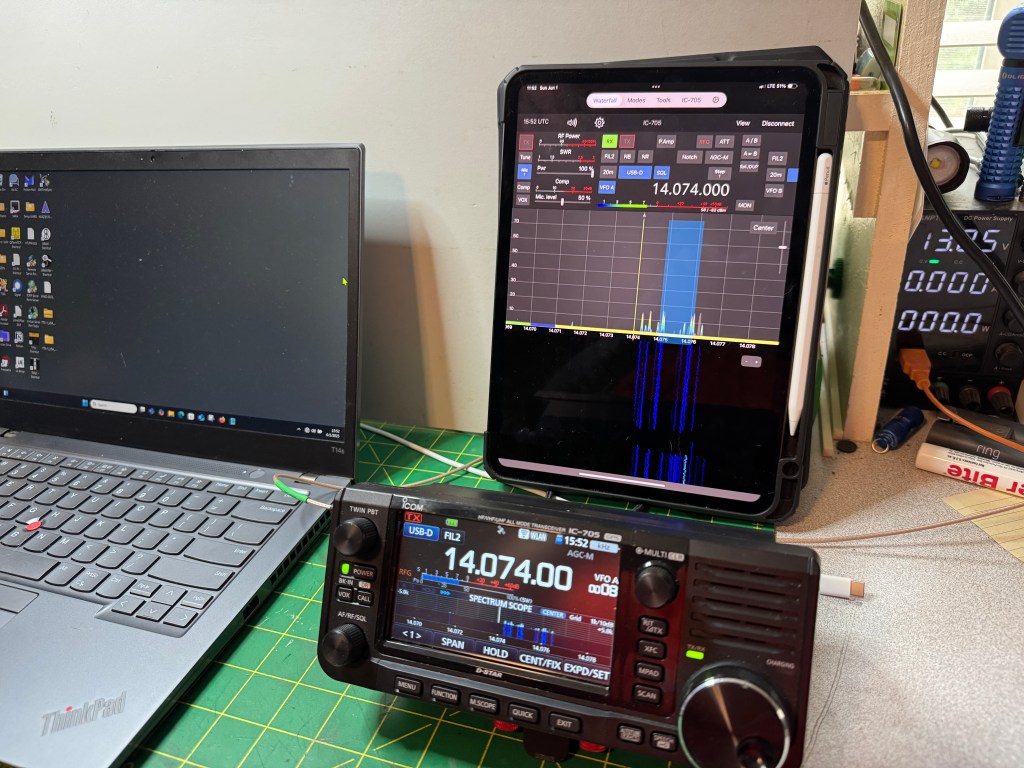
This morning I wanted to explore connectivity with the FTX1 and the IC-705. Right off the bat, the IC-705 comes standard with Bluetooth and GPS while the FTX1 requires a separate purchase for each. The Bluetooth unit cost $55 and the GPS cost $70. the IC-705 has one additional feature in that it also acts as a Wifi access point to allow you to control the radio via iPhone/iPad apps like SDR-Control SDR Control Website. With this app I can operate FT8 and CW. It has message memory and logging. The Wifi on the IC-705 is not intended for internet connection.

Getting back to the FTX1, it took a little figuring but I got it running FT8 on my Windows machine. The FTX1 is so new that there isn’t any control configurations out there on apps like WSJT. A little tinkering and I got it to work just fine. Here are the setting I used.

You want to use the enhanced com port. I also ended up using a USB C to USB A cable instead of a USB C to USB C. I was having trouble getting the latter to work and it may have been something on my part to cause it not to work. I will fool with it some more later.

UPDATE: I was able to get the radio to work with a USB C to USB C cable. However, something I missed was while WSJT software will Xmit and Receive, it will not QSY the frequency on the FTX1. I tried this with FT-891, FT-991, and FTDX10 CAT Command sets in WSJT. Usually with Icom’s there is enough compatibility between the radios that the CAT setting from one model will work with another. An example would be the IC-7610, it is pretty cross compatible with the IC-7300 command set. Hopefully this will be addressed soon.

On the IC-705 you can output GPS data through the B port. This can be used for different things, I use it sync the time on my laptop when I am using one. As far as I can see this feature is not planned for the Yaesu.

The Yaesu is still brand new, I had it 2 days and there was already an update. I am sure as the product matures, more features will be added. I like the radio; it has a certain fun factor. If someone asked me today, if I could only have one, I would pick the IC-705. But that is today, tomorrow as the FTX1 is refined, I may change my mind. In between, I plan on having fun with both. 72 de Scott

US-2167 Black Rock Mountain State Park and the End of an Era

This month I ended up at Black Rock Mountain State Park. It is one of my favorite parks. I like it because it is located on the top of Black Rock Mountain. The views are fantastic and you couldn’t find a better park to operate a radio. This was a weekday trip. For the past couple of months I tried operating during the week instead of in the weekend. It was okay, I think I like the weekends better.

The weather was beautiful mostly cool with a spot of rain on the first night. I was surprised to see Slate Colored Juncos on the mountain. My mother called them snowbirds because they often proceeded a cold front and sometimes snow. I was near a comfort station and right next tot he camp host. No issues when I put up my 28.5′ random wire vertical.

Radio du jour was my FT-710. I also brought with me my IC-705 thinking I would switch over to QRP and CW on the second day. More about that later. I started out on FT8 and 25 watts. I went QRV on 20 meters around 1900 Z. The band was wide open! I stayed on 20 until about 0200 Z. The first day, I made over 200 QSO’s. Wednesday morning things started out well and then fizzled. In the end I made 453 QSO’s covering 46 states and 16 DX entities. The states I missed were AL, HI, ND, and WV. For DX I got as far north and west as Alaska, as far south as Uruguay, as far east as European Russia. I was hoping the band would stretch far enough west to pick up Hawaii, but it didn’t quite make it. A hop too far.

By Wednesday afternoon the bands were dead and I decided to head back to the house. It was a good run while it lasted and a lot of fun. The only issue I had were people asking for dupes. I only need to work you once and the way band conditions were many stations I needed were a one shot deal. Heard them once and then they were gone. I lost some of those because of people asking for dupes. That means two of us lost. Most logging software will show you if you worked a station before. It’s what I use. As an activator, I try to get as many stations as I can in the log.

Once the bands died and I realized that QRP and CW were not viable, I decided to pack it up and head home. I left the park early Wednesday evening and was home before dark. All in all a nice trip. Here is a QSO map of the activation.

End of an Era. This will be my last year on WordPress. It cost me between $100-$200 a year to maintain and being retired I need to cut a few corners. What will happen, is I will move back to Blogger which is free. I own the domain name and I will bring that with me. My WordPress subscription, ends March of next year and in the mean time, I will move some of my posts over to Blogger. Mainly the technical stuff. I will also be taking fewer overnight trips and combining some trips with the wife doing more than amateur radio.

Retirement is grand, I wouldn’t trade it anything. With it comes a little more responsibility. If I think I want something on the pricey side, I ask myself if I am willing to go back to work for it. So far the answer is no. Stay safe and 73 de Scott

Surprises at Laura S Walker State Park

I decided to travel a little further this time and head toward the Okefenokee swamp. this time I tried the Laura S Walker State Park. It was a five hour drive and about 320 miles but fortunately I was able to stay off the interstates for all but about 30 miles of the trip. The park is near Waycross, GA which recently suffered from severe weather. Even though it has been a while there it still plenty of evidence to attest to natures fury. The park itself was in good shape and I had a nice campsite.

I would normally use my 28.5′ vertical antenna but I had a power line that passed almost directly over my truck and camper. I could have requested a better campsite but in the spirit of FunComm I decided to work with what I had. Instead of my usual antennas I deployed a new antenna. A Diamond RHM-12. This is a manual screw drive type antenna that is only about 7 feet tall and covers 40 meters to 440 MHz. With additional coils it also covers 80 and 160 meters. I set it up away from the power lines and used a Chameleon Spike to set it into the ground. I also had 2 counterpoises about 20-25′.

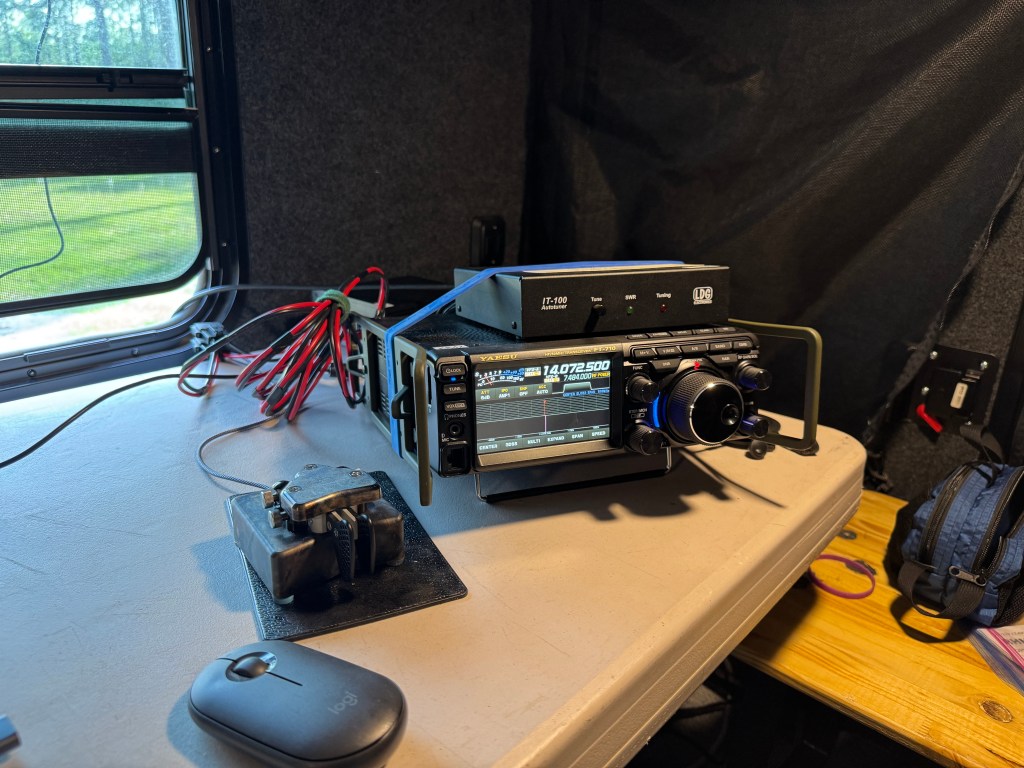
I was a little concerned about its performance. Inside the camper I had My Lenovo Laptop and Yaesu FT-710 with an LDG tuner.

I had a Rig Expert Pro Stick antenna analyzer with me and I was able to get the SWR down below 2:1. I guess I could have monkeyed with to get it lower but since I had the tuner…

I have really taken a liking to the FT-710. It has been performing well and since the last firmware updates, it has become a little champ. It is winning my heart. The radio, tuner, and computer all worked well together. I only ran 25 watts of power as that is about the limit on the antenna using FT-8. I was going to work some CW but the days I was at the park the temps were up around 90 degrees, far from the 43 degrees the morning I left my home QTH. I ran the air conditioning and when it is on I have trouble copying CW. Years in Army Aviation and other loud occupations have affected my hearing.

How did I do? Surprisingly well. In a 24 hour period which included sleep time, I made 400 contacts (7 dupes). I made contacts in 46 states (Not AK, HI, MT or RI) and 34 DX entities! I think that’s a new record for me during a POTA Activation. I got as far west as Australia and American Samoa, and as far east as Turkey, Bulgaria, and European Russia. The bands were up and down and I had to make a few trips out to the antenna to adjust it when I changed bands.

I never expected that little antenna to perform so well. The RHM-12 antenna has been assigned to permanent duty in my antenna kit.

It’s important to take your gear out and use it. Understand how it operates under various conditions. Know what your gear can and cannot do. This is good to know having fun but becomes critical when more is at stake.

Hamrs Pro

This past trip I was able to check out the new Hamrs Pro app. I must say I am impressed. I spent some time prior to my trip setting it up for a POTA activation. Here is my current setup:

Hamrs uses FLrig to interface the radio with the app. When the radio is connected, frequency, band, mode, and power is updated in the app. In addition, Hamrs Pro will set the RST to either 59 or 599 depending on the mode. Another nicety is when you add the POTA park number in “My Park” it will automatically add the Maidenhead Gridsquare to “My Grid”.

Tabbing is straight forward. It goes from left to right and top to bottom. In my set up I have received RST first since that is the first one I get and then a quick tab and I add mine. Time on is automatic. I always believed that computers should work for us and not the other way around. With Hamrs Pro, it does most of the heavy lifting for you.

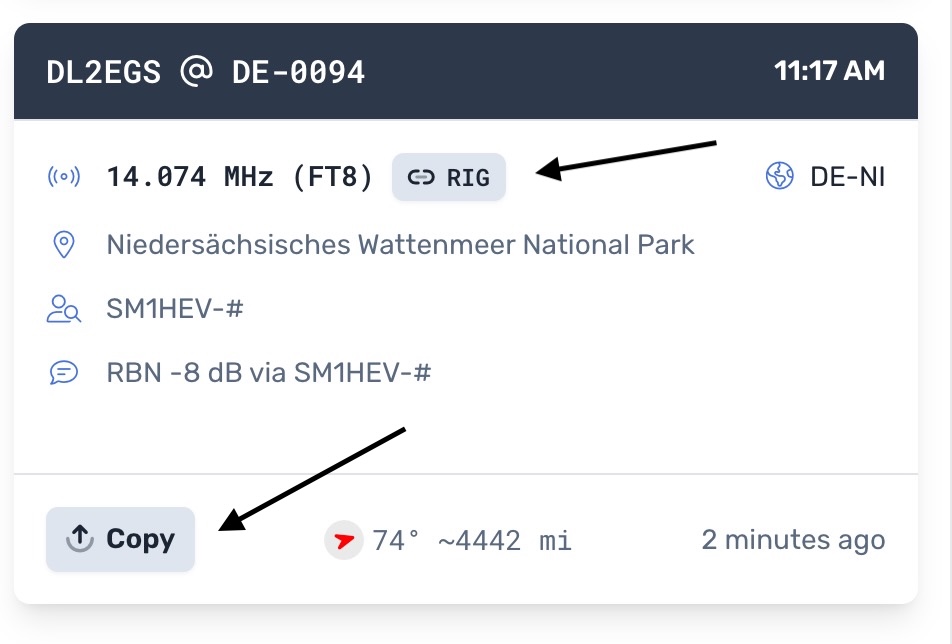
Another place where Hamrs Pro shines is the POTA spots.

There is a lot of info on the page to include compass heading and distance. If you click on the RIG button, Hamrs Pro transfers the frequency and mode to your radio. If you click the Copy button, the information is copied into the log. Add RST, hit save and you’re done. Pretty slick.

So far the only improvement I can think of is using Hamrs Pro with FT8. I don’t see an easy way to interface Hamrs with WSJT. This is not a big deal. All I do is log FT8 contacts in ACLog export the log as an ADIF, and then import the ADIF into Hamrs. It is easier than it sounds. Another way might be to use the WSJT log function and import that into Hamrs Pro.

Hamrs Pro with a $2 a month subscription allows you to sync your logs across platforms. I have Hamrs Pro on my Mac, IOS, IPadOS, and Windows. As along as I have internet or WiFi, they sync. This is great because I mainly use Windows for radio stuff and Apple for everything else. I can create a log on my Evolve III or my iPhone, and when I get home I can upload the log to POTA on my Mac — easy peazy.

I have been using Hamrs on and off since the beginning. This is a hugh step –in the right direction. I can see this as becoming my go to logging app. A lot of thinking and work has gone into Hamrs Pro. I can only see it getting better. Good job Hamrs folks. de – Scott

Night on Bald Mountain

This trip was to Cloudland Canyon State Park located in NW Georgia. It is a very nice campground about a 2 hour drive from the home QTH. I got at the campground Tuesday, around 2000Z and quickly set up. Radio du jour was the Yaesu FT710 Field which is currently under review. The antenna was my 28.5’ random wire vertical. I am also trying out my Maestro Evolve III laptop along with HAMRS Pro software.

Band conditions were a little off so I started on FT8. It was slow going but I made 15 contacts before the new day. After supper, I went back to FT8 to try to get 15 more contacts before the storms hit.

The whole time I had moderate winds and some pretty good gusts. Right before the storms I lowered the antenna and put a garbage bag over it to keep it dry. The antenna is weather sealed, but the push up pole when it gets wet, is a real pain to dry out.

How about the FT710? In general, I like the radio. I think it’s a keeper. It is fun to use and performs well. It has a few niggles that I camp about but I like it. I talk more about the issues on my YouTube video. I will say that this radio is very different than the first one I got. The first radio was probably released too early and still had growing pains. This radio just feels better. In general I feel this radio and the IC-7300 are about equal. Either one will work well.

Evolve III. This is a pleasant surprise. I paid about $122 for it and for a field laptop it does well. Last night I ran WSJT (FT8) and AcLog without any issues. I was also running. BktTimeSync with a GPS receiver in the background. It is a little slow to start up but once it’s running, it does fine. I run it with a Logitech M310 mouse.

I am also trying out HAMRS Pro. I have it on Windows, Mac, IOS (iPhone, iPad) and they all sync up. I will talk more about HAMRS in a follow up article.

This is Wednesday morning and I am going to try to do some CW before I pack up and go home. Bands conditions are so-so at the moment. I will break my normal procedure are hunt a while to try out some of HAMRS features.

I only managed to make one CW contact hunting and activating. I could tell I was getting out as I showed up on HamAlert. Here is a QSO map of the activation.

Screenshot

If I remember correctly, I had issues last time I was at Cloudland. The important thing was I got out for a while and I had fun. It isn’t always about the numbers. Below is a video about the activation and my thoughts on the FT710. Stay tuned es 73 Scott

Field Day WGARS Style

Field Day, the opportunity to take our equipment to the field and test it in preparation for the “Big One”.

The West Grorgia Amateur Radio Society (WGARS) takes this seriously. We bring our radios, antennas, batteries, etc to a local park twice a year to make sure we know how to operate in the field when the time comes. But this is not the only thing we do, in fact, sometimes it becomes a much lower priority because…

We like to have fun. We like each other and we often spend a lot of time socializing with each other. We have pot-luck meals where club members and their families show off their culinary skills. This year we had some guitar playing during the off times. I can see music a growing venue in our get togethers. We had a Fox Hunt before the start of Field Day to kick things off. The kids loved it. We have some talented youth in our club. During events like Field Day we see families joing us. We have room from everyone. When we do get on the radio, the youth jump on the radio calling CQ Field Day. They do this because for them it is fun. We have no quotas, they can walk away from the radio at any time for as long as they want. If a radio isn’t manned — so what!

Our setup is evolving. Last year we lost our clubhouse and instead of finding another place, we bought an 8 x 24′ trailer that we have been modifying to suit our needs. It is great because we can have a warm (or cool), dry place to operate almost anywhere we want. We have 4 stations setup with soundproofing. It works well. We set up 5 antenna for the trailer. We have half wave dipoles for 10, 15, and 20 meters tied end to end with about 10 foot of rope in between them. We oriented these east-west. We have another antenna system comprised of 2 half wave antennas for 40 and 80 meters oriented north-south. I run a satellite station about 100 yards away with a vertical antenna. With this configuration we have little to no cross band interference.

I enjoy running the satellite station, I usally run either FT8 or CW and I am usually the only one on that mode so I can run up and down the bands without causing dupes. Like everyone else, when I want to take a break, I do.

As you can see, we are somewhat laid back, go with the flow kind of folks. Because we look at our club light-heartedly, we have little drama. I can’t think of a better club I would rather be in.

On yeah, so how did I do? I only have my log as the rest of the club was still operating when I left. Throughout Field Day we would have members come and go; operate a little, eat a little, talk a little. Band conditions were funky. At times QSB was rather sudden, often within an FT8 exchange. I operated well into the night, which I often do during my outings. I stayed up until 0200 hrs Sunday morning and was rewarded with 148 contacts to include 2 from Hawaii, 1 from Alaska, 1 from Luxemburg, and 1 from Dominican Republic. I made as least one contact in all but 10 sections in the Continental United States. I enjoy seeing how far my radio can reach. Below is a QSO map and below that a link to My YouTube video. 73 – Scott