Why I didn’t Preorder the Yaesu FTX1

As information started coming out about Yaesu’s new QRP radio I was tempted to get one. However, the more I learned the less I liked about it. I have an Icom IC-705 and an Elecraft KX2 for QRP radios. My big field radios are an Icom IC-7300 and Yaesu FT-710F. I am looking for another QRP radio to do a long term review. I considered the FTX1 but gave it a pass for the following reasons.

Price. An IC-705 cost $1349.95 at HRO. The FTX1 cost $1499.95 but to be truly compatible with the IC-705, you have to add Bluetooth ($54.95) and GPS ($69.95). this brings the total to $1624.85. A spare battery for the FTX1 is $199.95. The Icom battery (BP-307) is $135.95; however, knockoffs on Amazon can be had for 2 for $59.95. I use them and they seem to work just fine. Another point are the antenna tuners. The AH-705 sells for $359.95 and can tune long wire and coax fed antennas. Yaesu chose a different path they have one tuner for coax fed antennas and one for long wire each costing $319.95 or $639.90 for both.

The optima package. It cost $1899.95 to give you a 100 watt option. To put this in perspective, you can buy a FT-710 Field for $884.95 and a FTM-510 for $499.95 for a total of $1384.90. Plus you get an antenna tuner included with the FT-710 and the 710 probably has better performance than the FTX1 on HF. As a side note, the FT-991A sells for $1229.95.

Performance. Yaesu was pretty mum about the performance of the FTX1. With the FTDX101, FTDX10, and FT-710, they touted the Rob Sherwood numbers long and loud. The only thing they said about the FTX1 was it had the same Analog to Digital Converter (ADC) as the FTDX10. ADC’s are all pretty similar in all of the SDR radios. So where does the FTX1 fall? Is it like the FT-710 or is it more like the FT-991A or the FT-891? For POTA and SOTA using SSB this is probably fine Rob Sherwood recommends a Dynamic Range Narrow Spaced number of 80 dB for contesting. For CW that number increases to 90dB. The FT-891 and the FT-991 are in the 70’s range.

My friend Thomas K4SWL who is attending Hamvention put his hands on a live FTX1. His first impression was it was much bigger than he imagined. He decided to cancel his reservation for a FTX1. Looking at how things attached to the radio, I had the same thoughts. If I am going that large, I’ll bring my IC-7300 or my FT-710F. I am curious about the current draw of the FTX1 at idle.

As folks get their hands on the radio, more details will come out. Hopefully Yaesu will be more forthcoming with information, we shall see. It seems to me that Yaesu did not listen to the QRP/POTA/SOTA community when building this radio. For sure the pricing and size seem out of whack. As for me, I am still looking for another radio to review, but at this time I will give the FTX1 a pass. 73 de Scott

Paddle Widget

I have a set of Begali Adventure Paddles. They are wonderful paddles. I have the mount for my IC-705, KX2, and desktop. Each mount works well. However, there are times when I do not have a stable platform for my radios or the paddles. At these times I usually hold the paddles in my hands. My go to handheld paddles are my N0SA SOTA paddles. I got mine from his last run. They are an excellent paddle.

I tried holding the Adventure paddles in my hand but I would cause errant dits and dahs. I first thought I would 3D print a box for the paddles–to much thought. I then thought about getting some square aluminum tubing. Too expensive. I scrouged around in my shop and found some 1″ angle aluminum. Perfect. Before I go on let me explain, that this was done with hand tools. A hacksaw, files, hand drill and drill bits. I also used a Dremel tool a little. This project is far from perfect. I never let perfection be the enemy of good enough.

Here is the piece roughed out.

The slot is where the finger guard mounts to the bottom of the paddler using a 4-40 screw. Mounted it looks something like this.

The guard extends past the end of the paddles to help protect the cable where it enters the paddle.

In use the paddle/guard combo looks like this.The guard keeps my index finger from touching the paddle lever and allows me to put my thumb below the paddle lever on the other side. It is very comfortable to use even with my large mitts.

A coat of primer, followed by paint and a clear coat and viola!, it is finished.

I will let it cure overnight and it will be ready for the next adventure. 73-de Scott

US-2167 Black Rock Mountain State Park and the End of an Era

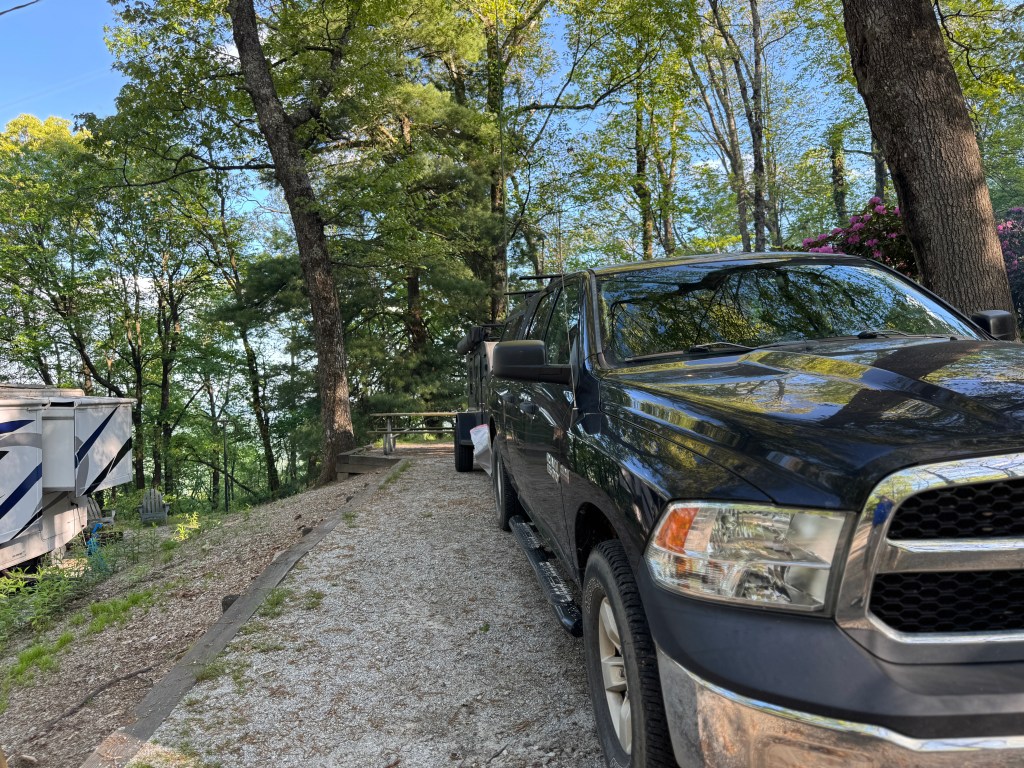
This month I ended up at Black Rock Mountain State Park. It is one of my favorite parks. I like it because it is located on the top of Black Rock Mountain. The views are fantastic and you couldn’t find a better park to operate a radio. This was a weekday trip. For the past couple of months I tried operating during the week instead of in the weekend. It was okay, I think I like the weekends better.

The weather was beautiful mostly cool with a spot of rain on the first night. I was surprised to see Slate Colored Juncos on the mountain. My mother called them snowbirds because they often proceeded a cold front and sometimes snow. I was near a comfort station and right next tot he camp host. No issues when I put up my 28.5′ random wire vertical.

Radio du jour was my FT-710. I also brought with me my IC-705 thinking I would switch over to QRP and CW on the second day. More about that later. I started out on FT8 and 25 watts. I went QRV on 20 meters around 1900 Z. The band was wide open! I stayed on 20 until about 0200 Z. The first day, I made over 200 QSO’s. Wednesday morning things started out well and then fizzled. In the end I made 453 QSO’s covering 46 states and 16 DX entities. The states I missed were AL, HI, ND, and WV. For DX I got as far north and west as Alaska, as far south as Uruguay, as far east as European Russia. I was hoping the band would stretch far enough west to pick up Hawaii, but it didn’t quite make it. A hop too far.

By Wednesday afternoon the bands were dead and I decided to head back to the house. It was a good run while it lasted and a lot of fun. The only issue I had were people asking for dupes. I only need to work you once and the way band conditions were many stations I needed were a one shot deal. Heard them once and then they were gone. I lost some of those because of people asking for dupes. That means two of us lost. Most logging software will show you if you worked a station before. It’s what I use. As an activator, I try to get as many stations as I can in the log.

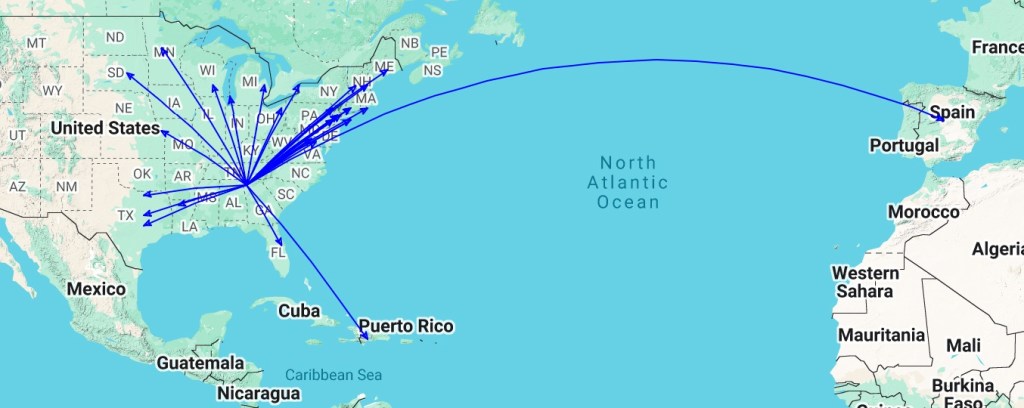
Once the bands died and I realized that QRP and CW were not viable, I decided to pack it up and head home. I left the park early Wednesday evening and was home before dark. All in all a nice trip. Here is a QSO map of the activation.

End of an Era. This will be my last year on WordPress. It cost me between $100-$200 a year to maintain and being retired I need to cut a few corners. What will happen, is I will move back to Blogger which is free. I own the domain name and I will bring that with me. My WordPress subscription, ends March of next year and in the mean time, I will move some of my posts over to Blogger. Mainly the technical stuff. I will also be taking fewer overnight trips and combining some trips with the wife doing more than amateur radio.

Retirement is grand, I wouldn’t trade it anything. With it comes a little more responsibility. If I think I want something on the pricey side, I ask myself if I am willing to go back to work for it. So far the answer is no. Stay safe and 73 de Scott

Yaesu FT710 final Review and Where to Go From Here

I’ve had the Yaesu FT710 for a while now and used it mainly in the field. That was and is my intent for this radio.  In general, I feel if I am doing an activity like Field Day or a multi-day POTA activation, and I am not carrying my gear more than a few feet, why not bring a full sized but compact radio.  These radios have more operating options and the controls are generally easier to use.  In addition, running a 100 watt radio at low power (20 watts or less), the radio doesn’t even get warm.  The radio works well with digital modes.  It wasn’t that long ago that Yaesu’s were a real pain to run digital.  Icom’s have had an easy interface since the IC-7100.  Today, the FTDX10 and the FT710 both are on par with the Icom’s when it comes to digital modes.  With CW, both brands are about equal.  In general, I feel both radios are interchangeable and it would be the matter of personal preference which would determine which is best for you. In the next couple of paragraphs I will describe the pluses and minus’ of the FT710 and the IC-7300. John WD8LQT provided input from his use of my radio during the WGARS Spring Fling.

Attenuation.  The IC-7300 only gives you 18dB of attenuation while the FT710 give you 3: 6dB, 12dB, and 18db.  Your more expensive radios typically have 3 like the FT710.  In an SDR radio, attenuation is your friend.  Preamp should almost never be used.  The nod goes to the FT710.

CW Tune.  Both radios have autotune but the FT710 has a CW tuning indicator right below the S-meter. I find myself using it quit a bit.  Some CW ops crank their filters way down and if you are a little off frequency, they won’t hear you.  My buddy John WD8LQT, also liked this feature. Nod goes to the FT710.

Sound quality.  The FT710 sounds a little better, but the IC-7300 has a lower noise floor.  I do not find either one objectionable. YMMV.  Draw

Waterfall.  The IC-7300 has an averaging waterfall and the FT710 does not.  That means that the FT710’s waterfall has to be manually adjusted every time band conditions change.  John noticed that when sending CW the waterfall would flash rather brightly, enough to be a little distracting. This may have been due to the waterfall level not being adjusted properly, but it is not an issue with the Icom.  Nod to the Icom.

Ergonomics.  Here the IC-7300 is the clear winner.  It has more of the right buttons on the control panel and it is easier to get to the most needed controls. The 7300 gives you 3 adjustable filters and the Yaesu gives you 2.  To adjust the Icom, grab a knob and give it a twist.  On the Yaesu, push a knob, twist the knob, push the knob, twist the knob.

Power consumption.  The FT710 uses about 1.2 to 1.3 amps at idle with normal volume.  The IC-7300 uses about 0.85 amps.  This doesn’t matter if mains power or generator power is available but when working off of batteries this can become an issue.

Sensitivity and Selectivity. The Icom has a lower noise floor, -133 vs -127 dBm for the Yaesu. Before I get into selectivity let me explain a little about Rob Sherwoods numbers.  Most people quote the 2 KHz blocking number, that comes with a couple of caveats. First, for the most part Rob measures 2 KHz blocking with a 500 Hz filter. That’s a CW filter.  Sideband filters usually run 2.4 KHz plus.  Unless you’re a CW op, this number is irrelevant. Here is what Rod Sherwood says, “I decided to sort the table on my website by close-in dynamic range at 2-kHz spacing. This was the “acid test” for CW contest / DX pile up operation.” He further quantifies his research with the following numbers. “What do you need in the way of close-in dynamic range? You want a number of at least 70 dB for SSB, and at least 80 dB for CW. A 10 dB safety factor would be nice, so that means you would prefer 80 dB for SSB and 90 dB for CW.” In the past I have compared the IC-7300 with the FTDX10 and the FT710 during a CW contest. What ever I could hear with one, I could hear with the other. The Yaesu’s had a little less ringing but I had no problem copying the signal from any of the radios.  

What this means is either radio will serve the vast majority of operators well.  Whatever your personal preference is, go for it.  There are things I love about the FT710 and there are things I love about the IC-7300. I never feel at a disadvantage with either radio.  I plan on keeping both.

Where do I go from here? That’s a good question. I don’t have anything in line to review. I have decided to take a step back from EmComm for a while.  I’ve been doing a lot of digital lately and need to get back to the joys of CW. I also have a couple of QRP radios that need to be taken out and used.  I still enjoy the smaller radios.  I’ll take a big radio on a camping trips/Field Days and may take a little radio for a quick activation. Sometimes it’s nice to grab a small box or bag and go. I have some antennas I haven’t used in a while, I need to get them out.  

Thanks for hanging with me.  I appreciate your company.  73 de Scott

WGARS Spring Fling 2025

Today was the club’s semi-annual outing and this spring it was one of our old haunts, Cheaha State Park US-1037 in the fine state of Alabama. There are 3 things we as a club like to do, we like to eat, we like to socialize, and once in a while we talk on the radio.

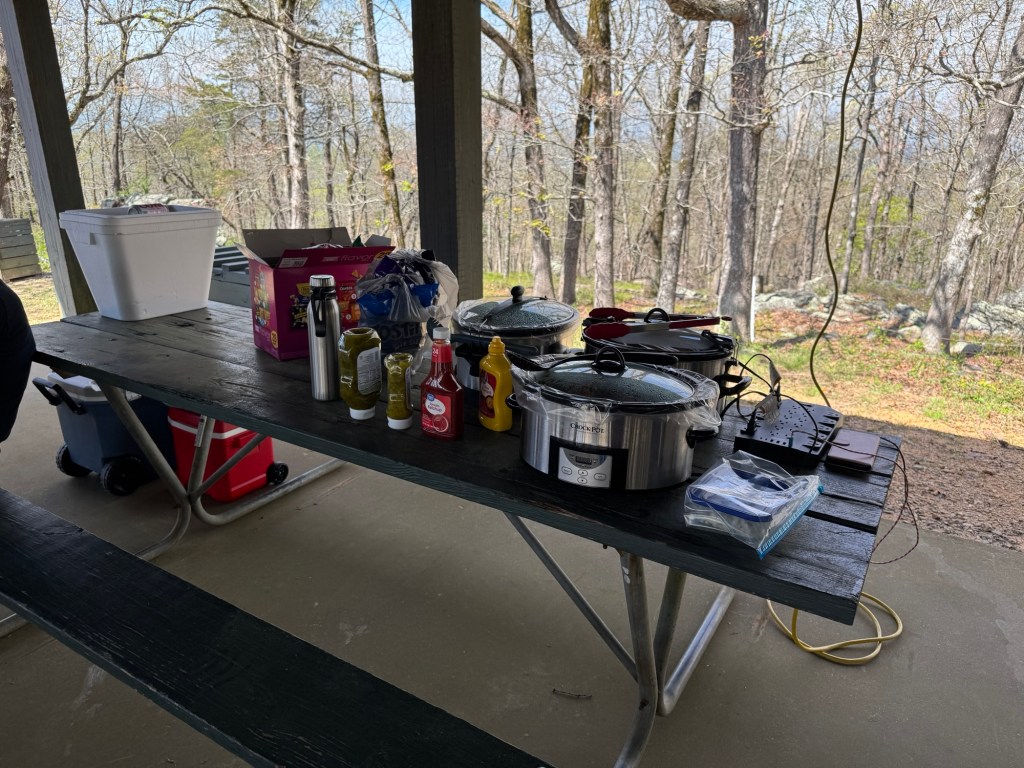
As usual, food was in abundance.

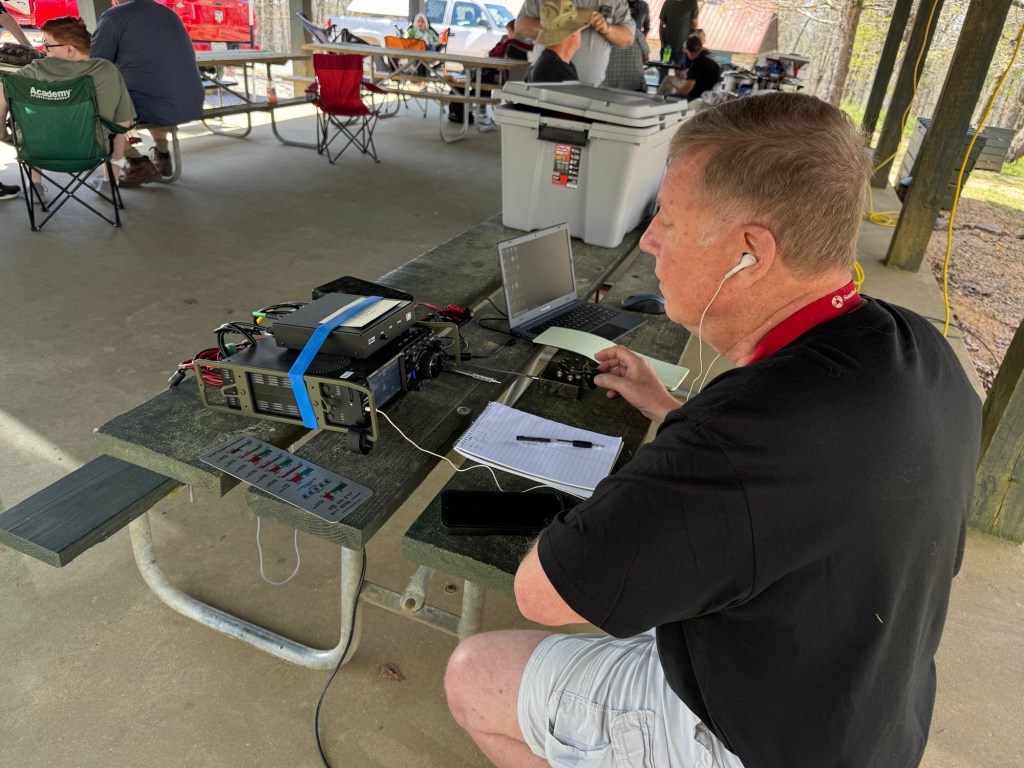
We had several stations set up under the pavilion. QRM was held to a minimum. We had Xeigu G90’s, Tru-SDR, Icom IC-705, and my Yaesu FT-710. I set the radio up and turned it over to the club President John WD8LQT. John, like me is a CW op and I wanted his opinion of the FT-710. I didn’t have to twist his arm too hard. The setup was the radio feeding a Chameleon micro transformer with a 12’ whip and about a 20’ counterpoise. The radio was powered by a 20 amp-hour Bioenno battery and the paddles were a Begali Expedition.

Band conditions were poor and it took John most of the time at the park to get his 10 contacts. There were stops for eating and chatting. Early in the activation, I decided to change antennas to be sure we had an atmospheric issue and not an equipment one. I had my Diamond RHM-12 which recently proved itself to be a good performer. Once the switch was made and some searching through the bands, John started making contacts on 20 meters. I believe it was atmospherics and not the equipment. John got his 10 contacts and we called it good.

John’s comments about the FT-710 were quite favorable. Like any radio, there are pluses and minuses. In general he thought it was a very good radio for CW. There is more commentary from John on the YouTube video posted below. John did have one epic fail. The ear buds he was using which looked rather ancient finally gave up the ghost. I took it upon myself to intervene and unceremoniously threw them in the trash. John will thank me.

My review of the FT-710 is drawling to a close. I find that I like the radio. It performs well for its price point and has some features found on more expensive radios. It has its quirks as all radios do, but none that I find overly objectionable. I plan on keeping the radio and it has found a place among my field radios. I imagine the radio may make an appearance during this year’s Field Day.

Surprises at Laura S Walker State Park

I decided to travel a little further this time and head toward the Okefenokee swamp. this time I tried the Laura S Walker State Park. It was a five hour drive and about 320 miles but fortunately I was able to stay off the interstates for all but about 30 miles of the trip. The park is near Waycross, GA which recently suffered from severe weather. Even though it has been a while there it still plenty of evidence to attest to natures fury. The park itself was in good shape and I had a nice campsite.

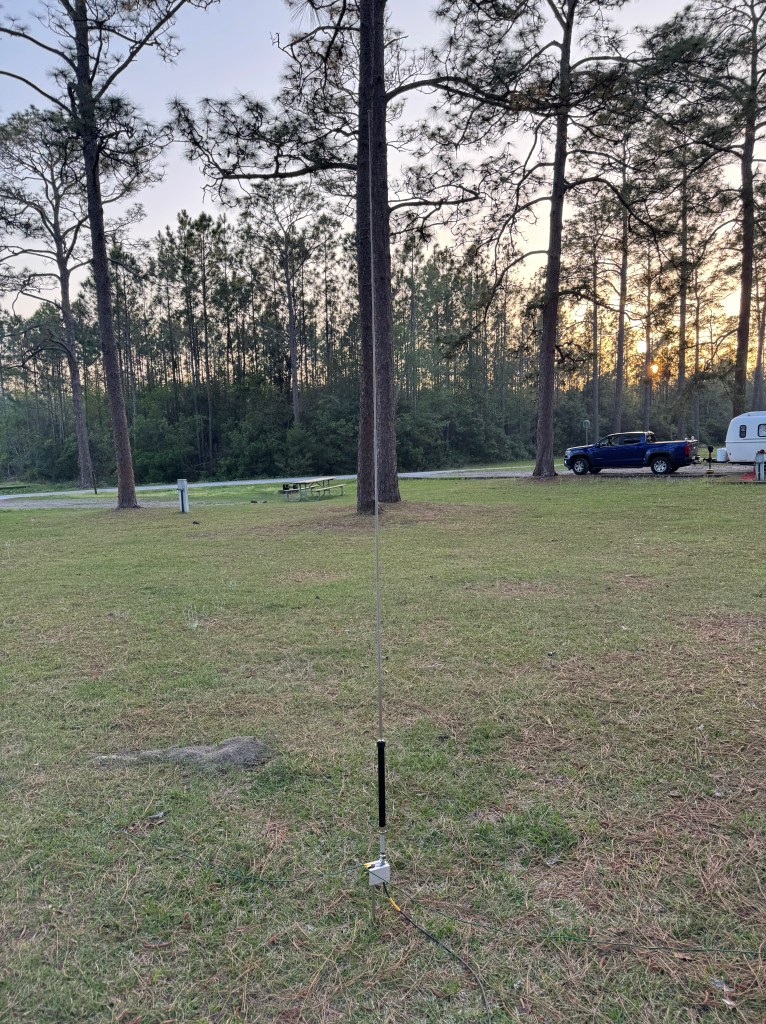
I would normally use my 28.5′ vertical antenna but I had a power line that passed almost directly over my truck and camper. I could have requested a better campsite but in the spirit of FunComm I decided to work with what I had. Instead of my usual antennas I deployed a new antenna. A Diamond RHM-12. This is a manual screw drive type antenna that is only about 7 feet tall and covers 40 meters to 440 MHz. With additional coils it also covers 80 and 160 meters. I set it up away from the power lines and used a Chameleon Spike to set it into the ground. I also had 2 counterpoises about 20-25′.

I was a little concerned about its performance. Inside the camper I had My Lenovo Laptop and Yaesu FT-710 with an LDG tuner.

I had a Rig Expert Pro Stick antenna analyzer with me and I was able to get the SWR down below 2:1. I guess I could have monkeyed with to get it lower but since I had the tuner…

I have really taken a liking to the FT-710. It has been performing well and since the last firmware updates, it has become a little champ. It is winning my heart. The radio, tuner, and computer all worked well together. I only ran 25 watts of power as that is about the limit on the antenna using FT-8. I was going to work some CW but the days I was at the park the temps were up around 90 degrees, far from the 43 degrees the morning I left my home QTH. I ran the air conditioning and when it is on I have trouble copying CW. Years in Army Aviation and other loud occupations have affected my hearing.

How did I do? Surprisingly well. In a 24 hour period which included sleep time, I made 400 contacts (7 dupes). I made contacts in 46 states (Not AK, HI, MT or RI) and 34 DX entities! I think that’s a new record for me during a POTA Activation. I got as far west as Australia and American Samoa, and as far east as Turkey, Bulgaria, and European Russia. The bands were up and down and I had to make a few trips out to the antenna to adjust it when I changed bands.

I never expected that little antenna to perform so well. The RHM-12 antenna has been assigned to permanent duty in my antenna kit.

It’s important to take your gear out and use it. Understand how it operates under various conditions. Know what your gear can and cannot do. This is good to know having fun but becomes critical when more is at stake.

Food for Thought

For those old enough to remember Popeye the movie with Robin Williams, there is a song called Everything is Food. When we talk about EmComm, we spend a lot of time talking about radios, antennas, batteries and so forth; but rarely does food come up. When deploying to an EmComm event, you often do not know if there is any food available (or available to you). I have been deployed to places where there was an active kitchen preparing meals, to living off of peanut butter and jelly sandwiches. I will tell that as much as I like. good PB&J sandwich, after a few days it gets old. On that trip, on the way home we stopped at the first burger joint we found open and a cheese burger never tasted so good.

During the aftermath of Hurricane Katrina, I spent 3 weeks in gulfport MS providing local and area comms. I was living off of 2 MRE’s a day donated by FEMA. MRE’s lose their flavor after about the first week. I’ve learned that you always bring food. ALWAYS! You never know what will or will not be there. When I am camping or on a deplyment, I want easy meals. I am usually busy doing other things to overly fuss about what to eat.

Back in my youth, I was an avid backpacker. Freeze dried foods were just coming out and they were expensive. I would mix and match them with store bought foods. I would eat instant oatmeal for breakfast along with a cup of instant coffee and maybe some Tang, lunch might be some granola bars and GORP (Good Ole Raisins and Peanuts), and supper might be one of those freeze dried meals. I only used my stove to heat water.

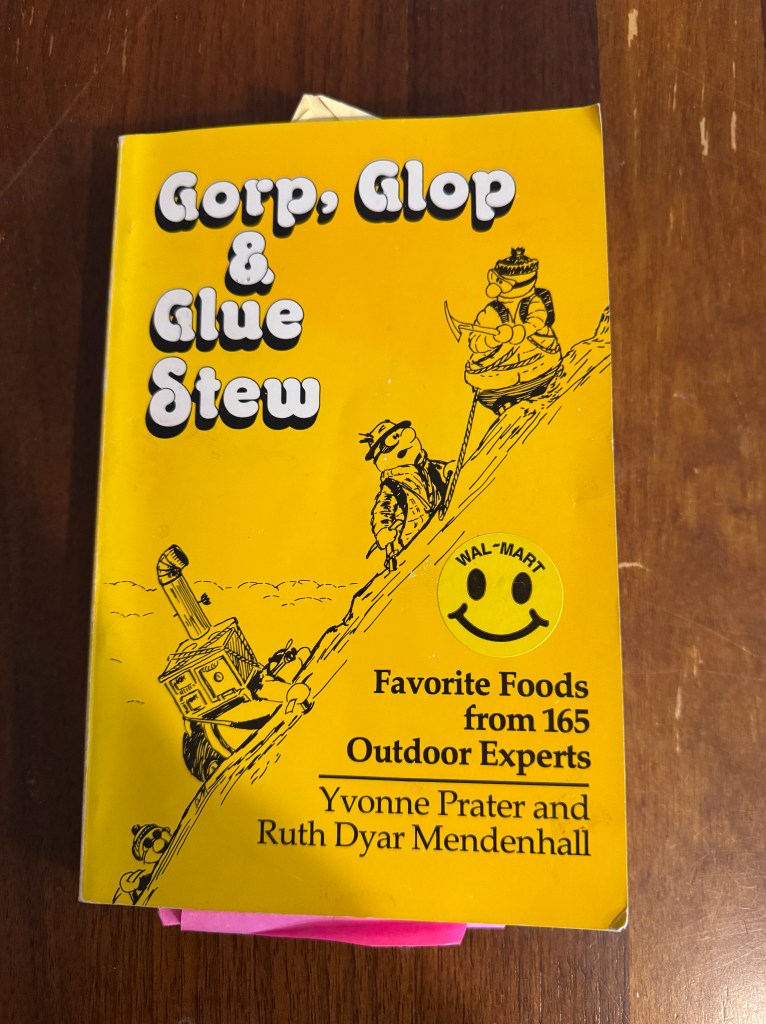
Today, I rarely buy MRE’s or Freeze dried foods. I bought a book Gorp, Glop and Glue Strew about 30 years ago. It’s a book about mountaineering foods that date back to pre dehydrated/freeze dried foods. These are the foods that conquered mountains. The foods are hardy, sturdy, and provide lots of calories. They are also quite filling. I like to make some of the mountain breads and fruit/energy bars. A little bit goes a long way and they do not require refrigeration. I can couple mountain bread with summer Sausage and cheese for the main course and then have some GORP for dessert. Drinks are usually coffee, tea, or some instant fruit mix.

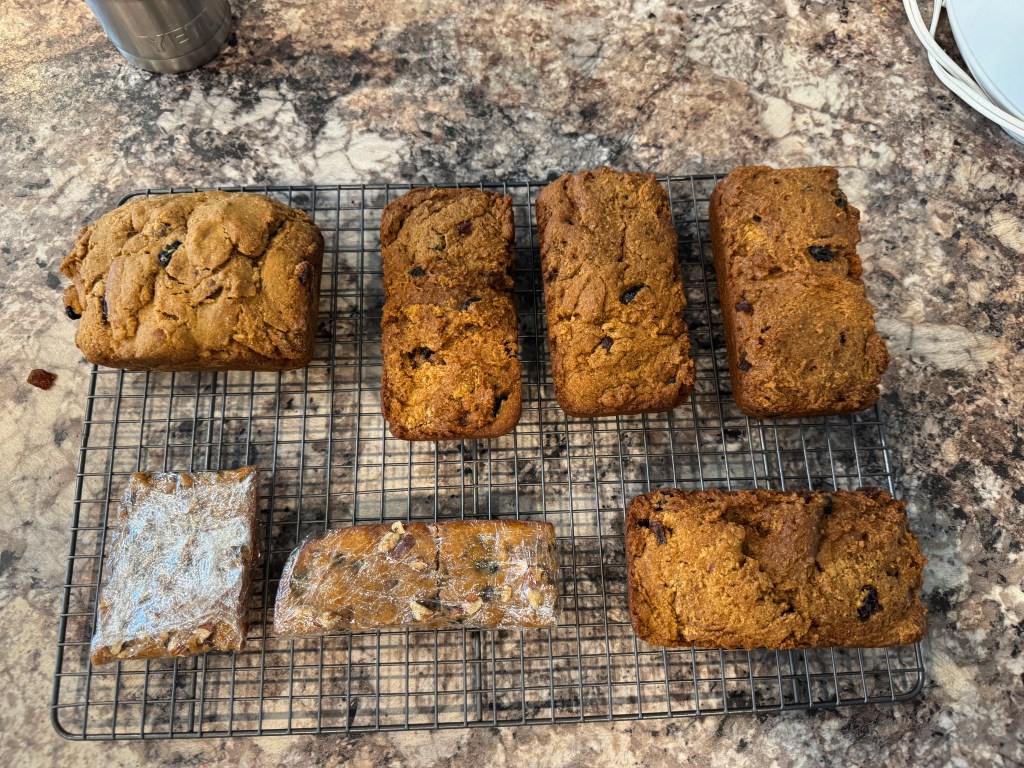
The loaves are Apple Logan Bread and the wrapped bars are Mince Meat Cookies. I will get them all wrapped and then freeze them. They last almost indefinitely. Some deployments may require a conservation of energy because those resources may be limited. Having foods that require no on site preparation is a bonus that allows you to operate longer. Sometimes, the Calvary doesn’t arrive just in time. Along with these foods, you can add Summer Sausage, Beef Jerky, Beef Sticks or canned meats. In addition to meats, cheeses keep pretty well and Ghee does not require refrigeration. Crackers or Pilot Bread are a good addition, try to find crackers that won’t crumble from the rigors of the road.

An old Army trick was to mix a little cold water with Hot Chocolate mix to make a pudding and doing the same to coffee creamer makes a field expedient whipped cream. It may not taste good at home but in the field… In the field I eat to live. These foods taste good to me especially out in the great beyond. One piece of advice; whatever food you plan to use on a deployment, start eating it now. Eat it during a POTA activation, an ARES event, or anytime you may be away from home. Now is the time to make sure your system can handle the foods you plan to eat. Having your bowels in an uproar away from home and nice “facilities” can be a very miserable experience. Stay safe es 73 de Scott

It’s Good to be SEEN

Saturday, 09 March 25, I made the two-hour trip over to Bessemer, AL to attend a SouthEast Emergency Network (SEEN) meeting. The meeting was to start preparation for an upcoming Field Training Exercise (FTX) in April. I was here to support my friend and SEEN founder Billy N4WXI.

Billy started SEEN a couple of years ago to serve his local area in case of a communications emergency using GMRS. It has since grown into a service covering the Gulf Coast States including Georgia. These are the States most affected by hurricanes. Hurricanes when they make landfall can cause extensive damage over wide areas. The focus of SEEN is to provide communications during the first few days of a disaster or until government agencies can recover their communications. SEEN is also affiliated with the American Radio Redoubt Operators Network (AmRRon). This affiliation will allow SEEN to pass messages from the southeast to AmRRon to anywhere in the USA.

SEEN primarily uses digital modes to pass traffic because it is quicker, more resilient to interference, and more accurate. Billy feels the main role of SEEN is to pass health and welfare traffic to connect families and friends inside and out of the disaster area. SEEN uses 3 apps/modes: FLdigi, JS8CALL, and VARAC. Right now, FLdigi is the heavy lifter, it has multiple modes and is used by many organizations. This allows cross group communications. The second is JS8CALL. JS8CALL is a slower but more robust and because of its excellent weak signal characteristics, it is used when nothing else will work. VARAC is the new kid on the block and has a lot of promise. This app uses VARA which is also used by Winlink. It has pretty good weak signal characteristics, but speed and automatic error correction are its strong points. A message sent through FLdigi using a mode like MFSK32 can take 5 minutes. Using JS8CALL can take 10 minutes or more. VARAC using VARA can send the same message in about 30 seconds. A good part of this meeting was spent getting folks up to speed on these modes. These are the ones that will be used during the upcoming FTX.

One of the topics talked about me sending Billy an intelligence brief from my mobile using VARAC on 40 meters. That story can be found here: KK4Z SEEN FTX 2024. The radio install can be found here: KK4Z mobile install.

As with any ham radio related meeting, the topic turned to equipment and gear. Some folks were thinking about using a QRP radio for the FTX. Both Billy and I recommended against it. There are good reasons not to and I will name a few: 1) digital modes have a high duty cycle when compared to SSB and CW. This causes the radio to heat up quicker and because QRP radios are small, there is not enough heatsink to mitigate the excess heat. The radios overheat and then automatically reduce power or shutdown. I have done this twice with two different QRP radios. They have their place, but not with EmComm. 2) Power. The primary purpose of EmComm is to get the message through, this is not a contest of how low you can go. You can always turn a QRO radio down but you can’t turn a QRP radio up. With a big radio like an IC-7300, I can run digital modes at 40 watts all day long and the radio will not even get warm.

Antennas. Again, the purpose is to get the message through. Put up the best antenna you can. Bigger is better. Your antenna in the field will not perform the same as your antenna at the home QTH. The only way you will know how your field system works is to take it out to the filed and use it. When I go on my trips, I use the same gear as I would for an actual deployment. I have 1,000’s of contacts from the field. I know my gear. A comment was made that big radios use more power than a QRP rig. True but that is easily resolved with a bigger battery. You need more juice to run that laptop anyhow. I did a test when I got home last night and checked a couple of my radios current usage at idle. My IC-705 drew 0.21 Amps, the IC-7300 drew 0.83 amps and the FT710 drew 1.28 amps. My main EmComm radio for the field is my 7300. Remember, you are most likely not going to move your EmComm gear far so weight/bulk is not a problem. You need the power and you need the heat dissipation.

To quote Leroy Jethro Gibbs “Grab you gear, let’s go”. Take your radios out to the field often. I try to get out 6-10 times a year to include both Field Days. Know your gear, know how it works. If you manage to get out, get at least 20 miles from the home QTH. That is the minimum distance that is too far to return home to get something you forgot. Learn to make do, improvise, adapt and overcome. Most of all have fun. I do a lot of Parks on the Air (POTA). POTA activators, know their gear because they get out and use it. Stay safe 73- Scott

Hamrs Pro

This past trip I was able to check out the new Hamrs Pro app. I must say I am impressed. I spent some time prior to my trip setting it up for a POTA activation. Here is my current setup:

Hamrs uses FLrig to interface the radio with the app. When the radio is connected, frequency, band, mode, and power is updated in the app. In addition, Hamrs Pro will set the RST to either 59 or 599 depending on the mode. Another nicety is when you add the POTA park number in “My Park” it will automatically add the Maidenhead Gridsquare to “My Grid”.

Tabbing is straight forward. It goes from left to right and top to bottom. In my set up I have received RST first since that is the first one I get and then a quick tab and I add mine. Time on is automatic. I always believed that computers should work for us and not the other way around. With Hamrs Pro, it does most of the heavy lifting for you.

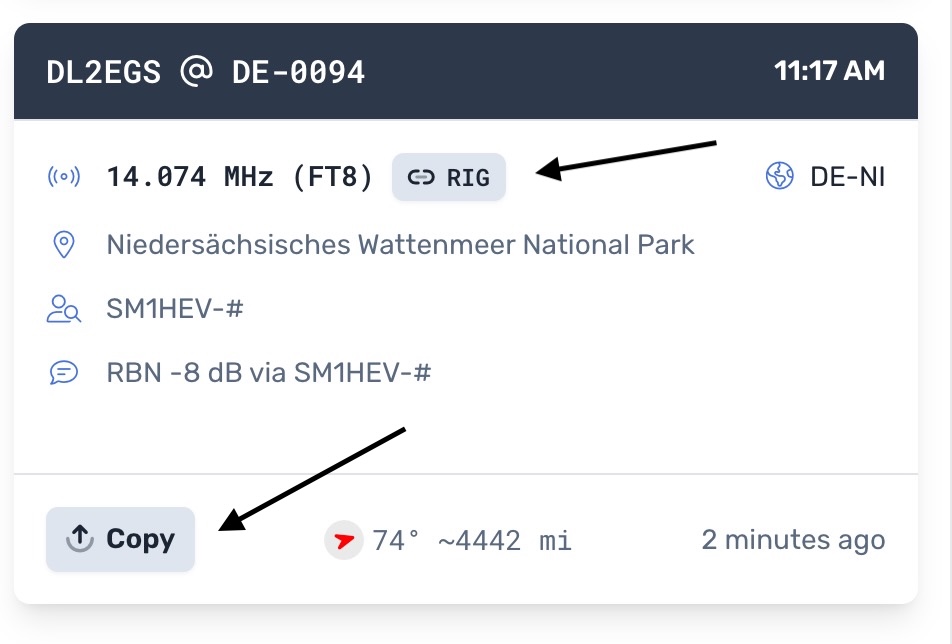
Another place where Hamrs Pro shines is the POTA spots.

There is a lot of info on the page to include compass heading and distance. If you click on the RIG button, Hamrs Pro transfers the frequency and mode to your radio. If you click the Copy button, the information is copied into the log. Add RST, hit save and you’re done. Pretty slick.

So far the only improvement I can think of is using Hamrs Pro with FT8. I don’t see an easy way to interface Hamrs with WSJT. This is not a big deal. All I do is log FT8 contacts in ACLog export the log as an ADIF, and then import the ADIF into Hamrs. It is easier than it sounds. Another way might be to use the WSJT log function and import that into Hamrs Pro.

Hamrs Pro with a $2 a month subscription allows you to sync your logs across platforms. I have Hamrs Pro on my Mac, IOS, IPadOS, and Windows. As along as I have internet or WiFi, they sync. This is great because I mainly use Windows for radio stuff and Apple for everything else. I can create a log on my Evolve III or my iPhone, and when I get home I can upload the log to POTA on my Mac — easy peazy.

I have been using Hamrs on and off since the beginning. This is a hugh step –in the right direction. I can see this as becoming my go to logging app. A lot of thinking and work has gone into Hamrs Pro. I can only see it getting better. Good job Hamrs folks. de – Scott

Night on Bald Mountain

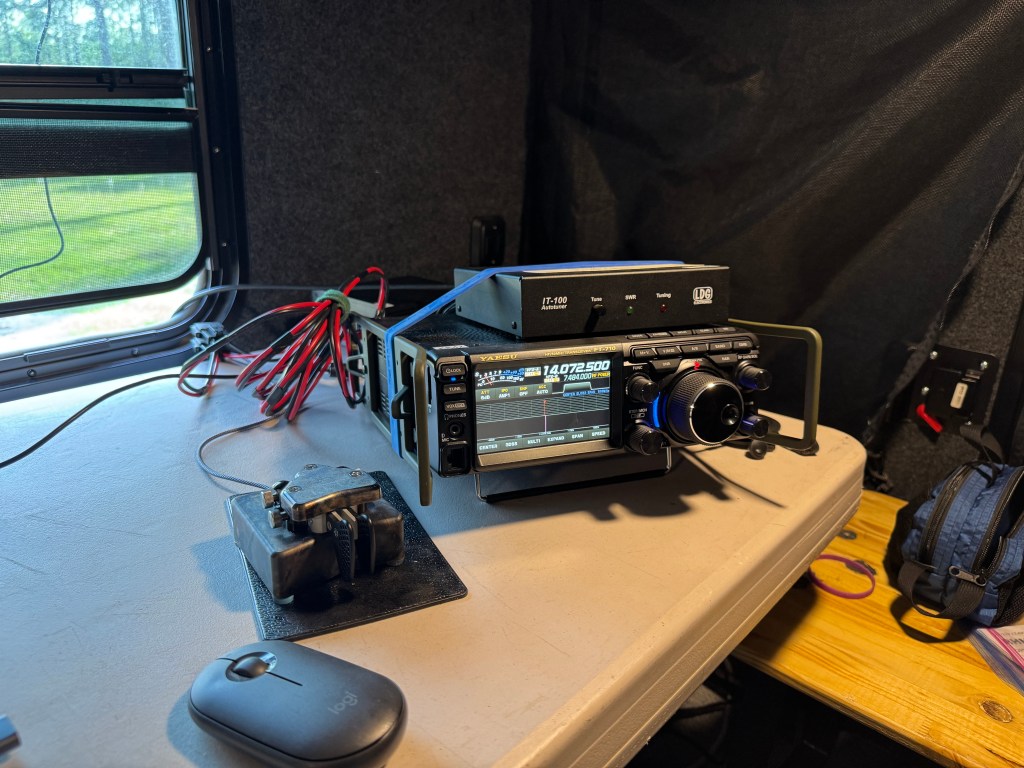
This trip was to Cloudland Canyon State Park located in NW Georgia. It is a very nice campground about a 2 hour drive from the home QTH. I got at the campground Tuesday, around 2000Z and quickly set up. Radio du jour was the Yaesu FT710 Field which is currently under review. The antenna was my 28.5’ random wire vertical. I am also trying out my Maestro Evolve III laptop along with HAMRS Pro software.

Band conditions were a little off so I started on FT8. It was slow going but I made 15 contacts before the new day. After supper, I went back to FT8 to try to get 15 more contacts before the storms hit.

The whole time I had moderate winds and some pretty good gusts. Right before the storms I lowered the antenna and put a garbage bag over it to keep it dry. The antenna is weather sealed, but the push up pole when it gets wet, is a real pain to dry out.

How about the FT710? In general, I like the radio. I think it’s a keeper. It is fun to use and performs well. It has a few niggles that I camp about but I like it. I talk more about the issues on my YouTube video. I will say that this radio is very different than the first one I got. The first radio was probably released too early and still had growing pains. This radio just feels better. In general I feel this radio and the IC-7300 are about equal. Either one will work well.

Evolve III. This is a pleasant surprise. I paid about $122 for it and for a field laptop it does well. Last night I ran WSJT (FT8) and AcLog without any issues. I was also running. BktTimeSync with a GPS receiver in the background. It is a little slow to start up but once it’s running, it does fine. I run it with a Logitech M310 mouse.

I am also trying out HAMRS Pro. I have it on Windows, Mac, IOS (iPhone, iPad) and they all sync up. I will talk more about HAMRS in a follow up article.

This is Wednesday morning and I am going to try to do some CW before I pack up and go home. Bands conditions are so-so at the moment. I will break my normal procedure are hunt a while to try out some of HAMRS features.

I only managed to make one CW contact hunting and activating. I could tell I was getting out as I showed up on HamAlert. Here is a QSO map of the activation.

Screenshot

If I remember correctly, I had issues last time I was at Cloudland. The important thing was I got out for a while and I had fun. It isn’t always about the numbers. Below is a video about the activation and my thoughts on the FT710. Stay tuned es 73 Scott