Maybe It’s time for a change

I feel a shift in the winds. Maybe it’s time to chart a new course. I feel if I continue on the current heading, I will end up in the doldrums. Not a good place. Parks on the Air (POTA) using CW has become stale. There is more to CW than a contest-like exchange. I have also noticed that the pile-ups in POTA have become a little more unruly. When this happens, it can extend the pileup time to double or triple what it used to be. CW pileups work well when each station sends their call once and not two or three times. Couple multiple calls with tail-ending, and a pileup could go on from close to a minute. These multiple calls often QRM the activator so no one can hear him, causing him to repeat the call they have chosen. While there aren’t any fast rules, there is an art to working a pileup from either end and, adapting to the ebb and flow of the pileup is key.

So where am I today? I think I need to try something different, not real different, just not what I’m doing now. After 1,000+ POTA CW contacts, I think I got it. Activations are still a bit of a challenge, but, it’s still just an exchange. I am currently enrolled in a CWI course to help break out of my stagnation. I want to become more conversational with CW, much like I was years ago. But insanity is defined as doing the same thing over and over again expecting a different result. This means I have to do something different than POTA, or SOTA for that matter.

My first step was to join the Straight Key Century Club (SKCC). SKCC does not allow any electronic means of sending CW. They allow 3 types of keys: straight key, sideswiper, and a bug. Yep, it takes a little more skill to run one of those babies. Twenty-eight plus years ago when I was a Tech+ I used Iambic Paddles and have used them since. I have another challenge, learn how to run a mechanical key. Couple that with learning to become more conversational should keep me busy for a while. I am also hoping that jumping backwards over the technological barrier, may be a place where things are a little less hectic.

I am looking at several different mechanical keys and when I get one (or more) they will show up here on the blog. Learning to use a mechanical key will be like learning a new musical instrument — how fun! I will still do POTA and SOTA, but I plan on opening new avenues to adventure. Hope to hear you out there. 73-Scott

Recording CW for CWI

As a part of my homework for the CW Innovations class, I (we) have to head send, that is, send code from our head without reading it or using items that we see. This treats the code more like a language. We check our practice by recording and then listening to what we sent. This helps identify if we have issues such as improper character or word spacing. This is a short post and video to help get you set up to record your CW. I know that there are many out there that already know how to do this. This is for those that may not.

Equipment is simple, you need a radio or a keyer, plus a key or paddles to send CW, a couple of 3.5 mm (1/8”) stereo cables, a 1/4” to 1/8” adapter if your radio has 1/4” headphone plug, a recorder, and either headphones/earbuds or a powered speaker. For those that need a 1/4” to 1/8” adapter, here is what I use: Millso 1/4 to 1/8 stereo adapter

The recorders need not be expensive. Look for one that has 2 channels (stereo) and an external mike/line in jack. There are some on Amazon for about $30. You plug the radio (headphone jack)into the ext. mic/line jack on the recorder. Then from the headphone jack on the recorder to the speaker/headphones.

Alternatively, you can record to your cell by placing the cell phone’s microphone close to the radio’s speakers. You will probably pick up more ambient noise this way.

Hopefully you can adjust an input levels on the recorder. On some recorders you have to “arm” the recorder before you can adjust the levels. On mine the first press of the record button arms it, and the second press begins recording (YMMV). Looking at the recorder’s meters, you want the recorded signal to peak around -12 dB (about 3/4 of the meter scale). If you can’t adjust the input level at the recorder, adjust the volume of the radio. Adjust the volume of line out (headphone) of the recorder and/or the level of the speaker if you are using one, to a comfortable level, and you are good to go. One additional thought. Record in MP3 rather than WAV, it is a much smaller file size and you probably won’t notice any difference in quality.

Hit record and start sending. Whatever comes to mind. Have a conversation with yourself, send your call, QTH, WX, the alphabet, numbers, pro signs; anything other than things you read or see. When you’re done, play it back and see how you did. Sometimes it is beneficial to wait a day before you review. Pay attention to character and word spacing. Could you copy your own sending? A common error is to mush characters and words together, When you do that, you are not sending code, but gibberish. Most of all, have fun and don’t be afraid to laugh at yourself. Unless you share, no one will hear this but you.

A final tidbit not related to recording audio. A lot of times during a day activation, I am logging with a pencil and paper. I use a mechanical pencil (0.5 or 0.7mm lead) and a Rite-in-the-Rain notebook. I’ve been using Rite-in-the-Rain (RitR) products for over 40 years. On thing I noticed about RitR products is it has more tooth than other papers. Tooth is the roughness of a paper. Pencil leads come in different hardnesses. They are graded by a number and a letter. The letter “H” stands for hard and the letter “B” stands for black. B is soft and H is hard. Right in the middle of the range is grade HB. This is the most common lead and is included with most pencils you buy. On either side of HB is H to the left and B to the right followed by 2H to the left of H and 2B to the right of B and on up the scale. What I have found is HB leaves too much graphite on RitR paper. It makes it difficult to erase and more readily smudges. My handwriting is already sloppy enough. I have recently switched to either H or 2H leads. It writes a little lighter and smudges less. For many years I have used 0.5mm leads but, I think I am starting to like 0.7mm more. It is less prone to breaking. Like anything else, Your milage may vary. I hope this helps. 72 — Scott

The Thrill of Victory and the Agony of Defeat – or is it

I had good intentions today. When I went for my morning walk it was 8 degrees F and with the windchill, somewhere around zero. This was one of the coldest days I have ever experienced in Georgia. I have been colder, but not here. To celebrate a how low can you go day, I decided on a park activation. During my CW Innovations (CWI) Class I wished to try to make a day activation each week of the class.

Today, it was back to JL Lester Wildlife Management Area. It’s still the closest and I had pretty good luck there last time. I wanted to go over my random wire antenna since I wrote about it in my last blog. Everything was going along swimmingly until I tried to remove the trailer hitch from the receiver — it was frozen in place. Which meant I couldn’t use my K4SWL+ Antenna. Luckily, I had my Frankentenna in the back and broke it out. I ran it in stealth mode :Frankentenna Stealth Mode I hooked everything and away I went, or I didn’t.

I’m not sure what was happening, but I was not making any POTA contact. I don’t think I was making into the RBN either. I did get one hit on HamAlert from the Cayman Islands. I didn’t know if I wasn’t getting out or that there were not a lot of POTA hunters operating today. The bands did sound quiet. So thinking POTA today was a bust, I spun the dial and a guy calling CW on 20 meters. I gave a shout and he came right back to me. We had a nice QSO for about 10 minutes until QRM kicked in. We were both operating QRP from a park and we both had a KX2. Obviously, the radio worked and I was getting out. The thrill of victory is that I made an actual CW QSO and not just an exchange. First time in many years. It is this sort of activity that CWI encourages. So, I broke the ice and did it, usually it gets easier after the first one. One of my goals this year is to get more conversational with CW. I have taken the first step.

K4SWL+ Antenna

On a recent post on QRPER.com, Teri KO4WFP was at a park in Florida that did not allow wires (or anything else) in their trees. Many POTA activators use End Fed Half Wave antennas which usually require one end in a tree. While it doesn’t happen at all parks, not being able to hoist your antenna could bust an activation.

I realized this may happen to me even though Georgia appears to be pretty lenient when it comes to such matters, I decided to switch to a park friendly antenna. I have been a fan of QRPER.com for quite some time and occasionally Thomas will repost something from my humble blog. That being said, it was K4SWL that got me started using a random wire antenna. My basis for my antenna was his speaker wire antenna which was a 28.5’ vertical antenna with a 17’ counterpoise. I used it a few times in that configuration and then started to modify it. I call this antenna my K4SWL+.

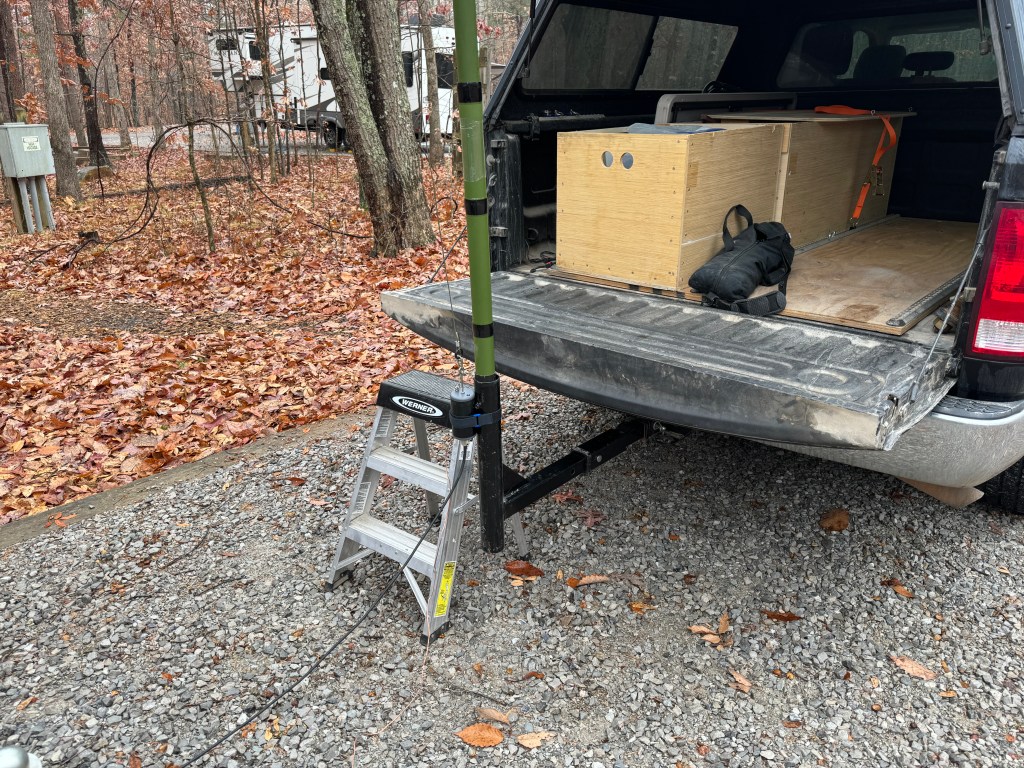
Some of the differences are I use a push-up pole to get the antenna in the air and at the base I use a 9:1 UnUn and a 1:1 Choke to keep RF out of the radio. A random wire antenna can feed RF back into the coax.

The wire is 14 ga. coated flex weave from The Wireman. This was left over wire from some other antenna projects. When I started this project I was using 22-24 ga. coated wire from SOTABeams but realizing there was no need to save weight, used the heavier wire. This allows me to dual purpose the antenna both for FunComm and EmComm. The insulator at the top is 3D printed with my call-sign and the base is U-type lugs. I find these are the best as I do not have to take the nut off of the antenna studs and if pulled hard will come loose instead of damaging the UnUn. I connect the antenna to the top of the push-up pole with a small Nite-eze “S-biner” size 1.

The 9:1 UnUn comes from Palomar Engineering. I have already created a blog post about how to build it and it can be found here: http://[https://kk4z.com/2022/05/28/91-unun-qro/]

Part of this blog post was to bring the different components together into one blog post.

The 1:1 Choke can be found here: [https://kk4z.com/2022/08/15/lightweight-choke-balun/]

I made two different types but I found the second works much better.

The project is pretty easy, the only caveat is to pay attention to what wire goes where. Putting it all together, you need a push-up pole, a Flag holder and maybe a trailer hitch extender. I will provide links below. The Flag Pole holder I used was not available so the link I used is a probable substitute. I have a trailer hitch on both my truck and my camper, When I pull into a campsite I have a choice of which hitch to use to keep my antenna clear from the trees. With the antenna up, I wrap the antenna wire around the push-up pole from tip to base, to prevent the wire from sagging near the tip. I attach the UnUn and choke to the mast with Stretch Velcro Straps. With my antenna up I have park employees drive by me all day along. Most of the time we exchange a friendly wave and occasionally one will stop by for a chat. I have had zero issues with this antenna at any of the parks I have visited.

How does it play? It has pretty much been a main antenna for just about all of my POTA activations. You can go back through my blog post and see what equipment I used with the antenna and the accompanying QSOMap. You do need an antenna tuner with this antenna and I typically use an LDG Z-11 Pro which I’ve had for 15+ years. The antenna tunes up from 80 to 6 meters and I have run the power as high as 65 watts. I normally run 10-35 watts depending on band conditions. I have tried it on 160 meters and while I can get a match, I don’t think much RF is leaving the antenna. I’ve made a few contact with it on 160. If you like to work 160 meters during a POTA activation, I suggest a Chameleon EmComm II with a 60’ antenna and a 50’ counterpoise. I run it as an inverted L with the apex about 20’ up my push-up pole and the end sloping down to something not a tree. Last time I tied it to the lantern stand at the campsite. It worked pretty well and I was able to make contacts on 160.

If you’re looking for an antenna that you can set up almost anywhere, with little or no hassles, take a look at this one. Don’t forget to check out the short video below. 73 — Scott

14 ga. Flexweave
Nite-Ize-Size-1-S-Biner
Jackite 31′ Pushup Pole
Flagpole Holder
Hitch Extender
Stretch Velcro Straps


Bits and Bobs

This morning I started waxing philsophically about kits and kitting. Some folks prefer to build a separate kit for each radio or each adventure. That can be a fun past time itself. I have tried that and it doesn’t work well for me (YMMV your milage may vary). When I do an activation or for that matter when I am hunting from home, I like to be familiar with my equipment. I like to know what it can and can’t do. One negative about multiple kits is you don’t put your hands on them as much which means they don’t get inspected or checked for damage, dead batteries etc. as much. I’ve seen many times where someone brought one of these kits to the field and something was missing, broken or dead, and they couldn’t get on the air.

This probably goes back to my Army days. We were issued one set of gear and that’s what we used. You knew how every thing worked and your kit was inspected frequently . A good example is my pocket knife of choice. While in the Army, I always carried a Swiss Army knife (SAK). It was used daily for a multitude of tasks. I developed a close relationship with SAKs. Forward to today, even though I can afford fancier knives and I have a few, my Every Day Carry (EDC) is still mostly a SAK. Why? Because I know the knife. I know the steel, how they are built and how to various blades work. For a while I was a UH-60A Blackhawk Crew-chief and the SAK was routinely used to work on the aircraft. Today, a SAK Small Tinker resides in my pocket. I have carried SAKs for over 50 years.

Back to radio stuff, I feel the same way. Even though I have quite a few antennas, I stick to a few that really work for me. I like going on an activation, knowing how my gear is going to work. Today, I was musing that I had my KX2 in its bag that came with the radio. It’s a nice bag but it’s a little tight fitting in my back pack. I decided to put some of the gear in a separate smaller bag. I have a 3D printed face cover and BNC connector cover to protect the radio bits so I can place the radio in my bag by itself. I also thought that my little QRP radios (KX2, IC-705, and QMX) use much of the same gear so I made one bag that all 3 radios can use. Then, when I go an activation, I can just swap out the radio and not worry about leaving something behind. Here is my new radio bag and list. For the rest of the pack contents see my blog post AAR on Bald Mountain: https://kk4z.com/2023/11/23/aar-bald-mountain/

The bag is a Condor Belt pouch. Nothin fancy, but sturdy enough and mashable enough to fit nicely in my backpack. Both my IC-705 and KX2 have a Begali Adventure mount and the Adventure paddle can be hand held. One thing not shown is an anti-slip pad that I use when operating from inside the truck. Here is the rest of the kit:
3’ RG-316 jumper
15” RG-316 with choke
Throw line and weight
Extra Bank Line
Begali Adventure Paddle
28.5 Random Wire Antenna with 17’ Counterpoise
Wire to BNC Adapter
BNC to SO-239 adapter
BNC to BNC adapter
3’ 3.5 mm Stereo Cable
Earbuds
Power Cable for there IC-705
Power Cable for the KX2 and QMX

My backpack stays packed and ready to go complete with a radio. Because it gets used often, I do not worry if the gear is ready, I just grab and go. Part of my Army training that has stuck with me, is I go through my gear when I come back from the field and get it ready for next time. As I said earlier, I plan on doing a one day activation a week along with one weekend activation a month. 72 — Scott

Day Activation at JL Lester WMA K-3756

Going with my goal to improve my CW skills I set out this morning to a nearby WMA for a POTA activation. It is the closest one to my house but it is still 30 miles away. CW is a participation sport, and like many things, in order to get better, you must practice. One of the things I have done was to sign up for a CW class in this case CW Innovations. One of the things CWI stresses is getting on the air and making contacts. I believe in that, and part of me joining CWI was forcing me to practice what I preach. The course is 10 weeks long starting next Monday. It is my plan to try to get out and make one day activation a week along with practicing from home. I like to activate but sometimes I get distracted at home and other things take precedence. By setting a schedule, I hope to break the pattern.

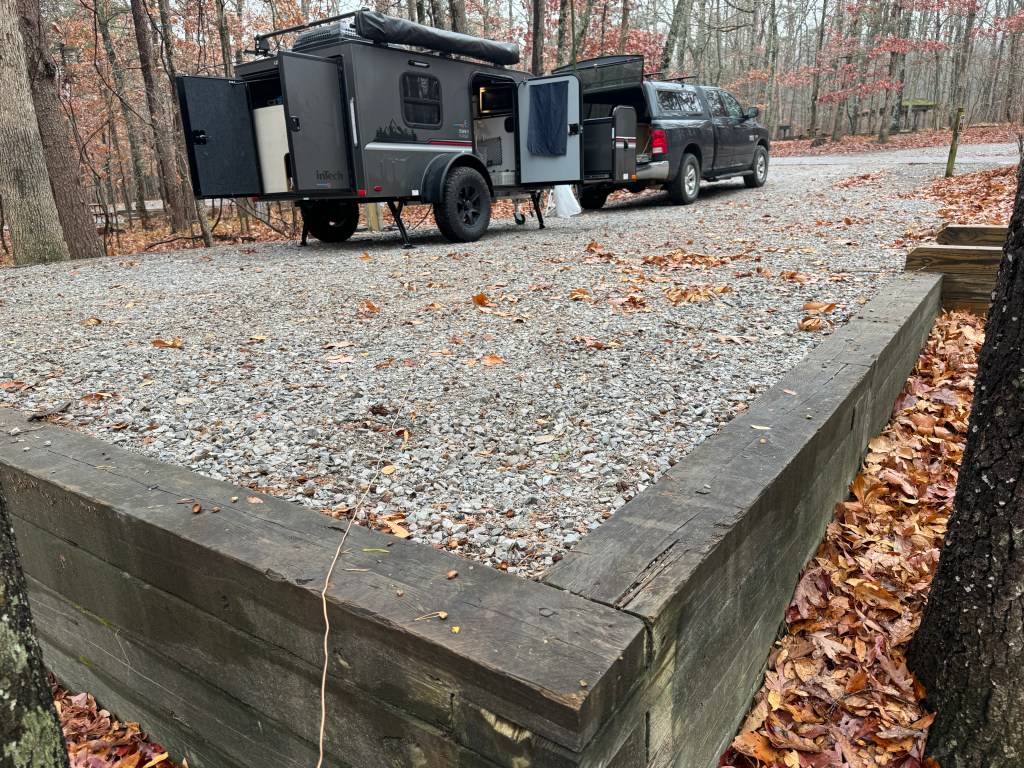
The JL Lester is a small WMA and I chose the less populated parking area. It’s a quiet place. My antenna was my 28.5’ random wire. It’s the easiest antenna I have to set up. It takes a few minutes and puts no wires in the trees nor holes in the ground. A win-win for everyone. The antenna is a permanent resident of my truck. The radio for this trip was my Elecraft KX2. It is a perfect radio for a short duration activity. Hook up the antenna and plug the paddle into the radio; I’m in business.

I was set up by mid-morning and thought I would start on 40 meters. Forty was already dead so I moved up to 20 meters and jackpot! I had quite a flurry of activity. I kept my speed at 18 wpm. Slow enough for those still around 15-16 wpm but fast enough for zippy guys. It can get hard to adjust your speed. I often falter when going from 16 wpm to 22 wpm. The band was in okay shape. There was a bit of QSB which made hearing some of the stations a little difficult. There was also some pile-up QRM. I really prefer it if everyone would send their call once and let me grab one. Sending a call 2-3 times slows down the whole process. I have to wait for everyone to stop sending before I can respond. Like today, most times, I stay on long enough to work everyone in the pile-up. Today I stayed on until no one was calling and then went QRT.

It was a pretty fast run, I made 32 contacts in less than 50 minutes. Could have made a few more if…

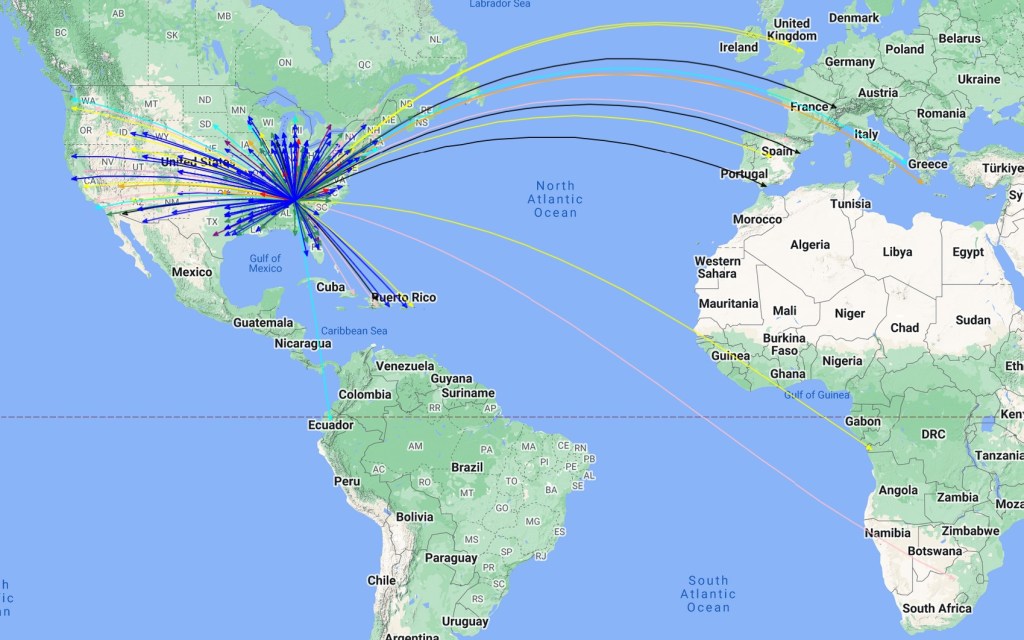
Below is a QSO map and a short video describing the activation. Thanks to all for your patience. I had some trouble with a few call signs due to QSB and a short between the ear cups. Hope to see hear you out there next week. 72 — Scott

The long and the short of it

My first campout for 2024 was at Vogel State Park located at the base of Blood Mountain in the Chattahoochee National Forest. It is Georgia’s second oldest state park having been established in 1931. The park contains 233 acres and includes a 22 acre lake. The park has camping, picnicking, hiking, and is known for its spectacular fall foliage. Nearby, the alpine village of Helen provides various attractions and good food. Be sure to check out the German Bakery/guesthouse.

One of my New Year’s resolutions is to improve my CW skills.
This weekend, it was going to be a me and the key weekend. I am going to spend the weekend only doing CW (or so I thought). Over the past year, I used a lot of FT8 mainly because the bands were in poor shape during my camping trips. I still plan to use FT8 some but for the most part it will be CW. In addition, to help me improve my skill, I signed up for a class with CW Innovations. It is a 10 week intensive CW course. My hope is to get my speed up to where I can do the occasional contest. Those contest boys are pretty zippy.

The weather for the trip was iffy. Friday night, the park was under a winter weather advisory with freezing rain predicted. I try not to let weather stop me from an activity. When I was in the Army, they never called off a field problem due to weather. Today , while I err on the side of safety, I still go regardless of the weather. It teaches the limits of my equipment and me.

I decided to bring the Elecraft Brothers. My K3(S)/10 and my KX2. In addition to running CW, I also plan on operating at QRP levels. This is not much less than I usually run while camping which is about 25-35 watts. My antenna ended up being my 28.5 Foot random wire antenna with a 17 foot counterpoise. I also brought my EmComm II which has better NVIS capability. Often my campsite dictates which antenna I use (I ended up using the random wire due to space constraints and the chance for freezing rain). I will be using a notepad and my Lenovo T14 for logging.

It all started out innocently enough. I was finishing up a bout with the Flu which was probably Covid, and thought I was well enough to make the trip. I reserved the campsite months ago and I figured I could give it a go and if things went south, I could come home the next day.

As soon as the sun went down and the winds picked up I was not feeling well. I ended up with a scratchy throat and associated coughing along with a good case of the chills. No matter how I tried, I could not get warm. My camper has two good heaters, my small ceramic heater which is usually more than enough and the built-in overhead heater/AC unit which will bring the camper up over 90 degrees. Even with both running, I still felt chilled. It was already starting to rain so I had to wait until morning to pack things up. It was not a fun night.

The second big thing to happen was me not making any CW contacts. I called and called Friday night and only made one contact. Cell service was sketchy so it was difficult to check if I was being picked up by the RBN network. I was running 10 watts which usually is enough to at least make the required number of contacts. I was stumped. By the way, on Saturday morning, I made contact with the NCS of the EmComm net I check into on CW and LSB. Hmmm! Back to Friday night. I had about an hour and a half to make the other 9 contacts for a valid activation.

I didn’t want to do it, but I switched over to FT8. I did it to see what was going on out there and to make enough for a valid activation. My FT8 app lit up like a Christmas tree. I had contacts from the west coast and Europe with points in-between to include Canada. What a head scratcher. I’ll include a a QSO map below.

The only thing I can think of is the propagation was not falling on the ears of the hunters and with spotty cell service I could see I wasn’t making it into the RBN. The park sets down in the mountains a bit but it has had 137 valid activations so the signal does get out. It is funny that I could check into my EmComm net with the NCS in SC and not work more than one hunter.

Saturday morning, I packed up after the rain stopped and headed for the house. Back home and under the care of my good wife I began to recover. I still have some gear to dry out and a few things to fix, but that can wait a day. You can’t always have a great activation. While I planned to have a “me and the key” weekend, I was glad to have the ability to operate FT8 which saved the day. Sometimes, a little extra planning makes the difference. I enjoyed the weekend, even though I wasn’t feeling well. A little adversity does add spice to life. Till next time 72 — Scott

I was extra good this year

I hope everyone has had a very Merry Christmas and is looking forward to a Happy New Year. For those not celebrating Christmas, I wish you a joyous holiday season. Bah, Humbug! Is not in my volcabuary this year.

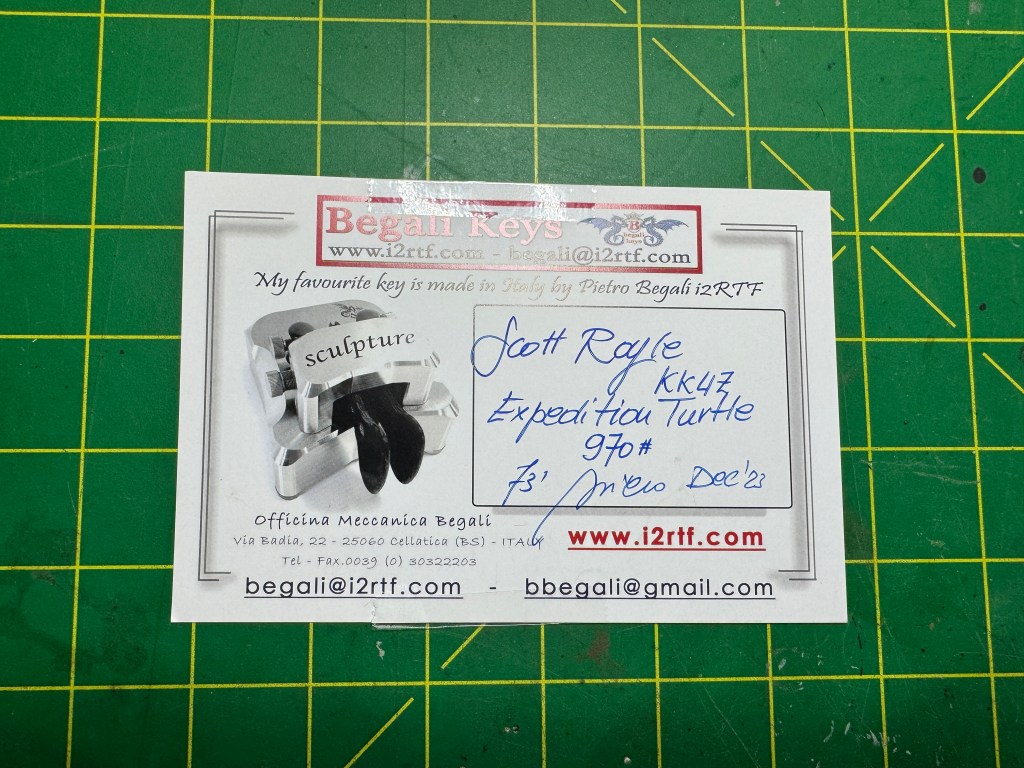
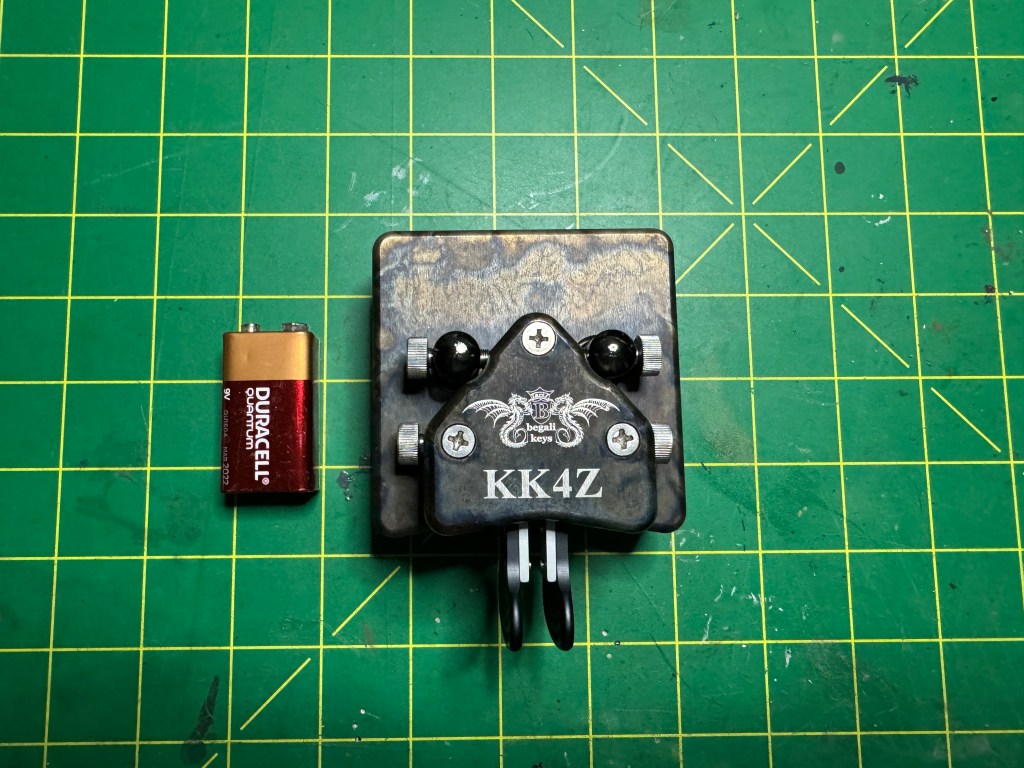
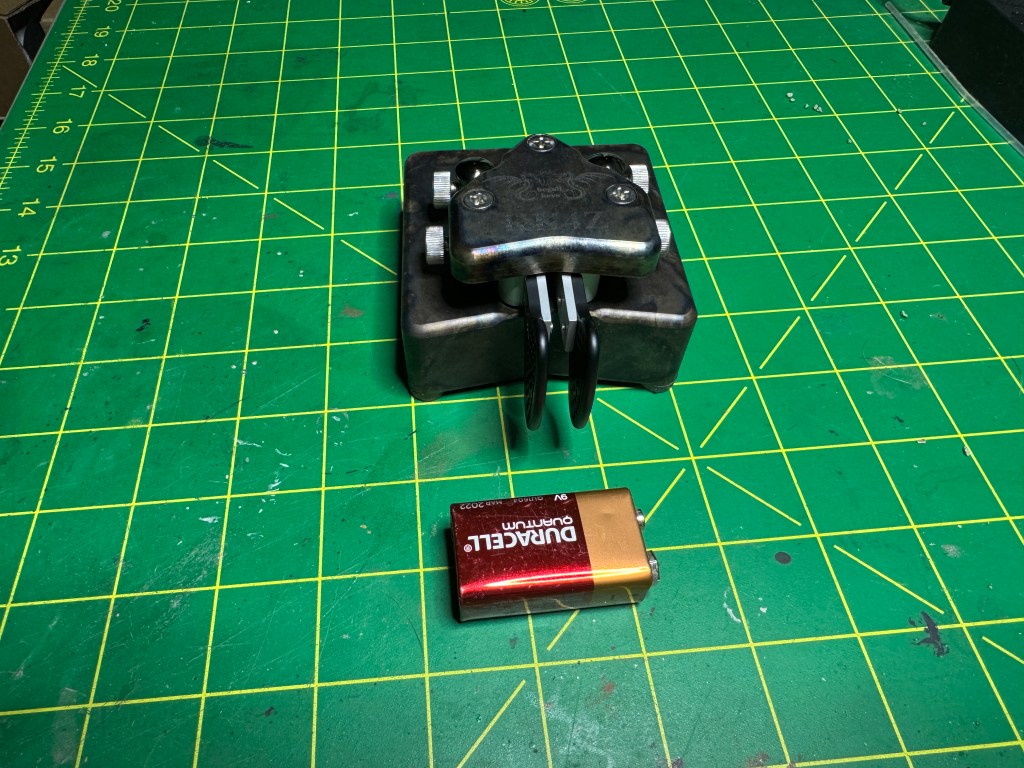
Back in early December, I ordered another Begali Paddle. This time I ordered an Expedition. As you can see in the photos, it was done in Turtle with my Callsign engraved. As a surprise Christmas Gift, my wife paid for them! She’s a keeper. I am planning on pairing the Paddles with my K3(s)/10 radio. I like to keep a set of paddles with each of my portable radios – all set and ready to go.

The Begali’s are a wonderful family. Whenever I order a set of paddles from Begali, Bruna always ensures that I get what I want and we often exchange multiple emails throughout the process. I now own 4 Begali paddles. Her last email was a request that I let her know I received the paddles. I will send her a link to this blog post.

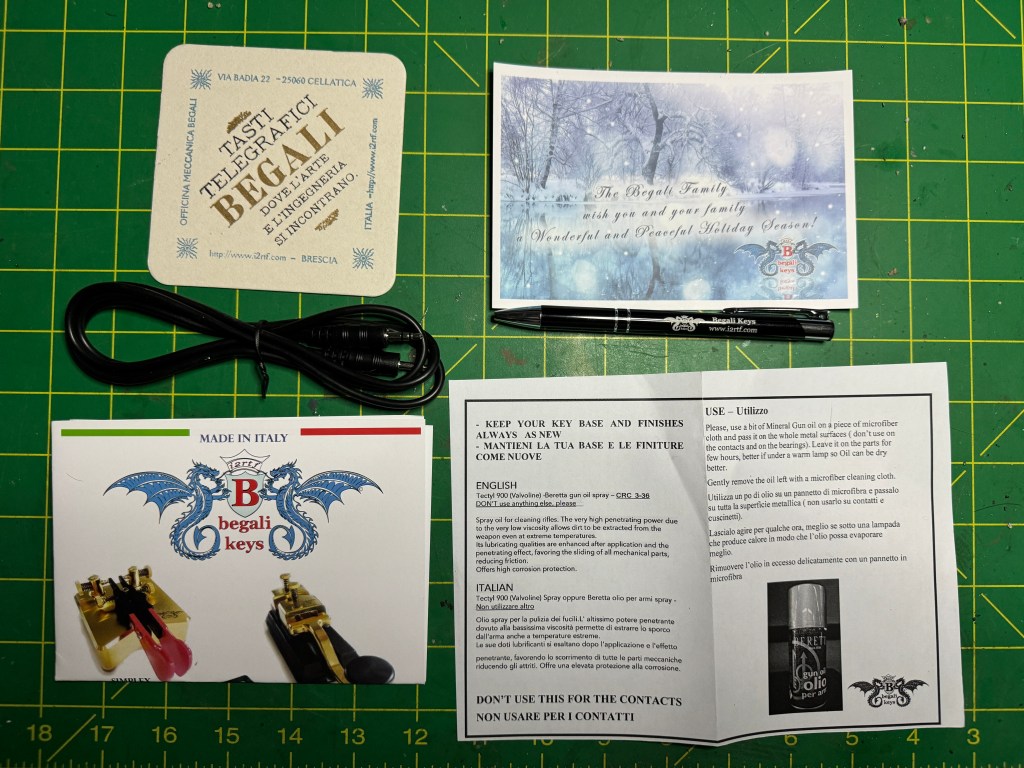
Why the Expedition? I wanted a set of heavy paddles to take with me on POTA activations and both of the Field Days. Weight is not an issue when carrying my kit a short distance. Having heavier paddles keeps them from moving around. I wanted a set of paddles that could take a little knocking around common to portable operations. According to the Begali website: The Expedition is a no-frills high-performance key. It is rugged enough, and not too expensive, to be tossed into the baggage for a DX expedition. Along with the paddles I received a nice Christmas card, care instructions, a microfiber cloth, a cable, and a pen. I ordered some CRC 3-36 oil for the paddles to keep them looking good. I wasn’t sure about the Turtle finish when I ordered them, but hey, you only live once. When I opened the box, I was amazed at how good they looked. The marbling effect has a nice patina and is somewhat subdued. Understated would be a good word to describe the finish. I am very pleased with the finish and the engraving.

How do they play? Very well thank you. The paddles come set up, ready to go, with the contacts closed during shipment to prevent damage. My adjustment is simple. From closed contacts, I back them off until I stop hearing the dits (or the dahs) and I am good to go. I nice feature about the Begali’s is they all have a similar feel. I have no issues going from one set to another. I received my paddles on the 23rd and as a part of my family tradition we open gifts on Christmas Eve. This dates back to my great-grandfather whose birthday was on the 24th. I did spend some time last night trying the paddles out and for portable rugged paddles, they are as smooth as silk.

I have been off the air these past few weeks, mainly due to the holidays, I am getting on the air today to reconnect with friends on the POTA-verse. One of my goals for 2024 is to get better on CW and the only way to do that is to get on the air.

I want to take a moment and thank everyone I have made contact with and especially those that visit this website. It’s you that keeps me going. Starting mid-January, I will be enrolled in a CW Innovations class to help with my new years resolution. I am looking forward to making new friends and new code buddies. 73 de Scott

A Key Resolution for the New Year

It’s that time of year again.  Shopping, baking, cooking, parties, more shopping, and more parties.  It’s a time for hustle and bustle, shaking and moving, busting a gut, or getting a gut.  “It’s the most wonderful time of the year” so sings Andy Williams. Bah! Humbug! with all this Christmas retail extravaganza.  The holiday season used to begin after Thanksgiving (now called Black Friday), but has since moved up in front of Halloween. 

But I digress.  Towards the end of the year is a time for me to reflect on the thrills of victory and the agonies of defeat. I’ve had some of both. One big thrill was I got to retire for the second and last time.  It seems I am busier now then when I was working a job.  It’s a good kind of busy though.  One agony, was I let CW slip a bit.  When band conditions were poor, I switched to FT8 for my POTA activations.  I made a boatload of contacts all over the world and finished 5 Kilo’s.  However, that did not help my desire to become more proficient with CW.  Back in the 90s as a Tech+, CW was the gateway into the world of HF.  My first DX contacts were HF CW.  Studying CW back in the day was tedious.  I had a couple of ARRL cassette tapes that I played over and over.  It was enough to get me up to 13 wpm and my Advanced ticket (KM5AV).  

CW worked well for me at the time.  I worked second shift and with my “shack” in our bedroom, using headphones, I was able to log a few contacts each night while I wound down from the evening’s work while the wife slept.  I got pretty good eventually getting up to about 18 wpm.  Then work, kids, school, new jobs, etc., put CW on the back burner.  It wasn’t until a couple of years ago that I started my journey back.

As I said earlier, I allowed myself to drift from CW.  That is solely my fault.  I only gave myself a general direction to proceed and no real standards to gauge my progress.  When I started back, I was around 16 wpm and very shaky.  I did manage to get myself up to around 20-22 wpm doing POTA hunting/activating.  Hence my downfall.  I can do an exchange at 20+ wpm but that’s about all.  I trained myself to do an exchange.  Where I want to be is to be able to engage in a CW QSO.  To converse using CW.  And I want to get my speed up around 28 wpm.  

Bringing this back around, here I sit at the end of one year and the beginning of the next.  This is usually a time for reflection on where I have been and where I am going.  The tradition, is to make New Year’s Resolutions with the hope of succeeding in making them come true.  I try to keep mine realistic and few.  Next year, I will have two. The first will be to become more proficient with CW.  With some personal hesitation I signed up for a class with CW Innovations https://cwinnovations.net/. My first experience with them was a 30-45 min. One-on-one interview with the instructors. It was a good experience, we talked about what I was trying to accomplish and we touched on how that was going to happen.  One thing they stressed was everyone, regardless of position or skill stayed on the same level (peer-to-peer). The other thing I like was that we would get code-buddies.  Someone to practice with, on the air.  I always say that if you want to get better get on the air.  With a code buddy, you’re working with someone in the same boat as you, someone you know on the other end — I like it.  My class starts the middle of January. The other thing I am going to do is use CW as much as possible.  That means using CW for hunting and activations.  I may still do some digital, but nowhere near what I did the past year.

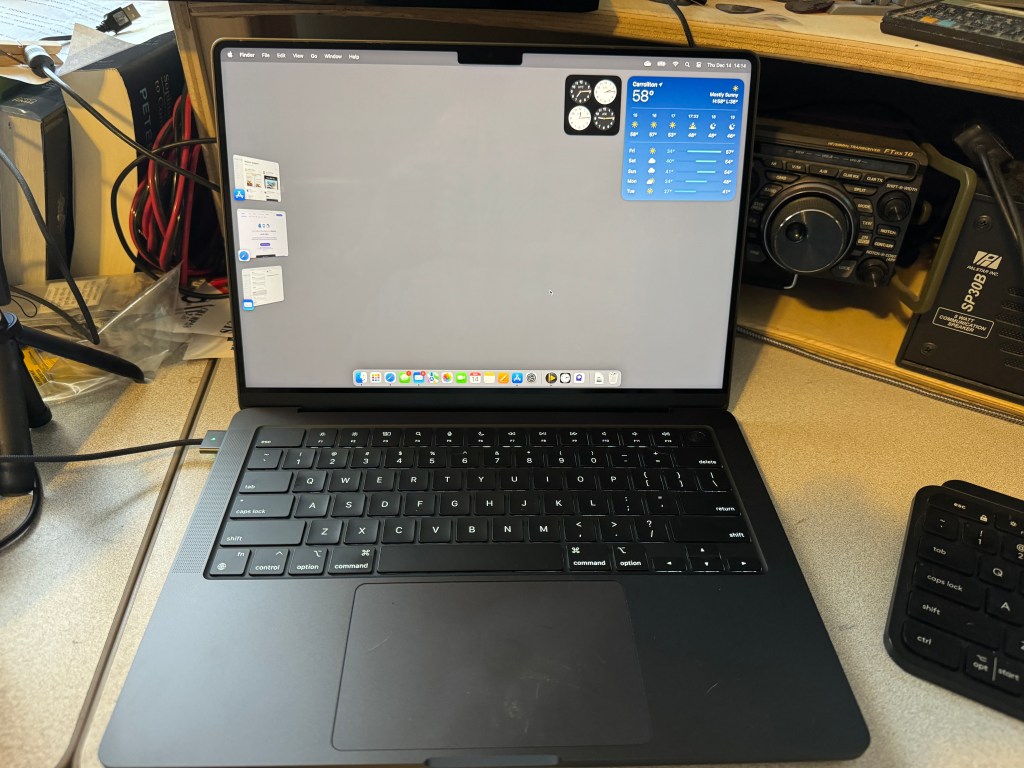
The second resolution is I am going to try to up my game when it comes to my blog.  I am going to push myself to do better with the written content, try to be a bit more polished, and provide more breath when it comes to subject matter.  I also plan on doing better with the videos.  I am going to spend more time editing them.  I recently purchased a MacBook Pro to help me.  One thing that was very annoying was getting content from my iPhone and iPad in the field into my Windows machine.  The aggravation would drive creativity right out of me. Now, as soon as I take a picture on my iPhone, Boom! It’s right here on there Mac ready to use.  

There you have it.  Let’s see how I do.  I hope everyone has a very Merry Christmas or a Happy Holiday Season and a Happy New Year.  I hope you all will take some time and give yourself a meaningful resolution to work on next year.  73 de Scott

POTA Activation K-2169, Me, VaraC, 160 meters and more

This weekend I had the opportunity to activate Cloudland Canyon State Park in NW Georgia. It was a digi weekend with me running FT8 and experimenting with VaraC. I also tried a new antenna combination to see how it would work on 160 meters.

The weather. I book my campsites 4-6 months in advance so I take what I get when I go. This weekend called for rain Friday and was supposed to clear up Saturday PM. It didn’t. It drizzled/rained from the time I got there until 0200 hrs Sunday morning. Since I mingle FunComm with EmComm, this was another test of my gear. The only issue I had was I needed to better seal the window where my coax goes into the camper. You shouldn’t let the weather stop you from going as long as it’s safe. I go year round and because of that, I have a good understanding of my gear and my clothing under varying conditions.

The gear. The antenna was a Chameleon EmComm II ver. 1. This version had a clunky antenna wire and insulator that is more from permanent/semi-permanent installation so I didn’t use it much. This year, Chameleon had a Black Friday Sale of 25% off. I decided to upgrade the wire to a 60′ Kevlar with a winder. I also ordered their new 40-meter OCF dipole which will be used on SOTA activations. I had some 14 gauge Flexweave wire that I cut to 50′ for a counterpoise. My intention was to use this antenna down to 160 meters. I ran the antenna as an inverted “L” ish. The vertical portion went about 25′ up my mast and the horizontal portion was more of a slope and facing north. The nice part was that the entire antenna fit within my campsite. I used the lantern hook on the site to secure the antenna. For rope, I used #36 tarred bank line. The rope is a little sticky so it holds knots well and does not absorb water like para-cord does. I used a clove hitch to secure the antenna ring to the mast and it held fast. The Bank line has replaced all of my para-cord.

The radio was First Peter, my IC-7300 that I bought new in 2016. I use an LDG Z-11 Pro that I have had for 15+ years to keep everything matched up. I was running 25-35 watts. My other IC-7300 is Second Peter. My backup radio was my new KX2. I keep it in a backpack so it is easy to toss in the truck.

Propagation. It was different, not bad, but different. There was a lot of solar activity and I believe it pushed the MUF up above 20 MHz. I had a lot of success on the higher bands which is typically not the case in the winter. My antenna easily tuned 160 meters and I made about half a dozen contacts using FT8. How did I do? I started at about 2030 hrs UTC Friday and finished up at about 2200 hrs UTC Saturday afternoon. I made a total of 325 contacts covering 42 states and 12 countries. Some of the interesting (to me) DX was Angola and South Africa. Both of those stations called me. Angola was on 10 meters and South Africa was on 12. No DX on 40 meters. I had a Facebook request to work 40 meters for local contacts. I did my best but 40 was rather flat this time around. It had the second-highest count of contacts. Breakdown by band was: 10 meters – 18, 12 meters – 18, 15 meters – 13, 17 meters – 7, 20 meters – 136, 30 meters – 19, 40 meters – 90, 60 meters – 12, 80 meters – 6, and 160 meters – 6. One of the surprises other than the lack of low band activity was that 17 meters was fairly dead. Typically on an activation, my money bands are 17, 20, 30, and 40. This time only 20 and 40 panned out. I manage 10 bands at this park in case I want to go for another N1CC award.

VaraC. For the past week, I have been evaluating VaraC mainly for EmComm. There is a lot to like about it. For one thing, it uses the same modem as Winlink. If you have it set up for Winlink, you are good to go for VaraC. VaraC can upload files and low-res pictures. PSKReporter showed favorable propagation on 20 and 40 meters. I made a few contacts with it and did some beaconing. I haven’t tried it yet, but it looks like I can create a document in FLMsg, save it, send it via VaraC, and reverse the process at the other end. pretty nifty. I think pairing Winlink with VaraC just might be the ticket.

Recap. Neither snow, nor rain, nor heat, nor gloom of night stays this operator from completing his park activation… I had a lot of fun. I try not to let the elements stop me from doing what I like to do. 73 – Scott