AAR Bald Mountain

My training from the military compels me to perform an after-action report of sorts. I have found it beneficial to review an adventure as quickly as possible while the triumphs and foibles are still fresh in memory. This becomes more important as we age. Today (Thursday) is a few days after my SOTA activation on Bald Mountain. In general, things went well even though the weather was not as nice as was expected. The climb was as expected, I had to huff and puff a bit which at my age was expected. Two things that came to mind were: 1) the pack could be a little lighter (it was 15 pounds with water and my Goretex jacket) and my hands were cold enough to hinder my CW sending. For my hands, I bought a pair of warm gloves that can expose the fingertips of my thumb and index finger. Because I was warmed up from the hike, the Goretex jacket was enough to keep me warm.

I decided to lighten my load a little bit. When climbing, a lighter is better. Here is a list of my new slimmed-down version of my SOTA pack. I got the pack down to 10 lbs without water or a jacket. I probably saved about 2 pounds, but hey! two pounds is two pounds.

Starting with my person, this is what I carry:
Wallet – minimalist
Bic Mini-lighter
Fischer Space Bullet Pen
Swiss Army Knife Hiker
iPhone
Benchmade Bugout Knife
Notebook 3×5
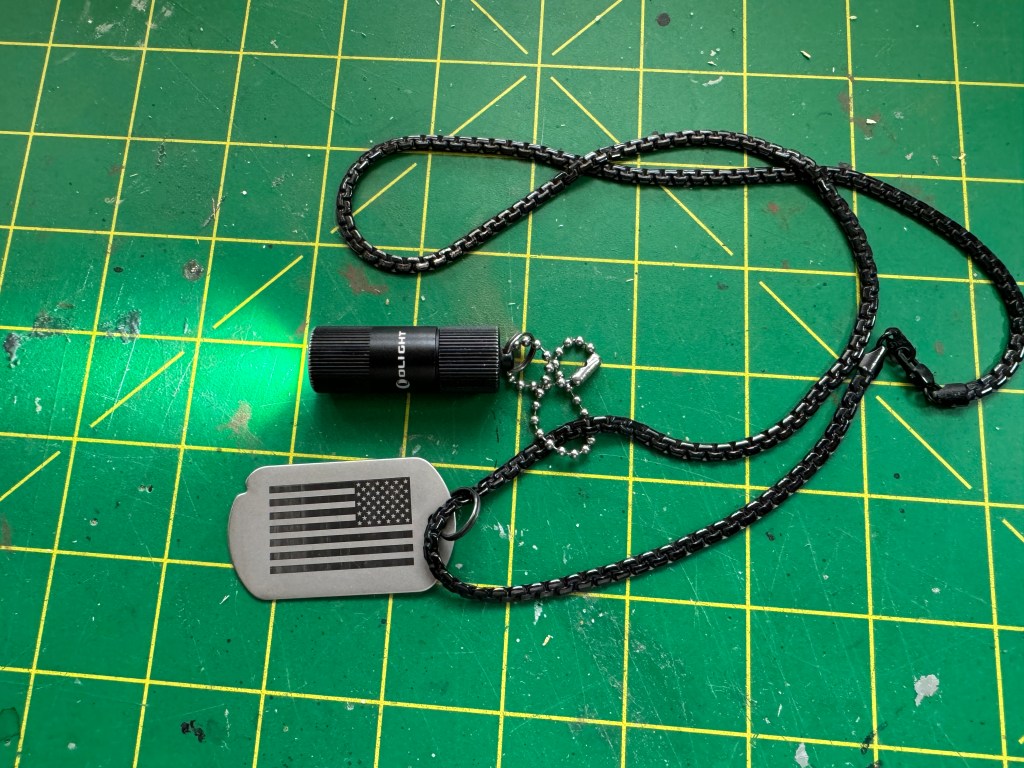
Dogtag with emergency contact info on a neck chain
Olight i1r2eos flashlight on the chain with the dog tag
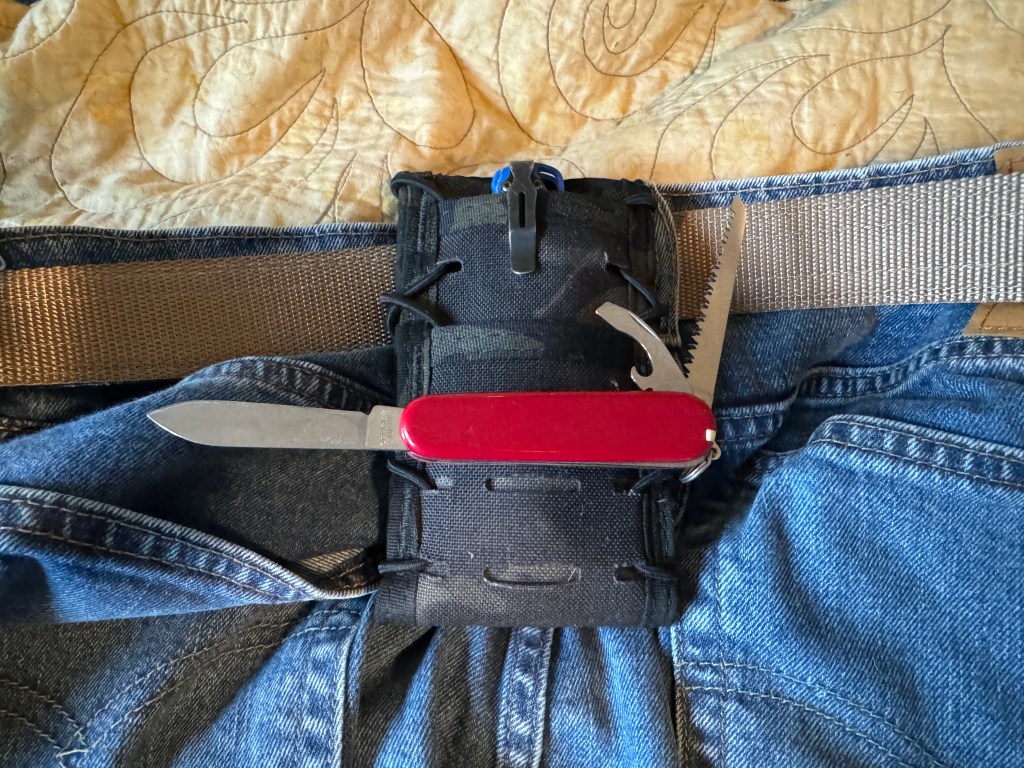
The Bugout rides in the same pouch as my iPhone in its own pocket. The pack I use is a Camelbak Military HAWG. It’s the old style. I’ve had it for quite a while and when I need a smallish pack, it’s the one I grab. The orange strip is highly reflective.

Attached to the left shoulder strap of the pack is a Garmin InReach Messenger. Some of the places I activate have little or no cell service so I use the Garmin to spot myself and keep the wife updated.

E&E Pouch
In the Army, we often made Escape and Evasion pouches. A small pouch with just enough stuff to get by. This one fits in a 6 x 9″ Alocsak Pouch and weighs 10oz.
Ferro Rod with carbide striker
Magnesium Rod
2 – 3/8 by 8″ Sisal Rope
Tropical matches (from MRE)
Tinder
Lighter Pine
iFAK
Whistle
Compass
Space Blanket
Signal Mirror
2 – Bic Lighters

The sisal rope is great for fire starting. You take it apart and it makes a nice nest for your fire.
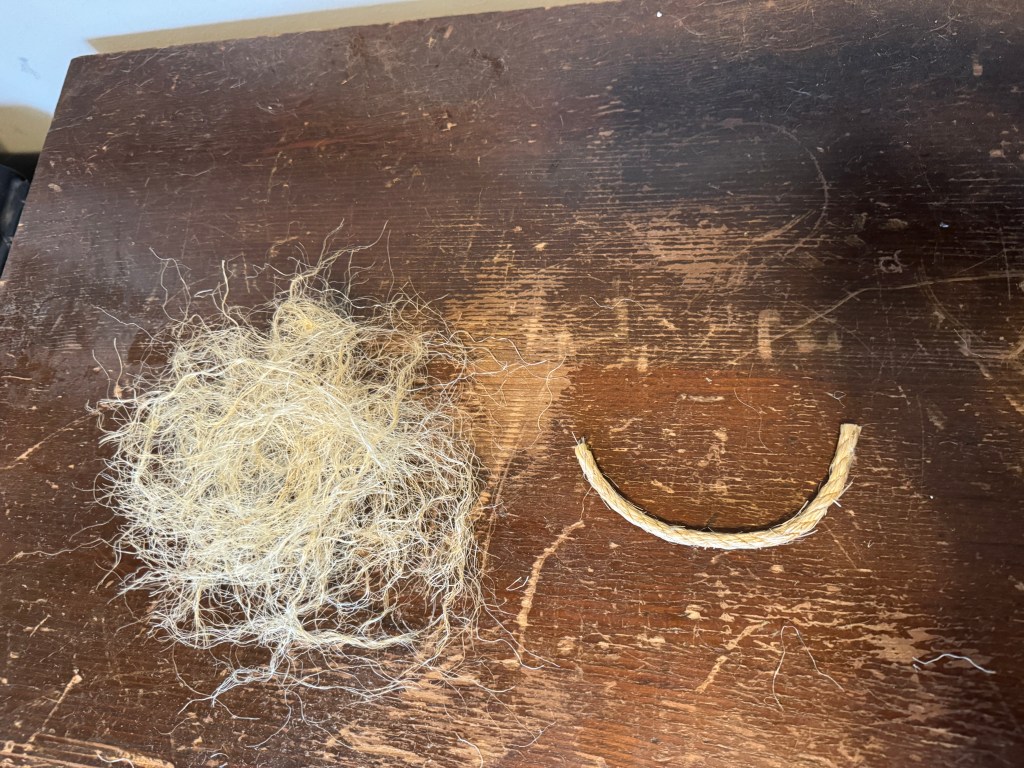
Considering my whereabouts will be generally known, I do have a preference for fire and signaling. Most likely, any survival situation will be short-term, and I want to be found.

The Elecraft Bag
This is the bulk of my radio gear. The Elecraft bag that came with my radio does a great job of keeping things organized.
KX2 with a 3D printed cover
Begali KX2 Adventure Paddle adapter
28.5′ Random Wire Antenna
17′ Counterpoise
30′ Bank Line
12 VDC power cable with Anderson Power Pole connector
N0SA SOTA Paddles (swap with Begali Adventure Duo)
15′ RG-316 with choke (Chameleon)
Skull Candy earbuds
8 oz Arbor weight with line

The rest of the items are dispersed within the pack
1 Liter Canteen with Cup and Spoon
HeadlampSeat Cushion
Contractor Trash Bag
Knee Board
Rite-In-The-Rain 4×6 Notepad
2 Mechanical Pencils
Spool of Bank Line
2 Tent Stake
Chameleon 40-meter OCF Dipole

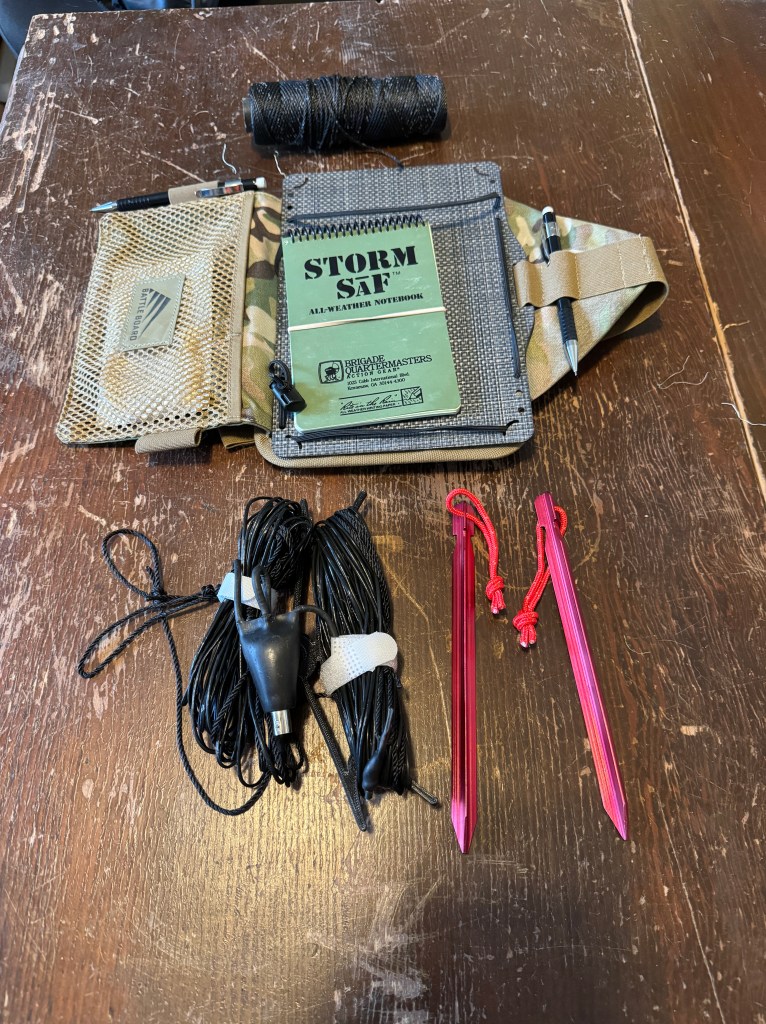
Finally, there are some seasonal/ad hoc items such as gloves, jackets, food, and localized maps. I have plenty of room in the pack to make adjustments for conditions.
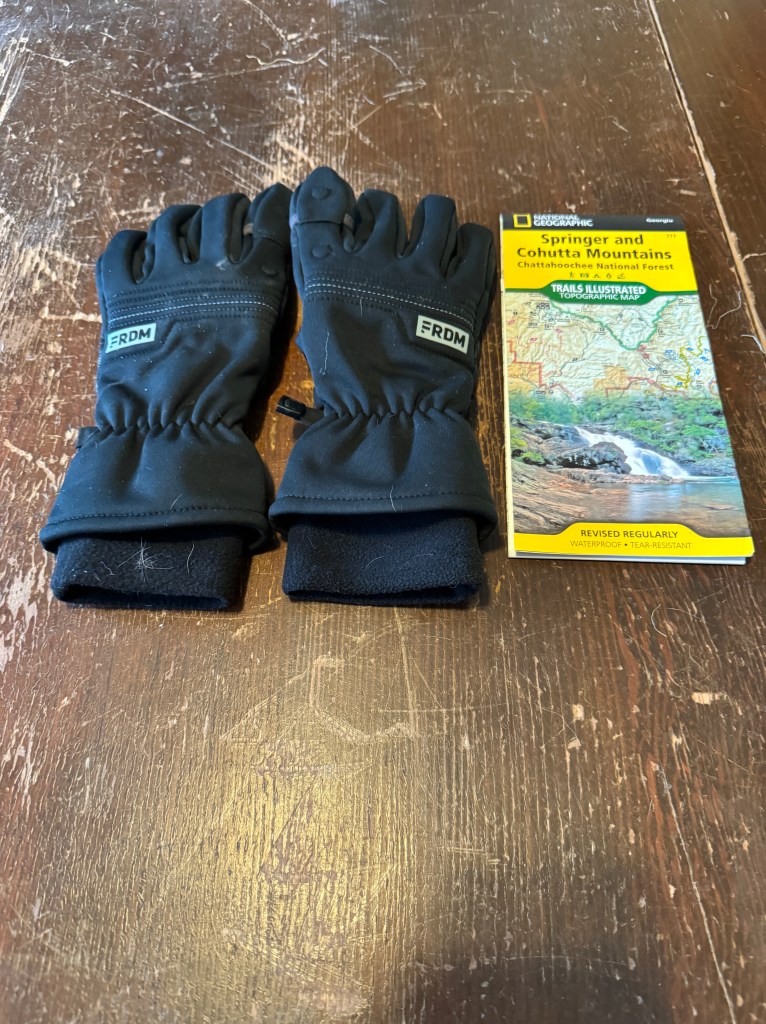
My pack contents will probably evolve over time as I use it. Right now I think there is a good balance in the pack between fun and safety. Some of the places I go are pretty remote. I always tell my wife where I am going and a general itinerary. You should do the same.

How did the KX2 do? This was the maiden voyage of the KX2. Right off the bat, I got to use it in some trying conditions. The weather was deteriorating as I walked into a cloud at the summit. It was windy and I wasn’t really sure what the weather was going to do. I figured I had enough time to make a quick activation and get down off of the mountain before the rains came. I climbed until I got well within the activation zone and set up. I strung the OCF dipole about 10 feet up and set my station right below it using the same tree as a backrest. I was going to use a Flight Deck but I didn’t want to fiddle with so I set the radio on top of the pack. Because the radio is self-contained all I had to do was plug in the antenna, paddles, and earbuds, and I was in business. I made 19 contacts logging on my notepad resting on my thigh. What helped to make the activation a success was the ease with which I got the radio working. Bing-Bam-Boom and I was on the air. As quick as I set it up, I took it down. The KX2 made it easy. I made it back to the truck to beat the drizzle. Since the activation, I added the kneeboard shown. I set it up at home and it should be easier to use than the one I had. I am still learning my way around the radio, but it is indeed going to be my main SOTA radio. Until next time 73 –de Scott

Methods Modes and Madness

Before I take my leave from EmComm and revert to FunComm, I thought I would share some of my meditations on digital modes.

My use of digital modes goes back to the mid-2,000’s. I was an early adopter of Winlink and ran a regional digital PSK31 net. I have had the pleasure of working with many fine amateur radio operators with many different skill sets.  Recently, I have had the opportunity to run a national digital PSK31 net for a few months.  Again, the experience of working with amateur radio operators was a fun and fulfilling endeavor. I have used most of the modes for Winlink with VARA being the current favorite.  Other modes I have used include PSK31, PSK125, QPSK125, Contestia, MT63, and Olivia.  They all work as intended, however, when it comes to the less experienced digital operators, PSK31 is the easiest to master.  I have run nets where we started on PSK31 and then moved to another mode and then back to PSK31.  Many ops do fine on PSK31; however, once we move to a different mode, they get lost. When considering EmComm we should always play to the least common denominator.

My favorite modes for EmComm are:

1) Winkink/Vara.  If I had to choose one, this would be it.  With nodes all over the world, the probability of getting into a node is greater than if you had to depend on a single point. Because messages are stored until they are retrieved, Radios do not have to be left on to forward and retrieve messages.  This can be done at any time and there is no need for a schedule.  An operator can wait until favorable propagation exists. I have not tried VARAC yet, but it is on my to-do list.

2) PSK 31 and 125.  I like PSK31.  I have run a national net using it.  Typically, I take check-ins on 31, send a message using FLMsg on 125, and then go back to 31.  I have a much higher percentage of people getting the message using PSK31 than with other modes.  On most modern radios, PSK31 can be decoded and sent without the use of a computer.  While those at home with mains power see that as frivolous, a computer or laptop can be a serious drain on a battery when mains power is not available when operating under potable/emergency conditions.  Because PSK31 has a narrow bandwidth (60 Hz) compared to MT63-1000s (1000 HZ), it enjoys a 2 S-unit advantage.  Roughly that means a PSK31 message transmitting at 5 watts is equivalent to an MT63-1000s message transmitting at 100 watts (5 watts to 100 is about 2.2 S-unit gain and PKS 31 to MT63-100 is about 2.03). My point of view here is someone operating in the field, using portable equipment.  In addition, we do not always get to choose who is in the field and who is at home.  Throughput on PSK31 is about 50 wpm and MT63-1000 is about 100 wpm.  If we bump up to PSK125 (which is about 1 S-unit better than MT63-1000) we get about 200 wpm.

3) My third mode would be CW and this would be used when nothing else is working.  It requires the least amount of equipment and what can be used is not complicated.  This would be an emergency mode.  Any communications plan should include CW and any EmComm group should try to maintain a few CW ops on their rosters.

What would I do if I was in charge? I would try to keep the communications plan as simple as possible and play to the least common denominator.  I would use the U.S. Army acronym PACE which stands for Primary, Alternate, Contingency, and Emergency. My plan would look something like:

a) Primary – normal infrastructure/internet-based communication.  When it’s working, it’s the best. I have seen operators try to use their radios when there is a working FAX machine next to them.

b) Alternate – This could be a combination of Voice/SSB and Winlink.  Establish a voice net because that is where most of the operators operate and provide an email address where to send Winlink Messages.

c) Contingency – This could be a Peer-to-Peer digital mode such as MT63-1000, or VARAC.  I like the idea of VARAC because VARA is used by Winlink but I have to try it out before I can recommend it.  Down at this level, the more experienced ops may not be prevalent, and it might be the less informed ops on the scene. 

d) Emergency – This is no man’s land in the EmComm community.  The probability of us getting to Emergency is quite low, maybe 1%.  Here you might find an operator with a radio and antenna while a geomagnetic storm is raging overhead.  I have been deployed to a disaster area while a storm was raging, and we have had a couple of SETs with poor band conditions.  Here might be the realm of PSK31 and/or CW.

What I am saying is to keep your comm plan simple.  You don’t have a legion of professional-level operators on hand that can tackle all the modes available.  What you do have are operators with widely varied skill levels, with amateur radio either a secondary or tertiary interest.  Pick the fewest modes that use the fewest different types of software and stick with them.  Don’t forget to train, train, train.  Additionally, have exercises that get operators out in the field.  Field ops are hugely different than operating from home.  Try to get them at least 20 miles from their home, this reduces the run home for something I forgot.  Many times, during a deployment/exercise there were ops who could not complete the tasking. I like to go camping at least once a month and bring my radios with me.  I usually do a POTA activation; it gives my radio system a good shakedown and helps me understand its performance. Get out, get on, and go do!  73 de Scott

Antennas and More

I have poured over a lot of documentation about antennas.  Through it all I have come up with the following antennas for portable/field use.  The best antenna is a horizontal half-wave dipole at 0.1 to 0.24 wavelengths above electrical ground.  As long as the height stays below 0.25 wavelengths, its efficiency isn’t affected that much.  Much of what I read has a height somewhere between 15-30 feet.  There are even a few who advocate putting the antenna within inches of the ground.  The antenna can be allowed to sag in the center for a little gain or it can be hung in an inverted vee as long as the apex angle is 120-140 degrees.

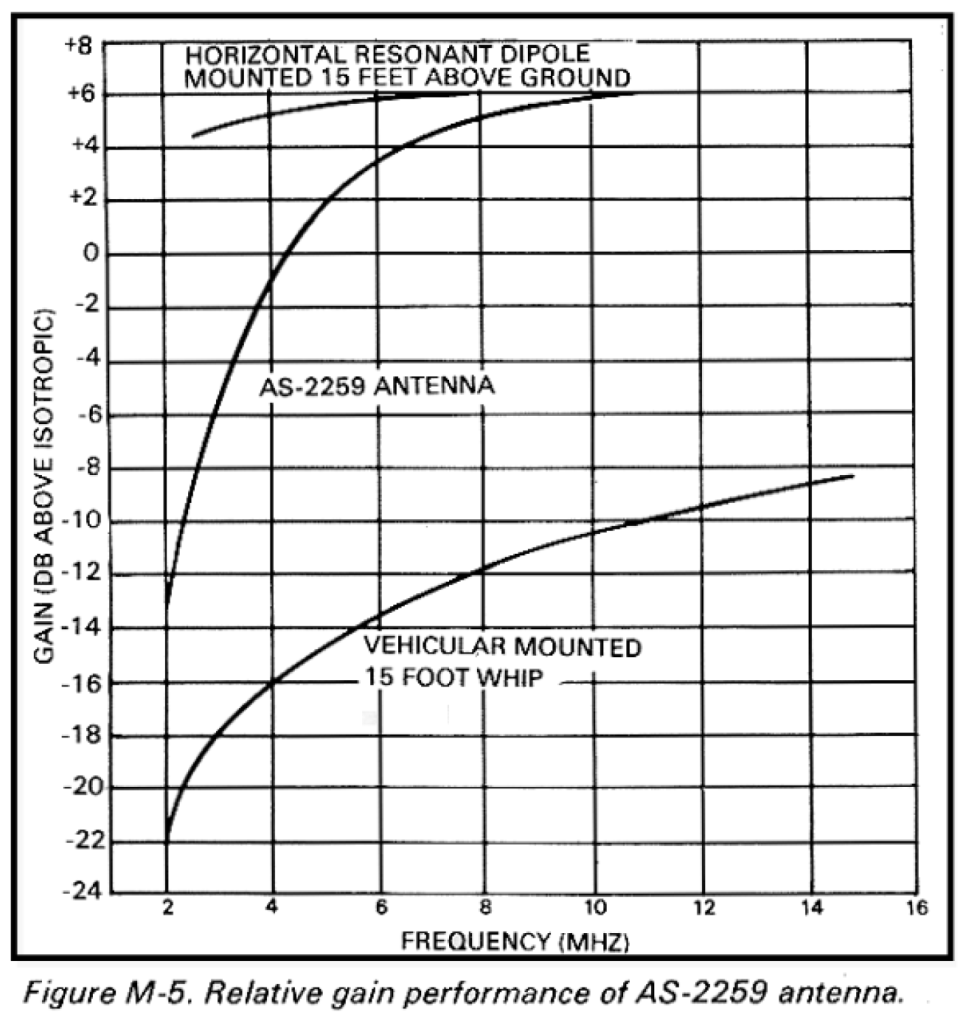
What about the AN/AS-2259?  Good question.  I built one back in 2007 and used it a few times.  It can be a pain to set up and I am not sure the juice is worth the squeeze. Concerning the AS-2259 vs a half wave dipole: In most cases, a standard dipole is as easy to install and performs significantly better (NVIS).

Height above ground.  There are two components to antenna height – the part you see and the part you don’t see.  The part you see is represented by the length of the mast holding the wire above the earth. The part you don’t see is the portion below the apparent surface through which the radio waves travel before reflecting. For very conductive ground, such as seawater, radio waves reflect on the surface.  For poor ground, such as freshwater, radio waves penetrate many feet.  An antenna lying on the surface of rocky soil, for example, might have an effective “height” of 40 feet or more. (NVIS) The second antenna is a military whip either 16’ or 32’ attached to a vehicle and used with a coupler. The whip is tilted horizontally away from the vehicle and the vehicle serves as a ground. This creates an asymmetrical dipole.  These whips are hard to get and are often expensive.  The whip can be replaced with a wire and the length can be extended to 60-100 feet or more and/or a counterpoise can be used.  This is a similar setup I used in Jacksonville, FL back in 2004.  Another variation of this antenna is Chameleon’s EmComm series.  All the antennas mentioned work. 

Remember an antenna NVIS should enhance near-vertical radiation and suppress ground wave radiation. Antenna 0.25 to 0.1 or less wavelengths above the ground should provide adequate or better NVIS performance. Any adventure into NVIS starts with a communications plan and propagation study. As I said at the beginning of this series, this is a Cliff Notes Version, enough to get you interested and going.  One thing that must be remembered is that NVIS doesn’t always work, and the communications plan should include a contingency for using long path or other forms of communication such as WinLink.  Thanks for your interest. 73 de Scott

Luffed, Muffed, and FOT’d

One of the critical skills needed for successful NVIS operation is determining which frequency or band to use when or if NVIS propagation is even possible.  Luckily, today there are online propagation prediction tools to help us.  In order to use these tools we need to understand a few terms.  Most of us know or have heard of the MUF and LUF, which stand for Maximum Usable Frequency and Lowest Usable Frequency.  What a lot of us don’t understand is the MUF and the LUF frequencies tell us that the path will be open at the LUF or the MUF only 50% of the time (NVIS). What we need is the FOT or the Frequency of Optimum Traffic.  This gives us a path reliability of 90%. It will frequently be about 50 to 85% of the MUF (NVIS).

To find the FOT, use a service like https://www.voacap.com/hf/ and input the transmitting and receiving stations. Then look for Best Frequency at the bottom of the map to find the FOT and viola! That and all sorts of other info are available. A couple of things to remember.  NVIS typically happens below 8 MHz.  If the FOT is above that, then NVIS propagation may not be possible. This website provides a lot of information and not all of it may be applicable to NVIS.  Software like VOACAP is designed for long-path propagation for broadcast stations.

Another good website is https://www.sws.bom.gov.au/HF_Systems/7/1. Try their Digital HF Prediction tab you can set things like elevation angle in the params tab.

When preparing a communications plan whether for a weekly net or emergency communications, a propagation study should be completed.  This will help determine which bands are best and when.  Today 11/22/23 at 1845 hrs UTC, the FOT is 27 MHZ.

What’s Up With NVIS

My first experience with Near Vertical Incidence Skywave (NVIS) propagation was during Hurricane Frances, in September 2004.  We were bringing two tractor-trailers full of food and supplies to an area on the east coast of Florida.  I was the EmComm Specialist, and my function was to ensure that adequate communications were available. I was new to this, and this was my second deployment.  I recently purchased an Icom AH-4 to go with my IC-706 MKIIG.  I was looking for something that could quickly be deployed and recovered while providing a reliable linkage.  I also had some Hamsticks with me.  The antenna was about 30’ of 12ga THHN wire and the counterpoise was about the same length of bare flat-braided wire. Before we reached our destination, we stopped in Jacksonville, FL to allow the hurricane to pass before we proceeded south.  That evening, I deployed the antenna to test it. This was a hurried callout and I had little warning.

That evening, I called to check into our 75-meter EmComm net. I was amazed that I sent and received a 59-signal report from an antenna that was only about 6 feet off the ground.  The distance between the two stations was about 300 miles! Back then, I didn’t know about NVIS, but I proved the concept. It works and it works well.

Today, there is a renewed interest in NVIS with Georgia ARES and Georgia AuxComm. I wanted to present a Cliff Notes version of NVIS to help others get a leg up on this form of propagation. Throughout this series, my two main references will be Near Vertical Incidence Skywave Communication, Theory, Techniques and Validation by LTC David Fieldler and Maj Edward Farmer, and FM-24-18 Tactical Single-channel Radio Communications Techniques. When I use a reference, I will abbreviate the (NVIS) or (FM24-18). Italicized text is a direct quote. What is NVIS? NVIS is skywave propagation where radio energy is radiated at or near vertical at a low enough frequency to be reflected by the ionosphere back toward the earth.  This causes an omnidirectional pattern like a fireman’s fog nozzle pointed up (FM24-18). This pattern eliminates the skip zone allowing communications within a couple of hundred miles and because the path is near vertical terrain such as mountains can be overcome.

Typical propagation with Skip Zone

NVIS Footprint or Fog Nozzle pattern

What is needed?  NVIS needs frequencies low enough to prevent them from penetrating the ionosphere (F1/F2).  This usually means frequencies in the 2 to 4 MHZ region at night and 4 to 8 MHz during the day.  This would include the 160-, 80-, 60-, and 40-meter bands (NVIS).  Note: It is important that tactical and emergency communicators develop strategies for implementing medium frequency (160-meter) NVIS paths (NVIS). There will be more about this in the discussion about propagation. Also needed are antennas that radiate at 75 to 80 degrees or greater from horizontal and that suppress groundwave radiation.  NVIS depends on skywave radiation.  Because of the time differences between skywave and groundwave radiation reaching the receiving station, there will be some cancelation in the form of fading (QSB) which may be enough to reduce effective communication. I will have more information about antennas in an upcoming discussion. NVIS isn’t mystical, magic, or arcane – well maybe a little arcane until now.  What successful NVIS operations need is a little effort from the participants.  There must be some skill with equipment, along with some knowledge about theory such as antenna design and propagation.  What it really needs is careful planning and an adequate communications plan along with practice. I have a couple of installments planned that should give the average ham enough specialized knowledge to be able to conduct successful NVIS operations. My one caveat for this section is that there will be times when NVIS will not work.  Your communication plan should accommodate that.

Old Man on the Mountain

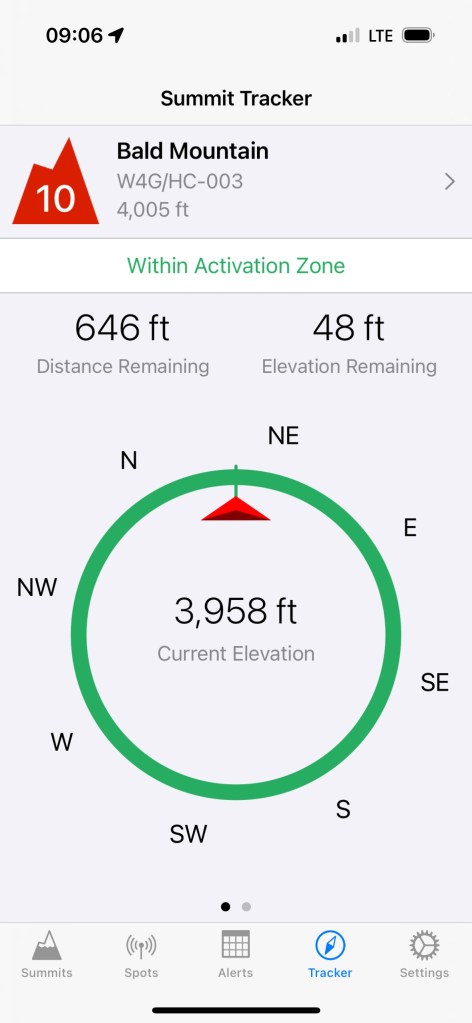
It’s official, I am retired.  Fifty-three years in the making. Being on the north side of 66 does not mean you are wheelchair-bound.  Maybe a little slower, but with patience and skill almost anything can be done. One of my first acts as KK4Z (ret.) was to do a SOTA activation. I chose Bald Mountain, a 10-pointer in northwest Georgia.

One of the reasons I chose a 10-pointer is I wish to get involved with a group called Southern Appalachian Summit QRPers or SASQ (SASQuatches). The group combines SOTA with a moderate level of Bushcraft.  What’s not to like.  There are skill-based membership requirements and one is a 10 pt SOTA activation within the past year.  I wanted to get my 10-pointer in before the Park Service closes the roads to the summits during the winter. 

I was originally planning on Tuesday for the trip, but the weather was going to be harsh that day.  Lots of wind and rain.  This is what I call the first winter storm of the season.  Between the wind and the rain, it usually finishes knocking all the leaves off of the tree. So, I backed the trip up to Monday and checked the weather (Wx) – all systems go. Preflight check of the Wx 0600 hrs Monday showed VFR (good).  The 10-point mountains are at least a 3-hour drive for me.  Two hours on highway/improved roads and one hour on unimproved/gravel roads.  That last hour covers approx. 20 miles. Along the way, I was confronted by a 6-8 pt deer who thought he was up to the challenge by a 5,000 lb Ram truck.  After a few snorts, he thought better of it and scampered into the wood.  Shortly after this, I heard Mussorgsky’s Night on Bald Mountain, an omen I didn’t recognize at the time.  When I reached the parking lot below the summit, things weren’t so VFR.  I checked the Wx again and now it showed rain on the way.  The sky had closed in and the summit was in a cloud.  I figured I had just enough time to reach the summit, make the required contacts, and retreat without getting too wet.  When I started the trek, it was 60 degrees.  By the time I reached the activation zone, the temps dropped, and the wind picked up.  When I got back to the truck the thermometer registered 50 degrees.  I estimated that the wind chill put temps in the low 40’s to high 30’s.  Whenever I venture out, I always bring an extra layer, in this case, a Gore-Tex jacket. I forgot gloves and my CW suffered for it.

I climbed just high enough to get safely into the activation zone.  My setup was quick and simple.  I used a Chameleon 40-meter OCF QRP dipole.  I like OCF dipoles.  They do not have to get very high off the ground (10-12 feet is enough) and they are good performers.  I prefer them over EFHWs.  I sit on a cushion on the ground, so I use the supporting tree as a backrest.  Coax is 15’ of RG-316 with a choke on one end.  The radio was my new Elecraft KX2.  I waited quite a while to get the radio. I did set it up at home and made one contact before taking it out.  Since I was in a hurry, I set the radio on my pack and the notebook log on my thigh.  The paddles were N0SA’s SOTA paddles.  I got lucky and got one from his last run. I held it in my left hand.  I sent a spot out and a few minutes later I sent QRL? On 7.057 MHz.  I got a NO, they were waiting for me, I’ve never had that before.  The wind was picking up and I had some difficulty hearing.  As my hands got colder, my CW and handwriting suffered.  I had a pretty good pile-up going and after 19 contacts I called QRT.  There were still some calling, but Wx was not on my side. 

I packed it up and headed down the mountain. By the time I got to the truck, it was starting to drizzle. I really didn’t mind the weather, I need to keep my hands warmer though.

The KX2.  It was everything I had hoped it would be.  I ran it 5 watts and it purred like a kitten.  The quality of the received signal was great. I ran with the filter set to 1K Hz and it was fine, no overloading even with a pile-up. For SOTA, the radio is hard to beat.  I like that I only have 3 cables to the radio, paddles, earbuds, and coax.  Simple and easy.

Next time I will be sure to add some gloves to my pack.  It was fun and I can’t wait to do the next one.  If I knew retirement was going to be this much fun, I’d have done it a long time ago.  72 de Scott

Ft Mountain State Park – A Family Affair

This past weekend, my wife and I went camping at Ft Mountain State Park near Chatsworth, GA.  The park holds a special place in our hearts because we spent our honeymoon there some 32 years ago.  Believe it or not, she still loves me.

Ft Mountain is also a favored place for POTA activations. Going into the weekend I needed a little over 200 contacts to earn a kilo award for that park. This weekend was special.  We were having a family campout with my two sons and their families.  We rented 3 campsites close together and spent a great weekend enjoying each other’s company.

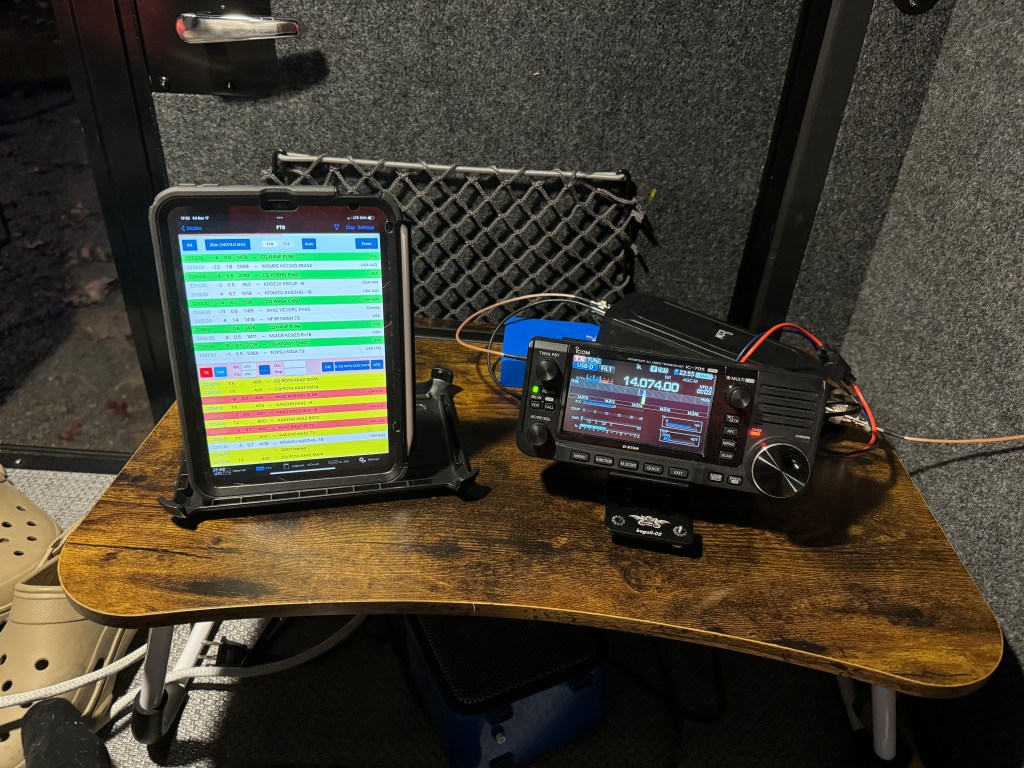
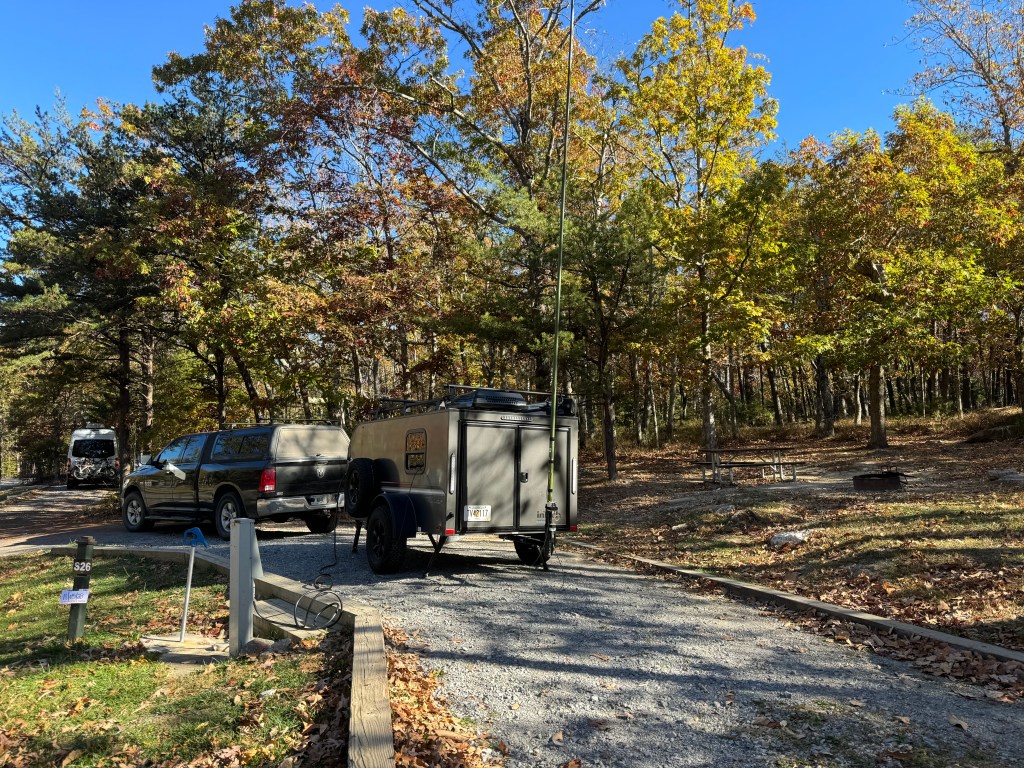
As you can guess, amateur radio took a back seat to the other activities.  Since my wife was with me, my little camper got a little crowded.  I had to scale back my radio gear.  I took the radio desk out of the camper and used a lap desk instead for the radio.  The radio du jour was my IC-705 with the AH-705 tuner.  The radio was battery powered and I used an external Bioenno 3 ah battery.  My mode of choice was FT-8 and I used my iPad mini to run SDR Control.  My antenna was my trusty 28.5 Random Wire.  When I first started, I hooked the antenna right up to the AH-705.  It worked flawlessly.  The AH-705 acts much like an SG-237.  It is a very versatile tuner.  As the temps dropped, I moved inside and had to change the antenna to its normal configuration with a 9:1 UnUn and a 1:1 current Balun.  I ran coax to the inside the camper to the AH-705. I did not have a long enough control cable to keep the AH-705 outside.

I knew my kids and their families wouldn’t arrive until Friday night which meant family activities wouldn’t start until sometime Saturday morning.  I got on the air Friday afternoon and stayed on until about midnight.  I took a couple hours of sleep and then got back into it.  The nice part about FT-8 is you can turn the volume down so as not to disturb the significant other.  I finished up before 10 AM, about the time everyone else was starting to stir.

I ended up with over 230 contacts covering 40 states and 7 countries with 7 watts of power.  This was enough for the Kilo. 

The rest of the weekend was with family.  When my boys were young (I call my boys, boys and my dogs boyz), I used to take them to Magic (The Gathering) tournaments.  While we were there I would run booster drafts which was an ad hoc game using new never never-opened card packs.  I did this to give myself something to do, and I got a Magic tee shirt that had “Staff”.  Street cred baby! I arranged a game while we were camping and of course, introduced the grandsons to the game.  It looks like we may do this again next year.

With careful planning, you can enjoy your family and radio at the same time.  In fact, one of my grandsons is interested in learning more about CW or Morse Code.  Yes, sir, next year’s campout is looking up.  72 de Scott

Wild Times at Cheaha State Park K-1037

It all started innocently enough. A nice fall weekend at Cheaha State Park to camp and operate my radios. While there I was planning on finishing up my POTA Kilo Award for this park.

Things started happening right at the time I got to the park. My reservation got messed up and I had to to take another campsite. This campsite was further from the comfort station bu at a higher elevation. Even at the higher elevation, cell service was very spotty which added to the wild weekend.

Getting setup, I put up my 28.5′ random wire antenna with a 17’counterpoise. I used a homemade 9:1 UnUn with a 1:1 current balun to feed my IC-7300 (Peter II). In between was my trusty LDG Z-11 Pro. I ran FT8 at 35 watts.

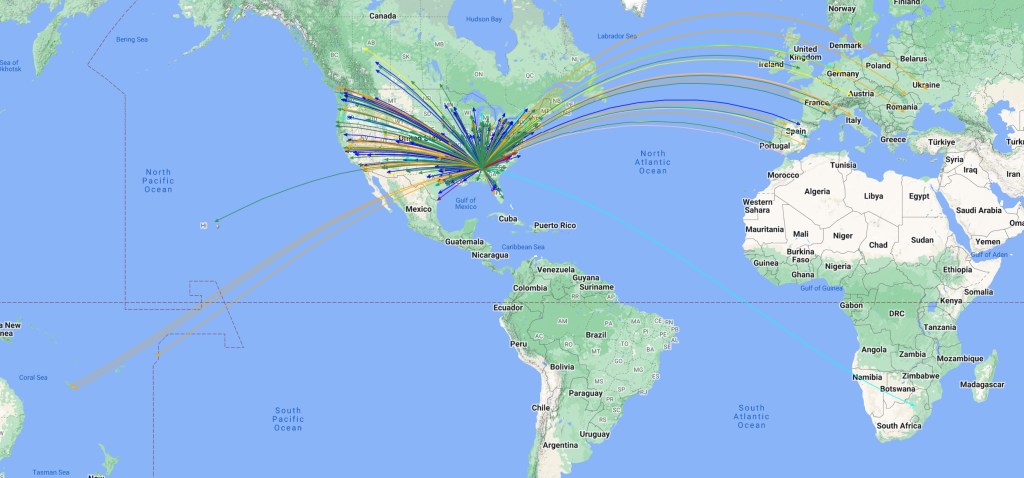
As soon as I started operating, things began to get squirrelly. I normally start on 20 meters in the afternoon and then drop down the bands as night falls often going back to 20 in the late evening. That didn’t happen. I only stayed on 20 for a little while before jumping down to 40, for most of the rest of the evening. This was not going to be a typical campout/POTA Activation. The next day I spent time on 20 but the MUF appeared to be much higher as I crept up the bands all the way to 10 meters. Typically, during an activation, 20 meters is my money band but this time 40 meters was the winner. Of the 465 contacts I made, 197 were on 40m meters and 157 were on 20 meters. I worked 46 states (except AK,CT,ND, and NH) and 15 dx entities. I had some interesting DX. I worked Germany, Portugal, Spain and Canada on 10 meters; Spain, Italy, and France on 12 meters; Samoa, New Caledonia, Ukraine, and Romania on 30 meters; and Hawaii on 40 meters. See the QSO Map.

On my home, when I got back to full service, I started receiving emails from the prior day from the SWPC with a bunch of Geomagnetic Storm Alerts. That explained the wild times on the bands. It was fun trying to figure out were to go to catch the propagation. I did manage to complete 3 Kilo awards before I left the park. The moral of the story is bad solar conditions can bring some surprising DX results. 73 de Scott

WGARS Mobile Command Center Update

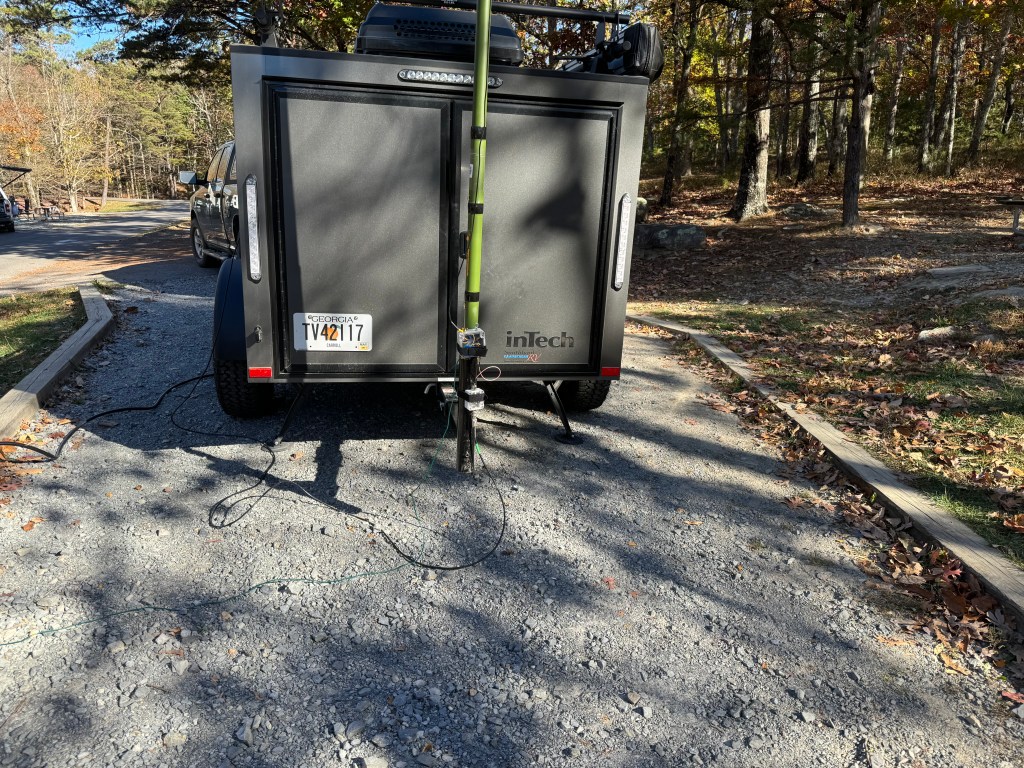
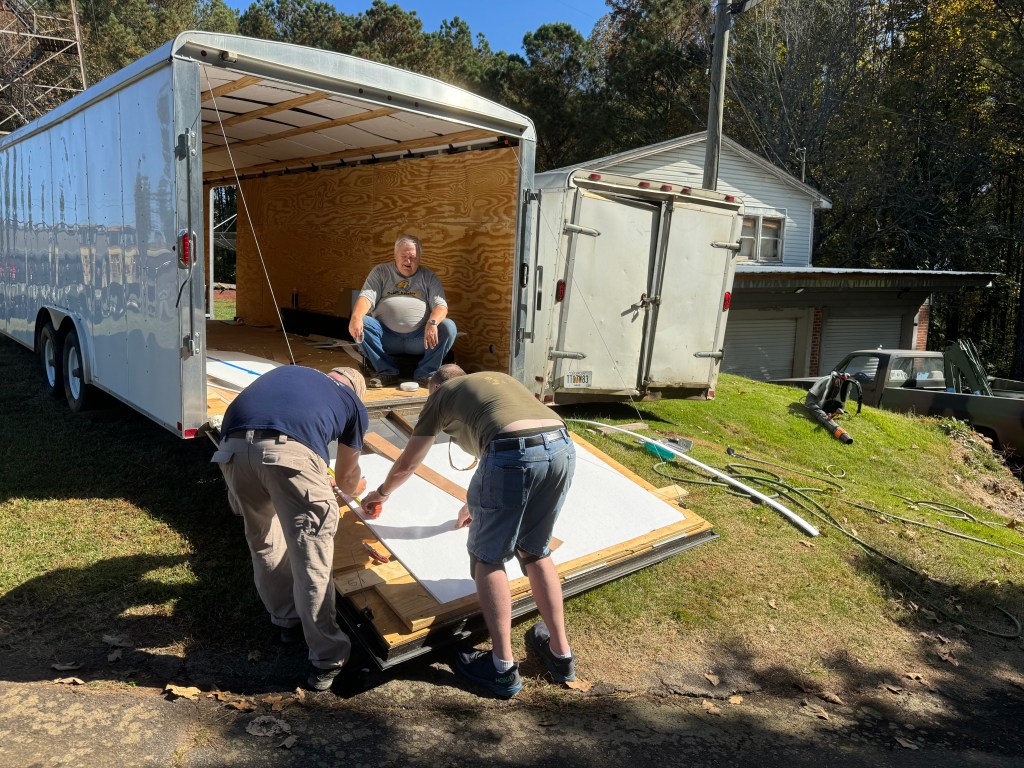
October 28, 2023. Today was another work day on the trailer. I didn’t take many pictures as today was a work day and I — worked. We got quite a bit accomplished. The roof was washed in preparation to reseal it. The ceiling was insulated and furring strips were put up. The furring strips will be used when we hang 1/4″ plywood for the ceiling. One of the final acts of the day was to insulate the rear ramp. Our goal is to be able to use the trailer by Winter Field Day. Once we get the ceiling up, we will be almost there.

The next steps include installing the Split AC system. A countertop down one side of the trailer, running electric and coax to the operating stations (approximately 4) with outside hook-ups, installing lighting, painting, and applying sound-deadening materials. We want to be able to operate all stations with a minimal amount of audio interference.

It’s really a fun project. We are fortunate to have a large talent pool to help pull everything together even when planning is sometimes “on the go”. When the project is finished, we will have a trailer set up and ready to go for FunComm and EmComm. Field Days to Emergency Communications all in one package.

It’s going to be an awesome trailer. 72 de Scott

West Georgia Amateur Radio Society at Cheaha State Park

The West Georgia Amateur Radio Society (WGARS) is a great group. We like to do three things: 1) talk on the radio, 2) get together, and 3) eat. We did all three this past weekend during the Fall Support Support Your Parks on the Air weekend (POTA). We like to do about 4 gatherings a year namely Field Day, Winter Field Day, and the Spring and Fall Support Your Parks on the Air Weekends.

This fall we went a little uptown and rented one of the pavilions at Cheaha State Park (K-1037). This gave us shelter from the elements, power for the slow cookers, and plenty of benches to set up on. There were restrooms nearby with running water. Cheaha Mountain is the tallest point in Alabama and our pavilion was just a little down from the summit.

The weather was perfect. In the morning it was in the upper 40’s rising to the mid 70’s by afternoon. As I said earlier, we like to eat. There was an abundance of food, we had Chicken and Sausage Gumbo, BBQ, baked beans, buns, garlic bread, dunkin’ donuts, coffee, soda, and I am sure I missed a few. The bottom line is we could have fed half again as many and still had leftovers. There were over a dozen of us there.

We set up three radio stations. We had a Yaesu FT-991A and an Icom IC-7300. They were running FT8, CW, and SSB. I was running an Elecraft K3(s)/10 on FT8. My original plan was to run FT8 until it got warmer out and then switch to CW. However, we had a group gather around my station and we were doing what we like to do, kibitz and socialize. With FT8 I can run the radio and join in the conversation. We had a lot of fun chatting with one another. By the end of the day, I worked 40 states and 4 countries for a total of 120 contacts. The DX were Argentina, Canada, Ecuador, and Spain. States covered all 4 corners and in between. Not bad for 10 watts!

I had the pleasure of meeting Ward W4RE. Ward is a Vietnam Veteran and what made our meeting special is that we both served with the 101st Airborne Division. We were a generation apart with me serving between wars, but anyone who has served with the 101st understands that it is not a cakewalk; we had an immediate bond. Like me, Ward is a CW op albeit, much better than I. I am hoping that during one of our future meets, Ward and I can run a CW station together.

This was the trial run for my K3(s). I upgraded my K3 to a K3S. It is a QRP radio with a max power of 12 watts. The difference between 10 watts and 100 watts is about 1.7 S-units, a small change for CW. I operated the radio pretty much the whole time I was out there and it performed flawlessly.

While my K3 was in the shop for a repair and a going over, I put my name on the list for a KX2. There is about a 3-4 month wait for them and if things didn’t work out I could always cancel the order. When I received the invoice for the KX2, I asked my wife Mary K4SEZ about it, thinking it was worth a shot and as I was getting ready to cancel the order; she got on the computer and checked the books (she’s an accountant) and said “Happy Retirement”. I was ecstatic. I retire in 54 days and I have already made plans for that little radio. It was a great weekend that was full of surprises. Winter Field Day is right around the corner — can’t wait. 72 de Scott