Old Man on the Mountain

It’s official, I am retired.  Fifty-three years in the making. Being on the north side of 66 does not mean you are wheelchair-bound.  Maybe a little slower, but with patience and skill almost anything can be done. One of my first acts as KK4Z (ret.) was to do a SOTA activation. I chose Bald Mountain, a 10-pointer in northwest Georgia.

One of the reasons I chose a 10-pointer is I wish to get involved with a group called Southern Appalachian Summit QRPers or SASQ (SASQuatches). The group combines SOTA with a moderate level of Bushcraft.  What’s not to like.  There are skill-based membership requirements and one is a 10 pt SOTA activation within the past year.  I wanted to get my 10-pointer in before the Park Service closes the roads to the summits during the winter. 

I was originally planning on Tuesday for the trip, but the weather was going to be harsh that day.  Lots of wind and rain.  This is what I call the first winter storm of the season.  Between the wind and the rain, it usually finishes knocking all the leaves off of the tree. So, I backed the trip up to Monday and checked the weather (Wx) – all systems go. Preflight check of the Wx 0600 hrs Monday showed VFR (good).  The 10-point mountains are at least a 3-hour drive for me.  Two hours on highway/improved roads and one hour on unimproved/gravel roads.  That last hour covers approx. 20 miles. Along the way, I was confronted by a 6-8 pt deer who thought he was up to the challenge by a 5,000 lb Ram truck.  After a few snorts, he thought better of it and scampered into the wood.  Shortly after this, I heard Mussorgsky’s Night on Bald Mountain, an omen I didn’t recognize at the time.  When I reached the parking lot below the summit, things weren’t so VFR.  I checked the Wx again and now it showed rain on the way.  The sky had closed in and the summit was in a cloud.  I figured I had just enough time to reach the summit, make the required contacts, and retreat without getting too wet.  When I started the trek, it was 60 degrees.  By the time I reached the activation zone, the temps dropped, and the wind picked up.  When I got back to the truck the thermometer registered 50 degrees.  I estimated that the wind chill put temps in the low 40’s to high 30’s.  Whenever I venture out, I always bring an extra layer, in this case, a Gore-Tex jacket. I forgot gloves and my CW suffered for it.
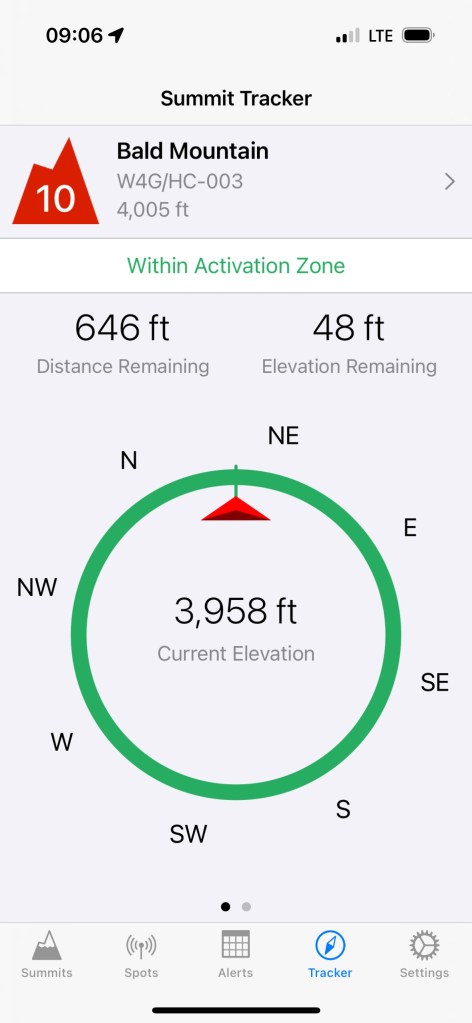
I climbed just high enough to get safely into the activation zone.  My setup was quick and simple.  I used a Chameleon 40-meter OCF QRP dipole.  I like OCF dipoles.  They do not have to get very high off the ground (10-12 feet is enough) and they are good performers.  I prefer them over EFHWs.  I sit on a cushion on the ground, so I use the supporting tree as a backrest.  Coax is 15’ of RG-316 with a choke on one end.  The radio was my new Elecraft KX2.  I waited quite a while to get the radio. I did set it up at home and made one contact before taking it out.  Since I was in a hurry, I set the radio on my pack and the notebook log on my thigh.  The paddles were N0SA’s SOTA paddles.  I got lucky and got one from his last run. I held it in my left hand.  I sent a spot out and a few minutes later I sent QRL? On 7.057 MHz.  I got a NO, they were waiting for me, I’ve never had that before.  The wind was picking up and I had some difficulty hearing.  As my hands got colder, my CW and handwriting suffered.  I had a pretty good pile-up going and after 19 contacts I called QRT.  There were still some calling, but Wx was not on my side. 

I packed it up and headed down the mountain. By the time I got to the truck, it was starting to drizzle. I really didn’t mind the weather, I need to keep my hands warmer though.

The KX2.  It was everything I had hoped it would be.  I ran it 5 watts and it purred like a kitten.  The quality of the received signal was great. I ran with the filter set to 1K Hz and it was fine, no overloading even with a pile-up. For SOTA, the radio is hard to beat.  I like that I only have 3 cables to the radio, paddles, earbuds, and coax.  Simple and easy.

Next time I will be sure to add some gloves to my pack.  It was fun and I can’t wait to do the next one.  If I knew retirement was going to be this much fun, I’d have done it a long time ago.  72 de Scott
I Got Bit By The SOTA Bug

Meeting with the SASQ group at Cheaha State Park this past weekend renewed my interest in SOTA. Over the past year, I have gotten myself in pretty good shape making SOTA more doable. I started putting together a bag for hiking to SOTA Summits. I have hiked and backpacked at different parts of my life so I have an idea of what I need (and want) for a kit. Since I’m an old guy, I do not want to be carrying the kitchen sink with me. I have a QRP radio coming, but that’s another post. Here is the list of my current load out.

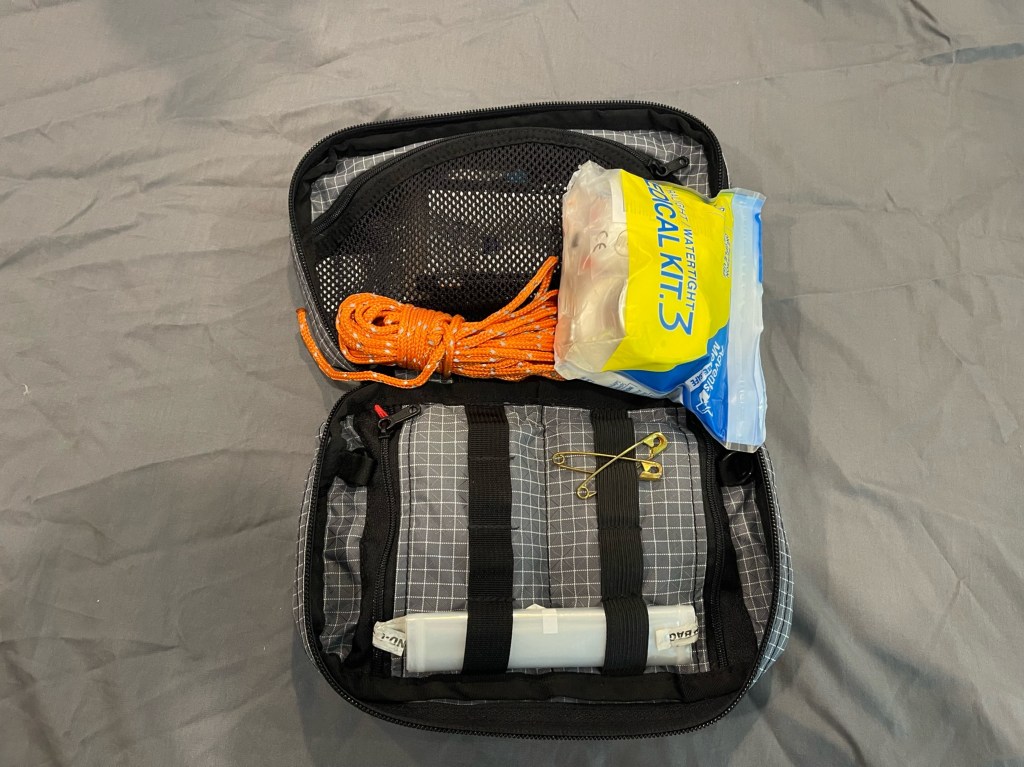
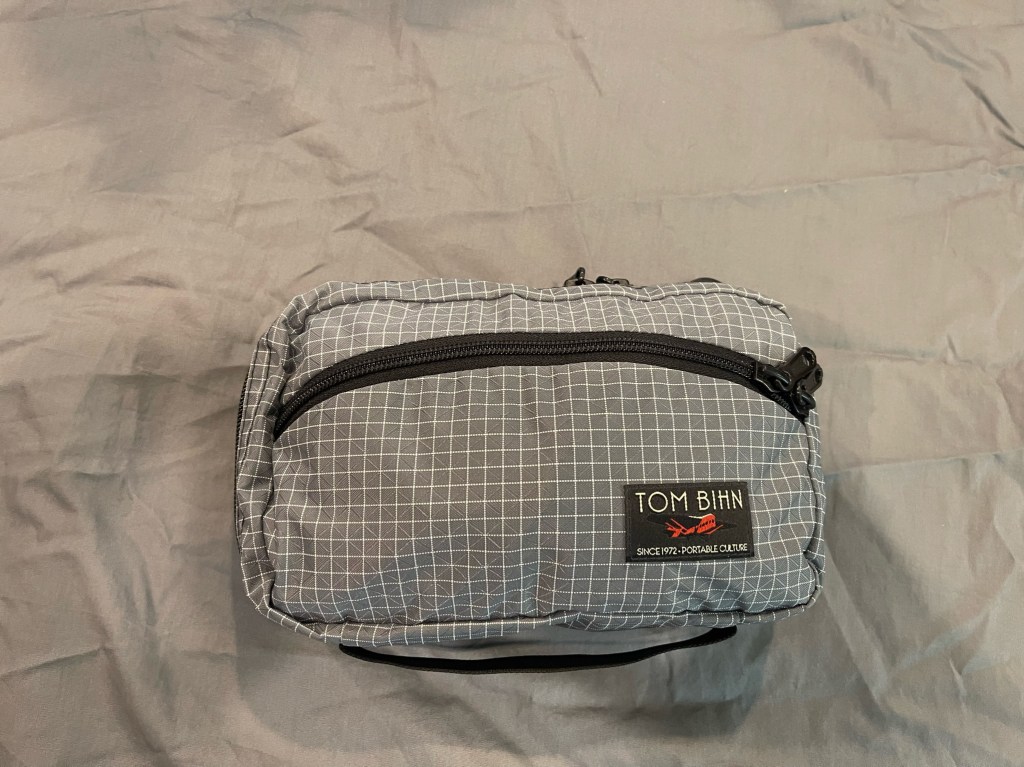
I’ll start with my E&E bag short for Escape and Evasion. Typically an E&E bag has the bare minimum of gear. This bag travels with me when I leave my home area. I move it from bag to bag as needed. The bag is a Tom Bihn Handy Little Thing (HLT) size 2. Loaded, it weighs 24 oz (1.5 lbs).

Here is a list of the contents:
Mechanical Pencil
Bullet (Space) Pen
Rite in the Rain Notebook
Mylar Rescue Blanket
2 – Eye Glass Cleaners
2 – Dude Wipes
Rope
First Aid Kit
2 – Safety Pins
1 – 1 Liter Water Bag
Compass w/signal mirror
Whistle
Survival Guide
Dental Floss
Ferro Rod, Striker, and Magnesium
Fire Tinder
Matches
Duct Tape
P-38
Mini Screwdriver
Flash Drive
Evidence Card
Large Magnifying Glass
Small Magnifying Glass

To carry the radio and associated gear, along with food, water, etc., I decided to use my Camelbak HAWG. It is the older style. I like it because it prevents me from overpacking. The bag and gear without the E&E bag weigh an even 6 lbs., 7.5 lbs with the E&E. With adding food, water, and radios, I am hoping to keep the weight below 15 lbs. I’ve done some Go Rucking with 40 lbs so this should be a breeze.

Here is the list:
Canteen, Cup, and Cover (canteen is Nalgene)
Potable Aqua
MRE Spoon
Poncho
Garbage Bag – Contractor
Rope Kit w/Duct Tape
Triangular Bandanna
Insect Repellent
Tincture of Iodine
Sit Cushion
Tent Stakes – 6

There you have it. enough to cover most events that may happen on an excursion into the wilds, but not too much where you feel like a pack mule. Next work on the radios. 73 – Scott

Day POTA Activation – Cheaha State Park

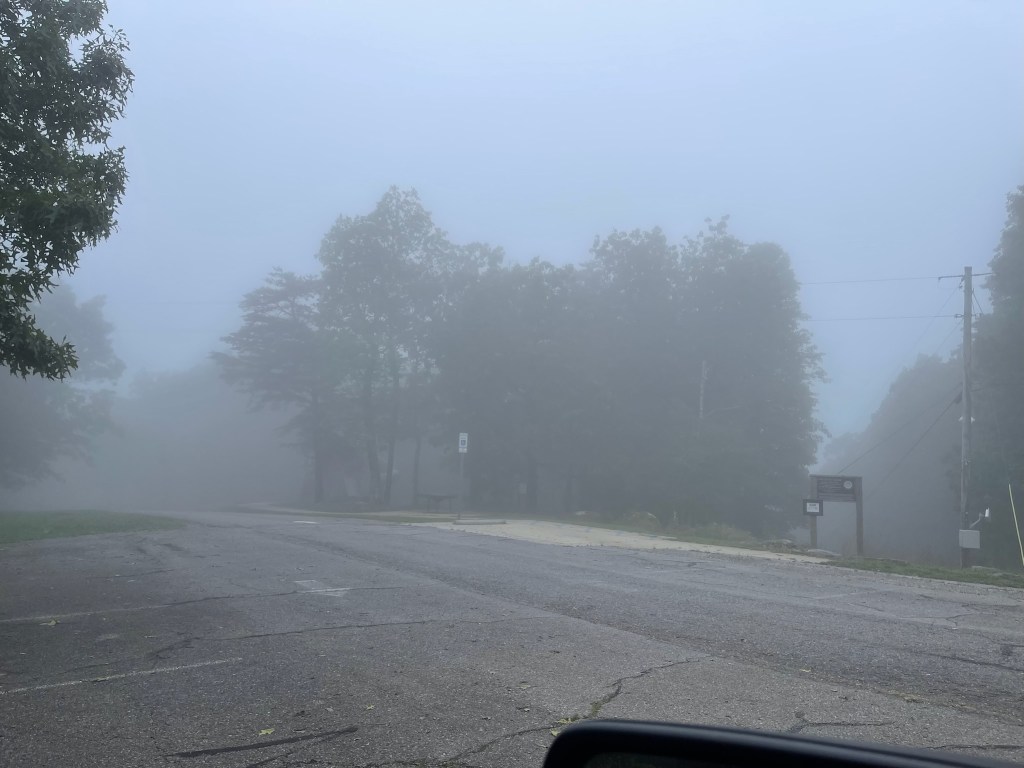
This morning, 05 May 23, I decided to take a trip out to Cheaha State Park. It’s about a 50-mile drive but worth it since it is the highest point in Alabama. I enjoy the park and consider it my home park. The day was cool and foggy. Since I was operating out of the cab of the truck, it was nice not to see the sun.

For a change of pace, I brought one of my QRP radios, the IC-705 with the AH-705. I like this radio. It is easy (for me) to use since I have other Icom radios and the interface is similar. I don’t have to relearn the radio every time I use it. The antenna was my Frankentenna Mobile version. I also wanted to give it a workout at QRP levels.

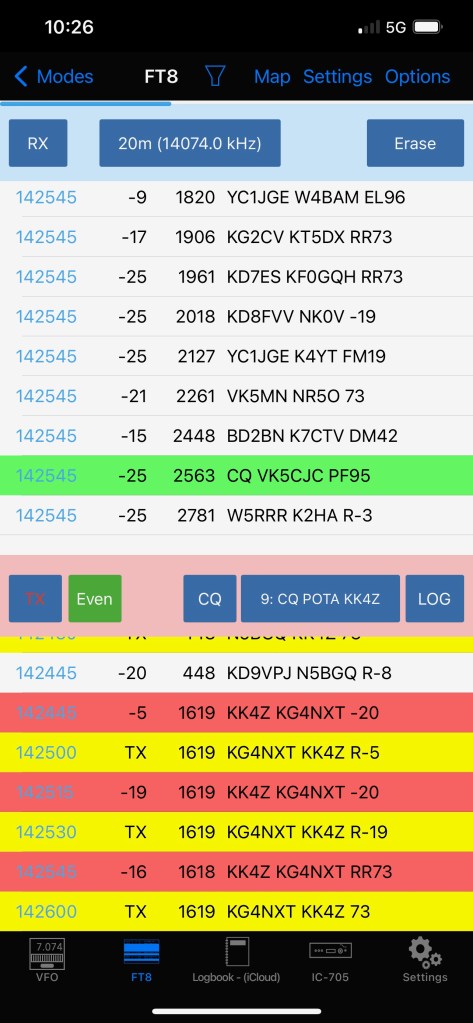
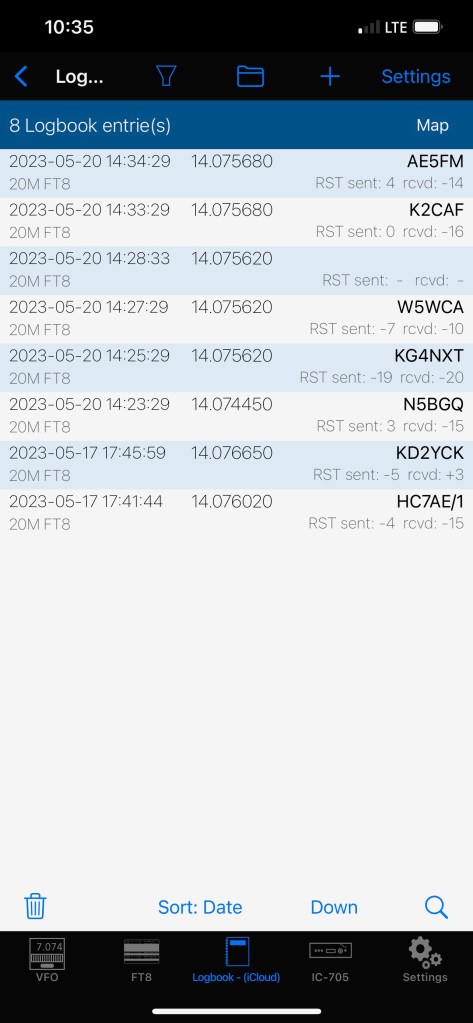
I had another motive for bringing the IC-705. I purchased an app for my iPhone called SDR-Control Mobile. It was created by Marcus Roskosch, the same Marcus that made SDR-Control for iPad. This app connects to the IC-705 via Bluetooth and operates FT8 and CW. It also has a logging function along with several other tools. What drew me to the app was the ability to use my cell phone. The cell phone uses far less power and lasts a lot longer than tablets or laptops. I used it for over 2.5 hrs and the battery level barely moved. The app controls the radio like most other apps. FT8 was a breeze as most of it was automated and logging was a push of a button. Exporting the log was also clicky-click.

Band conditions were up and down and even though I operating QRP, I still managed to make 41 contacts. It was nice working FT8 while holding the phone in my hands. In the past, I would have to twist a bit to get to the laptop making it uncomfortable.

While operating, a fellow ham drove up and said he was looking for me! He and 4 others were operating a special event station about 200 yards down the hill from me. the club was the Southern Appalachian Summit QRPers. SASQ or Sasquatch. This is a group that prefers operating outdoors. They enjoy hiking to SOTA summits and operating portable with lightweight gear. I visited with them for a while and interviewed them for my YouTube channel. If you are interested here is a link to their website https://jesarge.wixsite.com/sasq

I made 41 contacts and here is a QSO map of the activation.

It was a good day, I made a few contacts and a few new radio friends. I may have to see about joining SASQ. I also added another tool to my portable operations tool kit. I like it when things end up win-win. Below is a short video on the activation. 73 — Scott