
Dear Yaesu,
What has happened? Have you forgotten us? I don’t understand your thinking when it comes to the FTX1. The FT-817 and its variants sold well for over 20 years. It is still a cherished radio and has a strong following. The FTX1 is an okay radio. It would appear to compete with the IC-705 and as I have said, it doesn’t really compare. In the realm of QRP radios the IC-705 is still better then the FTX1.
I think many of us were hoping for an improved FT-817/FT-818. The FT-817 had a nice form factor and only weighed ~2.5 lbs with a battery and antenna. The FTX1 is clunky and weighs ~4 pounds without an antenna. I still haven’t figured out the best way to carry it.
What would be a nice QRP radio? My suggestion is taking the form factor of the FT-891 and making it a 10 watt radio (20 might even be better). Replace the the 100 watt finals with a battery or a decent antenna tuner (10:1 matching?). You could even go so far as make it an SDR radio. Make a nice pouch with a shoulder strap to carry it. Most people who run QRP don’t have a need for a waterfall. Instead use the USB port to send the signal to a a tablet/cell phone/laptop to view the waterfall there. You can also allow connectivity to a tablet/cell phone/laptop for digital modes and logging. That might put you on top again.
I don’t understand the Optima option. ~$1,900. Right now, I can get a FT-710 for $955. That would leave almost $1,000 for another radio or two. The FT-710 is a better radio. I have an FT-710 and I think it is one of your better efforts. I recently used it for Field day and it did very well. I have an FTX1 and I’m keeping it for a while to see what you do with it.
Yes, I have a preference for Icom radios, they work better for me. I have had other Yaesu radios namely FTDX10, FTDX3000, FT-950 and years ago an FT-817. I also run a Kenwood. I use what works best for me. I am not necessarily bashing you, I am offering my opinion for your consideration.
Sincerely,
Scott KK4Z
Note: right now I am not sure how the FTX1 fits into my lineup. As I said earlier, I think the IC-705 is better (at least for me YMMV). If I need something lighter I have a KX2. For Field Days and bigger events I can bring either an FT-710 or IC-7300. When I purchased this radio I was also looking at a KX3 with KXAT3 and KXFL3. Maybe if the right trade comes along…
Working on the farm.
I have been busy on my property. I have 6 acres to take care of and there is always something to do. Right now I have to start getting firewood ready for winter. That means dragging downed trees to the process area, bucking, splitting and stacking. I have a John Deere 3025 tractor to help me out. A problem I was running into was how do I get my gear out to where I am working. The front end loader is okay to carry things until you need it for something else. Besides the steel of the bucket is not good for a chainsaw blade. In the past I would sometimes use my wife’s UTV. That has it’s own set of problems namely, she uses it for her stuff and it stays full. So I decided to build a cargo box for the 3 point hitch on my tractor. I got a carry-all from King Cutter which allows me to use my iMatch quick hitch.

I stopped by my local welder and had a 2″ receiver welded on along with some grab hooks. The finished project looks like this.
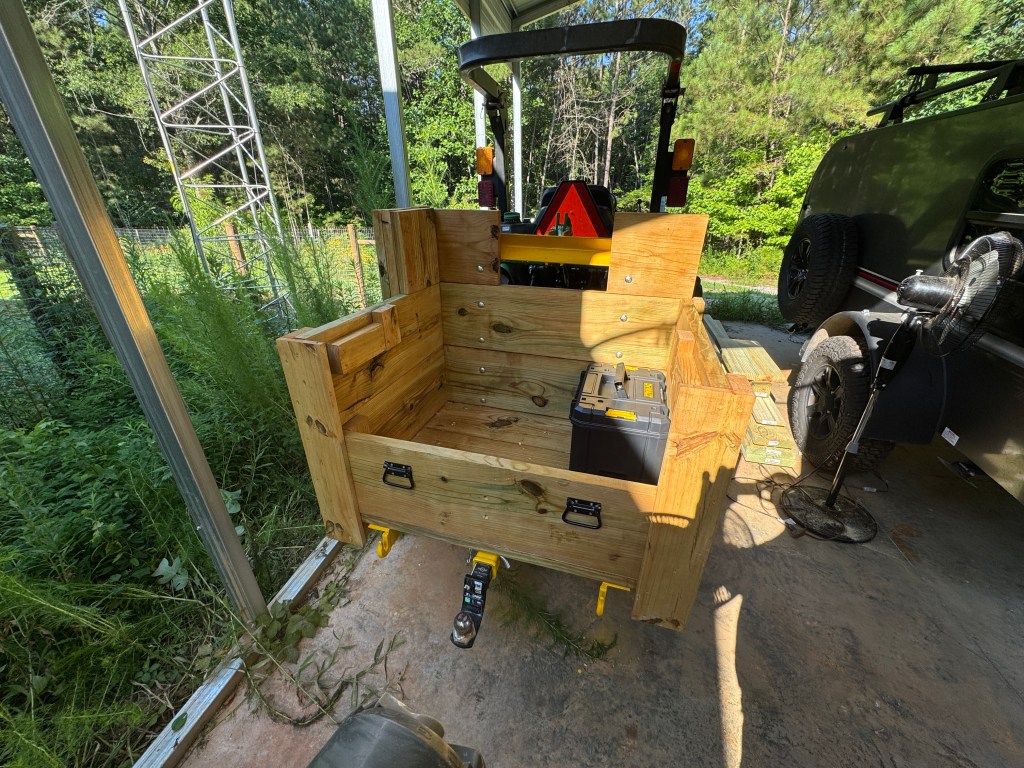
I can flip the tailgate up and turn it into a workbench.

I drilled a few holes so I can mount a chainsaw vise to sharpen my chainsaw in the field.
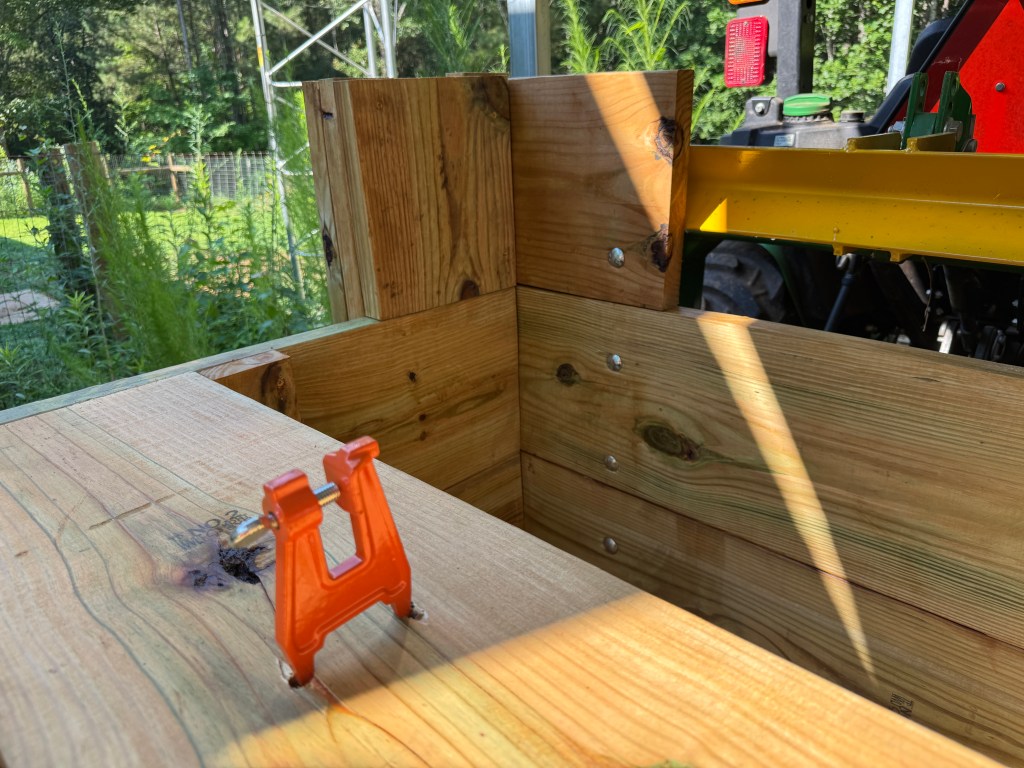
You can see the chainsaw sheath behind the vise. It will hold my 68cc chainsaw with a 27″ bar safely.
I use a 20′ shipping container for my maintenance shed. It’s hasn’t been reorganized since we initially filled it up almost 6 years ago. Another project is to get things in the shop sorted and non-essential stuff moved to one of our other outbuildings. I need to make it more of a workshop and less of a storage shed. There are always projects to work on.
New Paddles
I just received a new set of paddles from Modern Morse. I haven’t taken them out to the field yet, but in house testing shows them to be very promising. They are asy to grip, comfortable in the hand and have a very smooth touch. Workmanship is superb. The paddle body and the arms are Ceracoated and the finger pieces appear to be passivated. The arms pivot on 4 small ball bearings and tension is magnetic. There is a switch inside the paddle to switch dit-dah polarity. This is nice for left handers or “booby-footed” right handers. You can now plug and play with any radio. The paddles come in a nice metal case and two hex keys. The smaller key adjusts the tension and contact spacing and the larger one is for the 4 crews that holds the top of the case to the bottom. The paddle mechanism is sealed with a plastic lid. to get to the switch, you have to loosen the four bolts and carefully lift the top off. Be careful as there are tiny washers on the paddle arm pivots. Another nice feature is the paddles come with 4 magnets on the bottom.
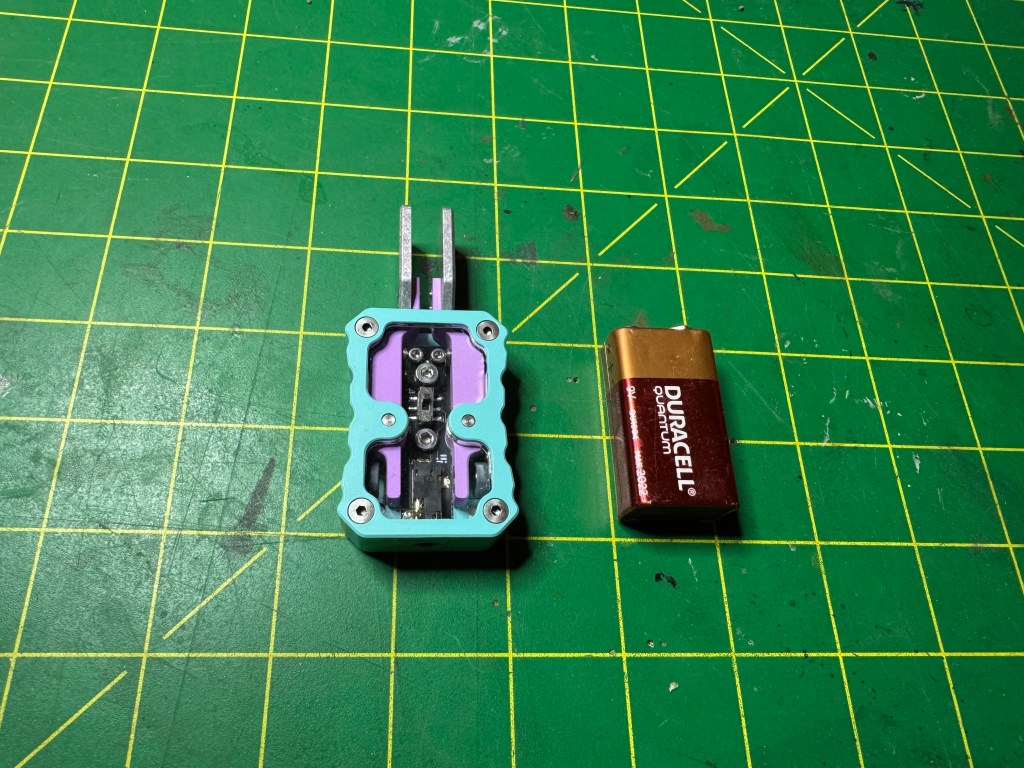

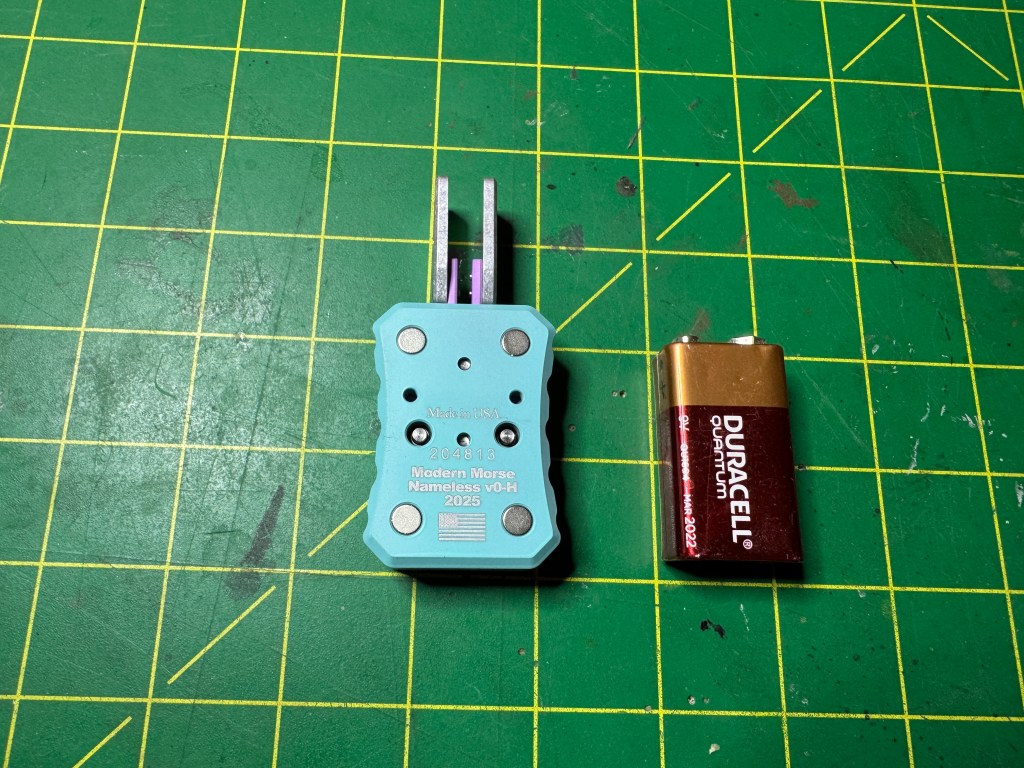
The colors have a nice retro feel and are pleasant to look at. They will certainly be easy to find in a pack or on the ground if dropped. The paddles fit nicely in my hand and I have no trouble sending. These are rugged paddles designed for field use. They are made in the USA by a Veteran. The first run is sold out and there will be a pause before the next run is available. You can check the status here https://www.modernmorse.com. These paddles are pricey but if you appreciate the feel of fine workmanship, they are worth it. I am happy with mine.
Final
Summer got busy and hot. Hopefully as fall approaches I will have more time to get my radios out in the field. I did manage to make it to Field Day with my club and my FT-710. I thought retirement was for leisure but I have never been busier. So much to do, so little time. 73 de Scott
 KK4Z
KK4Z 