Support Your Parks, QSK and QSL

This past weekend was the Support Your Parks on the Air Weekend. My local radio club, the West Georgia Amateur Radio Society (WGARS – https://wgars.com) operated from Cheaha State Park which is the tallest point in Alabama. While there I spent some time with a new ham and we got on the subject of CW paddles. He asked for a recommendation and at the time I didn’t really have a good answer. On the way home from the event I thought about it and if I was to make a recommendation today, it would be a Begali Simplex Begali Simplex Paddle. Currently they cost about $163 USD and are built to last a lifetime. I am a fan of their paddles and own 5. Begali paddles are built like tanks with the precision of a Ferrari. Their customer service is bar none.

While at the park, I set up my IC-705/AH-705 with a Chameleon Delta Loop. The 705 is a fun and very capable radio. The paddles I used were made by Modern Morse. These are very nice paddles and well built. However, during the operation, I was having trouble adapting to them. I made a lot of mistakes. It just didn’t feel right. I decided to check the paddle force or the amount of pressure it took to depress the paddles. I had been holding off getting a dynamometer but pulled the plug and I am glad I did. I first measured a set of paddles that I use well which were my Begali Expedition. They measured about 25 grams of force. As I went through my other paddles I discovered a wide range of forces between them. Some as high as 50+ grams.
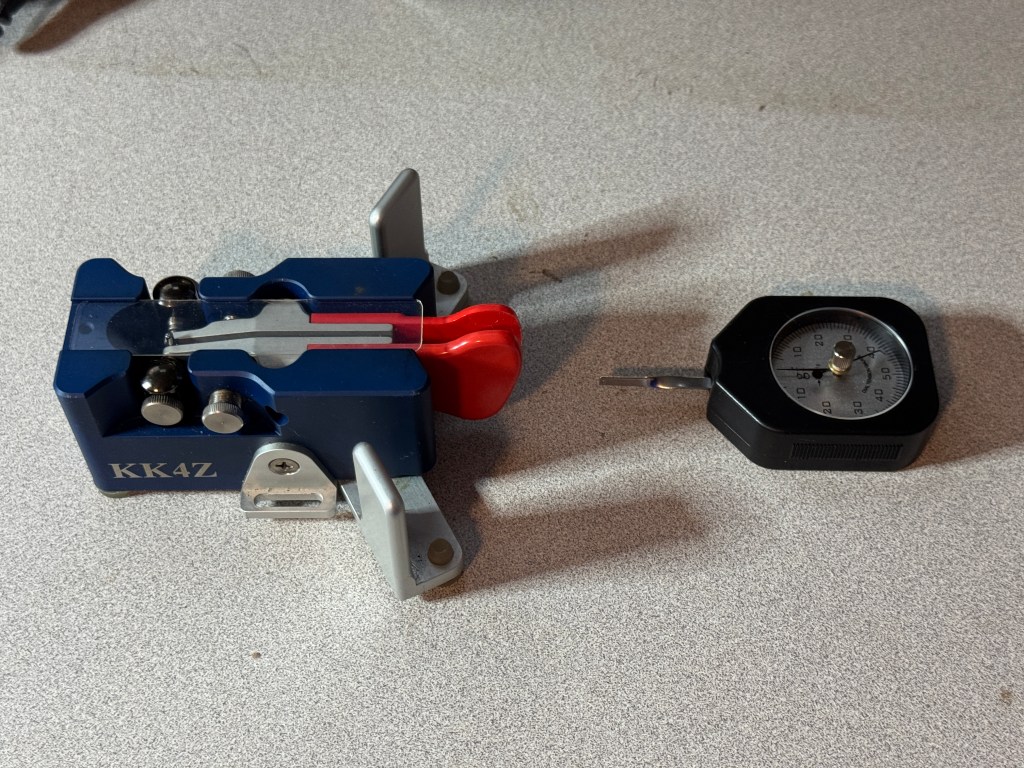
One by one, I got them all adjusted to 25 grams and switching between paddles has become much easier. Why didn’t I do this sooner? I got the gauge from amazon Amazon – Dynamometer.

QSK vs Semi-Break in. In CW, QSK means the the radio quickly switches between transmit and receive so you can hear dits and dahs from another station in between your characters and words you are sending. Some people love QSK, some people hate it. I like it because a good operator can send a dit at the right time to make you stop and listen for them. An example might be you calling CQ too fast and a well placed dit will get you to pause long enough to allow the other station to send their call and start a QSO or exchange. Some radios have noisy relays and QSK makes too much of a racket. Adding a little delay to make it semi-break in will cut down the chatter.

QSL. I no longer send out QSL cards. Life has gotten rather busy and I find myself not being able to keep up with QSL cards. I am usually very diligent about updating LOTW. Thanks to everyone who visits my blog and YouTube channel. I hope you are enjoying this fall weather as much as I am. 73 de Scott

Day POTA Activation – Cheaha State Park

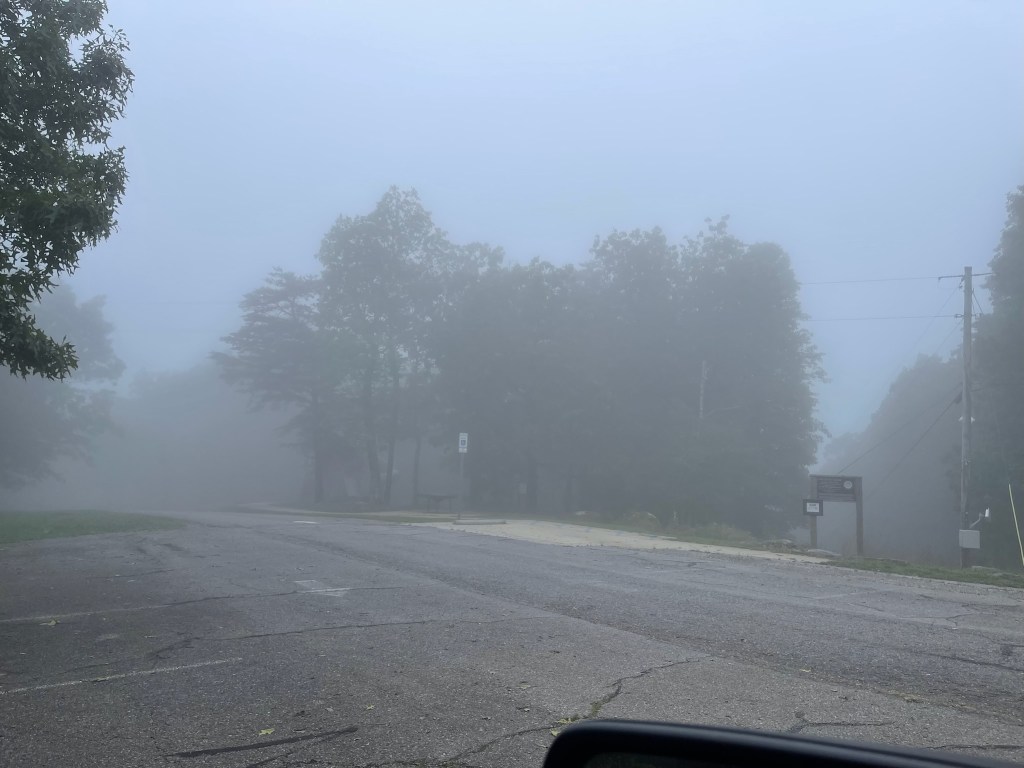
This morning, 05 May 23, I decided to take a trip out to Cheaha State Park. It’s about a 50-mile drive but worth it since it is the highest point in Alabama. I enjoy the park and consider it my home park. The day was cool and foggy. Since I was operating out of the cab of the truck, it was nice not to see the sun.

For a change of pace, I brought one of my QRP radios, the IC-705 with the AH-705. I like this radio. It is easy (for me) to use since I have other Icom radios and the interface is similar. I don’t have to relearn the radio every time I use it. The antenna was my Frankentenna Mobile version. I also wanted to give it a workout at QRP levels.

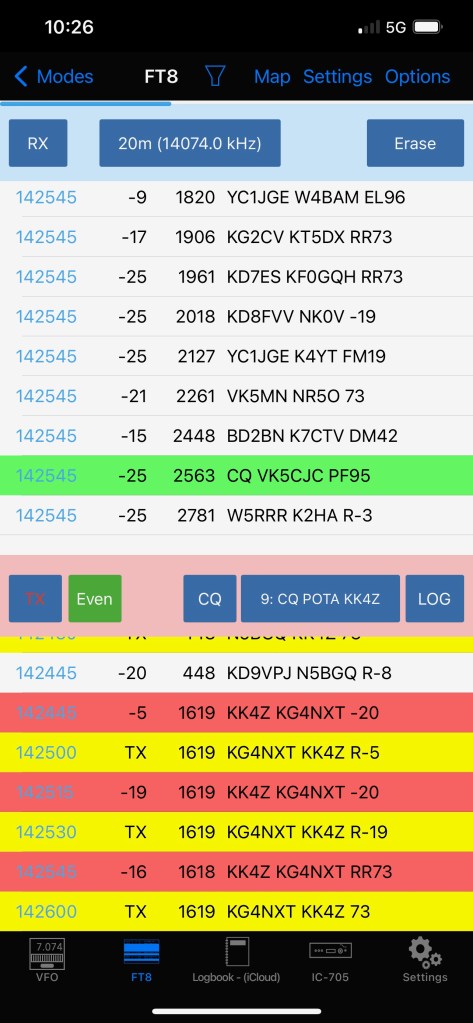
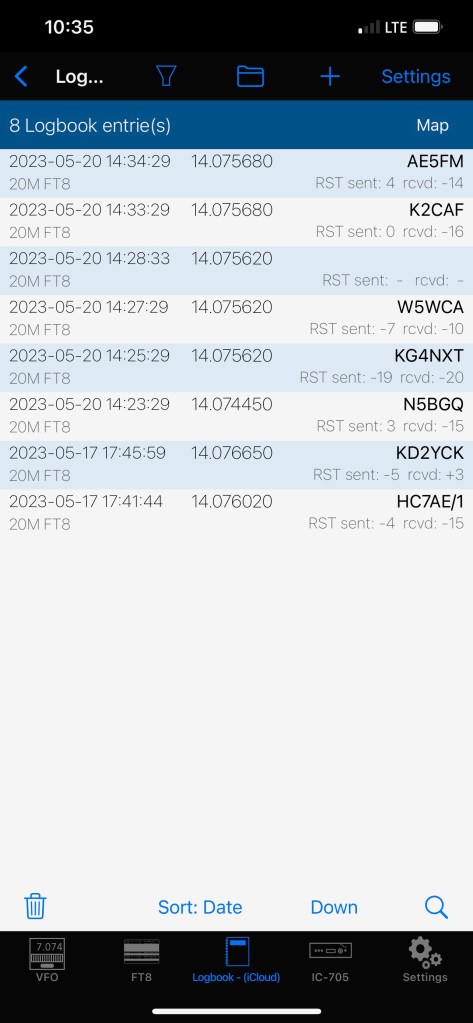
I had another motive for bringing the IC-705. I purchased an app for my iPhone called SDR-Control Mobile. It was created by Marcus Roskosch, the same Marcus that made SDR-Control for iPad. This app connects to the IC-705 via Bluetooth and operates FT8 and CW. It also has a logging function along with several other tools. What drew me to the app was the ability to use my cell phone. The cell phone uses far less power and lasts a lot longer than tablets or laptops. I used it for over 2.5 hrs and the battery level barely moved. The app controls the radio like most other apps. FT8 was a breeze as most of it was automated and logging was a push of a button. Exporting the log was also clicky-click.

Band conditions were up and down and even though I operating QRP, I still managed to make 41 contacts. It was nice working FT8 while holding the phone in my hands. In the past, I would have to twist a bit to get to the laptop making it uncomfortable.

While operating, a fellow ham drove up and said he was looking for me! He and 4 others were operating a special event station about 200 yards down the hill from me. the club was the Southern Appalachian Summit QRPers. SASQ or Sasquatch. This is a group that prefers operating outdoors. They enjoy hiking to SOTA summits and operating portable with lightweight gear. I visited with them for a while and interviewed them for my YouTube channel. If you are interested here is a link to their website https://jesarge.wixsite.com/sasq

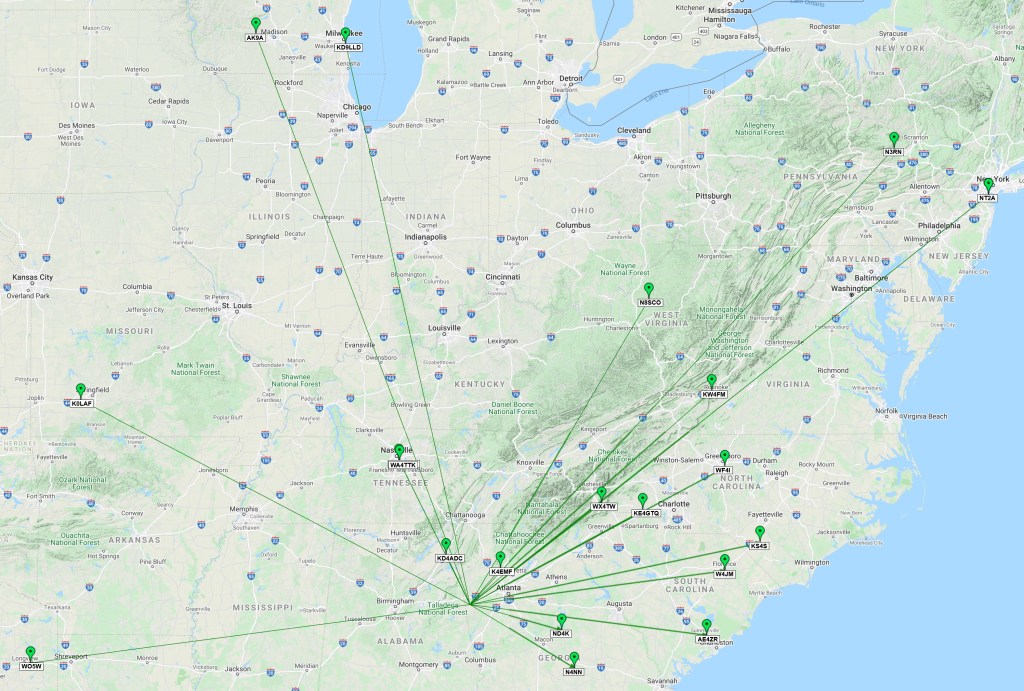
I made 41 contacts and here is a QSO map of the activation.

It was a good day, I made a few contacts and a few new radio friends. I may have to see about joining SASQ. I also added another tool to my portable operations tool kit. I like it when things end up win-win. Below is a short video on the activation. 73 — Scott

POTA Activation K-3756 JL Lester WMA

I had a doctors appointment in the morning so that kind of scrambled my day. I decided to attempt a quick activation using my new IC-705 with the AH-705. Today was the best day to do it because we are supposed to get some real winter weather starting tomorrow. I’m not opposed to winter weather, I do not like driving around with a bunch of folks who are. And yes, true to southern tradition, people are at the stores buying milk, bread, and eggs. Can never to too sure.

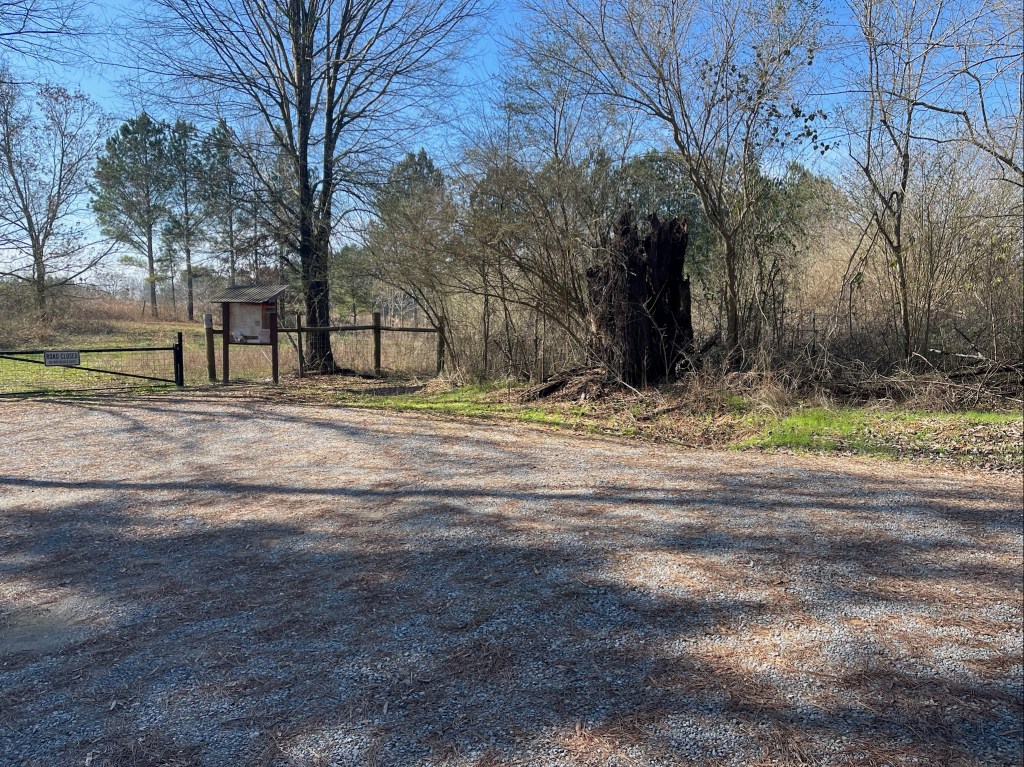
The J. L. Lester Wildlife Management Area is located in Polk County, GA near Cedartown. It is 477 acres with hunting and fishing opportunities. Even though I wasn’t hunting or fishing, I am required to have either a hunting or fishing license, or a land pass. The land pass is $30 and the hunting or fishing license is $15 per year. I became a fisherman. I parked in a parking area near the eastern boundary. I was nice and quiet.

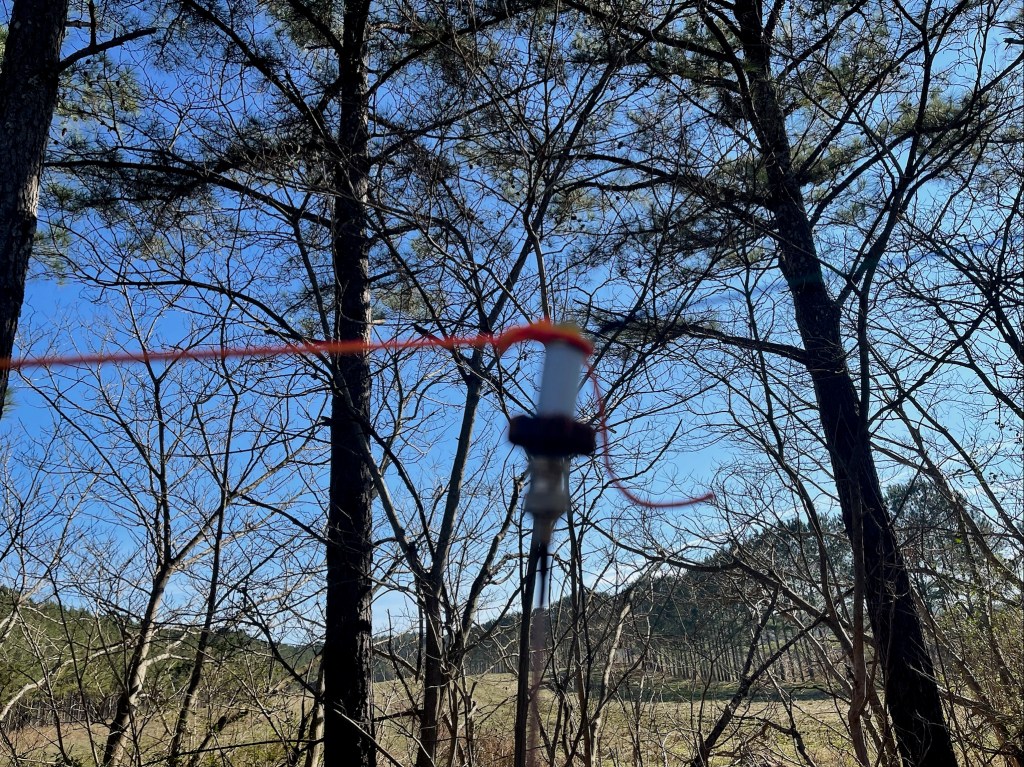
The setup was simple, the IC-705 running off of its own battery, N0SA paddles, AH-705 tuner and a Spark Plug EFHW with 65 feet of Buddipole antenna wire. The coax is RG-316. This is the first time I used the Spark Plug antenna. I hoisted the antenna wire about 20 feet up into a tree, and tied the Spark Plug off near my truck.

Here is the complete antenna set-up.

The setup in the truck was pretty simple. I used my center console desk and logged with paper. During the activation the AH-705 was on the passenger seat. Using the desk with the radio on it made it a little tipsy so for the photo, the AH-705 was a counter-balance. I will remedy this next time with a bungee cord. I had the earphones out; however, the IC-705 had enough volume for these not so good ears so the earphones were not needed.

I also discovered that I didn’t need the clock as the time on the IC-705 was easy to see.

How did everything play? Quite well actually, the AH-705 tuned the EFHW for the first time in less than 2 seconds. I was impressed. The AH-705 is more like a miniature AH-4. I have an AH-4 and it is a very capable tuner. I am looking forward to see how well the AH-705 compares to the AH-4.

One of the reasons I brought the IC-705 was for the keyer memories. I use keyer memories quite a bit. Using memories eases the QSO workflow. I started on 40 meters hoping to get 10 activations and if not maybe move to another band. However, I had a nice pileup going on for about 35-45 minutes and ended up with 21 QSO’s. As suddenly as it started, it stopped. I called CQ twice with no answer and then pulled the plug. the antenna and 5 watts were more than ample. Here is a map of the contacts.

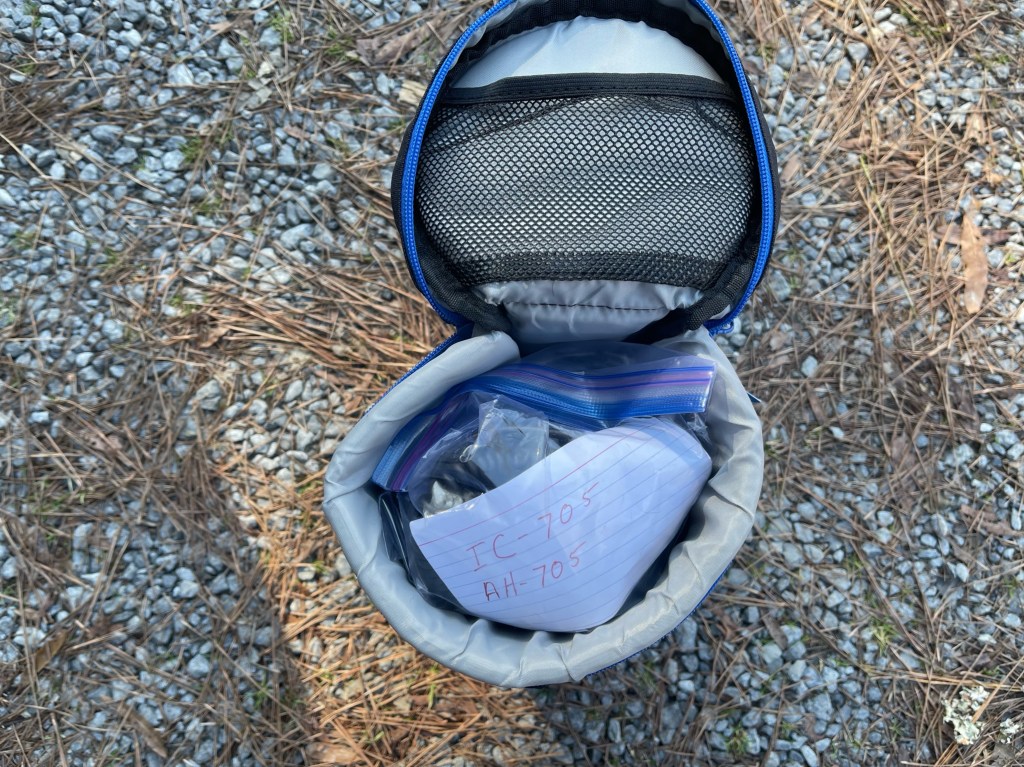
Packing up was a breeze, all my Icom stuff fits into one case. The only things that are not included is the antenna and coax.

All in all it was a great activation. It lasted just long enough and no one was left behind. I can see where the the IC-705 is moving up the ranks as my POTA radio of choice. Because I am very familiar with the Icom architecture, using it is almost second nature.

As I was packing up Marty K4JMG stopped by to say hello before he started his activation at the same place. We chatted a while and swapped a few tales. Marty and I belong to the same ham radio club. It is always good to see him.

Thanks to all those who hunted me, I enjoyed the QSO’s. See you down the log.